REVIEW · ATHENS
Philosophy Experiential Workshop at Aristotle’s Lyceum, Athens
Book on Viator →Operated by Hellas Revival · Bookable on Viator
Ancient philosophy, but not the stiff kind. This Philosophy Experiential Workshop takes you from Rizari Park to the Lyceum area, so you can learn Socrates, Plato, and Aristotle ideas where they were taught and then practice those ideas with guided discussion and choices.
What I like most is how friendly the pacing feels, even if you start with zero background. You get an expert facilitator, plenty of talk time, and simple explanations in plain English, so the big names do not stay trapped in textbooks. I also like the format: you’re not just listening, you’re playing a virtue-choice game and reflecting at the end with Aristotle quotes in Ancient Greek.
One thing to consider: it’s an outdoor experience at a historical site, so you need decent weather and you should be ready for rules around respectful conduct and noise.
In This Review
- Quick hits before you go
- A philosophy walk in Aristotle’s Lyceum area
- Rizari Park warm-up: Socrates to Aristotle in plain English
- The walk to the Lyceum ruins: where ethics becomes practical
- The virtue-choice game: ethical dilemmas you can actually feel
- Aristotle quotes at an open-air amphitheater overlooking the ruins
- Optional extra hour: Plato’s Philosophy and a debate on ethics
- Price and value: what $54.01 really buys you
- Language, group size, and how the session actually feels
- What you need to know about weather and conduct
- A note on accessibility and meeting spot reality
- Who should book this Aristotle’s Lyceum workshop
- Should you book? My take
- FAQ
- Is this a traditional guided tour?
- Do I need any background in Greek philosophy?
- What does the price include?
- Is the Lyceum admission fee included?
- Where is the meeting point and where does it end?
- Is the workshop outdoors, and what if it rains or weather is poor?
- What are the group size limits and are private or extra options available?
Quick hits before you go
- Small group size (max 10) keeps questions from feeling awkward.
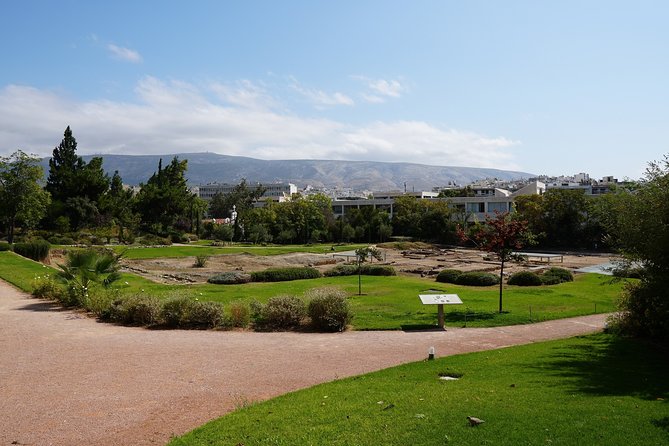
- Rizari Park warm-up sets up the story from Socrates to Aristotle in a short timeline.
- Lyceum site walking helps you connect ethics to everyday decisions.
- Virtue-choice game turns morality into hands-on choices and discussion.
- Open-air amphitheater reflection ends with selected Aristotle quotes, including in Ancient Greek.
- Optional extra hour on Plato adds an interactive debate on an ethical dilemma.
A philosophy walk in Aristotle’s Lyceum area
This is a guided philosophy experience, not a museum tour with headsets. The goal is to help you understand how Aristotle thought about virtue and a life well-lived, then try using those ideas in your own context.
The setting is part of the teaching. You begin in a calm, tree-shaded start at Rizari Park, then you move on to the Archaeological Site of Lyceum area, where Aristotle founded his famous school of philosophy. Instead of staying parked in one spot, you learn while you walk, which makes the ideas feel less abstract.
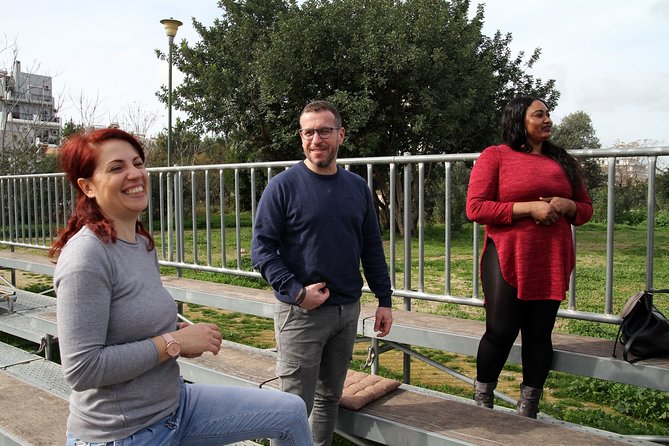
Since it’s capped at 10 people, you should expect a discussion-heavy vibe. The workshop is designed to work whether you’re a student, a parent, an educator, or just the curious type who likes asking why people do the things they do.
You can also read our reviews of more tours and experiences in Athens



Rizari Park warm-up: Socrates to Aristotle in plain English
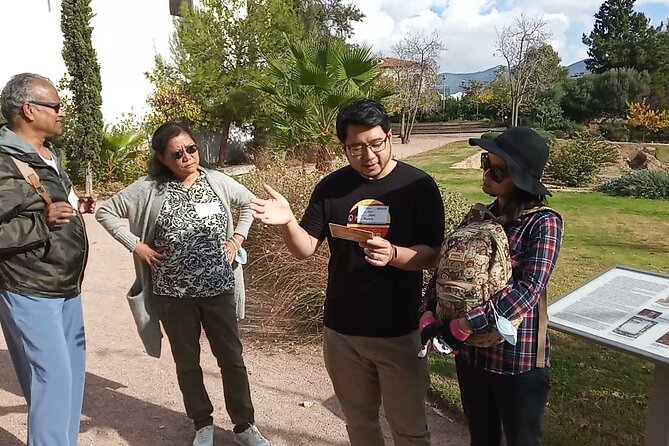
Your session starts under the trees at Rizari Park, just steps from central Athens. After a brief introduction, your facilitator guides you through a simple timeline of ancient Greek philosophy, tying together Socrates, Plato, and Aristotle so you’re not meeting each thinker cold.
This is where I think the workshop earns its value. Even with no previous knowledge, you’re given plain-language definitions and real examples. The point is to get you talking about ideas quickly, not to test you on vocabulary.
Expect interaction right away. This is not a silent “listen and move on” style activity. You’re encouraged to ask questions and share your own thoughts, which helps the group build a shared understanding instead of everyone mentally Googling everything later.
The walk to the Lyceum ruins: where ethics becomes practical
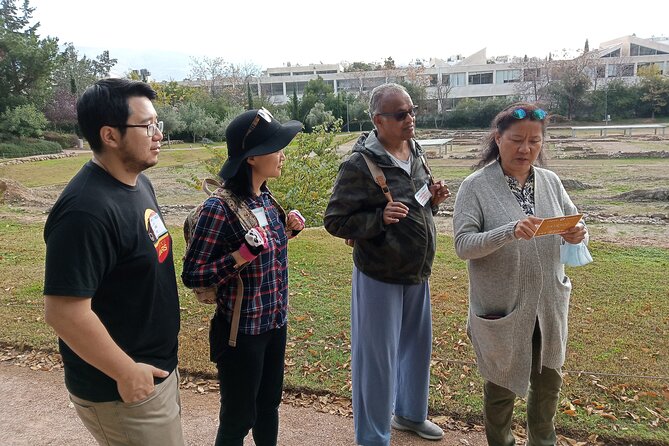
From the park, you head to the Archaeological Site of Lyceum. Important money note: the entry ticket isn’t included, and it’s listed as €5.00 per person. So you’ll want to factor that into your total if you’re budgeting tightly.
Once you arrive, you philosophize while walking through the area. The workshop connects Aristotle’s moral theory to a goal that sounds fancy but gets explained in human terms: Eudaimonia, often described as a life well-lived. Instead of treating it like a slogan, you’ll translate it into what it could mean for your daily habits and choices.
I like this approach because it changes the question from What did Aristotle say? to What would I do if I treated virtue like a skill? You’re not asked to worship ancient ideas. You’re asked to test them.
The virtue-choice game: ethical dilemmas you can actually feel
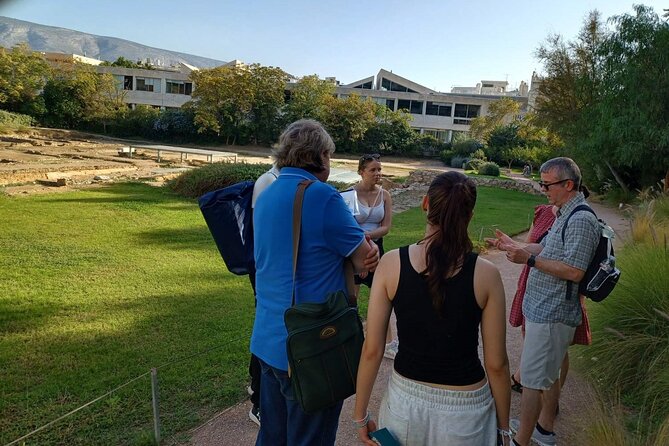
One of the most praised parts of this experience is the interactive virtue-choice game. You’ll work through ethical dilemmas together, then talk about what the choices suggest about virtues and the things that pull people off track.
If you’ve heard Aristotle associated with the golden mean, you’ll likely recognize the theme here. The game format makes the idea feel less like a concept and more like a practical balancing act between virtues and vices, the kind of middle-ground thinking that applies to real life.
This is also where the “discussion-first” model pays off. You’ll have time to respond to the facilitator and to each other, so you don’t just receive answers. For me, that’s the difference between learning names and learning how to think.
Aristotle quotes at an open-air amphitheater overlooking the ruins
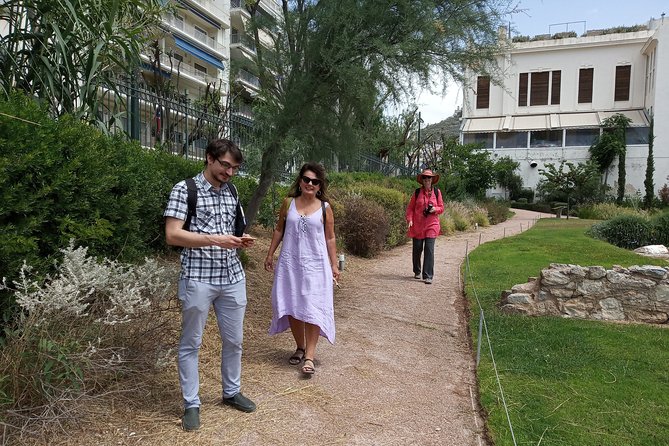
The session closes at a small open-air amphitheater with views over the ruins. It’s a simple setting, but it works because it slows you down for reflection.
Here you read selected quotes from Aristotle, and yes, the description notes that you’ll even see quotes in Ancient Greek. You’re not expected to instantly become a translator. The facilitator frames the quotes so they connect back to the themes you worked on during the walk and the game.
Then comes the reflection: how this wisdom still matters, whether you’re dealing with teen issues, family decisions, classroom questions, or just your own daily behavior. The tone stays grounded. The goal is not to sound profound. It’s to notice patterns and adjust what you do with your values.
- All Day Cruise -3 Islands to Agistri,Moni, Aegina with lunch and drinks included
★ 5.0 · 4,958 reviews






Optional extra hour: Plato’s Philosophy and a debate on ethics
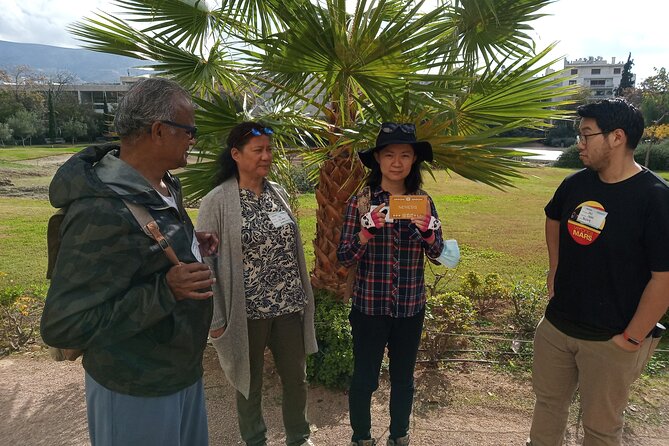
If you want more, there’s an add-on option for an extra hour on Plato’s philosophy. This extra time includes an interactive debate on an ethical dilemma.
This is a smart choice if you enjoy discussion more than you enjoy quiet reading. Debate also helps you practice how arguments work, not just what conclusions might feel good.
It’s also a good fit if you’re traveling with someone who loves back-and-forth conversation. You can compare how Aristotle and Plato ideas push you in different directions, even though both are trying to explain how to live well.
Price and value: what $54.01 really buys you
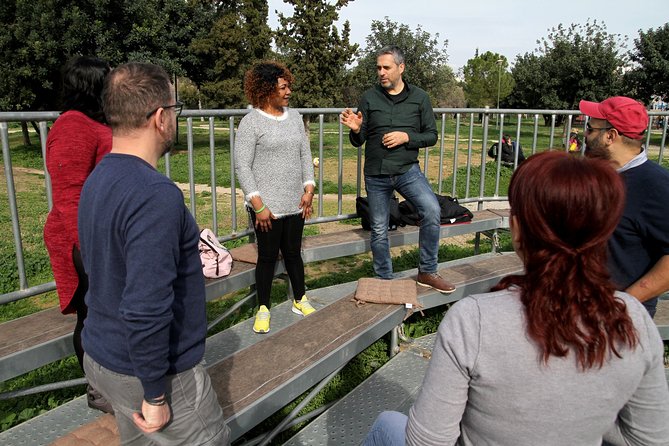
The listed price is $54.01 per person for a session of about 1 hour 45 minutes. That’s the base philosophy experience, and it includes an expert facilitator, liability insurance, and local VAT (24%). You also get a mobile ticket.
To judge value fairly, add the one missing cost: the Lyceum admission fee of €5.00 per person. That extra line item matters, but it’s still a small add-on compared with many guided experiences in Athens.
Where this feels like good value is in the format. You’re not paying for a large bus tour or a rushed lecture. You’re paying for small-group, English-language guidance and interaction, plus the site-based setting that makes the learning feel connected rather than generic.
Also keep in mind timing. The workshop is typically booked about 34 days in advance, so if you’re traveling in peak season or on a tight schedule, you’ll want to lock it in early.
Language, group size, and how the session actually feels
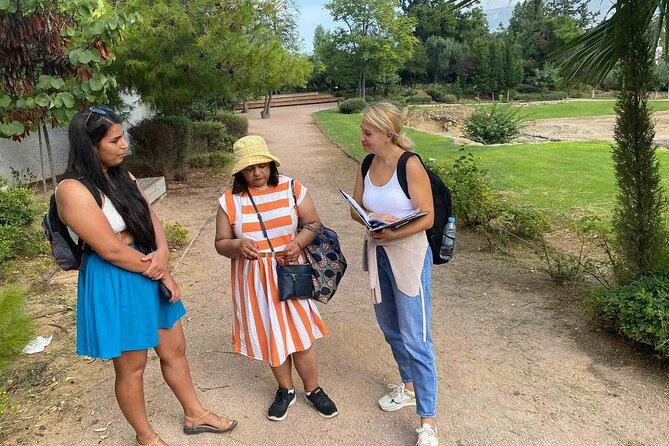
The workshop is offered in English and is designed so that terms are explained in simple words. That matters because philosophy can turn into jargon fast. Here, the structure is meant to prevent that.
The group limit of 10 travelers makes a difference you’ll feel. In bigger tours, you can spend most of the time waiting your turn to ask one question. In a small group, discussion flows. It’s easier to build on someone else’s point, and you’ll likely leave with a few personal takeaways you didn’t expect.
The experience is also suitable for adults and teenagers over 14, with a note that minors can’t book alone. If you’re traveling with a group that includes younger teens, you’ll want at least one responsible adult booked as well.
What you need to know about weather and conduct
This is outdoors, so weather matters. The experience requires good weather, and if it’s canceled due to poor conditions, you’re supposed to be notified at least 3 hours ahead. In that case you can choose a different date, a similar workshop, or receive a full refund.
Because it takes place in a historical and cultural setting, you should follow conduct expectations: be respectful, dress appropriately, keep the space clean, and manage noise. The facilitator has the right to terminate participation without refund if behavior is disrespectful to the place or people. It’s not about being uptight. It’s about keeping the site and other visitors in mind.
If you need medication for allergies, the guidance says you should bring it with you. The facilitators are first aid trained, but they cannot provide medication by law.
One more practical note: since this is in public space, you consent to photo/video shooting that may appear in future publication. You can withdraw consent in writing at any time, but that’s worth knowing before you arrive.
A note on accessibility and meeting spot reality
Service animals are allowed, and the meeting location is listed clearly. You meet at Vasilissis Sofias 24, Athina 106 76, Greece, and the workshop ends back at the same meeting point.
It’s near public transportation, so getting there should be manageable. Still, because you’ll be walking between areas, comfortable shoes matter. You’ll also want to dress for the weather since you’re outside for the full experience.
If you’re booking a private upgrade, the idea is that your group gets the experience just for yourselves. That can be worth it if you want quieter conversation or more tailored discussion, especially for multi-generational groups.
Who should book this Aristotle’s Lyceum workshop
I’d recommend this if you want philosophy that feels human and usable. You’ll probably enjoy it most if you like discussion, ethical questions, and learning in an actual place rather than a classroom slide deck.
It’s also a strong fit for people without a philosophy background. The workshop is explicitly structured for newcomers, with plain-language explanations and room for questions.
You might want to skip it if you prefer a traditional guided tour format with lots of fixed facts and minimal interaction. This experience is built around dialogue and choices, not passive sightseeing.
Should you book? My take
Book it if you want a small-group Athens experience that turns big names like Socrates, Plato, and Aristotle into real choices you can discuss. The strongest appeal is how the workshop makes the ideas approachable, then tests them through walking, games, and reflection.
If you’re deciding between this and a more standard tour, choose this when you want to leave with questions in your head that you actually enjoy. If weather is stable during your dates and you’re comfortable with outdoor walking and respectful-site rules, it’s a smart use of time in Athens.
Just plan for the extra €5.00 Lyceum admission and the outdoor conditions, and you’ll be set.
FAQ
Is this a traditional guided tour?
No. It’s a philosophy experience. The focus is on guided discussion and activities, and it’s also suitable for people with no prior knowledge.
Do I need any background in Greek philosophy?
No. The workshop is taught in plain English, and terms are explained in simple words with examples.
What does the price include?
The experience includes an expert facilitator, liability insurance, and local VAT (24%). You also get a mobile ticket.
Is the Lyceum admission fee included?
No. The Archaeological Site of Lyceum entry ticket is not included, and the listed admission fee is €5.00 per person.
Where is the meeting point and where does it end?
You meet at Vasilissis Sofias 24, Athina 106 76, Greece. The activity ends back at the meeting point.
Is the workshop outdoors, and what if it rains or weather is poor?
Yes, it takes place outdoors and requires good weather. If it’s canceled due to poor weather, you’ll be notified at least 3 hours ahead, and you’ll be offered a different date, a similar workshop, or a full refund.
What are the group size limits and are private or extra options available?
The workshop has a maximum of 10 travelers. There’s also an upgrade option for a private experience for just your group, and an optional extra hour on Plato’s Philosophy with an interactive ethical dilemma debate.

More Workshops & Classes in Athens



More Tour Reviews in Athens
- All Day Cruise -3 Islands to Agistri,Moni, Aegina with lunch and drinks included
★ 5.0 · 4,958 reviews