REVIEW · ATHENS
Open Water Course in Nea Makri, Athens
Book on Viator →Operated by Kanelakis Diving Experiences · Bookable on Viator
If you want your scuba certification without chaos, this Nea Makri course fits well. I like the small-group format (up to four in your unit) and the patient, responsible instruction from Dimitris. One thing to think about first: you’ll have to handle the health questionnaire and the rule about not doing the underwater activity within 12 hours of flying.
The course keeps you moving, but not rushed. You study five theory sections on your own (book or laptop), then you get hands-on help from your instructor during the practical work. The instructor stays with you through the process, so questions don’t get lost in a crowd.
It’s also worth noting that the schedule depends on which track you choose: a quicker option that caps depth at 12 meters, or a longer track that allows deeper work. If you’re set on a tight timeline, double-check which option matches your comfort level.
In This Review
- Key things to know before you book
- Nea Makri makes the course feel easy (and close to Athens)
- Course options: 2–3 days to 12 m vs 4–7 days for deeper training
- The shorter track (regular certification)
- The longer track (intense certification)
- Theory sections you can do flexibly (and still get instructor help)
- Confined water practice in shallow water: skills first, pressure later
- Open-water sessions in the South Evoikos Gulf: revise, then add new skills
- Small-group attention (and Dimitris’s teaching style)
- Price and value: what $488.70 buys you in Athens-region training
- What you should know before you arrive
- Who this course is best for (and who should think twice)
- Should you book this Nea Makri Open Water Course?
- FAQ
- How long is the PADI Open Water course in Nea Makri?
- What maximum depth can I reach on the regular course?
- Where does the course take place?
- What time does the course start, and where does it end?
- How big are the groups?
- Do I have to study theory before practical training?
- What happens during the practical portion?
- Do I need a medical check before I can participate?
- What is the cancellation policy?
Key things to know before you book
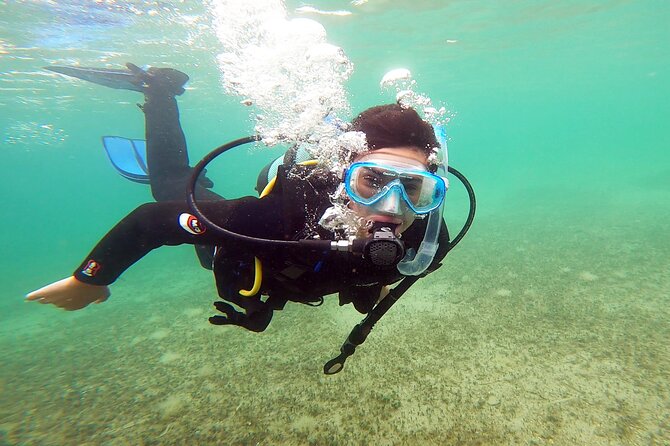
- Small groups in the water: personalized attention, with your unit limited to four people.
- Dimitris-led coaching: patient, responsible, and focused on repeating skills until they feel solid.
- Theory on your own time: five sections via book or laptop, completed at the start or during the course.
- Shallow-water skill building first: confined water practice where you learn equipment use and safety habits.
- Open-water sessions in the South Evoikos Gulf: you revise basics and add new skills in real conditions.
- Two course tracks: shorter 2–3 day option capped at 12 m, or longer 4–7 day option for deeper training.
Nea Makri makes the course feel easy (and close to Athens)
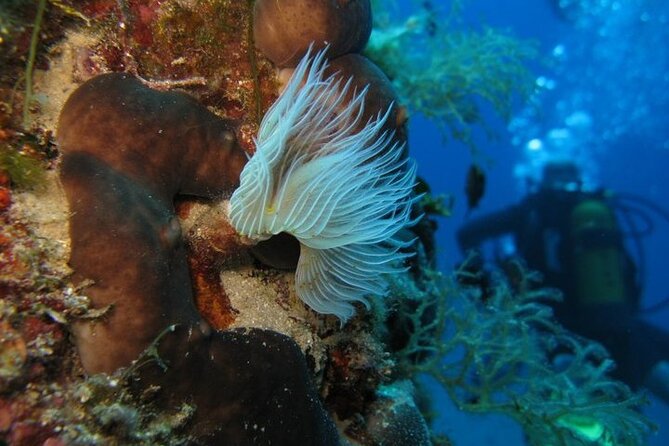
Nea Makri is a practical base for a scuba certification near Athens. You’re not commuting across the city all day. One review called out that the drive is about 30 minutes from central Athens, which is exactly the kind of detail that matters when you’re trying to stay rested and show up ready to learn.
The meeting point is Kanelakis’s location at Frinis 20 in Nea Makri, and the start time is 10:00 am. From a comfort standpoint, that’s late enough to have breakfast and early enough to still get a full training day.
Also, the area is near public transportation. That doesn’t mean you can ignore planning, but it does give you options if you’re not renting a car. And since the activity ends back at the meeting point, you won’t end the day stranded across town.
You can also read our reviews of more tours and experiences in Athens.



Course options: 2–3 days to 12 m vs 4–7 days for deeper training
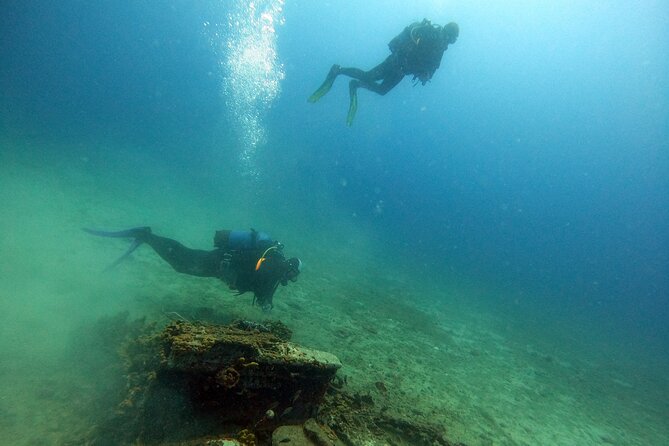
This is an Open Water Course with a clear fork in the road.
The shorter track (regular certification)
This option takes about 2–3 days and lets you reach a maximum depth of 39 feet (12 meters). If you want a focused, time-efficient path, that cap is also a comfort boundary. It shapes the training toward skills and confidence that transfer well to real-world conditions.
The longer track (intense certification)
The longer option runs about 4–7 days and allows you to reach deeper depths. If you feel you want more repetition, more time for skill confidence, or you’re aiming for expanded comfort in varied conditions, this track may fit better.
A practical way to decide: think about your personal learning pace. Some people do great under a tighter schedule. Others breathe easier with extra days. Since both tracks are led by the same overall structure—study theory, practice skills in shallow water, then progress to open-water sessions—you’re mainly choosing how much time you have to absorb and repeat.
Theory sections you can do flexibly (and still get instructor help)
You’ll complete five theory sections. The good news is that you don’t have to sit through all of it in a classroom at the start.
You can study on your own using a book or on your laptop. The theory can be done at the beginning of the course or during it, depending on how the schedule works out for your group.
What I like about this setup is that it protects your brain from overload. If you prefer to get the basics out of the way early, you can. If you learn better after you’ve seen some real context in the water, you can push some of the theory to later in the course.
And there’s no left-behind feeling. Your instructor is with you the whole time to answer questions about theory and practical skills. That matters because scuba knowledge isn’t just facts—it’s understanding how and why you do each step.
- All Day Cruise -3 Islands to Agistri,Moni, Aegina with lunch and drinks included
★ 5.0 · 4,958 reviews




Confined water practice in shallow water: skills first, pressure later
The practical portion starts with confined water sessions in shallow water. This is where you exercise the use of scuba equipment and build the core habits that keep everything calm underwater.
You’ll practice safety-related skills and get comfortable with the gear. The goal is not to test you. It’s to train you. You should expect repetition until the movements feel natural.
One of the strongest notes from the feedback is how much technique practice you get. A review described having four underwater training sessions in two days and practicing all techniques multiple times. That kind of repetition is exactly what you want in the early stage: it turns unfamiliar procedures into something you can do without thinking too hard.
Open-water sessions in the South Evoikos Gulf: revise, then add new skills
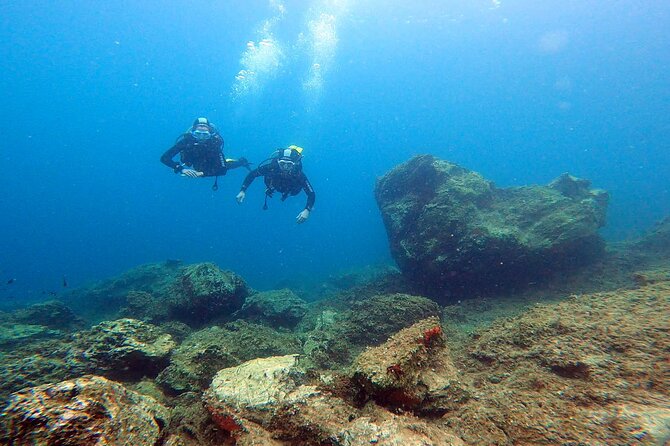
After you complete the confined water portion, you’ll be ready to participate in the open-water sessions in the south Evoikos Gulf. This is where the course stops being purely mechanical and starts feeling like real scuba.
The structure is built around two things:
- You revise what you learned during the confined water practice.
- You learn new skills in the most interesting places in the gulf.
The course is designed so you don’t jump straight into the hardest parts of scuba without building foundations first. From the course description and the strong instructor feedback, the emphasis is on safety and comfort as you move into open conditions.
Also, one review specifically praised the underwater locations as very good and safe. That doesn’t mean every day feels the same, but it does suggest the team plans sites with training in mind, not just sightseeing.
Small-group attention (and Dimitris’s teaching style)
For a certification course, teaching style matters as much as the schedule. Here, it’s a big selling point.
Your group is limited to four people, and the whole activity has a maximum of eight people. That balance is important. You get enough structure that you’re not waiting around, and enough supervision that you can get answers fast.
The feedback is especially strong about instructor Dimitris. People described him as experienced, responsible, and patient. They also mentioned he repeats techniques so you can practice them multiple times, which is a huge help if you’re nervous or if your brain needs extra tries to lock in the steps.
If you’re the kind of learner who wants clear explanations plus hands-on coaching, this style is a strong match. If you prefer learning by watching only, you might find the active approach more demanding—but that’s often how you become competent quickly.
Price and value: what $488.70 buys you in Athens-region training
At $488.70 per person, this course isn’t bargain-basement cheap. But it’s also not trying to be a bare-minimum meetup.
Here’s what you’re paying for, based on what’s included in the course structure:
- A PADI-style Open Water certification pathway
- Five theory sections you can do via book or laptop
- Instructor-led support throughout the course
- Shallow-water skill practice plus open-water sessions in the South Evoikos Gulf
- A small-group format built for hands-on coaching (up to four in your unit)
In value terms, it’s not just paying for time. You’re paying for guided repetition and safety-focused training that helps you leave with a real skill base—not just a certificate printed after a checklist.
Price also shifts depending on whether you choose the shorter 2–3 day track or the longer 4–7 day option. If you’re already set on deeper training, going longer may be worth it rather than trying to rush yourself into a comfort zone that isn’t ready yet.
What you should know before you arrive
A few practical rules and limits are part of the package. They’re there for safety, but they also affect how you plan your trip.
- You’ll complete a health questionnaire before the underwater activity.
- Some medical conditions (examples given include asthma and heart conditions) may prevent you from scuba training. You should consult your doctor if you have any concerns.
- It’s not recommended to do the underwater activity within 12 hours of flying.
- Minimum age is 10, and children must be accompanied by an adult.
- Most people can participate, but the health screening still matters.
If you’re flying into Athens and you’re tempted to squeeze a course start immediately after arrival, build in buffer time. That rule exists for a reason, and it can save you stress.
Also, plan to show up on time for the 10:00 am start. Since this is a skill-based course, late arrivals can ripple into your day.
Who this course is best for (and who should think twice)
This Open Water Course is a strong fit if you:
- Want a certification in a few days near Athens
- Prefer small-group attention (up to four in your unit)
- Like clear instruction and repeated practice while you build confidence
- Learn well from a mix of self-study theory and instructor-led practical help
It may be less ideal if:
- You’re sensitive to scheduling changes because you have tight travel logistics, especially around flying timing
- You don’t want to do any self-study theory at all (you do five theory sections)
- You have medical conditions that could affect certification approval without a doctor’s clearance
If you’re unsure about your medical eligibility, treat that as your first step. Filling out the questionnaire and checking with a doctor beats guessing, and it keeps the course stress low.
Should you book this Nea Makri Open Water Course?
I’d book it if your priority is guided, safety-focused skill-building with small-group attention—and especially if you want a teaching style like Dimitris’s: responsible, patient, and willing to repeat techniques until they click.
Choose the shorter track if you want to get certified efficiently and you’re comfortable with the 12-meter cap. Choose the longer track if you’d rather have extra time to absorb the process and you want the possibility of deeper training.
One last decision tip: if Athens logistics are part of your vacation plan, the location helps. Nea Makri is close, the start time is clear, and the course structure is designed to move you from theory to shallow-water practice to open-water sessions without leaving you hanging.
FAQ
How long is the PADI Open Water course in Nea Makri?
There’s a regular option that takes about 2–3 days and an intense option that takes about 4–7 days.
What maximum depth can I reach on the regular course?
On the regular certification track, you can reach a maximum depth of 39 feet (12 meters).
Where does the course take place?
You meet at Kanelakis’s location in Nea Makri, Athens, and the open-water sessions take place in the south Evoikos Gulf.
What time does the course start, and where does it end?
The start time is 10:00 am at the meeting point in Nea Makri. The activity ends back at the meeting point.
How big are the groups?
Your unit is limited to four people for personalized attention. The overall activity has a maximum of eight people.
Do I have to study theory before practical training?
You’ll complete five theory sections that you can study on your own using a book or a laptop. The theory can be done at the beginning or during the course.
What happens during the practical portion?
You start with confined water sessions in shallow water to practice equipment use and key skills. After that, you move to open-water sessions to revise skills and learn new ones.
Do I need a medical check before I can participate?
Yes. You must complete a health questionnaire before the underwater activity, and certain medical conditions may prevent you from diving. If you have concerns, you should consult your doctor.
What is the cancellation policy?
Free cancellation is available up to 24 hours in advance for a full refund. If you cancel less than 24 hours before the start time, the amount paid isn’t refunded.
More Tour Reviews in Athens
- All Day Cruise -3 Islands to Agistri,Moni, Aegina with lunch and drinks included
★ 5.0 · 4,958 reviews