REVIEW · ATHENS
Mycenae, and ancient Olympia – Olympic games
Book on Viator →Operated by EASYEXPERIENCES · Bookable on Viator
One morning, two legends, one road trip. This small-group day turns ancient myths into real geography, starting at Corinth Canal and running all the way to Olympia, where the Olympic Games began. I especially like the slow-but-not-slow rhythm: you get time to look, time to take photos, and time to connect dots between Bronze Age power and athletic legend.
Two more things I like: the comfort of an air-conditioned vehicle for a long day, and the simple included snacks like koulouri plus soda to keep the energy steady. One consideration: archaeological site entry isn’t included, so you’ll want to budget extra euros before you go, and that means planning for tickets on your own.
In This Review
- Key highlights at a glance
- The big idea: Athens to Olympia by way of myth and money
- First stop: Corinth Canal and the Diolkos concept (photo time, then off again)
- Mycenae: walking around the kingdom of Agamemnon in two focused hours
- What you should expect at Mycenae
- Kakovatos Beach lunch: the break that actually matters on a long day
- How to use this stop well
- Ancient Olympia: where the Olympic Games began, plus Zeus and famous sculpture names
- What you’ll focus on at Olympia
- A practical consideration at Olympia
- The ride and the mini-group advantage: why small groups work on day trips
- Timing and flow: how to set yourself up for a smooth 13-hour day
- Value for your money: when $698 per group makes sense
- Who should book this tour (and who might skip it)
- Should you book this Mycenae and Olympia day trip from Athens?
- FAQ
- What time does the tour start, and where does it end?
- How long is the tour?
- What are the main stops on the itinerary?
- Are admission tickets included for Mycenae and Olympia?
- Is pickup available?
- What is the cancellation policy?
Key highlights at a glance
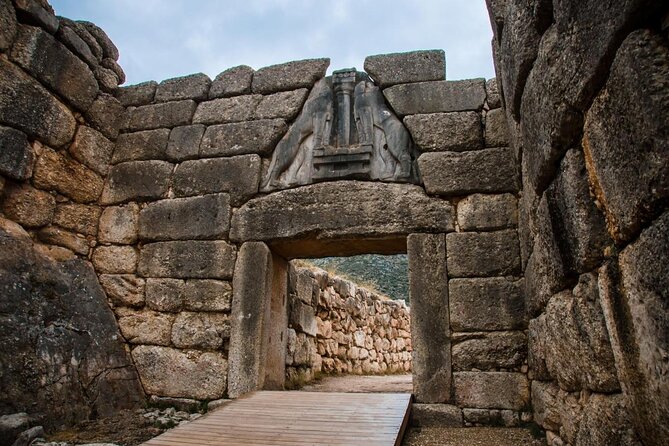
- Corinth Canal photo stop with quick views and a chance to picture the older Diolkos canal idea
- Mycenae in about two hours at a major Late Bronze Age palatial center tied to Agamemnon
- Seaside lunch break at Kakovatos Beach at a local beach restaurant (tickets not needed, but lunch is on you)
- Olympia, birthplace of the Olympic Games with two key hours at one of Greece’s most important sanctuaries
- Mini-group feel with pickup offered, so the day stays more personal than big bus sightseeing
The big idea: Athens to Olympia by way of myth and money
If you like Greece in story form, this route works. You’re not just dropping into ruins. You’re moving through places that shaped how Greeks thought about power, sport, and the gods. The day is built like a road map of contrasts: sea-level engineering at Corinth, Bronze Age might at Mycenae, then a beach lunch pause, and finally the sacred athletic stage of Olympia.
And because the group is small (up to 7), your time at each stop tends to feel usable. You’re less likely to be rushed through walls of stone while trying to keep track of what you’re seeing. You’re also more likely to ask a question and actually get an answer right there on the spot.
You can also read our reviews of more tours and experiences in Athens.


First stop: Corinth Canal and the Diolkos concept (photo time, then off again)
The day starts with a straightforward hit at Corinth Canal. You get about 30 minutes there, and the admission is free. This is a photo-and-look stop, not a long exploration. Think of it as a visual warm-up: water cutting through the land, plus that feeling that Greeks have been engineering travel routes here for ages.
What makes this stop more interesting than it sounds is the connection to the older idea of the Diolkos, an ancient canal system that dates to around 450 BC. Even if you can’t see everything from the roadside, it helps you frame the modern canal as part of a longer human obsession with shortening journeys between regions.
Practical note: since your time is short, don’t spend the whole half hour searching for the perfect angle. Grab a couple of good photos early, then spend the rest watching how the canal sits in the terrain. That’s where the “wow” often comes from.
Mycenae: walking around the kingdom of Agamemnon in two focused hours
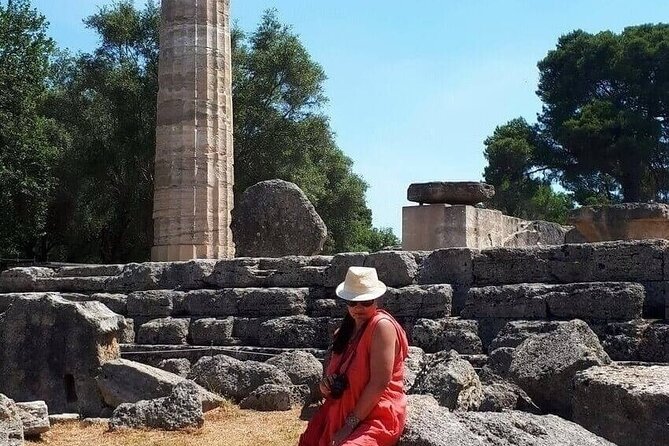
Next you head to Mycenae, and you’ll have about two hours at the archaeological site. This is one of the most meaningful stops on the day because it’s tied to two ways of understanding history: archaeology and myth.
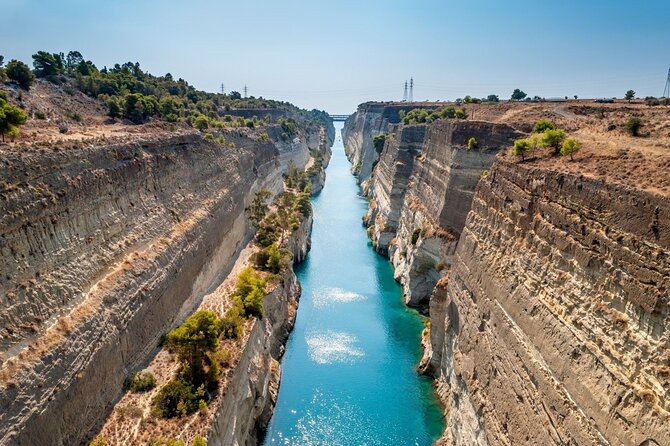
Mycenae is often described as rich in gold, and that’s not just poetic. In Greek tradition, the kingdom of Agamemnon is tied to the stories that Homer made famous. So when you stand in this landscape, you’re not just looking at walls and foundations—you’re also holding a cultural link to how later Greeks imagined the earlier world.
Then there’s the myth angle. According to Greek storytelling, Perseus—son of Zeus—was connected to the building of the fortress walls through help from Cyclopes, one-eyed giants. The key image here is the idea of stones no human could lift. Even if you don’t take myths as literal records, it’s still useful. It’s a cultural clue about what kinds of feats the people of later ages wanted to explain: how could such heavy work ever have happened?
What you should expect at Mycenae
You’ll be moving around a major fortified area, which means some walking on uneven ground is likely. The time window is long enough to get your bearings and still see the big highlights, but it’s not a slow wandering day. If you prefer museum-style pacing with lots of seating, this stop may feel more active than you expect.
Also plan for the tickets: Mycenae entry is not included. The site entry cost is listed separately (about 12 euro, or 6 euro in winter), so set aside that budget for each archaeological site on the itinerary.
Kakovatos Beach lunch: the break that actually matters on a long day
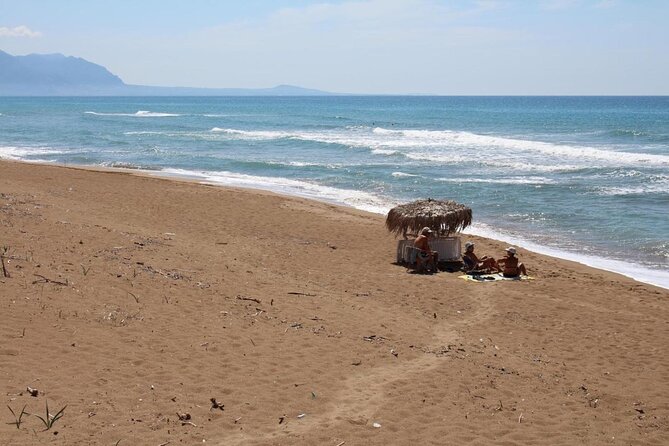
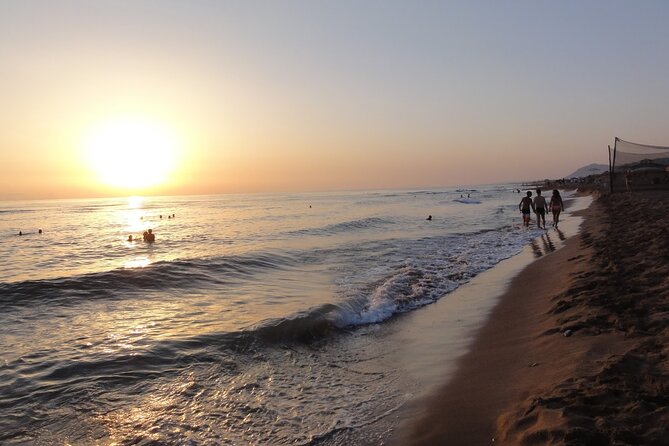
Then you’re sent to Kakovatos Beach for lunch at a seaside local restaurant, with about two hours there. This is not just downtime. It’s the breathing space that keeps a 13-hour day from feeling like a nonstop checklist.
You’ll get a meal in a beach setting, which is a real advantage here because the rest of the day is heavy on stone history. After Mycenae, you need a reset for your legs, your eyes, and your head. Two hours gives you enough room to eat without rushing, and still look around for a bit.
- All Day Cruise -3 Islands to Agistri,Moni, Aegina with lunch and drinks included
★ 5.0 · 4,958 reviews



How to use this stop well
Even with a relaxed lunch schedule, bring the same mindset you’d use on any long sightseeing day:
- Pace your meal so you’re not wiped out before Olympia.
- If you’re sensitive to sun, consider taking a short walk near the water and then returning to shade.
There’s no entry ticket needed for the beach area itself, so this part is simpler logistics than the archaeological sites.
Ancient Olympia: where the Olympic Games began, plus Zeus and famous sculpture names
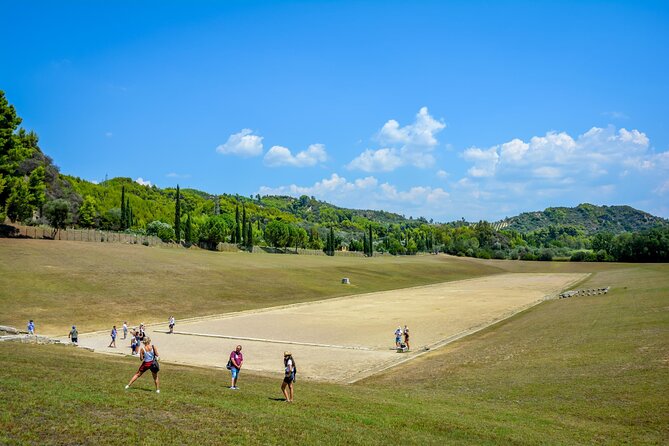
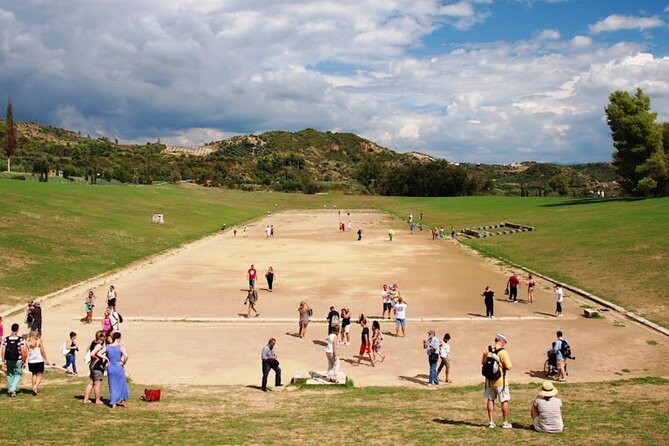
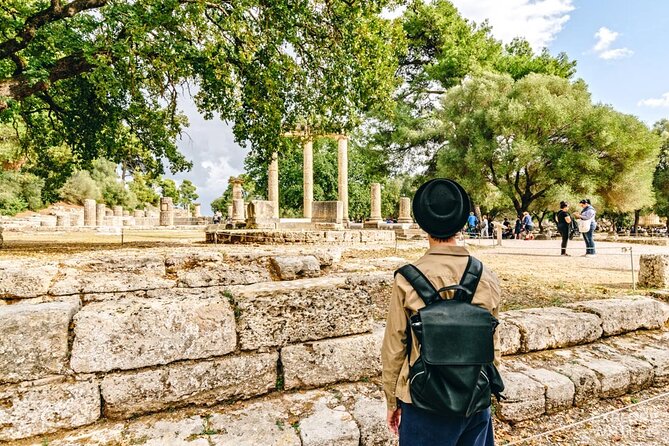
Finally: Ancient Olympia. You’ll have about two hours at the site. Olympia is described as the birthplace of the Olympic Games, and the Games here took place every four years from 776 BC to 393 AD. That span matters because it tells you this wasn’t a one-time event. It was a repeated, structured tradition tied to major public life.
Olympia also served as a sanctuary dedicated to Zeus, with worship dating back to about the 10th century BC. So when you walk through the grounds, you’re looking at both sport and religion—two parts of ancient Greek life that show up again and again in their culture.
What you’ll focus on at Olympia
The highlight is the way the site layers meaning. It’s not only about athletic history. You’ll also connect to the religious side through the temple decoration and related sculpture highlights. The description points to:
- The decoration of the temple of Zeus
- The Hermes of Praxiteles
- The statue of Nike of Paionios
You may want to approach this like a guided “spot the stories” experience. Those names are famous for a reason. When you hear them while standing in the broader Olympia context, they stop being random facts and start feeling like pieces of a single puzzle: art, power, faith, competition.
A practical consideration at Olympia
Because Olympia is an outdoor archaeological site, you’ll want comfortable shoes and a water plan. You’ll likely do more walking than you expect once you start following sightlines and gathering your bearings.
And again: site entry isn’t included, so you’ll pay separately. The cost is given as 12 euro or 6 euro in winter, so check what season you’re traveling.
The ride and the mini-group advantage: why small groups work on day trips
This tour is designed as a day-trip format from Athens. You start at 7:30 am from Ermou 80, Athina 105 54 and you end back at the meeting point. The vehicle is air-conditioned, and pickup is offered, which is a big deal on early departures.
The small-group size (up to 7) matters more than it sounds. On big bus tours, you often spend half your day waiting in crowds or being steered at a pace that’s too fast for real attention. Here, the structure feels built around usable chunks of time: a photo stop, two solid site blocks, a real lunch break, and then Olympia.
There’s also the included snack kit. You get Greek sesame ring koulouri and soda/pop. That’s a small detail, but it helps on days when breakfast was rushed. You’ll feel better walking and looking instead of thinking about food the whole time.
Timing and flow: how to set yourself up for a smooth 13-hour day
This is an all-day itinerary—about 13 hours total. That means it’s worth thinking like a commuter, not a tourist. You’ll be doing a lot of transitions: car time, then short site windows, then another drive, then lunch, then a final site block.
Here’s how I’d plan your mindset:
- Treat Corinth as a quick visual warm-up, not a deep-dive.
- Treat Mycenae and Olympia as your two main concentration zones.
- Use Kakovatos Beach lunch as your reset, not just a meal stop.
Because you’ll spend most of the day outdoors at archaeological sites and looking at landscapes, bring a layer for morning cool and late-day sun changes. Wear shoes you trust. You’re on real ground, not carpet.
Value for your money: when $698 per group makes sense
The price is $698.14 per group (up to 7 people). On paper, that can look like a lot—until you break it down by group size and what’s included.
What you get that reduces your cost elsewhere:
- Air-conditioned vehicle
- Included snacks and soda/pop
- A planned route that covers four major waypoints without you having to self-drive the whole circuit
- Pickup offered and mobile ticket mentioned as part of the setup
What costs extra:
- Lunch
- Archaeological site entry fees (about 12 euro, or 6 euro in winter)
So the value comes from convenience plus guided time allocation. If you’re traveling with friends (and can fill part of that group cap), your per-person cost can get much more reasonable than renting a car and paying for parking plus your own navigation.
If you’d rather pay only for admission and prefer total freedom over structure, then DIY might be cheaper. But if you want less stress and a clear plan for a long day, this type of tour tends to pay off.
Who should book this tour (and who might skip it)
This works best if you like:
- A themed day that connects myths to real locations
- Big-name Greek sites without having to design the logistics yourself
- Small-group comfort on long drive days
- A mix of archaeology and a seaside lunch break
Skip it if:
- You dislike driving days and want only one or two stops maximum
- You have tight mobility limits and need lots of frequent rest
- You prefer meals and pacing entirely at your own control (because lunch is not included)
Should you book this Mycenae and Olympia day trip from Athens?
I think you should book if you want a compact “greatest hits plus myth” day that still keeps time for actual viewing. Corinth Canal gives you a quick engineering wow, Mycenae adds the Bronze Age story of Agamemnon, Kakovatos Beach prevents the day from feeling like constant stone, and Olympia delivers the Olympic origin story with sanctuary and sculpture highlights.
Before you decide, do two quick checks: confirm your budget for site entry fees, and make sure you’re comfortable with an early start and a full 13-hour day. If that’s your style, this is a strong way to spend limited time in Greece—calm, focused, and built around places that genuinely shaped Greek legend and life.
FAQ
What time does the tour start, and where does it end?
It starts at 7:30 am at Ermou 80, Athina 105 54, Greece, and it returns to the same meeting point.
How long is the tour?
The duration is about 13 hours.
What are the main stops on the itinerary?
You’ll visit Corinth Canal, the Archaeological Site of Mycenae, Kakovatos Beach for lunch, and the Archaeological Site of Olympia.
Are admission tickets included for Mycenae and Olympia?
No. Entrance to the archaeological sites is not included. The cost is listed as 12 euro or 6 euro in winter.
Is pickup available?
Pickup is offered.
What is the cancellation policy?
You can cancel for a full refund up to 24 hours before the experience start time. Free cancellation is listed, and changes within 24 hours aren’t accepted.
More Tour Reviews in Athens
- All Day Cruise -3 Islands to Agistri,Moni, Aegina with lunch and drinks included
★ 5.0 · 4,958 reviews