REVIEW · ATHENS
From Athens: 4-Days Classical Tour with Meteora
Book on GetYourGuide →Operated by G.O.TOURS · Bookable on GetYourGuide
Ancient Greece, compressed into 4 days.
This is the kind of itinerary that moves with purpose: you’ll sweep from Peloponnese classics up to Delphi, then finish with Meteora’s monasteries perched on enormous rock towers. What makes it especially interesting is the mix of major archaeological sites, plus scenic driving routes that connect the dots across central Greece.
I really like the focus on big, unmistakable stops—Epidaurus for its famous theatre acoustics, and Meteora for the dramatic monasteries and Byzantine artwork you see up close. I also like that you’re not stuck figuring things out alone; you get a professional guide and a comfortable, air-conditioned coach with Wi‑Fi onboard.
The main consideration is the pace. You’ll do a lot of driving between sites, and because lunches and drinks aren’t included, you’ll want to plan for meals during longer travel stretches.
In This Review
- Key highlights you can count on
- Athens to Peloponnese: a classic route built for first-timers
- Corinth Canal and Epidaurus: the theatre stop you’ll feel in your chest
- Mycenae and the Tomb of Agamemnon: myth becomes geography
- Olympia at night and again in the morning: Zeus, stadium seats, and the torch spot
- From Rion to Antirion and into Delphi: Apollo’s world, plus a scenic reset
- Delphi’s archaeology and museum: the oracle site that makes sense with a guide
- Meteora monasteries: Byzantine art above the rocks
- Thermopylae quick stop and the Leonidas viewpoint
- Price and comfort: what $711 buys you (and where to watch your expectations)
- Practical things to plan before you go
- Should you book this 4-day Classical Tour with Meteora?
- FAQ
- What is the duration of the tour?
- Where does the tour start and end?
- How much does the tour cost?
- What’s included in the price?
- Are lunch and drinks included?
- Which major sites are visited?
- What languages are the guides available in?
- Is there an accommodation tax?
Key highlights you can count on
- Epidaurus theatre: the stop most people remember for the way the ancient design still works
- Mycenae and the Tomb of Agamemnon: myth translated into stone, walls, and real archaeological layout
- Olympia morning program: Sanctuary of Zeus, ancient stadium, the torch-spot area, plus the museum
- Corinthian Bay bridge crossing: a quick scenic break that changes the scenery fast
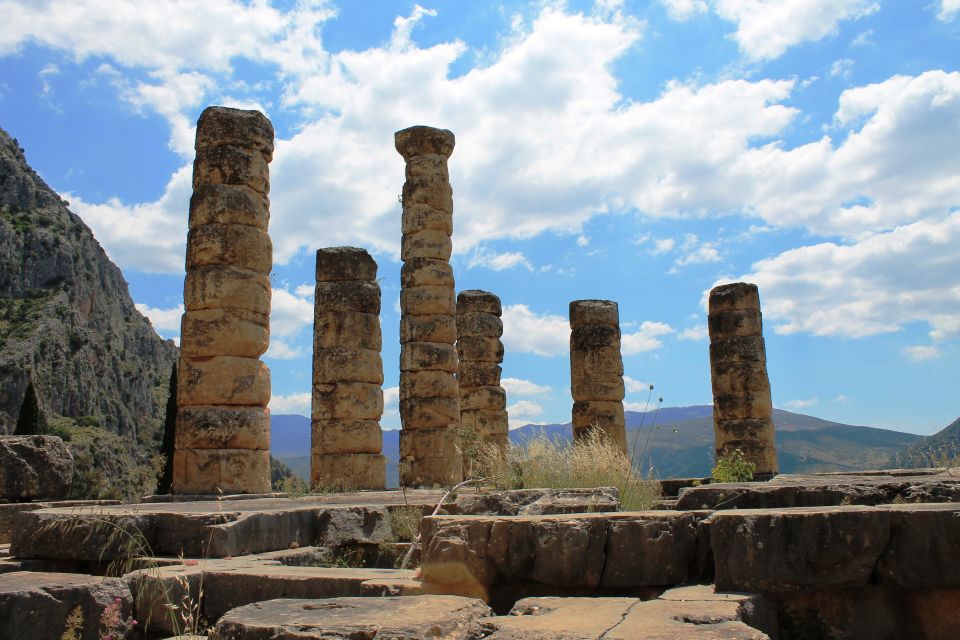
- Delphi’s oracle site + museum: two solid doses of Apollo’s world in one day
- Meteora monasteries: monasteries high above the plains, with Byzantine art details worth slowing down for
Athens to Peloponnese: a classic route built for first-timers
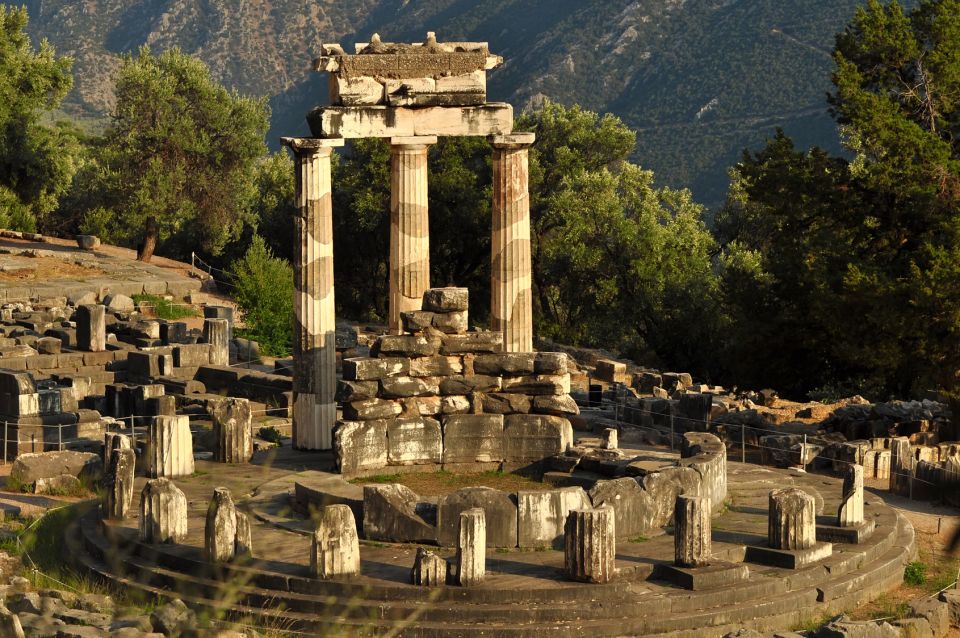
Starting in Athens and then fanning out across the Greek mainland is a smart way to see a lot without juggling trains and rental cars. You’ll begin with a few different possible departure points, then step into a luxury air-conditioned coach and settle in. The overall feel is structured and easy: your guide handles the talking, the timing, and the context, while you focus on watching the countryside roll by.
This tour is also a good match for people who want “the highlights” without turning every stop into homework. You’ll move through eras—prehistory to the Roman period, then Byzantium, the Crusades, and up to modern Greece—because each site naturally covers a different chapter of the story. And yes, you’ll spend time on the road. Still, the itinerary breaks up the long drives with meaningful stops, photo pauses, and mornings that start with major archaeology rather than just scenery.
One more practical point: you’re traveling as a group on a coach, so it helps to pack a few small comforts (water bottle, light layers, and something simple for snacking during transfers). The route is busy, but it’s not chaotic.
You can also read our reviews of more tours and experiences in Athens.


Corinth Canal and Epidaurus: the theatre stop you’ll feel in your chest
Day 1 begins with a coastal road and a short stop at the Corinth Canal. It’s brief, but it’s a strong warm-up: you get a clear sense of why this area mattered for travel and power. Even without lingering, it sets the tone for the rest of the day—Greece isn’t just ruins; it’s also geography that shaped history.
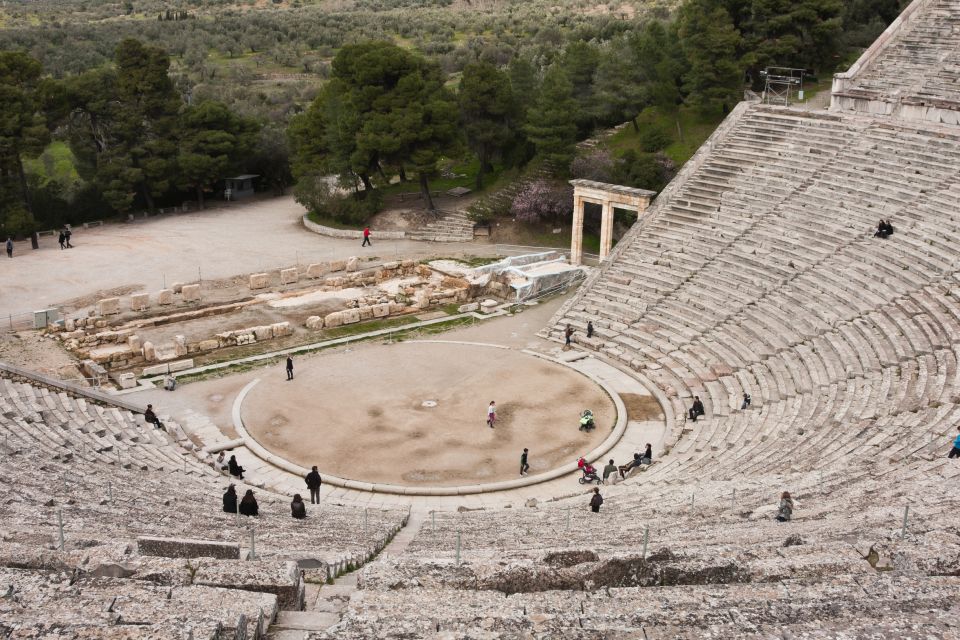
Then you hit Epidaurus, one of the most famous theatre stops in the country. The standout here is the theatre’s remarkable acoustics, which is exactly the kind of detail you’ll remember later when you’re comparing different ancient sites. Epidaurus is also a calmer change of pace after earlier travel stretches. You’re not sprinting between tiny markers; you’re looking at a single major monument and taking in how ancient Greeks used architecture for real human experience.
Is there a drawback? With one major stop like Epidaurus, the timing matters. If you’re sensitive to crowds or you need extra quiet, you may want to arrive with the mindset that this is a top attraction and people will be around. The upside is that the guide experience usually helps you get more out of the space quickly.
Mycenae and the Tomb of Agamemnon: myth becomes geography
After Epidaurus, the day keeps building toward Greece’s legendary age. You’ll pause in Nafplio for a short photo stop, then continue on to Mycenae.
At Mycenae, you’ll visit the archaeological site and the Tomb of Agamemnon. This is where the tour’s “classical highlights” approach really pays off. Instead of only hearing names, you’re seeing how they sit in the landscape—how gates, ruins, and burial context fit together. It’s also one of those stops where a guide can make a big difference, because the site is easier to understand when you know what each area represents.
One small practical note: Mycenae involves walking over uneven ground and taking in broad views. You don’t need special gear, but sturdy shoes matter more than you’d think if you’re coming from a hotel or a long coach ride.
By the time you move on toward Olympia—passing towns like Tripolis and Megalopolis—you’ll feel how the itinerary connects regions. It doesn’t just jump from one postcard to another; it threads the middle of the Peloponnese into the story.
Olympia at night and again in the morning: Zeus, stadium seats, and the torch spot
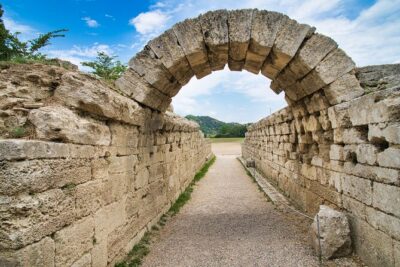
You sleep in Olympia, and that’s a smart choice because Day 2 starts strong. In the morning, you visit the Sanctuary of Olympian Zeus, the ancient stadium, the spot where the torch of the modern Olympic Games is lit, and the Archaeological Museum.
This is a rare combination: you get the sacred grounds (Zeus), the sports architecture (the stadium), a direct modern connection (the torch area), and then the museum where you can anchor what you’re seeing. That museum stop is especially valuable because it helps you connect decorative fragments and objects to the big structures outside.
In other words, you’re not just looking at stones. You’re building a mental map: what this place looked like, how it functioned, and why it mattered. It’s also the kind of day that rewards even moderate attention. If you listen, you can feel the logic of the site.
Dinners are included on this tour as per the itinerary, and you’ll have one in Olympia. One review note to consider: some people felt the dinners skew more toward buffet-style choices rather than deeply traditional Greek menus. That doesn’t make the food bad—just plan your expectations. If you care a lot about eating like a local, you might want to supplement with your own lunch discoveries on free time (though lunch is not included).
From Rion to Antirion and into Delphi: Apollo’s world, plus a scenic reset
Day 2 transitions from Olympia to Delphi. You’ll drive through the plains of Ilia and Achaia, then cross the impressive bridge that goes from Rion to Antirion. That bridge crossing is more than a commute detail. It’s a visual reset. When you come from a morning of stadium and sanctuaries, switching to a wide water-and-bridge view helps you process everything you’ve already seen.
On the way, you pass Nafpactos (Lepanto) and Itea. The tour doesn’t position these as long stays, but you get the benefit of variety—more than just highway scenery.
When you reach Delphi for dinner and overnight, the pace shifts again. Delphi is one of Greece’s most famous “read the world differently” sites: it’s the oracle context, the mythic gravity, and the way the site feels perched and dramatic. In the afternoon/evening you’re checking in, then Day 3 goes deeper.
- All Day Cruise -3 Islands to Agistri,Moni, Aegina with lunch and drinks included
★ 5.0 · 4,958 reviews



Delphi’s archaeology and museum: the oracle site that makes sense with a guide
Day 3 includes a full stop at Delphi’s archaeological site and the museum. This is where you really get to see why Delphi is often called the most famous oracle in the ancient world. The structures and terraces can feel scattered if you don’t have context, but with a good guide you’ll understand what you’re looking at and why it mattered to people who believed answers came from the sacred center.
The museum adds essential glue. Without it, you might walk away thinking only about the big view and the famous name. With it, you’re connecting inscriptions, artifacts, and presentation to the larger themes the oracle represented.
After Delphi, you continue to Kalambaka, a small town located at the foot of Meteora’s rock complex. Staying here is practical. It puts you close to the monasteries so you’re not doing a long round-trip on Day 4.
Dinner and overnight are included again as per the itinerary, so you’re set for the final day—when the scenery does the heavy lifting.
Meteora monasteries: Byzantine art above the rocks
Day 4 is the big finale: Meteora. The monasteries are perched on enormous rock formations that seem impossible, and that’s exactly what makes them special. You’ll see standing, ageless monasteries and get views that feel like you’re looking over the Greek mainland from a different planet.
But the tour isn’t only about the drama of height. It also highlights Byzantine art, including exquisite examples you can see in the monastic setting. This is a key value point: Meteora works best when you slow down enough to notice what’s inside and on display. If you’re thinking it’s all just a viewpoint, you’ll miss part of the appeal.
Practical tip: wear shoes with grip and bring something for changing weather. Meteora is outdoors, and even when the day looks sunny from the coach, conditions near the rocks can shift. If your group moves quickly between viewpoints, it helps to know that the most meaningful minutes are usually the ones where you pause, look, and let the guide explain what you’re seeing.
Then you head back toward Athens via Trikala and Lamia, with a stop for Thermopylae.
Thermopylae quick stop and the Leonidas viewpoint
The return leg includes a short stop to see across the road from Leonida’s Monument at Thermopylae. It’s not a long visit, but it’s a meaningful punctuation mark. After Meteora’s religious and artistic focus, the Thermopylae stop returns you to a story about resistance and myth shaping identity.
You’ll arrive back in Athens early in the evening, which is another quiet advantage. After a 4-day loop across major sites, you don’t end up stuck in late-night transfers or vague arrival times.
Price and comfort: what $711 buys you (and where to watch your expectations)
At around $711 per person for 4 days, this tour is priced like an all-in classical circuit with transport, guide time, and entry fees included. That’s the core value. You’re paying for fewer logistics headaches: a coach, scheduled visits, and professional interpretation at major sites.
Comfort-wise, reviews point to a well-organized trip with a comfortable bus and accommodation options that can vary. One review specifically called out an update to a 4-star hotel option, with people praising both the rooms and the staff experience. Another review noted that an upgraded hotel option was worth it, while non-upgraded selections were less liked by co-travelers. Translation: if you see an upgrade choice, it may matter to your overall comfort more than you’d think.
Food is another area to calibrate. Dinner is included as per the itinerary, but one review mentioned that dinner choices felt more like safe buffet style rather than deeply Greek authentic meals. That doesn’t change the fact that you’re fed, but if you plan your trip around food identity, you might want to treat dinners as included fuel and use lunch (not included) for more targeted, local meals.
Who runs the show matters too. Reviews mention excellent guides like Georgia Dova and Anthony, and also Evie as a professional guide. Drivers named John and Socrates were also singled out for good service. While your exact pairing will depend on the departure, this tour appears to invest in the human part that makes the history stick.
Practical things to plan before you go
Because this is a coach-based loop, your comfort depends on small choices:
- Lunch isn’t included, so plan for buying food on your own during the day.
- Overnight accommodation is included, but there’s an accommodation tax you pay at the hotel prior to check-out. The amount depends on star rating: €4 for 5-star, €3 for 4-star, and €1.50 for 3-star per overnight per room.
- Entrance fees are included, which is a big deal for value on a tour like this.
- You’ll have free Wi‑Fi on the bus, useful for quick check-ins or offline maps.
- The guide languages offered are French, English, and Italian, so you can match the language you’ll understand best.
Also, pack for walking and for weather. You’ll see big outdoor sites like theatres and archaeological areas plus a monastery day that’s very much outdoors.
Should you book this 4-day Classical Tour with Meteora?
If you want a well-paced, highlights-first circuit that connects the Peloponnese to Delphi and ends at Meteora, this tour is a strong bet. It’s especially good for first-timers who want major sites handled in a logical flow with a professional guide explaining what matters.
I’d book it if:
- You want Epidaurus, Mycenae, Olympia, Delphi, and Meteora without doing separate trips.
- You value guided context over just looking at ruins and hoping they make sense.
- You don’t mind a lot of driving in exchange for seeing a broad cross-section of Greece.
I’d think twice if:
- You’re a strict foodie who expects dinners to be consistently local and very traditional.
- You dislike bus tours or you struggle with lots of moving days.
Overall, for the combination of major archaeological stops, a museum mix, and the Meteora finale, it’s good value—and it’s the kind of trip that leaves you with a clear mental map of Greek history in the places where it actually happened.
FAQ
What is the duration of the tour?
The tour duration is 4 days.
Where does the tour start and end?
The start meeting point may vary depending on the option booked, and the tour ends back at the same meeting point.
How much does the tour cost?
The price is listed as $711 per person.
What’s included in the price?
Included are overnight accommodation, a professional guide, transport by luxury air-conditioned coach, meals as per the itinerary (breakfast and dinner), entrance fees, and free Wi‑Fi on the bus.
Are lunch and drinks included?
No. Lunch and drinks are not included.
Which major sites are visited?
You’ll visit Epidaurus, Mycenae (including the Tomb of Agamemnon), Olympia (sanctuary areas, stadium area, and museum), Delphi (archaeological site and museum), and Meteora.
What languages are the guides available in?
The live tour guide is available in French, English, and Italian.
Is there an accommodation tax?
Yes. There is an accommodation tax guests must pay at the hotel prior to check-out, based on hotel star rating: €4 (5-star), €3 (4-star), or €1.50 (3-star) per overnight per room.



More Tours in Athens

More Tour Reviews in Athens
- All Day Cruise -3 Islands to Agistri,Moni, Aegina with lunch and drinks included
★ 5.0 · 4,958 reviews