REVIEW · ATHENS
Corinth Canal, Mycenae, Nafplio and Epidaurus Private Tour from Athens
Book on Viator →Operated by LS Tours · Bookable on Viator
A long day, but the kind with big payoffs. This private Athens outing strings together the Corinth Canal, Mycenae, Nafplio, and Epidaurus so you can see Greece’s ancient layers and a gorgeous waterfront town in one go. I like how the format is part sightseeing, part independence: you get drop-offs, background talk from the driver, then you explore at your own pace inside the major sites.
Two things I especially like are the freedom to set your rhythm and the way the day flows. At stops like Mycenae and Epidaurus, you’re not trapped on a tight march; you can linger where you care most, like the view from the hilltop ruins or the theater seating. Another plus is the drive itself: the stops are far enough apart that having a private, air-conditioned car (with WiFi and bottled water) really matters when you’re doing this much in a day.
One drawback to consider: it’s a long 8–9 hour day with real walking and steep bits. Also, the driver is not an official site guide, so if you want deep, on-the-ground interpretation inside every ruin, you may need to add a licensed guide or plan to read up on the sites beforehand.
In This Review
- Key things to know before you go
- The smart Athens loop: Canal to Mycenae to Nafplio to Epidaurus
- Pickup, driving time, and what private transport gets you
- Corinth Canal: the short ride that sets the tone
- Mycenae citadel: Lions Gate, palace views, and the hilltop feeling
- Treasury of Atreus: the short stop that still counts
- Palamidi Castle and Nafplio: fortress views, Venetian-era angles, and lunch time
- Asklepios Sanctuary and Epidaurus Theater: from healing cult to famous stage
- Epidaurus Museum, then the 2-hour return drive to Athens
- Price and value: what you pay, what you still need to budget
- Pacing, walking, and the “driver not inside the ruins” reality
- Tips to make your day smoother (and not feel rushed)
- Who should book this private Athens day trip?
- Should you book this Corinth Canal to Epidaurus tour from Athens?
- FAQ
- Does this tour include admission tickets for the archaeological sites?
- Are you guided inside the ruins and museums?
- How long is the day trip from Athens?
- Is pickup available from Athens hotels and Airbnb stays?
- What’s included in the tour besides transportation?
- Is cancellation possible if weather is bad?
Key things to know before you go
- Corinth Canal’s views: a short ride on the water plus a high viewpoint over the isthmus and limestone walls.
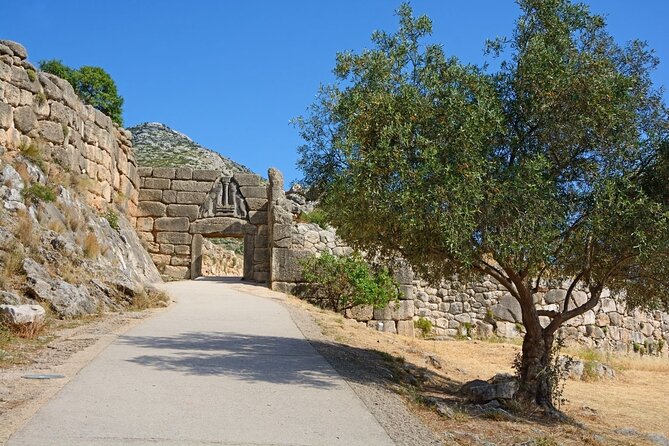
- Mycenae time to breathe: 1 hour at the citadel area, entering through Lions Gate and taking in the palace area.
- A quick hit at the Tomb of Agamemnon: the Treasury of Atreus stop is short, but it’s one of the Bronze Age highlights.
- Nafplio + Palamidi combo: fortress views from 216 meters up, then relaxed town wandering by the sea.
- Epidaurus is the show: UNESCO-listed theater plus the museum with reconstructed temples and columns.
- Tickets and walking are on you: several admissions aren’t included, and you’ll want comfy shoes.
The smart Athens loop: Canal to Mycenae to Nafplio to Epidaurus
This is a classic Peloponnese pairing, and the order makes practical sense. Starting with the Corinth Canal gives you immediate scenery and a quick sense of how geography shapes Greek life—then you shift straight into the power centers of the Bronze Age at Mycenae. After that, the day becomes more “human-scale,” with Nafplio giving you a real break for strolling, snacks, and photos. The finish at Epidaurus brings you from palace and fortress life into religion, healing culture, and the world-famous theater setting.
If you like days that feel varied (ancient sites plus a proper town stroll), this route is built for you. It’s also a good fit if you want to avoid the stress of renting a car for a one-day sprint outside Athens.
The most important mindset shift: you’re not being “escorted through museums.” You’re dropping in, exploring at your own pace, then moving on. Your enjoyment will be highest if you’re comfortable reading signs, looking closely, and letting the place do the talking.
You can also read our reviews of more private tours in Athens


Pickup, driving time, and what private transport gets you
Your day starts with pickup from your hotel, Airbnb entrance, or the Piraeus port area, depending on where you’re staying. There’s about an hour of driving before the first major stop, and then you’ll keep moving between sites for the rest of the day.
What you gain with a private car is simple: you don’t have to coordinate with strangers, you don’t wait around for transfers, and you can usually get to the closest drop-off points. In the real world, that translates into more time on the ground and less time buffering in parking lots or on street corners.
Also, your comfort matters here. This is a big loop, and the tour includes an air-conditioned vehicle, WiFi on board, and bottled water. That sounds basic, but on a hot day it keeps you from burning your energy early—especially before Mycenae and Palamidi.
Finally, the private setup means your group’s pace is the pace. Several guides in past experiences (for example, George, Alex, and Nico) have been praised for keeping things flexible, including adjusting how long you spend at each location.
Corinth Canal: the short ride that sets the tone
You’ll spend about 20 minutes at the Corinth Canal. The canal was constructed in 1893, and the best part is getting your eyes up. From high up, you can take in the Corinth’s isthmus and the steep limestone walls—very different from the usual “ruins on a hill” scene you’ll see later.
This stop is also a nice mental warm-up. It’s not heavy walking, and it gives you time to orient yourself for the day: you’re going to see how terrain turns into strategy. Later, you’ll literally climb hills at Mycenae and Palamidi. The canal is an early preview of that theme.
Practical tip: bring your camera ready for viewpoints, not just the water. The canal area is built for looking outward, so if you’re only thinking about the ride, you might miss the best angles.
Mycenae citadel: Lions Gate, palace views, and the hilltop feeling
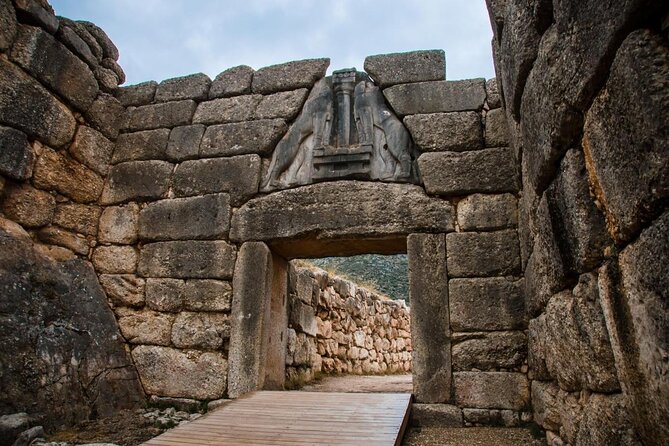
Mycenae is where the day becomes intensely archaeological. You get about 1 hour at the Archaeological Site of Mycenae. You enter through Lions Gate, then wander through the citadel ruins and the area connected to the royal palace.
The layout forces you to move, and that’s good. Mycenae sits on a hill, so even if you take it easy, you’ll feel the altitude shift as you climb. Several people note how the topography makes the past feel more immediate than a flat-site museum ever could.
Here’s what I’d plan to focus on during your hour:
- The gate area first, because it helps you understand the fortification logic before you wander.
- The palace zone and surrounding walls/structures, where your eyes start connecting the architecture to status and power.
- The views from the hill—because the ruins were built to command sightlines.
A small but important reality check: Mycenae involves steep inclines and uneven ground. If you’re traveling with anyone who struggles with steps, it’s worth thinking about how long you want to stay on the higher portions. The good news is you can self-time it since you’re exploring at your own pace.
Treasury of Atreus: the short stop that still counts
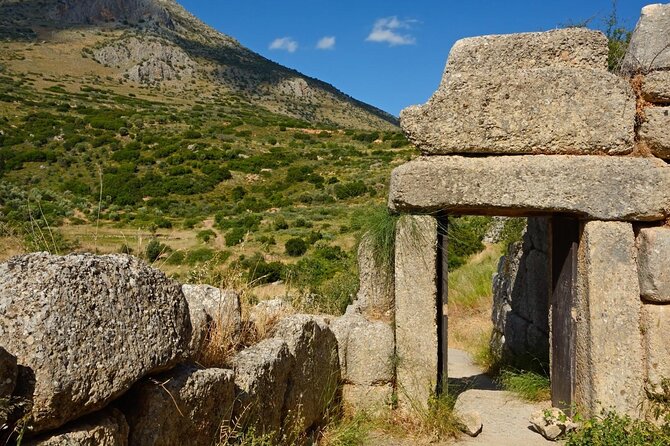
After Mycenae, you’ll make a quick 15-minute stop at the Citadel and Treasury of Atreus, also known as the Tomb of Agamemnon. This is a tholos (beehive) tomb on Panagitsa Hill, built during the Bronze Age around 1250 BC.
Fifteen minutes sounds brief, but it’s enough to take in the shape and understand why people get excited about this specific structure. The value here is not “completing a circuit,” it’s getting a strong impression of one standout piece of Bronze Age engineering before you continue on.
If you’re the type who likes to read every sign, you might want to slow down on the edges and then decide on the spot whether to keep moving or linger.
- All Day Cruise -3 Islands to Agistri,Moni, Aegina with lunch and drinks included
★ 5.0 · 4,958 reviews





Palamidi Castle and Nafplio: fortress views, Venetian-era angles, and lunch time
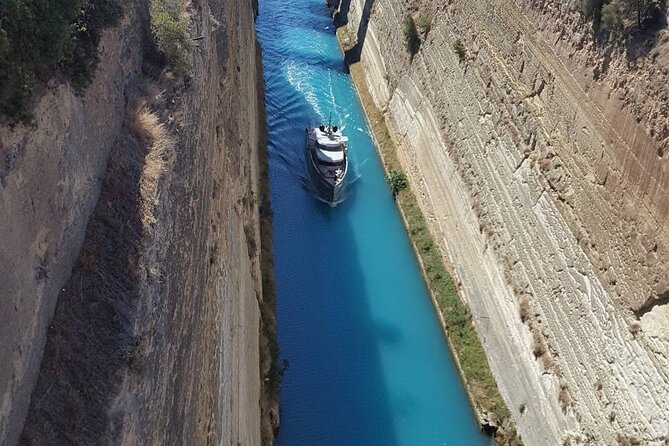
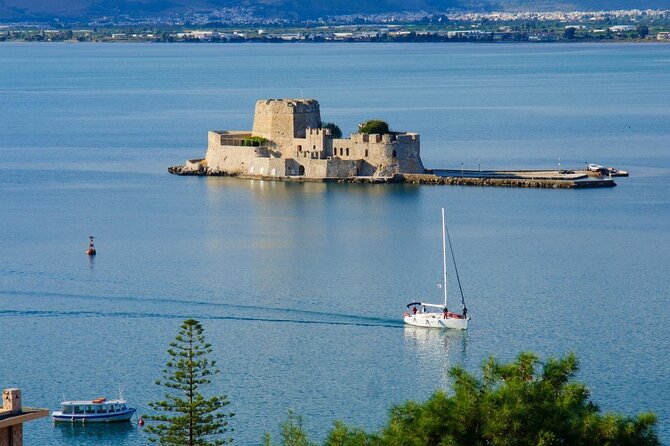
Next comes Palamidi Castle, with about 30 minutes on the hilltop fortress. Palamidi is a fortress above Nafplio, built by the Venetians during their second occupation from 1686–1715. It sits on a 216-metre-high hill, which is exactly why people love it: the views are the whole point.
Then you drop into Nafplio for roughly 1.5 hours of free time. This is your chance to be tourist instead of archaeologist. Browse shops, pick up small handmade souvenirs, and take a real lunch break.
One of the most practical tips I can share from earlier visitors: plan to eat in Nafplio when you have time there, not after you’re exhausted on the road back. Multiple people specifically praised a lunch stop recommendation in Nafplio—one example named Bounos Fish Tavern—as a memorable meal in the middle of the day.
What to expect in town:
- You’ll want comfortable shoes again. The fortress requires effort, and Nafplio’s streets are lively and walkable.
- Keep your energy for the return steps. If you overdo the castle walking, lunch can become a sit-and-recover situation.
If you’re traveling with someone who loves views as much as ruins, this segment is a sweet spot. It’s also a nice change of pace after the more intense Mycenae terrain.
Asklepios Sanctuary and Epidaurus Theater: from healing cult to famous stage
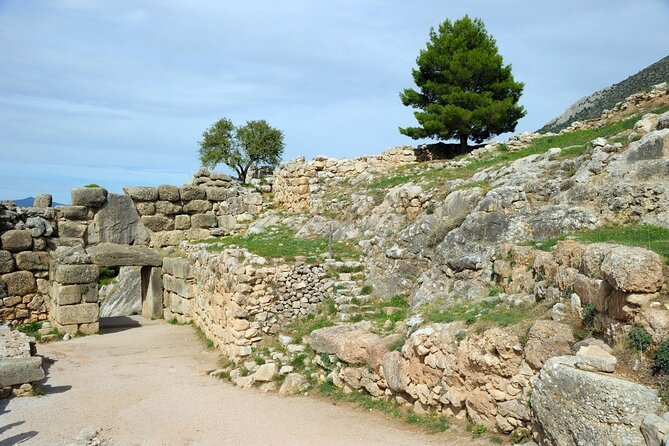
You’ll then head to the Sanctuary of Asklepios for about 15 minutes. This place matters because it represents an early organized “healing” setting. It’s tied to the history of medicine and shows the shift from belief in divine healing toward more scientific thinking.
This stop is short, but it’s a useful bridge. It explains the mindset behind Epidaurus. You’re not just walking into a theater; you’re stepping into a world where religion, health, and ritual shaped daily life.
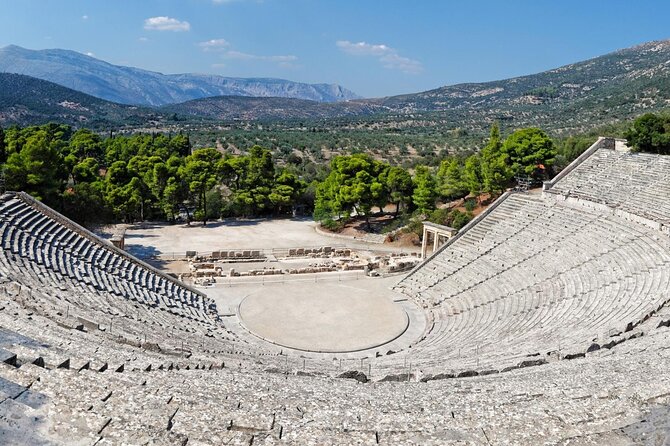
Then comes the big one: the Ancient Theatre of Epidaurus, with about 30 minutes. It’s described as world-renowned, one of Greece’s most popular archaeological sites, and it’s listed as UNESCO World Heritage.
Here’s how to get real value from the time you have:
- Take a moment to look over the seating before you focus on any one section.
- Imagine how it would feel to sit in the stone tiers. Even if you don’t know the full details, your body understands what “designed for sound and sight” means.
Finally, you’ll visit the Epidaurus Archaeological Museum for about 30 minutes. The museum is noted for reconstructions of temples and columns. If you’ve been staring at ruins all day, reconstructed elements can help your brain connect what you saw outside with what the structures likely looked like in use.
Epidaurus Museum, then the 2-hour return drive to Athens
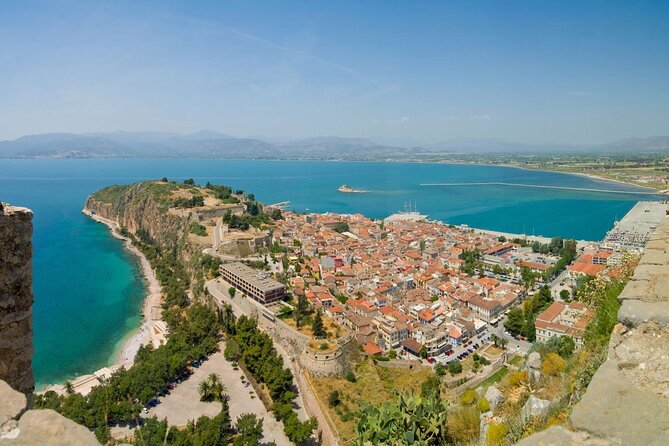
After the museum, you’ll have about 2 hours of driving back toward Athens. By then, your day is mostly “processing time.” This is where comfort helps: the car is air-conditioned, and you have a WiFi connection for maps or quick trip planning if you need it.
In a day like this, the best memories aren’t just the loud highlights. They’re the in-between moments: the view from Palamidi, the feeling of climbing up through Mycenae’s grounds, then the quiet shock of seeing Epidaurus’ theater scale in person.
Price and value: what you pay, what you still need to budget
The tour price is listed at $228.28 per person for a private day trip lasting about 8 to 9 hours. That price covers private transportation with an air-conditioned vehicle, WiFi, bottled water, and the driver’s on-the-road commentary.
What’s not included is important and should shape your budget:
- Archaeological Site Mycenae: €20 per person
- Citadel and Treasury of Atreus / Tomb of Agamemnon: not included (the tour lists the stop with no included admission)
- Palamidi Castle: €20 per person
- Sanctuary of Asklepios: not included (listed as no admission included)
- Epidaurus Ancient Theatre: €20 per person
- Epidaurus Archaeological Museum: €20 per person
Based on the included admission prices provided, you should assume an additional significant day-of ticket cost. At the very least, the stated paid admissions add up quickly (for example, four €20 admissions total to €80). Since not every stop lists a price, I recommend you check the exact admissions for the specific stops when you book, so there are no surprises.
Here’s the value logic that helped me make sense of it:
- If you’re doing these sites independently, you’d still be paying for transport, fuel/time, and tickets. The private car reduces the friction cost.
- If you’re traveling as a couple or small group, the private format can feel less expensive per person than you’d expect because you’re buying convenience, close drop-offs, and a driver who can answer questions en route.
- The driver is not entering the sites with you, so the value is primarily transport + pacing + in-car context.
If you care deeply about archaeology and want someone walking you through details inside each site, you might want to consider adding a licensed tour guide (the tour description notes this option is available).
Pacing, walking, and the “driver not inside the ruins” reality
This tour works best when you’re hands-on with the sites yourself. Your driver can provide commentary in fluent English, but they won’t enter the archaeological sites with you. In practice, that means:
- You get context while traveling and at the drop-offs.
- Inside the ruins, you depend on signage, your own reading, and whatever you prepared beforehand.
This is where people’s experiences can split. Some guides named in past trips—like Pericles, Nico, George, Alex, Dimitri, and Nikos—were praised for flexibility and for answering lots of questions. One person even highlighted that the driver let them decide the order that suited their timing, and another described a guide who shared filming/viewpoint suggestions.
On the other hand, if you were hoping for a deep, narrated walk through every site from start to finish, you may feel under-served by a non-licensed driver format. That’s not a deal-breaker, but it’s a match-or-mismatch thing. If you’re history-nerdy, I’d suggest doing a bit of background reading on Mycenae and Epidaurus before you go, or upgrading with a licensed guide if that’s offered for your day.
Tips to make your day smoother (and not feel rushed)
Here are the practical moves I’d use:
- Wear grippy shoes: Mycenae and Palamidi both involve steep and uneven areas.
- Plan your priorities before you’re dropped off: decide what you want to see most at Mycenae (gate area vs palace vs view).
- Treat Nafplio as your reset button: use the free time for a slow stroll, not just grabbing lunch.
- Use the car time smartly: WiFi can help you look up what you’re seeing next, which makes the museum and theater make more sense.
- Ask for viewpoint/photo angles: several guides were praised for suggesting good angles for photos or filming. If your driver offers ideas, take them—this is where a good communicator can save you time.
Also, expect that the day is weather-dependent. Epidaurus and the theater area are outdoor. If conditions aren’t good, you may be offered a different date or a full refund.
Who should book this private Athens day trip?
I think this tour is an excellent fit for:
- Couples and small groups who want private pacing without the hassle of planning driving routes.
- Travelers who enjoy ancient sites but also want a real break in a seaside town like Nafplio.
- People who prefer to explore on their own inside ruins while still getting helpful context on the ride.
It may be less ideal if:
- You’re expecting a fully licensed, inside-the-site guide experience at every stop.
- Your group struggles with walking on steep, uneven ground.
Should you book this Corinth Canal to Epidaurus tour from Athens?
Yes—if you want a full Peloponnese hits-in-one-day plan with maximum time on the ground and less transit stress. The combination of Corinth Canal, Mycenae’s hilltop citadel area, Nafplio’s town time, and Epidaurus’ theater is a strong “one day, many moods” package.
I’d book it if you can handle a long day and you’re comfortable exploring ruins independently. If you’re the type who needs every inscription explained as you stand in front of it, consider adding a licensed guide option—or do your pre-reading so the self-guided time feels satisfying instead of flat.
If you want a day that balances big ancient set pieces with a genuinely pleasant town break, this is one of the better ways to do it.
FAQ
Does this tour include admission tickets for the archaeological sites?
No. Tickets for the Archaeological Site Mycenae (€20), the Ancient Theatre of Epidaurus (€20), the Epidaurus Archaeological Museum (€20), and Palamidi Castle (€20) are not included. Other stops are listed as admission not included as well.
Are you guided inside the ruins and museums?
No. The driver is not an official tour guide and will not enter the archaeological sites with you. They can still answer questions and provide commentary in fluent English.
How long is the day trip from Athens?
It runs about 8 to 9 hours total, with multiple stops along the Peloponnese and a return drive to Athens.
Is pickup available from Athens hotels and Airbnb stays?
Yes. Pickup is offered from your hotel lobby or the entrance of your Airbnb apartment. Pickup is also listed for the Piraeus port.
What’s included in the tour besides transportation?
The tour includes bottled water, an air-conditioned vehicle, and WiFi on board, plus private transportation.
Is cancellation possible if weather is bad?
The experience requires good weather. If it’s canceled due to poor weather, you’ll be offered a different date or a full refund.




More Private Tours in Athens


More Tours in Athens


More Tour Reviews in Athens
- All Day Cruise -3 Islands to Agistri,Moni, Aegina with lunch and drinks included
★ 5.0 · 4,958 reviews