REVIEW · ATHENS
Ancient Athens E-Bike Tour
Book on Viator →Operated by AyoToursAthens · Bookable on Viator
Want Athens in two easy hours?
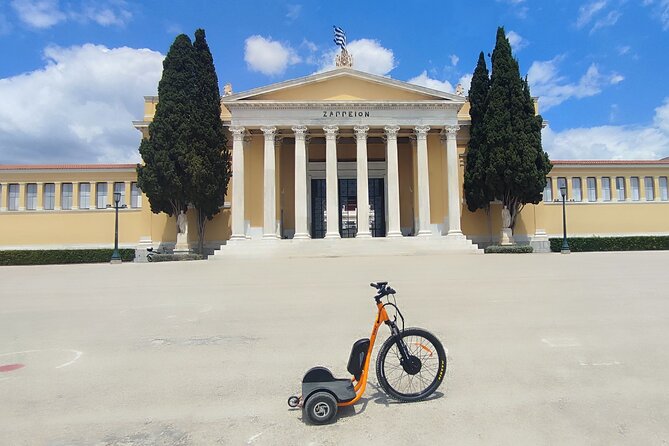
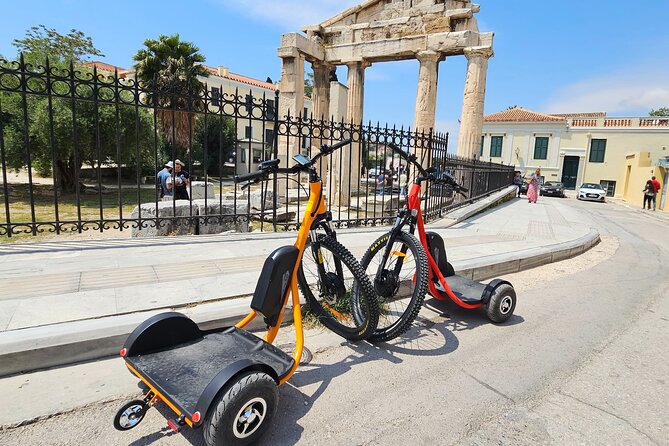
This Ancient Athens E-Bike Tour uses a standing e-bike (a Trikke), so you can cover big sights fast without the stress of constant uphill walking. I like the standing e-bike idea because it keeps the focus on views and monuments, not sore legs. I also like the small-group feel, since it makes the whole route feel personal instead of rushed. The main drawback to plan for: key archaeological-site tickets are not included, so your day budget will likely run a bit higher than the tour fee.
To keep it from feeling like a checklist, the guide can tailor the route based on what you already saw. In particular, guides like Dimitris are known for adjusting on the fly and pointing out angles and details most people miss. You’ll also get comfortable gear—helmet and insurance—so you can concentrate on the city.
Athens can be hot, and roads can feel busy. Still, if you’re comfortable standing and following instructions, the pace works well even over only two hours, especially when you want Acropolis-area highlights without turning the trip into a slog.
In This Review
- Key things to know before you ride
- Why a standing Trikke tour fits Athens so well
- Price value check: $72.09 plus archaeological-site tickets
- Tour route highlights: Dionysus, democracy, and the old city’s pulse
- Theatre of Dionysus area: where theatre started
- Odeon of Herodes Atticus: the Roman theatre still in use
- Acropolis viewpoints: the Parthenon up top
- Pnyx: democracy’s origin story
- National Observatory on the hill of Nymphs: a science stop in the middle of ruins
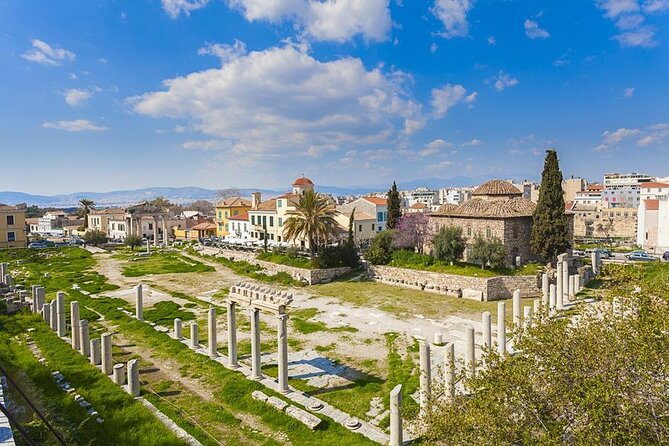
- Ancient Agora of Athens: market life and social power
- Keramikos: ceramics in the neighborhood name
- Monastiraki: the city’s restaurant-and-shop core
- Roman Agora and Tower of the Winds: Roman-made public space
- Plaka: the traditional neighborhood that feels like an island
- How the guides and small group size change the experience
- Safety, comfort, and what to expect on the streets
- Who this Ancient Athens e-bike tour is best for
- Should you book this tour?
- FAQ
- How long is the Ancient Athens E-Bike Tour?
- What is included in the tour price?
- Are archaeological tickets included?
- How big is the group?
- Where do I meet the guide?
- What language is the tour in?
- What happens if the weather is bad?
Key things to know before you ride
- Standing Trikke = fast sightseeing without pedaling: You glide to viewpoints and landmarks without doing the constant climbs on foot.
- Max 12 people keeps it manageable: Smaller groups mean you spend more time looking and listening, not waiting.
- Tickets are separate for major sites: Acropolis-area and other paid stops can add up on top of the tour price.
- You get the big names in a tight loop: Acropolis Hill, Agora areas, Plaka, and more in about two hours.
- Heat and weather matter: The tour requires good weather for the ride; poor conditions can trigger a reschedule or refund.
- Guides can adjust for your pace: If you’ve already seen a few things, the route can shift.
Why a standing Trikke tour fits Athens so well
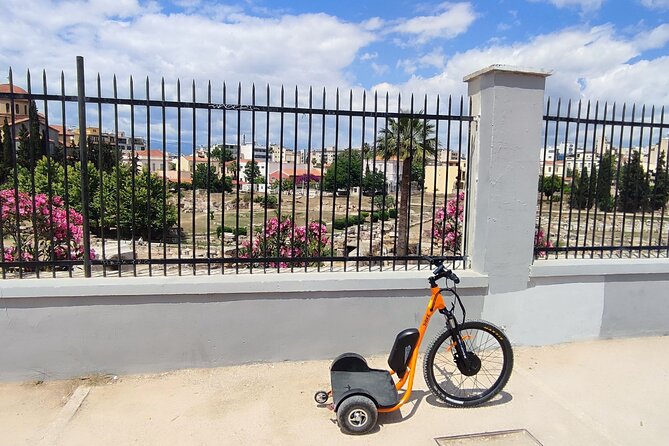
Athens is packed with top sights, but they’re not evenly spread. A normal walking tour turns into a lot of effort just to move between viewpoints—especially around the Acropolis area. That’s where a standing e-bike shines. You get to “spend your energy on looking,” not on grinding up slopes.
The Trikke-style setup also changes the rhythm. Instead of stopping every few minutes to catch your breath, you can roll to the next overlook and park yourself for the explanation. It’s still a guided experience—helmets on, instructions first, and you follow the group—but the city feels smaller.
There’s another smart benefit for real-world travel: after two hours, you usually still have daylight and motivation to return to one or two favorite spots on foot. This kind of tour is a great way to get your bearings fast—then plan your longer visit later, at your own pace.
One more practical upside: a two-hour loop is long enough to hit the classics, but short enough that you’re not stuck sweating through an entire afternoon. If you’re traveling with limited time, or you want to avoid the “walk, walk, walk” problem, this format makes sense.
You can also read our reviews of more cycling tours in Athens



Price value check: $72.09 plus archaeological-site tickets

The tour price is listed at $72.09 per person, and it includes the use of the standing e-bike (Trikke), plus a helmet and costume insurance. You also get a mobile ticket, and the tour is offered in English.
What’s not included is the real budget variable: archaeological-site admissions. Based on the listed site costs, you should expect to pay for some major stops, while others are free or marked as included. Here are the specific ticket figures shown:
- Odeon of Herodes Atticus: 20€ (not included)
- Acropolis Hill: 20€ (not included)
- Ancient Agora of Athens: 4€ (listed as included on one line, but also clearly priced in the stop notes—plan for a small added fee)
- Roman Agora: 4€ is shown in the stop notes, though the admission status text is inconsistent—double-check what your day-of instructions say
You’ll also notice an important ticket logic: the Acropolis Hill ticket is stated as including the Theatre of Dionysus. So you may not need a separate ticket for that theatre site if you already bought Acropolis-area entry.
Is it still good value? For most people, yes—because the tour compresses multiple high-priority areas into a short window and reduces the physical cost of getting around. But I’d treat tickets as “likely add-on costs” rather than a surprise.
Tour route highlights: Dionysus, democracy, and the old city’s pulse
This is a tight, well-chosen loop. You’ll move through classic Athens layers: the theatre world, the Acropolis viewpoints, the birthplace story of democracy, the Agora market core, and then neighborhoods where you’ll want to linger later.
Theatre of Dionysus area: where theatre started
Your route begins at a spot tied to what many consider the key theatre tradition of Ancient Greece. It’s described as the first theatre of the world, and the place where theatre started. The ticket for Acropolis Hill is also stated to include the Theatre of Dionysus too, which is a useful heads-up if you’re planning admissions.
This stop matters because it frames the rest of your time. You’re not just seeing stone—you’re learning what kind of society built it: performance, politics, public life. Even with a short visit window, you get a strong interpretive start.
Odeon of Herodes Atticus: the Roman theatre still in use
Next comes the Roman Theatre, still used for shows. The guide notes its construction in the second century A.D. and connects it to Herod Atticus and a memorial for his wife. That personal-stakes story helps the site feel less like an empty ruin.
Expect about 10 minutes here. It’s a quick hit, but the “still in use” point is the takeaway. Athens didn’t just preserve the past—it keeps working with it.
You can also read our reviews of more tours and experiences in Athens





Acropolis viewpoints: the Parthenon up top
Then you reach the heart of the postcard: the Acropolis rock, with the Parthenon at the top. The tour is designed so you can watch the hill from a close side, which means you don’t waste the short time you have wrestling with heat and crowds just to get a decent angle.
You’ll spend around 10 minutes at this stop. That’s short, but it’s enough for the big picture: where the temples sit, what the slopes surround, and how you might return later for a longer, ticketed walk.
Practical tip: if you’re sensitive to sun, aim to bring water and plan for shade breaks. The tour format helps, but the Acropolis area has very little “hide from the light” space.
Pnyx: democracy’s origin story
Pnyx is where the walking would normally slow you down, but on the Trikke it becomes a smooth transition. This hill is described as the place where democracy started. It sits within an archaeological area and also a park, which helps it feel more like a living public space than a museum corner.
You’ll get about 15 minutes here, and admission is listed as free. Even in that short time, it’s one of the better stops for understanding how political life shaped the city’s geography.
National Observatory on the hill of Nymphs: a science stop in the middle of ruins
Next is the National Observatory of Athens, described as the first observatory of Athens. It’s located on the hill of Nymphs inside an archaeological area and also a park.
You’ll get about 15 minutes, and admission is listed as included for this stop. This is a nice tonal shift. After theatre, politics, and temples, you get science in the same broad “Athens layers” story.
Ancient Agora of Athens: market life and social power
The Ancient Agora is where public life met daily trade. It’s described as the most important side of Ancient Greece and the main market in ancient society.
You’ll spend around 20 minutes here, and the ticket is shown as 4€. This is one of the stops where a short guided time works well because the guide can point out what made this space central: commerce, meetings, announcements, and the flow of people through the day.
Keramikos: ceramics in the neighborhood name
Then you roll to Keramikos, the archaeological area close to the Agora. The name connects to ceramics production—Kerameikos is tied to where ceramics were made—so it’s a place where language reflects labor.
You’ll get about 10 minutes, and it’s listed as free. This stop is ideal if you want the Athens beyond the big temples. It’s the “how people actually lived” layer.
Monastiraki: the city’s restaurant-and-shop core
After the archaeological stops, Monastiraki shifts the mood. It’s described as the second most crowded square in Athens and considered the heart of Athens, with bars, restaurants, and lots of choices nearby.
You’ll get about 10 minutes, and admission is listed as included. This isn’t just a photo stop. It helps you connect the ancient city map to where real life happens now—and it makes it easier to choose what to do after the tour ends.
Roman Agora and Tower of the Winds: Roman-made public space
The Roman Agora follows, described as similar to the Ancient Greek Agora, but built by the Romans in the second century A.D. Inside you can see the Tower of the Winds, which gives the stop a specific, “go look at that” target.
You’ll spend about 10 minutes. The notes show a 4€ ticket but also include an admission status line that says free, so be prepared for a small ticket or a clarified situation from your day-of information. Either way, the Tower of the Winds is worth keeping your eyes open for.
Plaka: the traditional neighborhood that feels like an island
Finally, you reach Plaka. It’s described as the traditional neighborhood of Athens and as a picturesque area in the heart of the city, with streets that feel like a Greek island.
This stop is around 10 minutes with admission listed as free. It’s a good landing spot. You finish near the area where you’ll likely want a meal, a stroll, and maybe one last look at the skyline as the evening shifts.
How the guides and small group size change the experience
A tour can be “correct” and still feel generic. What I like about this one is that the experience is built for adaptation.
Guides can adjust the route depending on what you already saw, so you don’t get the same speech twice or feel stuck in a rigid template. Dimitris is specifically mentioned as doing this, and that kind of flexibility is a big deal when you’re combining Athens sites with your own wandering.
Small group size—maximum 12 travelers—also helps. Standing e-bike tours work best when you’re not fighting for space. With fewer people, you get smoother movement and clearer instructions at the stops.
Also, the tour’s “no pedaling required” style makes the group feel more even. People move at similar speeds without the slowest rider dragging everyone down. That matters when you’re trying to fit multiple paid and free sites into only two hours.
Safety, comfort, and what to expect on the streets
The tour includes a helmet, and that’s not just a box-checking detail. Riding a standing e-bike means you’re on your feet for the whole ride, so you want a guide who keeps spacing and gives clear signals.
The operation also assumes most travelers can participate. Still, I’d be honest with yourself: if you have balance limitations or you’re uncomfortable standing for sustained periods, you’ll likely feel it here. This isn’t a seated scooter tour.
Also, the tour requires good weather. That’s not just a legal line. A standing e-bike on uneven or slippery ground is not the place to test your luck. If weather is poor, you’ll be offered a different date or a full refund, so you’re not locked into bad conditions.
Heat is another factor. Athens can cook even when you’re only outside for short windows. The upside is that the motorized ride reduces physical effort, so you’re not arriving at each viewpoint already exhausted. Bring water, wear sun protection, and plan for short photo pauses instead of long standing marathons.
Who this Ancient Athens e-bike tour is best for
This tour is a strong match if you want:
- Acropolis-area sights without a big walking day
- A short guided plan that helps you decide what to revisit later
- Easy city navigation with a small group (up to 12)
- An Athens orientation that connects ancient spaces to modern neighborhoods like Monastiraki and Plaka
- A more comfortable sightseeing pace in warmer weather, thanks to the motorized standing e-bike style
It’s also a good family option. One set of experiences mentions kids enjoying the ride, and the “learn fast” feel shows up in the practical feedback. Still, kids should be comfortable following instructions and staying within the group.
If you’re the kind of traveler who hates being herded, this is more likely to work for you than a long walking tour. Two hours means you’re not trapped all day, and you get momentum for the rest of your Athens plan.
Should you book this tour?
Book it if you’re trying to do Athens efficiently and you care more about smart pacing than squeezing every last minute at one monument. The combination of standing Trikke mobility, a tight sightseeing loop, and the chance to learn what matters at places like Pnyx and the Agora makes the experience feel practical.
Don’t book it blindly if you know you hate standing, or if you want a fully ticket-included day with no extra admissions. You’ll likely pay for at least the biggest archaeological entries, including Acropolis-area access, so factor that into your budget.
If you’re short on time and want the “best of the center” first, this tour is a very reasonable way to start Athens—then come back later with a clearer sense of where you want to spend more time.
FAQ

How long is the Ancient Athens E-Bike Tour?
The tour is listed as about 2 hours.
What is included in the tour price?
Included are the use of the Trikke (standing e-bike), a helmet, and costumer insurance. The tour also uses a mobile ticket.
Are archaeological tickets included?
No. Tickets to archaeological areas are not included. Several stops show specific admission prices, while others are listed as free.
How big is the group?
The tour has a maximum of 12 travelers.
Where do I meet the guide?
The meeting point is listed as Leof. Andrea Siggrou 22, Athina 117 42, Greece. The tour ends back at the meeting point.
What language is the tour in?
The tour is offered in English.
What happens if the weather is bad?
The experience requires good weather. If it’s canceled due to poor weather, you’ll be offered a different date or a full refund.


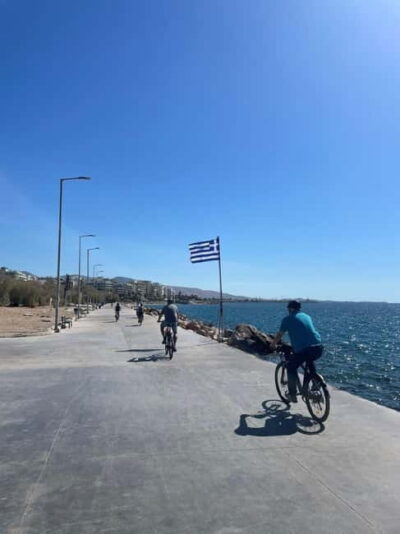

More Cycling Tours in Athens

More Tours in Athens



More Tour Reviews in Athens
- All Day Cruise -3 Islands to Agistri,Moni, Aegina with lunch and drinks included
★ 5.0 · 4,958 reviews