REVIEW · ATHENS
Corinth Canal, Ancient Corinth, Nafplio and Epidaurus Private Tour from Athens
Book on Viator →Operated by LS Tours · Bookable on Viator
Corinth Canal steals the show fast. This private outing strings together the big views (especially from the Corinth Canal) and the jaw-dropping stone top of Acrocorinth, with enough time at each stop to actually see what you came for. The main drawback is simple: it’s a long day, and you’ll do some walking and climbing in the sun while paying extra site admission.
I also like how personal it feels. You get hotel, Airbnb, or Piraeus pickup, then a private air-conditioned ride with WiFi and bottled water—handy on a hot Peloponnese day. In the feedback I read, drivers like Giannis, George, Alex, Billy, Andreas, and Apostolos were praised for fluent English and for adjusting the pace so the day stays relaxed even with a lot packed in.
One more thing to weigh: the driver isn’t an official site guide who walks inside with you. They can still explain the places in the car and answer questions, but you may want to come with a little background (or plan to read quick signs) if you like deep, on-the-ground commentary at every ruin.
In This Review
- Key Points You’ll Care About
- A Private Peloponnese Day That Starts With the Best Views
- Corinth Canal: 1893 Engineering With Real Drama
- Ancient Corinth (Archaia Korinthos): Temples, Power, and Street-Level History
- Acrocorinth: The Monolithic Rock That Owns the View
- Corinth Archaeological Museum: Artifacts That Give the Ruins Context
- Palamidi Castle and Nafplio: Fortress Views, Then Lunch Time
- Asklepios Sanctuary, Epidaurus Theatre, and the Museum: Medicine to Acoustics
- Price and Logistics: When This Private Tour Makes Sense
- How to Pace Yourself in Heat and Hills
- Best For Who? Couples, History Buffs, and View Chasers
- Should You Book This Private Corinth, Nafplio, and Epidaurus Tour?
- FAQ
- What’s included in the private tour from Athens?
- Do I need to pay admission fees during the day?
- Is this tour private or shared with other groups?
- How are pickup and meeting handled?
- Do I get an official licensed guide inside the archaeological sites?
- How long does the tour take?
Key Points You’ll Care About
- Corinth Canal views are the quick-win highlight, seen from above with dramatic limestone walls
- Acrocorinth’s climb is worth it for the rock-top perspective over ancient Corinth
- Nafplio time feels like a break, not just a photo stop, with room for lunch and shopping
- Epidaurus Theatre is the big payoff, with UNESCO-level fame you can experience in person
- Admission fees add up, especially for Ancient Corinth, Palamidi Castle, and Epidaurus
- Private transport + WiFi makes the long ride from Athens feel manageable
A Private Peloponnese Day That Starts With the Best Views
This tour is built for people who want a lot of Greece in one day without the stress of buses, schedules, and seat hunting. You leave Athens in an air-conditioned private vehicle (with WiFi), and you keep moving through a sequence of ancient power spots and real coastal-town breaks.
What makes it especially satisfying is the mix. You’re not only looking at ruins—you’re also getting the “how could they build this here?” moments like the Corinth Canal and the fortress views above Nafplio. Then you land at Epidaurus, where the experience is less about monuments and more about how people in antiquity designed public space.
The time flow is also sensible. You get short, focused stops for certain sites, plus longer pauses where it helps to slow down. You won’t feel like you’re sprinting every minute, but you also won’t get a lazy day. It’s a “see it and enjoy it” kind of outing.
You can also read our reviews of more private tours in Athens


Corinth Canal: 1893 Engineering With Real Drama
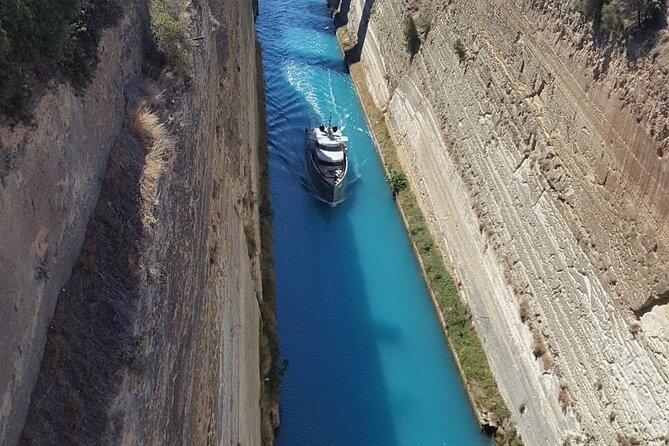
Your first big visual hit comes at the Corinth Canal. This is the modern canal connecting the Gulf of Corinth and the Saronic Gulf, constructed in 1893. Standing in the right viewpoint area (high up), you get that rare “isthmus-from-above” view—plus steep limestone walls that make the canal feel carved, not built.
Even if you’ve seen pictures before, the scale lands differently in person. From up high, it’s easier to understand why this narrow stretch became such a strategic and engineering obsession. It’s also a fast stop—about 15 minutes—so you can keep energy for the heavier ancient sites later.
Practical tip: if you like photos, this is the moment to shoot early. Midday shadows and crowds can change the lighting fast, and you’ll want clear shots before your day gets more time-pressed.
Ancient Corinth (Archaia Korinthos): Temples, Power, and Street-Level History
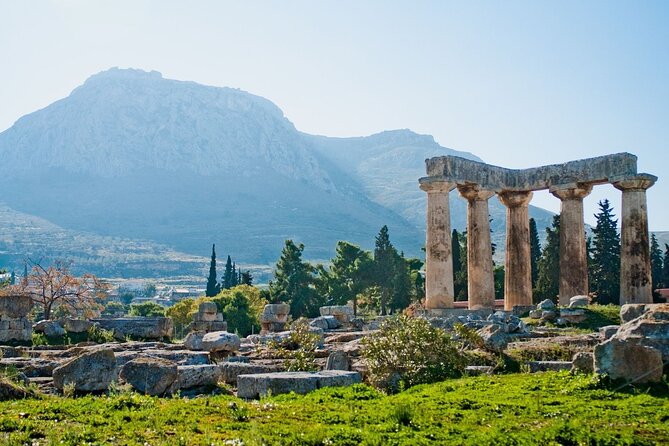
Then you shift from modern engineering to an ancient city-state that still feels important. Ancient Corinth sits on the Isthmus of Corinth and was one of the most visited places in Greece in antiquity for a reason—geography, trade, and connections.
You’ll see key monuments, including:
- The Temple of Apollo
- The Bema of Saint Paul
- The Roman Odeon
What I like about this stop is how many eras you can sense in one area. You’re not only looking at one “time period look.” Instead, you’re walking through layers—Greek religious space, Roman civic life, and the early Christian story tied to the region.
Your time here is about 45 minutes. That’s enough to orient yourself, spot the big structures, and take in the overall layout. It’s not enough to read every stone detail, so I’d treat this as your fast orientation to ancient Corinth: get your bearings, then let Epidaurus and Asklepios sharpen the themes of antiquity that you’re already seeing.
Admission here is not included, and it’s one of the paid sites you should plan for early.
Acrocorinth: The Monolithic Rock That Owns the View
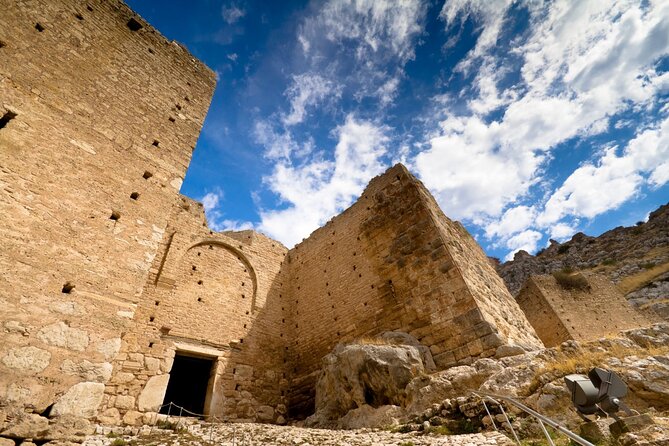
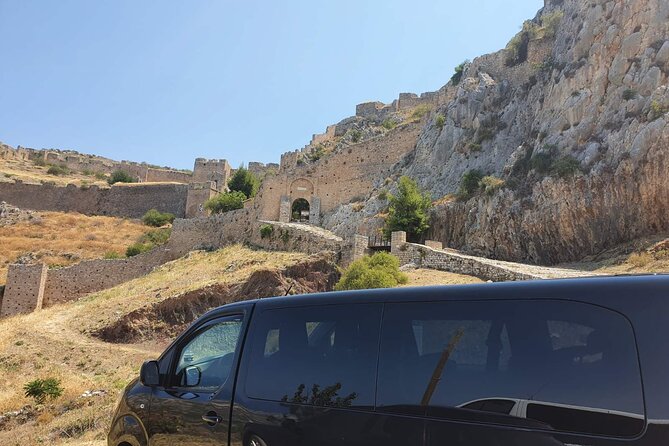
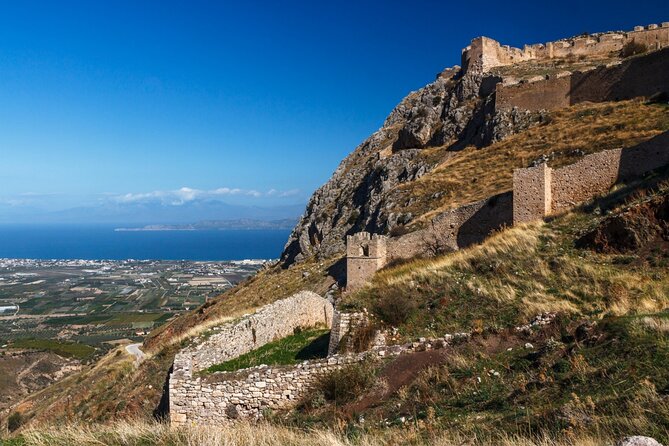
After Ancient Corinth, the day turns more dramatic at Acrocorinth—the acropolis of ancient Corinth. This isn’t a gentle hill. It’s a monolithic rock, and it oversees the entire ancient city.
This is the stop that tends to justify the effort. Even when your legs are a little tired, the payoff is real: you’re elevated over the region, so it becomes easier to imagine how ancient people controlled movement through the isthmus and how the city’s power worked in practice.
Your time at Acrocorinth is about 45 minutes, and you’ll likely spend a good part of that moving up, taking in views, and then moving back down. Reviews also mention it can mean a difficult walk or climb—especially in high heat. If you’re not used to uphill walking, plan slower steps and take breaks when you need them.
Also remember: the driver can explain the site, but they won’t go inside with you as an official guide. If you love learning minute-by-minute at ruins, do a quick read beforehand on what Acrocorinth was and why it mattered.
Corinth Archaeological Museum: Artifacts That Give the Ruins Context
Between outdoor ruins, a museum stop can feel like a breather—and that’s exactly how it works here. The Archaeological Museum of Corinth holds a large collection of artifacts from the local site and from smaller sites nearby.
You’re scheduled for about an hour in the museum. The value of this stop is not just “things in cases.” It’s that it helps you connect what you saw outside to the objects people actually used, built, dedicated, or buried. Without this, ruins can feel like a set of shapes. With it, those shapes become a lived place.
It’s also a good mental reset before you head toward Nafplio and Epidaurus. Epidaurus in particular is heavy on atmosphere and design. You’ll get more out of it if your brain isn’t still stuck on the logistics of climbing rocks.
Museum admission is not included, so add it to your budgeting.
- All Day Cruise -3 Islands to Agistri,Moni, Aegina with lunch and drinks included
★ 5.0 · 4,958 reviews






Palamidi Castle and Nafplio: Fortress Views, Then Lunch Time
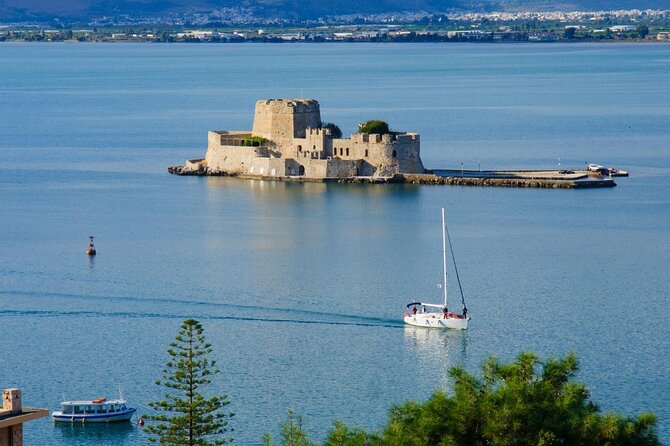
After the museum, you head to Palamidi Castle in Nafplio. Palamidi is a fortress built by the Venetians during their second occupation (1686–1715). It sits on a 216-metre-high hill, so the reason to come here isn’t subtle: it’s for the views over Nafplio and the coastline.
Your time is about 30 minutes. That’s short, but it’s enough to reach viewpoints, take photos, and feel the “why this site” logic. If you’re already tired from Acrocorinth, this is where you want to pace yourself. The hill position means you’ll likely climb some stairs or walk uneven ground.
Then comes a much-needed change of pace: Nafplio itself. You get about 1 hour and 30 minutes of free time, plus time to drive onward after. This is your window to stroll through town, buy handmade souvenirs, and handle lunch at your own pace.
What makes Nafplio a smart stop is that it balances the day’s ancient intensity with a real-life town. You can shop, eat, and look at the waterfront mood without feeling guilty that you’re not staring at ruins.
Asklepios Sanctuary, Epidaurus Theatre, and the Museum: Medicine to Acoustics
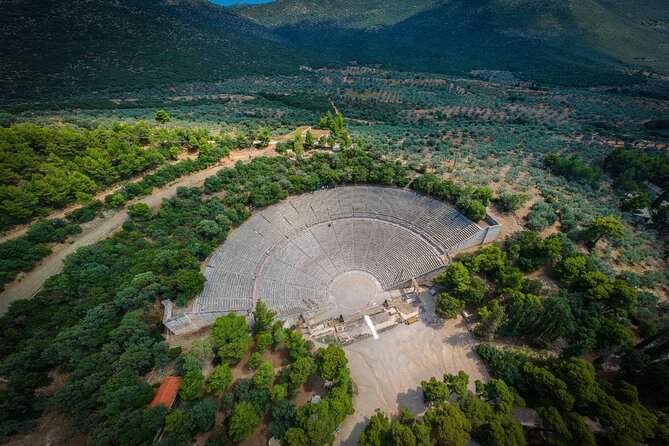
Next is the Sanctuary of Asklepios, associated with the history of medicine. It’s described as the earliest organized sanatorium, and it matters because it shows a transition—from belief in divine healing toward something closer to science and medical practice.
This stop is brief (about 15 minutes), so think of it as a “theme setter.” You’re not going to solve the entire history of medicine in one quick visit. Instead, you’ll get the sense that antiquity wasn’t only art and myths—it also tried to systematize healing.
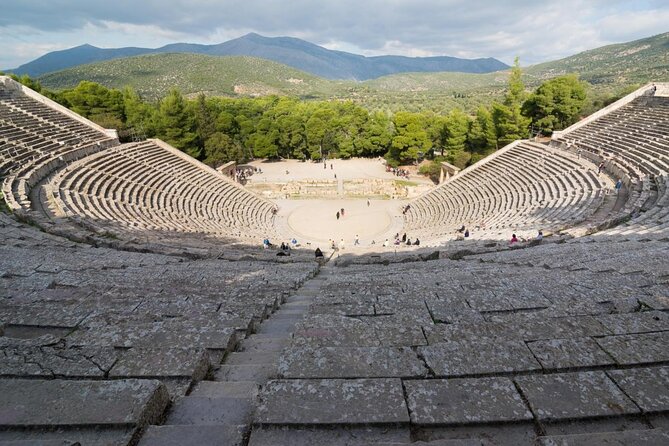
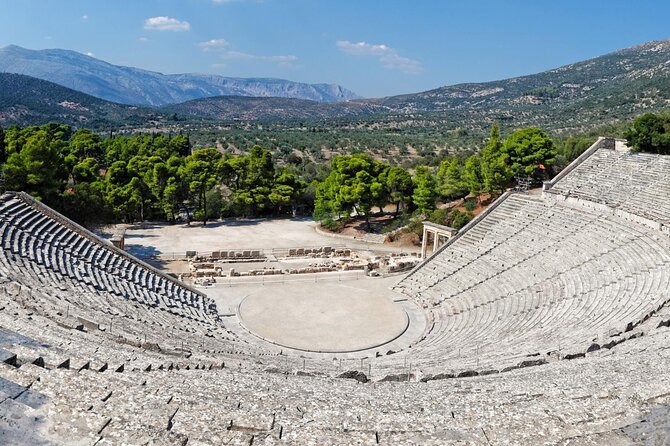
Then you reach the Ancient Theatre of Epidaurus, one of Greece’s most famous archaeological sites and an UNESCO World Heritage listed monument. The key reason people care is the theater’s reputation worldwide—especially how it supports listening and performance.
Your scheduled time here is about 15 minutes, which can feel short for such a famous place. But that short window still works because it lets you take in the structure, understand the scale, and feel the shape of the space. If you want to linger longer, you’ll have to manage your pace and priorities. Either way, this is a “see it at least once” stop.
After the theatre, you visit the Epidaurus Archaeological Museum for about 30 minutes. This museum is noted for reconstructions of temples and columns. That’s a practical bonus because it helps you visualize what the theatre and surrounding sacred spaces might have looked like when whole.
Epidaurus site admission is not included, and it’s one of the paid admissions you should budget for.
Price and Logistics: When This Private Tour Makes Sense
At $228.27 per person, you’re paying for a private, air-conditioned ride with WiFi, bottled water, and pickup from Athens, Airbnb, or Piraeus. You’re also paying for the convenience of moving between several sites in a single day without arranging separate transfers.
Here’s the part to plan for: several major admissions aren’t included. The tour lists extra fees for:
- Ancient Corinth Archaeological Site/Museum (€20 per person)
- Palamidi Castle (€20 per person)
- Epidaurus Archaeological Site/Museum/Theatre/Asklepios (€20 per person)
That means at least €60 per person for those three big-ticket areas, plus other museum entry that isn’t priced in the details you provided. So the true total is your base tour price plus admissions you pay on the day.
Is it still good value? In many cases, yes—because you’re getting a full day’s worth of driving and site time in a private vehicle. For couples and small groups, private transport often works out better than piecing together trains, buses, and multiple taxi legs. It’s also easier on your schedule when you’re coming from central Athens with limited time.
Two logistics notes that matter:
- The driver provides commentary but is not a licensed official tour guide who enters sites with you.
- The day is long. Even with breaks, expect a lot of walking, sun exposure, and some steps at hilltop locations.
How to Pace Yourself in Heat and Hills
This is a day for water and smart movement. The tour includes bottled water, which helps, but you should still dress like you’re out for several hours in strong sun.
I’d bring:
- Comfortable shoes for uneven ground and possible climbs
- Sunglasses and sunscreen
- A hat or something that shades your face
- A light layer for windy cliff or theatre areas (it can feel cooler once you’re seated or in shade)
Also, consider your timing style. This tour gives you set times at major stops, so if you love slow museum wandering, you might want to focus on the highlights where reconstructions matter most. If you’re mainly there for big outdoor views (Corinth Canal and Acrocorinth), you’ll likely enjoy the structure.
If you’re sensitive to heat, you’re not out of luck. You’ll get breaks: Nafplio free time for lunch and shopping, plus indoor museum time before Epidaurus.
Best For Who? Couples, History Buffs, and View Chasers
This tour fits best if you want:
- A private day with your own group only
- Big hits across the Peloponnese: canal, ruins, fortress views, and Epidaurus
- Enough flexibility to enjoy the stops without feeling like a bus tour
It’s also a solid match if you appreciate the fact that the driver can explain the sites in fluent English. In the feedback tied to this experience, drivers like Alex and Andreas came through as personable and made guests feel at ease, with plenty of time at each stop.
If you’re the kind of traveler who wants a certified guide walking inside every ruin and museum, you may find the “driver not entering sites” limitation annoying. In that case, I’d consider adding a local guide at your top priority site or spending more time reading interpretive signs as you go.
Should You Book This Private Corinth, Nafplio, and Epidaurus Tour?
I’d book it if you want a one-day Peloponnese experience that feels organized but not rushed, with private transport and a route that mixes engineering, ancient city life, coastal-town downtime, and the world-famous Epidaurus theatre.
Skip (or adjust expectations) if:
- You hate uphill walking and stairs in heat
- You want a fully guided, inside-every-site commentary experience
- You don’t want to handle extra admissions on top of the base price
If you’re comfortable with a long day and you’re excited to stand above the Corinth Canal, climb (or at least work for) the Acrocorinth views, and then sit in the theatre at Epidaurus, this is a strong use of your time.
FAQ
What’s included in the private tour from Athens?
The tour includes private transportation in an air-conditioned vehicle with WiFi on board, bottled water, and pickup. It’s offered in English.
Do I need to pay admission fees during the day?
Yes. The Ancient Corinth archaeological site/museum, Palamidi Castle, and Epidaurus archaeological site/museum/theatre/Asklepios have admission fees listed at €20 per person. The Corinth Archaeological Museum also has admission that isn’t included in the tour price.
Is this tour private or shared with other groups?
It’s private, meaning only your group participates.
How are pickup and meeting handled?
You can be picked up from your hotel lobby, from your Airbnb entrance, or from the Piraeus port arriving area where the driver holds a sign with your name.
Do I get an official licensed guide inside the archaeological sites?
No. The drivers are knowledgeable and provide commentary in fluent English, but they are not official tour guides and will not enter the archaeological sites with you.
How long does the tour take?
It runs about 9 to 10 hours, depending on timing and travel between stops.




More Private Tours in Athens


More Tours in Athens


More Tour Reviews in Athens
- All Day Cruise -3 Islands to Agistri,Moni, Aegina with lunch and drinks included
★ 5.0 · 4,958 reviews