REVIEW · ATHENS
Ceramic and Pottery Creative Workshop with Two Local Artists
Book on Viator →Operated by chronohoros · Bookable on Viator
Clay has a learning curve, and that’s the point. This Athens ceramic workshop is interesting because you get hands-on handbuilding pottery instruction in the center of town, led by local artists Pavlos and Rossina, with a small group capped at six. I love the step-by-step pacing from wedging and pinching to adding your own touch, and I love that the studio setup makes it easy even if you have never worked with clay. One real consideration: you don’t walk away with a fully finished, take-home souvenir the same day—drying, firing, glazing, and shipping (if you want it) are a separate story.
What you do leave with is a sturdy start: a piece you build from scratch using tools and materials provided, designed to become usable once the next steps are done. The instructors tend to keep things calm, friendly, and practical, so you spend your time shaping, not figuring out what to do next. And at $36.04 for about two hours, it can be strong value if your goal is making something personal in Athens, not just watching art happen.
In This Review
- Key things to know before you go
- Where this Athens pottery class fits on your trip
- Inside the 2-hour flow: from wedging to your own design
- Tools, materials, and why the class feels beginner-friendly
- The big question: what happens after you leave the studio?
- What to do so you are not surprised later
- Shipping your pottery from Athens: practical advice before you build
- Where you meet in central Athens, and how to plan your time
- Who this workshop is best for
- Price and value: what $36.04 buys you (and what it doesn’t)
- Tips to get better results on your first piece
- Should you book this Athens pottery workshop?
- FAQ
- How long is the ceramic and pottery workshop in Athens?
- Where does the workshop start?
- What language is the workshop offered in?
- Is the class limited in size?
- Can beginners participate?
- Does the price include shipping my finished pottery?
- Will my piece be fired and glazed?
- What if I need to cancel?
- What if weather is bad?
Key things to know before you go
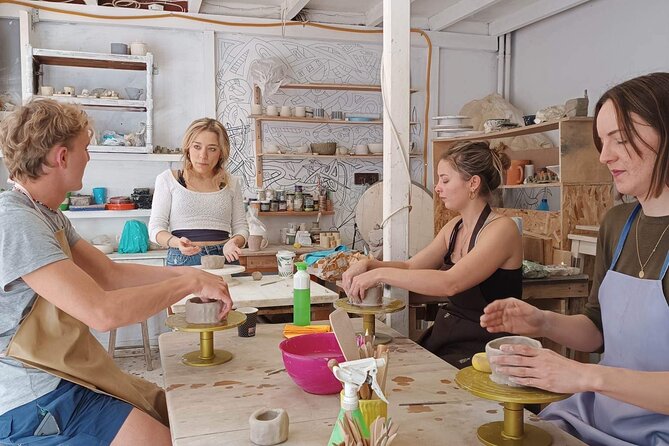
- Handbuilding focus: you shape with clay by hand, including pinching and wedging.
- Small group setting: up to 6 people means more attention and less waiting around.
- Two local artists: you’ll work with either Pavlos or Rossina during your session.
- Finish-after-class options: firing, transparent glazing, and shipping are available on request, but not necessarily the same-day experience.
- Size affects logistics: shipping cost depends on the piece’s weight, so think about what you build.
- Time needed post-workshop: drying and studio steps take days to weeks, so plan for a delayed keepsake.
Where this Athens pottery class fits on your trip
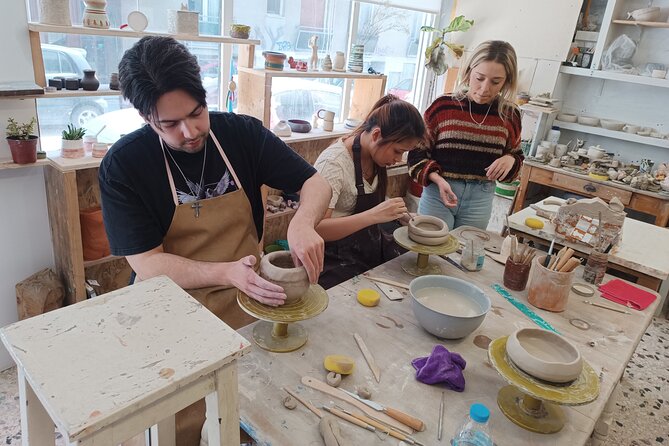
If your Athens plan is mostly about ruins, museums, and long walks, this workshop is a nice switch. You trade the street noise for a quiet studio rhythm: knead clay, learn basic techniques, and slow your body down for a couple hours. It also gives you something more personal than a photo—an object that started as formless clay and ended up with your own fingerprints in it.
The workshop runs about 2 hours and starts at Genneou Kolokotroni 8 in Athens (right near the center). The session ends back at the meeting point, so you can slot it into your day without complicated transport planning.
You can also read our reviews of more tours and experiences in Athens



Inside the 2-hour flow: from wedging to your own design
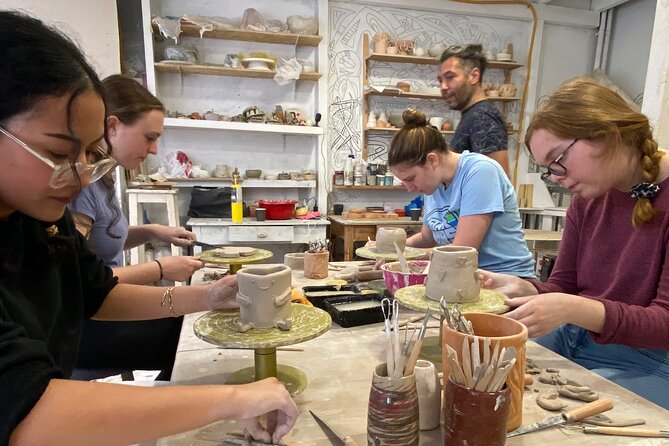
This is a true make-it-yourself class, and you can feel that in the structure. The core idea is a guided handbuilding process, where you build the foundation, then customize your form.
Here’s what the workshop typically walks you through:
- Wedging: you prep the clay so it’s workable and consistent. This matters. Badly wedged clay fights you as you shape it, and your piece gets harder to refine.
- Pinching: you learn how to pull form from clay by hand. It’s one of the most forgiving starter techniques and a good way to build confidence fast.
- Tool use and adjustments: you get familiar with the tools in the studio so you can smooth, refine edges, and create a finish that looks intentional.
- Your personal touch: you add your own choices—shape, texture, and detailing—so the final piece doesn’t look like everyone else’s.
Even if you’re brand-new, the class is designed so you’re not stuck. If you already know a bit about clay, the instruction still helps because you’re building in a guided sequence instead of guessing.
One practical note: some people expect wheel work. The description and the hands-on nature here are squarely about handbuilding. If using an electric wheel is a must for you, confirm clearly before you book.
Tools, materials, and why the class feels beginner-friendly
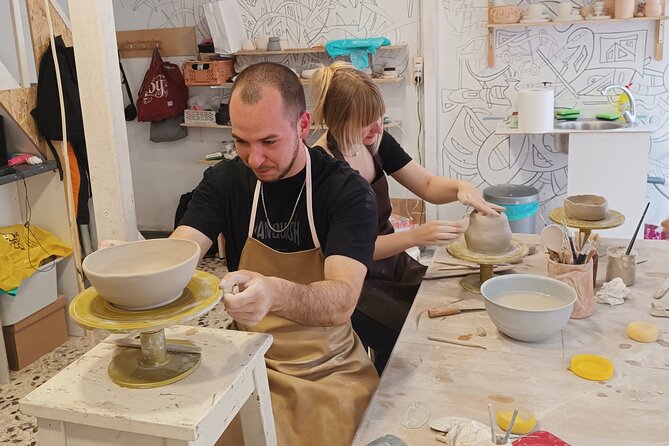
You don’t need to bring anything. The workshop includes the materials and tools needed for the session. That’s more than convenience—it changes how you experience the class.
When the studio provides what you need, you can focus on:
- how the clay feels in your hands,
- how your piece holds shape as you work,
- and how you correct mistakes while the clay is still soft.
Also, the instructors keep things at a human pace. Multiple past participants called out how patient and supportive the teaching is, plus a fun, relaxed atmosphere. That matters in a beginner workshop. Clay is messy, hands get tired, and you want someone to help you without rushing you.
The big question: what happens after you leave the studio?
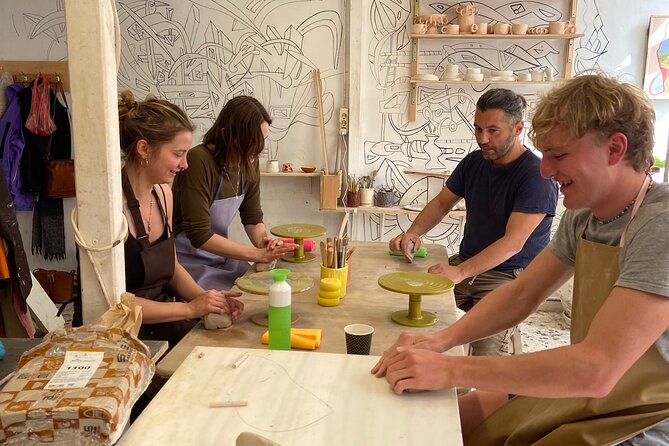
Here’s the part that can make or break the experience, and it’s worth planning for from the start.
In the workshop, you create the form. After that, there are later steps like:
- drying,
- firing (kiln work),
- and transparent glazing (a finishing coating option).
You can also request shipping of your finished piece, but shipping costs are not included in the class price.
Why this matters: pottery isn’t like painting a souvenir you can tuck into your bag. Clay needs time and a kiln process to become stable. Several people shared that pickup or completion takes time—think in terms of days to weeks, not hours. One person noted stages like drying for several days, then kiln work, then extra glazing time. Others mentioned pickup after roughly a couple weeks to around three weeks.
What to do so you are not surprised later
Before you make a final choice on your piece size and shipping, ask these direct questions:
- Will your piece be fired and glazed as part of the planned process for your workshop selection, or is it an extra option/cost?
- If you plan to ship, when do they expect it to be ready?
- What pickup window do they use for pieces you don’t ship?
- If shipping is allowed, how do they calculate the shipping price—by weight, by box size, or both?
If you want the piece as a true trip souvenir, you should also ask whether you can collect it locally instead of shipping. Some people also found the shipping communication frustrating when updates were slow, so you’ll feel better having clear expectations up front.
- All Day Cruise -3 Islands to Agistri,Moni, Aegina with lunch and drinks included
★ 5.0 · 4,958 reviews






Shipping your pottery from Athens: practical advice before you build
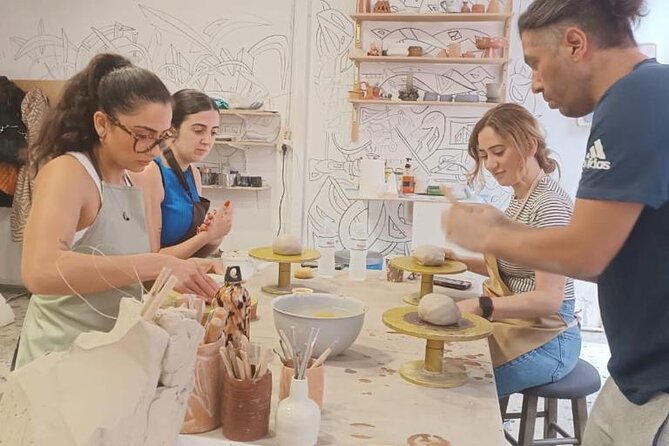
Shipping is available on request, and shipping fees are separate. That’s normal, because pottery weight adds up fast. But you should treat shipping as a design constraint.
Here’s what to think about while you’re making your piece:
- Keep it compact if you might ship. Large, heavy forms cost more.
- Aim for sturdier shapes. Very thin walls can be more fragile through handling and packing.
- Plan for delay. Even if the studio is friendly, ceramics still need drying and kiln time.
Some people did successfully choose shipping and later received the pieces. Others reported delays or poor response after paying. You can reduce your risk by choosing a smaller size and asking for a realistic timeline and update process before you sign off.
Also, remember that air travel rules can be strict for finished ceramics only if they are properly cooled and sealed. If you’re hoping to put pottery in your luggage right away, ask what the studio considers “ready.”
Where you meet in central Athens, and how to plan your time
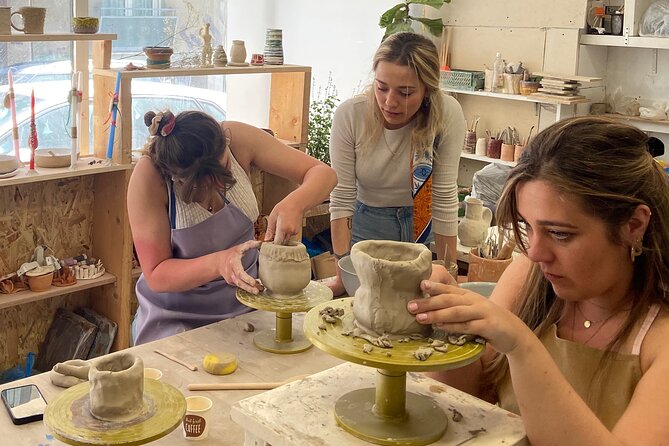
The meeting point is at Genneou Kolokotroni 8, Athina 117 41, Greece, and the activity ends back there. It’s also near public transportation, which helps when you’re pairing it with museums and dinner plans.
Because the session is about 2 hours, I’d treat it like a mid-day or late afternoon reset. Clay work feels better when you’re not rushing to your next reservation. If you tend to pack your schedule tight, give yourself a buffer afterward, just in case your session runs a little long or you end up chatting with the instructors.
And if your plan includes a lot of walking, know that clay work can be tiring in a different way—wrist and forearm effort while you shape. Comfortable shoes help for getting to the studio, and staying nearby afterwards helps your body recover.
Who this workshop is best for
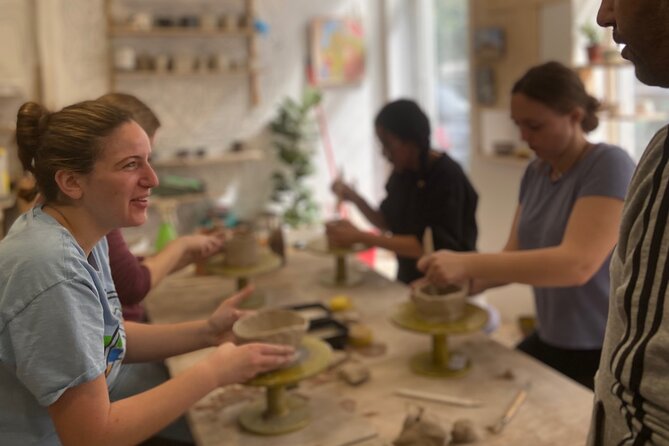
This class works well for a lot of travelers because it’s hands-on and flexible.
You’ll probably love it if:
- you want a calm, creative break from sightseeing,
- you’re traveling with family or a group and want something that bonds people through shared effort,
- you like learning a real technique step-by-step,
- you want to make a personal item in Athens rather than another object from a shop.
It also fits kids and teens, as long as they’re up for hands-on work and some mess. Several families have praised the patient pacing with children.
You might rethink it if:
- you want a finished, glazed souvenir you can carry out immediately,
- you’re only interested in wheel throwing,
- you have zero patience for post-workshop timing and logistics (drying, firing, pickup, or shipping).
Price and value: what $36.04 buys you (and what it doesn’t)
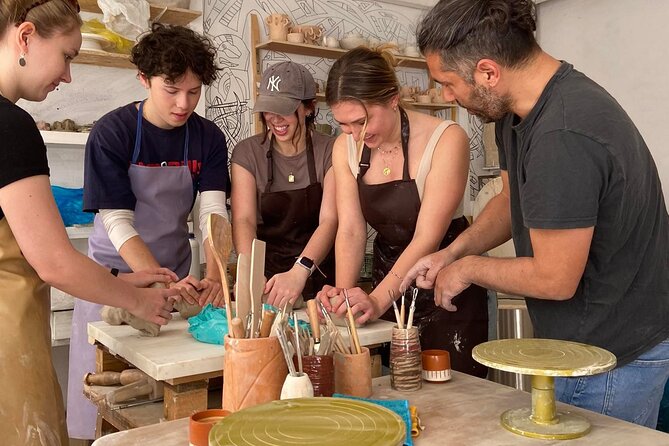
At $36.04 per person for about two hours, the price lands in the “solid, fair” zone for a workshop where you get materials, tools, guided instruction, and a constructed piece by the end.
The value question is less about the clay session itself and more about what you want as your final outcome:
- If you are happy with the workshop as the making portion, and you plan for pottery to be completed afterward, then this is good value.
- If you expected that firing and glazing would be included with no extra follow-up, you’ll want to confirm that before you book. The written description says firing and transparent glazing are an option, and shipping costs are not included—so it’s smart to ask what your exact package includes.
In other words: you’re paying for the class and the make process, and you may pay later for the finished-state decisions like shipping (and possibly kiln finishing, depending on what you choose).
Tips to get better results on your first piece
You can’t speed up pottery physics, but you can make your life easier during the workshop.
- Ask early what you should aim for in size and thickness. A thicker piece is often easier for beginners; it also can matter for shipping weight.
- Slow down on texture and edges. Small refinements look better than big changes made at the end.
- Take the instructor’s feedback seriously while the clay is still soft. That’s the window where corrections make the biggest difference.
- Bring a plan for your story: what do you want this object to be—small dish, pinch pot style form, or another functional idea? Having a mental target helps you avoid overworking the clay.
- If you want it shipped, decide during the session rather than afterward. It’s easier to coordinate when you’ve already shaped your piece with the logistics in mind.
Should you book this Athens pottery workshop?
I’d book it if you want a hands-on, calm Athens activity with real instruction and a small group feel. The two-artist setup (Pavlos or Rossina), the beginner-friendly handbuilding approach, and the chance to create something from scratch make it a strong add-on to a standard Athens itinerary.
I would pause before booking if your top priority is walking away with a fully finished, glazed souvenir the same day, or if you need quick shipping with guaranteed updates. If that’s you, ask tough questions up front about firing/glazing inclusion and timeline, and consider building a smaller piece in case shipping becomes part of your plan.
FAQ
How long is the ceramic and pottery workshop in Athens?
It runs about 2 hours.
Where does the workshop start?
The meeting point is Genneou Kolokotroni 8, Athina 117 41, Greece.
What language is the workshop offered in?
It’s offered in English.
Is the class limited in size?
Yes. The maximum group size is 6 travelers.
Can beginners participate?
Yes. The workshop is designed for both beginners and people with more experience.
Does the price include shipping my finished pottery?
No. Shipping is available on request, but the shipping fee is not included.
Will my piece be fired and glazed?
There is an option of firing and transparent glazing as part of the process upon request, but the details and timing after the workshop matter—ask what’s included for your plan.
What if I need to cancel?
You can cancel up to 24 hours in advance for a full refund.
What if weather is bad?
The experience requires good weather; if it’s canceled due to poor weather, you’ll be offered another date or a full refund.




More Workshops & Classes in Athens



More Tour Reviews in Athens
- All Day Cruise -3 Islands to Agistri,Moni, Aegina with lunch and drinks included
★ 5.0 · 4,958 reviews