REVIEW · ATHENS
Athens:Half day tour to Acropolis and the must-see historical sites and downtown
Book on Viator →Operated by Greece Athens Taxi GAT · Bookable on Viator
The Acropolis views hit fast. This half-day format packs you from the Parthenon hill down into modern Athens, with a smooth Mercedes ride plus key stops like Panathenaic Stadium and Parliament Square. It is built for first-timers and anyone short on time.
I love the comfort and convenience: hotel/Airbnb or Port of Piraeus pickup and Wi‑Fi on board means less friction and more sightseeing time. I also love the balance of viewpoints and context, because you get big monuments first and then an Acropolis Museum stop that helps everything click.
One possible drawback: entrance fees are not included, and the driver is not a licensed guide inside the archaeological sites, so parts of the visit can turn more self-guided than you might expect for the price.
In This Review
- Key highlights worth knowing before you go
- Why this half-day Athens format works (even if you are short on time)
- Acropolis start: Parthenon views, plus the structures people actually talk about
- A practical tip for fewer headaches at the entrance
- The one expectation to set right
- Acropolis Museum: where the sculptures and history finally connect
- How to use your 1 hour smartly
- Panathenaic Stadium and the Olympian Zeus area: quick hits with big visual payoff
- Why these short stops feel worth it
- Constitution Square and the Unknown Soldier: where Athens feels like a living city
- Plaka and Monastiraki: the best way to end with dinner plans
- Plaka: the cozy ladder-down from the Acropolis
- Monastiraki and the Ancient Agora edges
- Price and logistics: where the $180.42 per person makes sense, and where it does not
- Who this tour is best for
- Who should consider a different format
- Guide names to watch for (and what to ask them)
- Should you book this Athens half-day tour?
- FAQ
- Are the entrance tickets included in the price?
- Will the driver guide us inside museums and archaeological sites?
- What’s the tour duration?
- Is pickup and drop-off included?
- What vehicle amenities are included?
- Is this a private tour?
- When is the Acropolis closed?
Key highlights worth knowing before you go
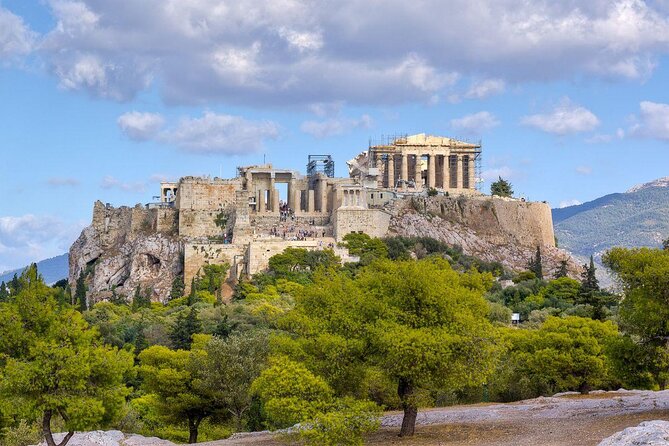
- Acropolis time with a plan: about 1 hour 15 minutes on the hill to see the Parthenon area plus major nearby structures
- Acropolis Museum that explains the stones: artifacts from Bronze Age through Roman and Byzantine Athens
- A real Athens mix: Panathenaic Stadium, Olympian Zeus area, Parliament Square, and classic downtown neighborhoods
- Watch the changing of the guard: a short stop to see the Euzones at the Unknown Soldier Monument
- Plaka + Monastiraki for an easy dinner transition: cobbled lanes and classic tavernas right after sightseeing
- Mercedes ride perks: A/C, Wi‑Fi, bottled water, and mobile chargers to keep the day comfortable
Why this half-day Athens format works (even if you are short on time)
Athens is one of those places where a little planning changes everything. You could spend a full day just getting oriented around the Acropolis and the downtown monuments—but this tour is designed to get your bearings fast. You start with the big skyline moment, then you move to museums and street-level Athens before your energy dips.
The best value here is not the checklist. It is the pacing. You are not stuck waiting for a long group schedule. You are also not driving and parking yourself. A Mercedes with Wi‑Fi, A/C, water, and chargers keeps the day smoother—especially in hot months when even “a quick walk” becomes a sweat test.
Just know what kind of experience you are buying: it is private transportation plus a driver who shares history, not a full-time licensed guide walking you through every museum room. If you want narration inside each site, you may need to request a licensed tour guide if available.
You can also read our reviews of more historical tours in Athens


Acropolis start: Parthenon views, plus the structures people actually talk about
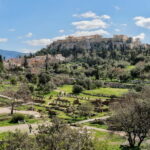
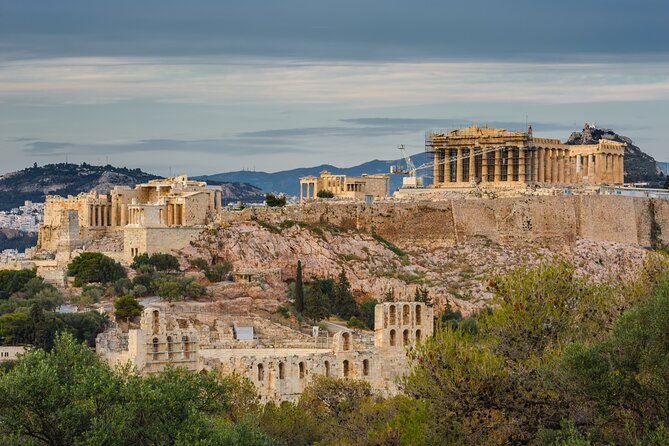
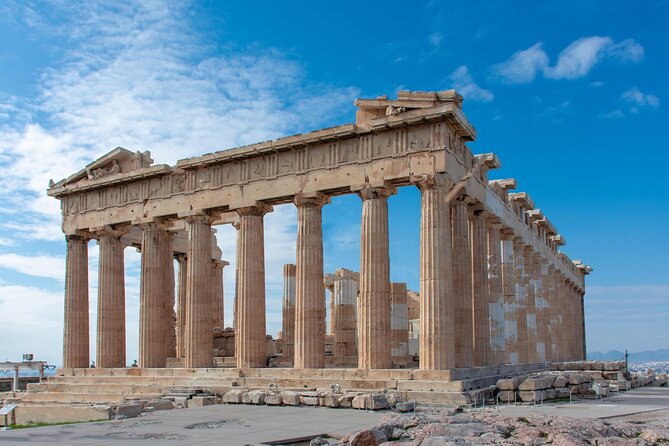
The day begins on the Acropolis, a rocky hill about 156 meters above sea level and roughly 70 meters above the city. Even if you have seen photos, the scale lands differently in person—partly because the whole hill feels like a stage set.
You get about 1 hour 15 minutes here, and that is enough time to hit the key areas if you move with purpose. You will see the Parthenon, dedicated to Athena. Construction started in 447 BC and the main building was completed in 438 BC, with sculptural decoration work continuing until about 432 BC. The architects are often credited as Iktinos and Kallikratis (and Phidias is sometimes associated with the project). If you look closely, you can feel why the Parthenon became the reference point for Classical Greek architecture.
From there you will continue to other standout structures nearby:
- The Erechtheion on the north side, known for the Karyatidis (the iconic female figures that support portions of the temple).
- The Temple of Athena Nike, a small but significant stop for details and views.
- The Theatre of Dionysus, built into the south slope of the hill, tied to the worship space of Dionysus Eleuthereus.
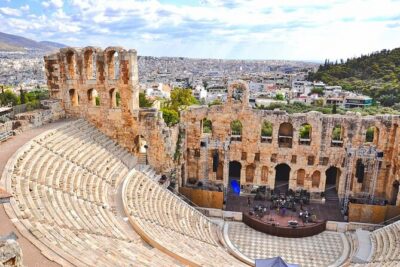
- The Odeon of Herodes Atticus (Herodion), a stone Roman theatre structure on the southwest slope.
A practical tip for fewer headaches at the entrance
On an Acropolis morning, lines and crowds can change minute by minute. If you have mobility limits, it helps to ask whether there are options like elevator or golf-cart access routes. Some guides in Athens are familiar with how to route visitors to use those tools. If you need that kind of support, tell your driver up front.
The one expectation to set right
The driver is not a licensed tour guide permitted to accompany you inside archaeological sites. Translation: you may get great context right at the start, then you head off on your own for portions of the walk. For many people, that is still a great way to see the Acropolis. For others—especially those who want stop-by-stop interpretation—this is the main tradeoff.
Acropolis Museum: where the sculptures and history finally connect
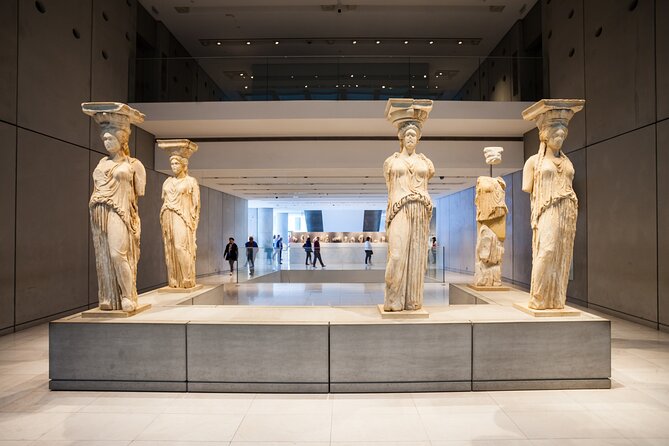
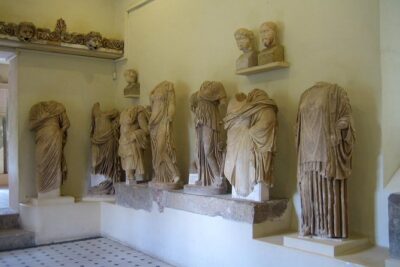
After the hill, the Acropolis Museum is the reality check in the best way. Instead of trying to interpret carvings you saw outside in 100-degree glare, you get a space that groups artifacts so you can understand what you are looking at.
This museum is focused entirely on findings from the Acropolis site and nearby slopes—spanning the Greek Bronze Age through Roman and Byzantine Athens. The building itself was designed to house artifacts from the rock, and it even sits over parts of Roman and early Byzantine ruins. That matters because it changes how you experience “the museum.” It is not just displays. It is a continuation of layers of Athens.
In terms of scale, the museum opened to the public in 2009 (with the foundation laid earlier). There are more than 4,250 objects exhibited across about 14,000 square metres. Your time here is about 1 hour, which is not a “see everything” block. It is long enough to focus on the highlights that tie directly back to what you saw on the hill.
- All Day Cruise -3 Islands to Agistri,Moni, Aegina with lunch and drinks included
★ 5.0 · 4,958 reviews





How to use your 1 hour smartly
Give yourself a simple mission: pick one theme and follow it.
- If you loved the Parthenon sculptures, spend your first minutes figuring out what is displayed and how it links to the temple setting.
- If you are more into temples and architectural purpose, focus on how the museum shows temple fragments and context.
This is one of those stops where seeing fewer objects—but with better attention—feels like a win.
Panathenaic Stadium and the Olympian Zeus area: quick hits with big visual payoff
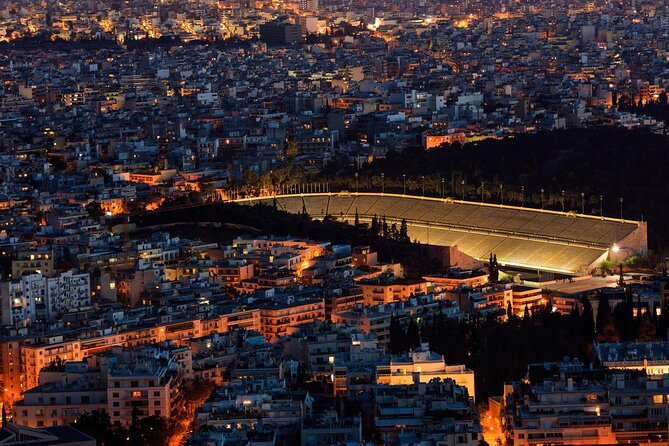
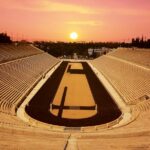
Next you get a short stop at Panathenaic Stadium, also called Kallimarmaro. This is the oldest stadium still in operation in the world, and the Olympics have been held here three times. It is also the only major stadium built entirely of white marble. You will not be here long (about 10 minutes), but it is perfect for a quick photo, a stretch, and a moment of wow.
Then the tour shifts toward the Temple of Olympian Zeus, a half-complete monument dedicated to Zeus. It is impressive partly because you get to see it in its “unfinished” state. The site is surrounded by other landmarks, and that makes it an efficient sightseeing zone rather than a standalone detour.
You will also see nearby points in the same area:
- Hadrian’s Arch (Hadrian’s Gate), a monumental Roman-style gateway that marked an ancient road leading from central Athens toward the eastern complex connected to the Zeus temple area.
- Zappeion, a palatial building next to the National Gardens that is used for meetings and ceremonies.
- National Garden, a public park of about 38 acres located near the Greek Parliament building, with references to notable figures and some ancient ruins.
Why these short stops feel worth it
A half-day tour has limited time. These stops help because they are “look-and-learn” moments. Even if you only get a glance, you walk away with recognizable anchors for the city: you connect the Acropolis story to the Roman-era power story and then to the modern capital setting.
Constitution Square and the Unknown Soldier: where Athens feels like a living city
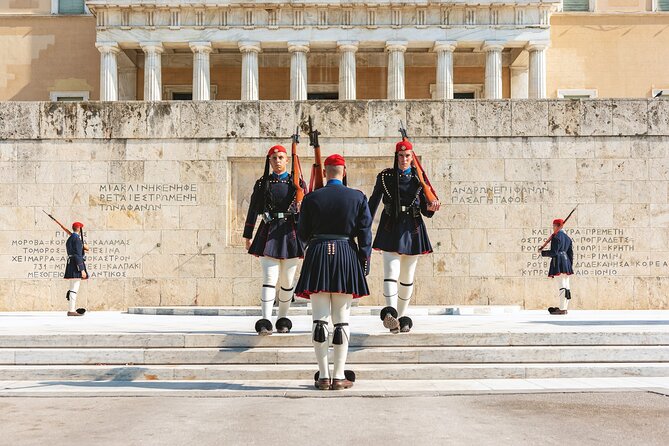
One of the best quick experiences in central Athens is watching the changing of the guard at the Unknown Soldier Monument in front of the Parliament complex. The guards are the Euzones, and this stop is timed for about 10 minutes.
The surrounding setting does half the work for you. The Parliament building sits in the Old Royal Palace overlooking Syntagma Square (named for the constitution granted after the 1843 uprising). You are standing at the crossroads where tourists and locals intersect, and the ceremony adds structure to the middle of your day.
Even if you do not care about uniforms, it is a neat pause. It gives you a fixed moment in a city that can feel overwhelming when every street looks historic.
Plaka and Monastiraki: the best way to end with dinner plans
After temple time and museum time, you drop into neighborhoods where you can slow down without thinking too hard.
Plaka: the cozy ladder-down from the Acropolis
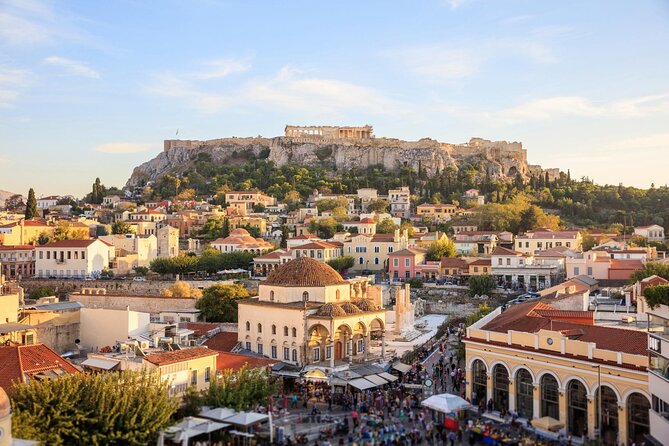
Plaka is Athens’ oldest and most charming district, tucked below the Acropolis. Expect winding medieval alleyways, neoclassical houses with red-tile roofs, and balconies with colorful plants. It is also where you find classic Greek taverns and street cafés—exactly the type of place where you want to grab an ice-cold frappé and decide what’s next.
You get about 1 hour here. Use it for wandering, photos, and picking a restaurant while you still have energy. This is where the “I saw the sights” day becomes an actual Athens day.
Monastiraki and the Ancient Agora edges
As you move through the downtown area, you will also pass key Monastiraki/Agora markers:
- Hadrian’s Library, built around AD 132, known for its internal courtyard and pool bordered by 100 columns.
- Stoa of Attalos, a stoa in the Agora built by and named after Attalos II of Pergamon.
- The Agora, the gathering place in ancient Greek city-states—the social and political center of the polis.
You are not here for long, so do not treat it like a deep archaeology day. Treat it like a “wraparound view” so you recognize what you are looking at later, whether you go back on foot or just remember it.
Price and logistics: where the $180.42 per person makes sense, and where it does not

At $180.42 per person, this is not a budget tour. The price is paying for the things that cost real money in Athens: private Mercedes transportation, pickup and drop-off (including hotel/Airbnb and Port of Piraeus), and the convenience layer that keeps you from wasting half the day figuring out logistics.
You also get:
- Wi‑Fi on board and mobile chargers
- Bottled water
- A/C in the Mercedes
- Group discounts (when applicable)
- Mobile ticket use
- Child seats when needed
But you also have two important costs you should plan for in advance:
1) Entrance fees are extra. The Acropolis Museum lists €20 per person, and the Acropolis entrance lists €30 per person. Ticket prices for other archaeological sites can vary by season.
2) The driver does not function as a licensed guide inside sites. You will likely get direction and context, but you may not get full interpretation as you walk through museums and archaeology spaces.
Who this tour is best for
This tour shines if you:
- Want to see the most important Athens sights in a short time window
- Prefer someone else to handle the driving and timing
- Like a mix of must-see monuments plus downtown streets
- Travel as a family group or with mixed ages, because the vehicle support and routing help keep the day manageable
Who should consider a different format
You might want a different setup if you:
- Want a licensed, in-depth guide inside every major museum and site
- Do not like self-guided time after drop-off
- Hope the price includes every ticket and a fully guided museum experience
Guide names to watch for (and what to ask them)
A lot of the best moments come down to the guide-driver. In this company, you may be connected with people like Andreas, Konstantinos, Spyros, Theo, or Lorenzo depending on availability.
What to ask your driver right away:
- If you want Acropolis lines handled as efficiently as possible, ask about the best entrance route (some guides steer people toward entrances with shorter lines).
- If anyone in your group has walking limits, ask what options exist for getting closer access routes (like elevator or golf-cart alternatives).
- Tell them what you care about most: Parthenon details, museum artifacts, or the Parliament ceremony. A well-matched guide can shape the day around your priorities.
The reviews also point to a pattern: the best guides are good at timing, weather awareness, and quick suggestions for food and photo stops. You will feel that difference immediately.
Should you book this Athens half-day tour?
If you are choosing between doing it on your own and buying a shortcut, this tour is a strong pick. You get major sights without the headache of driving, and you get at least one place—the Acropolis Museum—that turns the Acropolis from “wow, big stones” into “oh, I understand why.”
Book it if you want:
- Private door-to-door convenience
- A smooth ride with Wi‑Fi and comfort
- A realistic half-day plan that covers the Acropolis plus central Athens and Plaka
Maybe skip or consider an upgraded guide setup if you:
- Expect the driver to stay with you inside every museum and archaeological area
- Want all entrances included in the base price
- Are the type who likes to read every label slowly—because your museum and monument times are limited
If you go in with clear expectations and budget for the entrance fees, this is one of the easiest ways to get a complete first look at Athens without burning your day in transit.
FAQ
Are the entrance tickets included in the price?
No. The Acropolis Museum entrance is listed at €20 per person, and the Acropolis entrance is listed at €30 per person. Ticket prices for other sites vary by season.
Will the driver guide us inside museums and archaeological sites?
The driver is not a licensed tour guide and is not permitted to accompany you inside archaeological sites. A licensed tour guide may be available upon request depending on availability.
What’s the tour duration?
It runs about 4 to 5 hours.
Is pickup and drop-off included?
Yes. You can be picked up from your hotel/Airbnb or from Port of Piraeus without extra charge, and you will also be dropped off there.
What vehicle amenities are included?
You ride in a Mercedes with A/C and Wi‑Fi on board. The tour also includes bottled water and mobile chargers.
Is this a private tour?
Yes. It is a private activity with only your group participating.
When is the Acropolis closed?
The Acropolis is closed on January 1st, March 25th, May 1st, Easter Sunday, and December 25th and 26th.


More Historical Tours in Athens



More Tours in Athens


More Tour Reviews in Athens
- All Day Cruise -3 Islands to Agistri,Moni, Aegina with lunch and drinks included
★ 5.0 · 4,958 reviews