REVIEW · ATHENS
Biblical Corinth: St. Paul and His Letters to the Corinthians
Book on Viator →Operated by My Athens Transfers · Bookable on Viator
Paul’s story starts above Athens. This private day trip follows St. Paul’s footsteps through places tied to his preaching, letters, and the trade routes he used to move ideas. You get the classic highlights plus the in-between details, from Mars Hill to the port at Kechries.
I especially like the pacing: it’s private, so you can linger, stand back, and take photos without the usual herd feeling. I also like the practical touches like onboard Wi‑Fi, bottled water, and a lunch stop that keeps the day human instead of rushed.
One drawback to weigh up front: your driver gives interpretation and context but is not a licensed guide inside the archaeological sites. If you want a full official guide walk-through at Ancient Corinth or the Museum of Isthmia, you’ll need to request that option (and those site entrances are extra).
In This Review
- Key reasons you’ll like this Corinth day trip
- Mars Hill above Athens: where Paul challenged the Unknown God
- Corinth Canal and the Diolkos: the isthmus that shaped travel, trade, and ideas
- Isthmia’s Poseidon sanctuary and the crowds Paul would have met
- Museum of Isthmia: artifacts from Paul’s ports and everyday belief
- Ancient Corinth and the Bema: standing where Paul’s case mattered
- Temple of Apollo and Akrokorinthos: seeing the skyline Paul preached under
- Kechries (Kenchreai) port and the church that remembers Paul
- Lunch in Corinth: don’t skip the break
- Price and value: what $218.43 buys you (and what costs extra)
- Who should book this Corinth Paul-focused tour
- Final call: should you book?
- FAQ
- Do I need to pay for entrance tickets during the tour?
- Is lunch included?
- Does the driver go inside the archaeological sites with you?
- Can I request a licensed tour guide?
- What’s the total duration?
- What’s the tour language?
- Is Wi‑Fi provided?
- Is hotel or port pickup included?
Key reasons you’ll like this Corinth day trip
- Mars Hill (Areopagus Hill) in Athens ties directly to Paul’s sermon about the Unknown God
- Corinth Canal + Diolkos connect the geography of the isthmus with Paul’s sea-and-trade world
- Isthmia sanctuary and stadium area show the kind of public crowds Paul would have encountered
- Museum of Isthmia adds artifacts, including rare finds tied to Kenchreai
- Ancient Corinth highlights like the Bema place you close to Paul and Gallio’s legal moment
- Akrokorinthos views make the “walk the territory” part feel real
Mars Hill above Athens: where Paul challenged the Unknown God

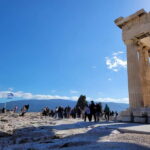
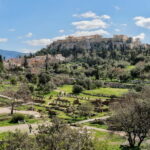
You start in Athens with a walk through the sacred grounds of the Acropolis area, then a focused stop at Areopagus Hill, also known as Mars Hill. This is the spot traditionally linked to Paul’s speech to the council of Athens, where he connects faith to the city’s own questions and points to the “Unknown God.” Even if you’re not doing this as a devotional visit, the setting helps. It’s not just a concept. You’re literally standing on the kind of dramatic high ground where ideas get argued out.
Here’s what I like about this approach: it puts you in the mindset of ancient Athens before you move on to Corinth. Athens represents philosophy and public debate. Corinth represents community building under pressure, with trade, religion, and power mixed together. That contrast makes the rest of the day land better.
Practical note: this stop is short (about 20 minutes) and there’s walking around the viewpoint area, so wear comfortable shoes even if you’re expecting it to be easy.
You can also read our reviews of more tours and experiences in Athens.

Corinth Canal and the Diolkos: the isthmus that shaped travel, trade, and ideas
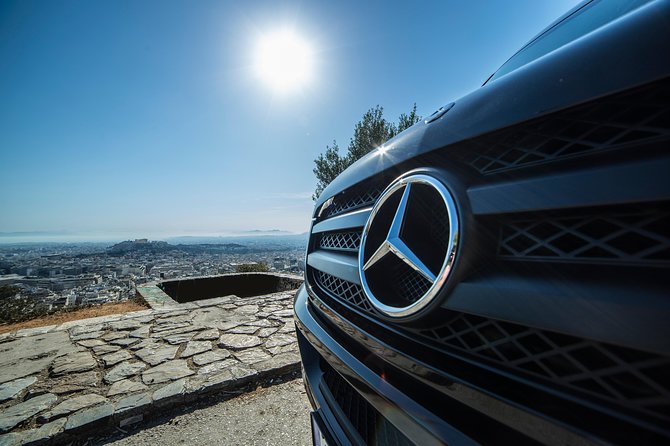
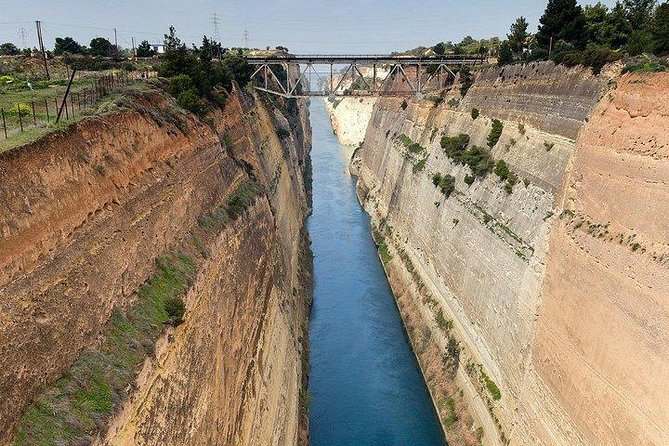
After Athens, the drive takes you to the engineering story of the region: the Corinth Canal. You’ll get a viewpoint from up high where you can see the steep limestone walls and watch vessels thread through the channel below. It’s a modern cut, but it sits on the same geographic pinch point that mattered in antiquity.
This is where the day gets smart. The tour isn’t only “Bible sites.” It’s also about the practical reality Paul traveled through: the isthmus that forces journeys to slow down. Canals are the modern version of the same problem ancient people faced.
Next comes the Diolkos, the ancient ship-transport roadway. You don’t have to memorize Roman measurements to appreciate why it matters. The point is simple: long before the canal, people moved ships overland across the narrow strip connecting the Aegean and Ionian seas. Standing where the remnants of that route lie helps you picture Corinth as a logistics hub, not just a church address.
The time for each of these stops is brief (about 30 minutes for the canal and 20 minutes for the Diolkos), which is perfect if you’d rather spend your “slow time” at the ruins and views tied to Paul’s letters.
Isthmia’s Poseidon sanctuary and the crowds Paul would have met
From the canal area, you head to Isthmia, about where the Peloponnese meets mainland Greece. In ancient times this mattered. The sanctuary dedicated to Poseidon was tied to the Isthmian Games, second in importance only to the Olympic Games. That means this wasn’t just a temple stop. It was a place where athletes, visitors, and sellers converged season after season.
This stop is especially meaningful in a Pauline-focused itinerary because Paul is believed to have worked as a tentmaker in the Corinth region, and you can easily imagine how he would serve visitors coming for the games. The idea is not that you’ll find Paul’s footprints etched into stone. It’s that the environment fits the pattern. Paul met people where people already gathered.
You’ll also visit the Archaeological Site of Isthmia area, where the Temple of Poseidon and stadium are part of what you see. Nearby is the Sanctuary of Palaimon, devoted to a patron associated with sailors, which reinforces how many spiritual “threads” existed in the same public space.
Two extra layers make this stop richer:
- The ancient theater at Isthmia, originally for contests of music connected to the Games, carries Roman-era mosaic decoration (including sea creatures and Dionysian mythology).
- The area also connects to the fact that Isthmia wasn’t only religious. Its strategic location made it a meeting place where politics and military decisions could matter.
The tour keeps this part around one hour at Isthmia first, then adds additional site time, so you’re not just “look and go.” You get time to read the place as a lived-in crossroads.
Museum of Isthmia: artifacts from Paul’s ports and everyday belief
Next you’ll stop at the Archaeological Museum of Isthmia. This is the change-of-gear moment. Outdoors, you’re seeing structures and terrain. Indoors, you’re getting the objects people used, offered, and kept.
The museum collection is tied to the Sanctuary of Poseidon and the wider festival context, but what makes it feel connected to Paul’s world is the presence of items from regional ports. One highlight mentioned for the collection is glass panels connected to Kenchreai, the nearby port where Paul is tied to departures toward Syria.
You’ll also see other pieces such as statues, votive offerings, and burial artifacts. That range matters because it prevents the day from becoming one narrow lane. Corinth and its region were not only “church story.” They were everyday life: worship practices, travel, and the objects that survived when people didn’t.
Timing here is about 30 minutes, and the key practical detail is that museum entrance is not included in the tour price (you’ll purchase it on site). If you only budget short museum time in your head, don’t. This is often where the day becomes more than “sightseeing checklist.”
Ancient Corinth and the Bema: standing where Paul’s case mattered
Now the main event: Ancient Corinth (Archaia Korinthos). This is one of the biggest parts of the day, and it’s also where you need to manage expectations. You’re not getting a full guided walk inside every ruin by default. You’ll explore the site yourself, while your driver explains what you’re seeing from outside and helps answer questions.
The centerpiece of the story is the Bema, the stone platform associated with the Roman public space where Paul is believed to have stood before Proconsul Gallio. Acts frames this as a turning point: Gallio refuses to judge what’s treated as an internal dispute, and Paul can continue his mission. Even if you’ve read the passage before, being on the physical platform area adds weight. It’s the difference between hearing a legal moment and feeling how public it would have been.
You’ll also connect the city’s setting to why it was such fertile ground for early church letters. Corinth sat on a strategic route, so the community you’re imagining was constantly in contact with new people, new ideas, and new tensions.
As you move through the site, plan for about one hour. The ruins are large, and the best use of time is to slow down near the big interpretive points (like the Bema area) rather than trying to sprint from one wall to another.
- All Day Cruise -3 Islands to Agistri,Moni, Aegina with lunch and drinks included
★ 5.0 · 4,958 reviews


Temple of Apollo and Akrokorinthos: seeing the skyline Paul preached under

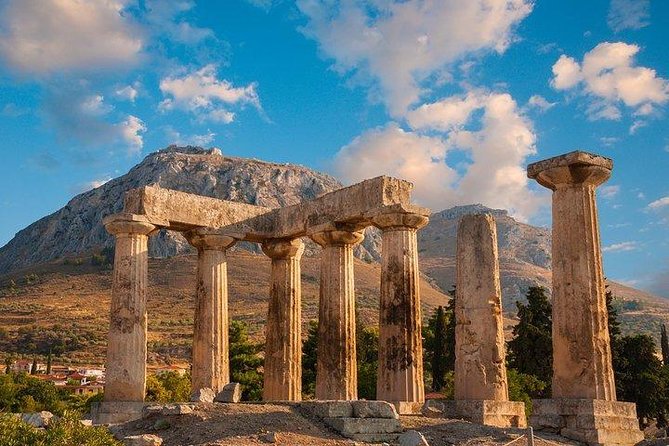
At the heart of Ancient Corinth is the Temple of Apollo, one of the older major temples in Greece, with construction dating to around 560 BC. What you get isn’t just architecture. It’s scale. When Paul arrived in Corinth, this kind of monumental worship would have dominated the skyline, so it’s a helpful anchor for understanding what “spiritual status quo” Paul confronted in public life.
Then the day climbs to Akrokorinthos, the fortress above the city. Expect a hike. This is about one hour, and the purpose is not only a view (though the view is why most people enjoy it). It’s also about realizing how steep and defensible this place is, and how the city below would look from above when you’re thinking like someone who had to travel, teach, and stay safe.
One small practical tip: for a climb like this, pack for weather changes. Athens and the Corinth region can shift quickly. Even if you’re only climbing for an hour, it’s still easier to enjoy the views if you’re not fighting sweat and sun the whole time.
Kechries (Kenchreai) port and the church that remembers Paul
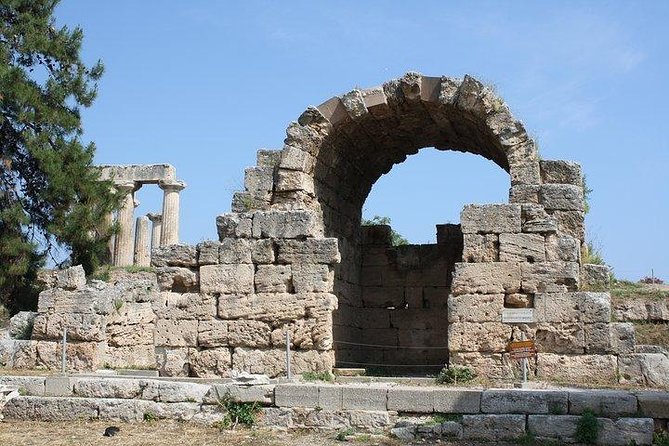
The tour then slows into the coastal part of the Paul story with a stop at Kechries, tied to ancient Cenchreae, the eastern port of Corinth. This is where the New Testament story becomes very practical. In Acts 18:18, Paul is connected with travel plans from the region to Syria, and the idea of him cutting his hair to fulfill a vow adds an intimate personal moment right in the middle of the travel route.
You’ll also connect this place to early church life in the wider Roman world. Paul’s letter to the Romans includes mention of Phoebe, described as a trusted servant of the church at Cenchreai. The tour uses that link to keep the port from feeling like a generic beach stop.
After the coastal walk, you visit Apostolou Pavlou, a church that honors Paul’s long stay in Corinth around 51–52 AD. The tour frames it as a living reminder of the Pauline ministry that began there. I like pairing a ruin-based day with a standing place of worship, because it shifts your head from ancient stones to living meaning.
This portion of the day is built around time for walking and absorbing the atmosphere, around 20 to 30 minutes at each of these stops.
Lunch in Corinth: don’t skip the break
Half the point of a long day trip is keeping your energy stable. This one builds in lunch at a traditional seaside Greek taverna. If you choose the option with Greek traditional food, the meal cost is included.
I think this matters for two reasons:
- You’ll last longer on the ruins if you eat like a person, not like a commuter.
- A local taverna is one of the easiest ways to feel what Corinthian daily life can be like, even centuries after the first letters were written.
The lunch slot is about one hour, so it’s not a snack. You’ll have time to sit, cool down, and then go back out.
Price and value: what $218.43 buys you (and what costs extra)
At about $218.43 per person for an 8 to 9 hour private day, you’re paying mainly for three things: comfortable transport, interpretation during the drive, and structured time at the key sites.
What’s included:
- Hotel or port pickup and drop-off
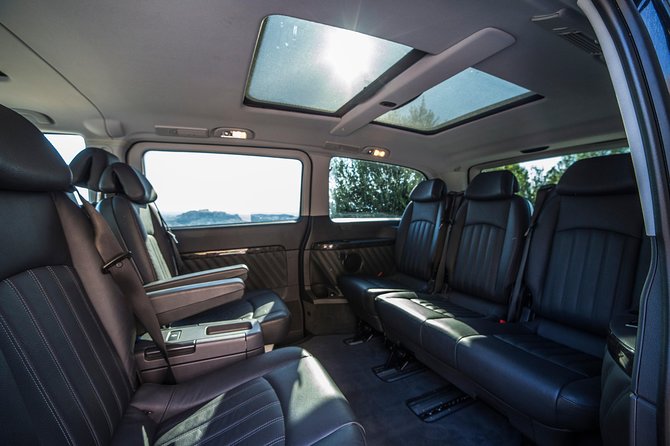
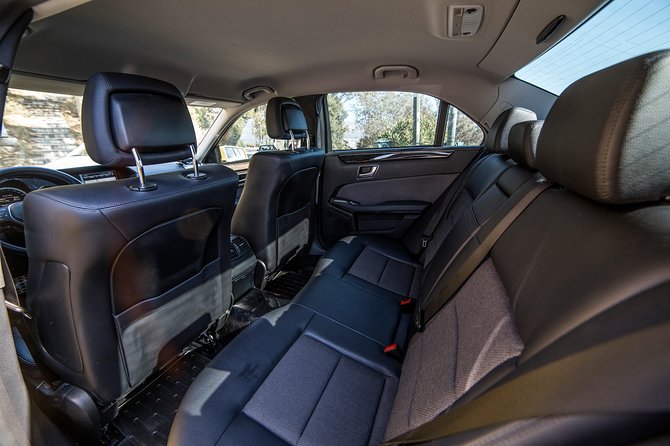
- Private transportation in an air-conditioned vehicle
- Onboard Wi‑Fi and bottled water
- A lunch option (with the Greek traditional food choice)
What you should budget for separately:
- Entrance fees for Ancient Corinth and the Archaeological Museum of Isthmia, listed as €15 per person (paid on site)
- If you want a licensed tour guide inside the archaeological sites, that’s an extra request option and depends on availability
One more practical value point: because it’s private, you’re not forced into someone else’s museum pace. That’s why people like this format. It lets you spend your effort where you care most, whether that’s standing at the Bema area or taking extra time on Akrokorinthos.
Who should book this Corinth Paul-focused tour
This tour makes the most sense if you want a day that’s more than a list of stones. You’ll get the big references to Paul and the letters, but you’ll also be shown how the geography worked for people moving by sea and across the isthmus.
Book it if:
- You care about seeing where Paul preached and connected with communities.
- You’d rather have a driver who explains what you’re seeing than follow a script inside every ruin.
- You want comfort and fewer timing headaches from Athens pickup.
Consider something else if:
- You’re expecting a licensed guide to walk you inside the major archaeological sites as part of the base price. The driver can explain and answer questions, but the licensing inside venues is optional and extra.
- You want a very small group feel with lots of free time. It’s private, but the day still packs many major stops into one run.
Final call: should you book?
If your goal is a meaningful, practical Corinth day tied directly to Paul’s story, I’d say this is a strong choice. The combination of Mars Hill, the isthmus engineering stops like Corinth Canal and the Diolkos, and the grounded anchors at Ancient Corinth (including the Bema) keeps the day coherent instead of scattered.
If you want to maximize your experience, do two things: wear shoes for climbing at Akrokorinthos, and plan for the €15 entrance fees at Ancient Corinth and the Museum of Isthmia. Then you’ll be set to enjoy the day at a comfortable pace, with explanations that help the sites make sense.
FAQ
Do I need to pay for entrance tickets during the tour?
Yes for two main places. The tour notes entrance fees for Ancient Corinth and the Archaeological Museum of Isthmia at €15.00 per person, which you can purchase on site.
Is lunch included?
Lunch is included if you choose the option with Greek traditional food. If you don’t choose that option, lunch isn’t automatically included.
Does the driver go inside the archaeological sites with you?
No. The tour includes professional drivers with history commentary, but they are not licensed tour guides and are not meant to enter the archaeological sites with you. They can still explain what you’re seeing and answer questions.
Can I request a licensed tour guide?
Yes, a licensed tour guide is listed as upon request and depending on availability. This would be an optional add-on.
What’s the total duration?
It runs about 8 to 9 hours.
What’s the tour language?
The tour is offered in English.
Is Wi‑Fi provided?
Yes. The tour includes Wi‑Fi onboard.
Is hotel or port pickup included?
Yes. The tour includes hotel or port pickup and drop-off as part of the private service.

More Tour Reviews in Athens
- All Day Cruise -3 Islands to Agistri,Moni, Aegina with lunch and drinks included
★ 5.0 · 4,958 reviews