REVIEW · ATHENS
Athens to Meteora, Day Trip with Local Guide,up to 9 people
Book on GetYourGuide →Operated by VIP Meteora Tours · Bookable on GetYourGuide
Meteora feels unreal at first glance, like stone castles floating above the clouds. This full-day trip takes you out of Athens to the rock-top monasteries of UNESCO World Heritage Meteora, with the day broken into doable chunks: train and bus legs, guided monastery time, and planned photo stops.
I like two things most: you see all 6 monasteries from close viewpoints, but you also get inside 3 of them rather than only watching from afar. And the local English-speaking tour leader keeps the day moving with clear stories and practical direction, including names like Vagelis and George showing up in recent experiences.
One thing to consider: this is a 14-hour outing. The timing is long and the monastery visits involve walking on stone paths and steps, so it can be tiring if you’re dealing with mobility or health limits.
In This Review
- Key things to know before you go
- Meteora’s rock-top monasteries: what you’re really signing up for
- Athens to Kalabaka: train changes, bus swaps, and how it affects your day
- Kalabaka meeting point: how the day gets organized on arrival
- Seeing all 6 monasteries up close, then entering 3
- Photo stops with panoramic angles: when to take the shots and when to just look
- Hermit Caves: the quieter, smaller stops that add meaning
- How the day flows: pacing, walking, and what to do about meals
- Price and value: does $128 make sense for a Meteora day?
- Who this tour fits best (and who should choose a different plan)
- Should you book this Athens to Meteora day trip with VIP Meteora Tours?
- FAQ
- How many Meteora monasteries do we see, and how many do we enter?
- Are monastery entrance fees included in the tour price?
- Do we visit the Hermit Caves?
- How does transportation work from Athens if rail service is disrupted?
- How long is the day trip?
- Where do we meet in Athens, and where do we get picked up in the Meteora area?
- How large is the group, and is there an English guide?
- What comfort items are included on the ride?
- Are meals included?
- Is this tour suitable for wheelchair users or people with serious health issues?
Key things to know before you go
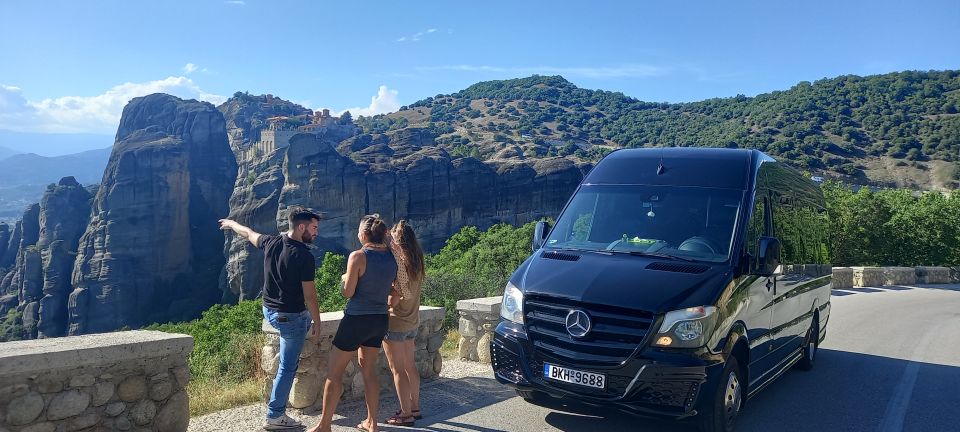
- All 6 monastery viewpoints: you’ll get panoramic stops and close-distance views, not just one highlight spot
- Inside 3 monasteries: enough time to actually look around, not just line-of-sight snapshots
- Hermit Caves visit: you’ll also see the quieter, smaller spiritual sites carved into the rock
- Small group feel (up to 9): easier than big-bus touring when you’re trying to hear the guide and get photos
- Train + bus logistics: rail disruptions are handled with a bus plan that keeps the trip length about the same
Meteora’s rock-top monasteries: what you’re really signing up for
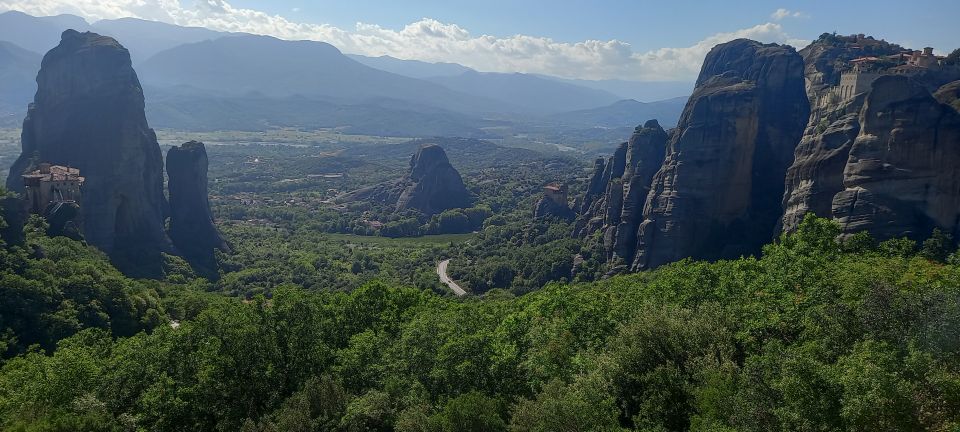
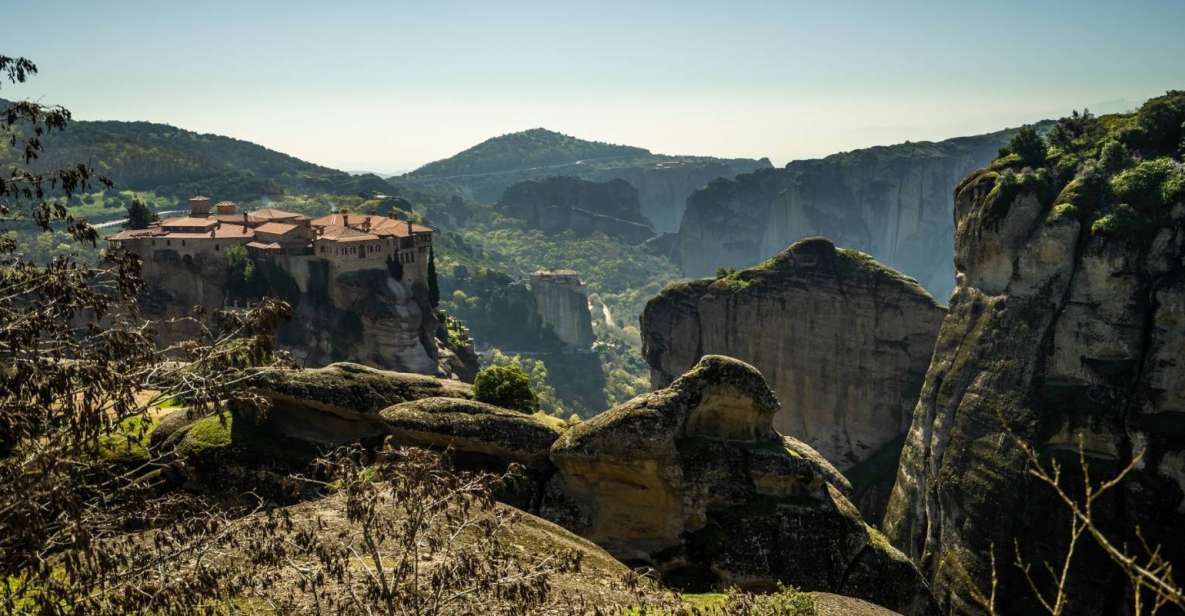
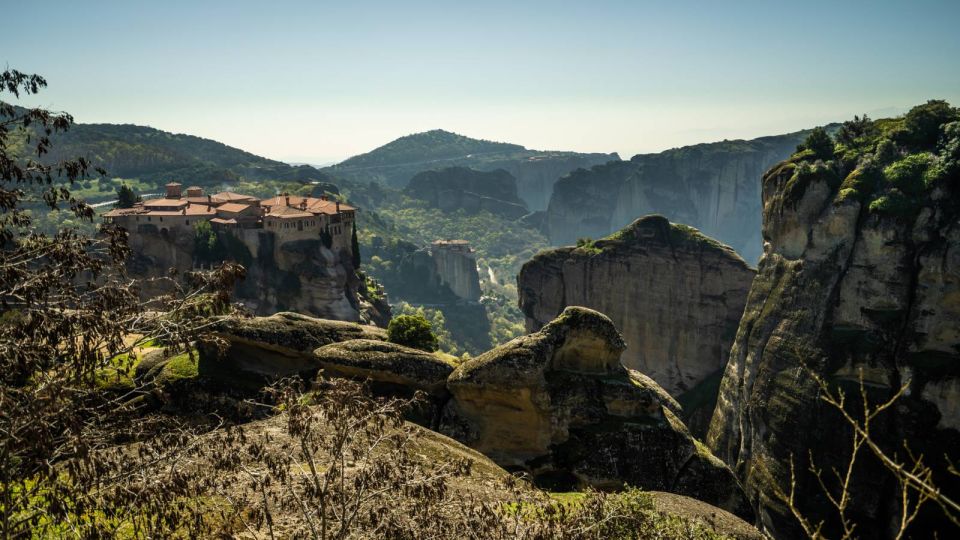
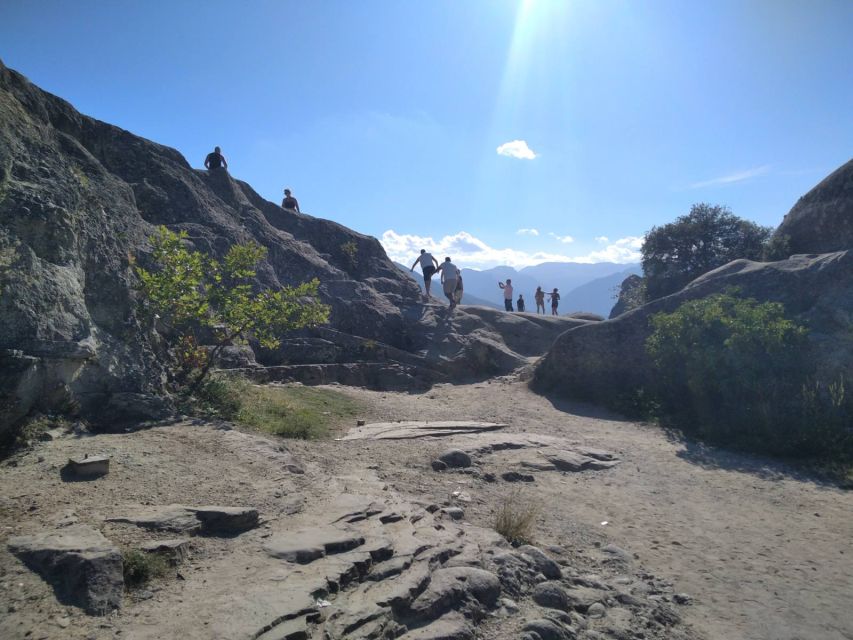
Meteora is the kind of place that looks staged until you’re there and realize the rocks are real, the scale is real, and the monasteries were built in the strangest possible spots. The value of this day trip is that it’s structured for a single long day: you get transportation out of Athens, a local guide to connect the dots, and a loop through the main monastery area without you having to figure everything out on the fly.
You’ll spend a big chunk of your time around Meteora itself, including a bus tour through the area, dedicated photo stops, time to visit monasteries, and a visit to the Hermit Caves. The day isn’t designed to be slow and dreamy; it’s designed to be effective. That works well if you want a once-in-a-lifetime hit of Meteora with limited planning.
The key idea: you’re not just chasing Instagram angles. You’ll also get context for what you’re looking at—why these monasteries were placed where they were, and how the complex sits in relation to the rock formations. That kind of orientation is what turns a quick visit into a day that sticks.
You can also read our reviews of more guided tours in Athens

Athens to Kalabaka: train changes, bus swaps, and how it affects your day
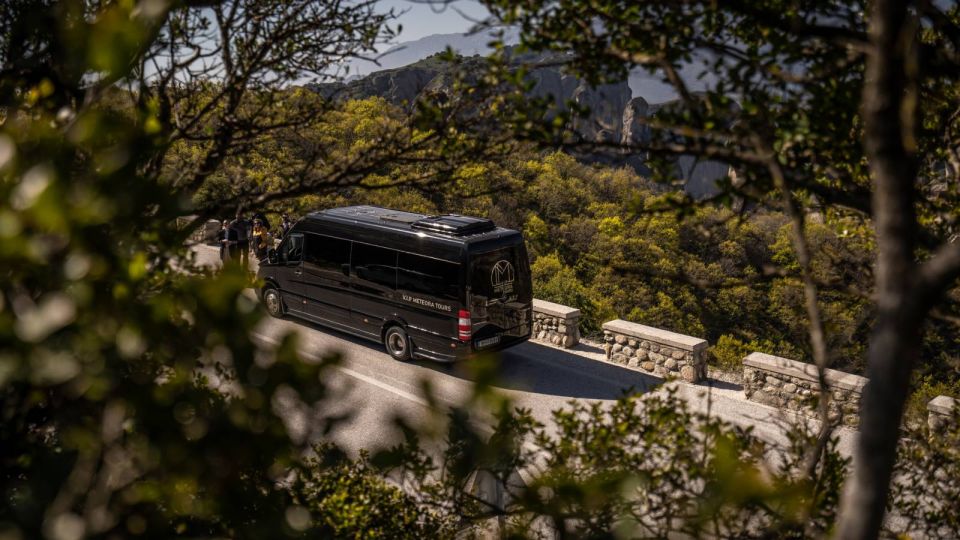
The tour starts in Athens at St. Larissis. From there, you’ll travel by train toward Kalabaka, and then there’s a bus/coach leg to reach Meteora. The important detail is that the rail portion is affected by repairs and service changes, and the operator’s plan accounts for that.
Right now, rail-trips from Athens to Meteora are paused due to restoration work. Instead of the rail route, the plan uses a modern air-conditioned 35-seater bus, and they note the travel time is the same while the trip is easier. Separate guidance also points out that trains have ceased operating in the area, so you travel by train up to a point and then board a bus using the same tickets.
Practically, this means:
- Build your morning around an early start from Athens.
- Know that part of the route may be bus instead of rail.
- Follow the email instructions you’ll get a few days before, since your exact mid-route shift from train to bus (and vice versa) depends on the current rail setup.
Seats are assigned based on your tickets, which removes one more headache when you’re juggling transport on a tight schedule.
Kalabaka meeting point: how the day gets organized on arrival
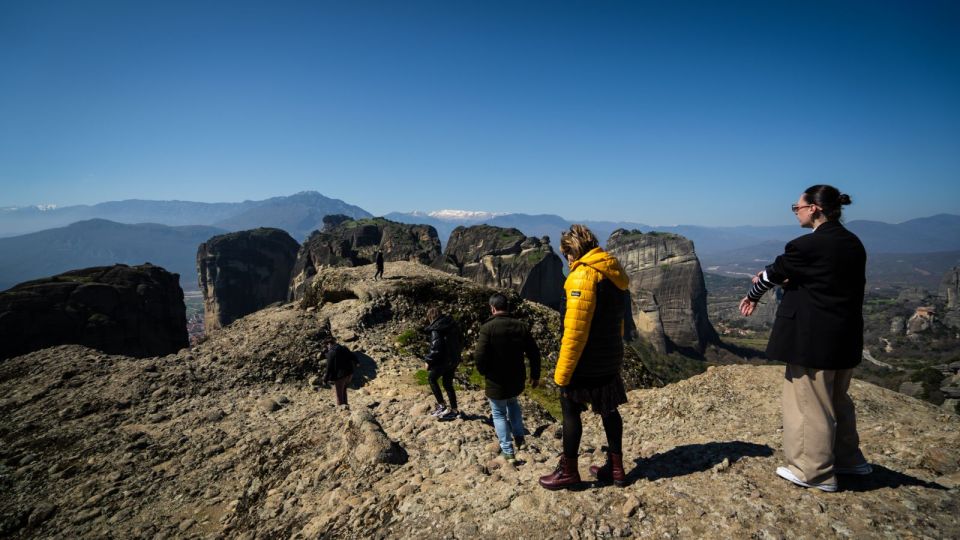
Once you reach Kalabaka—the gateway town for Meteora—you meet your local English-speaking tour leader. The day shifts from “getting there” to “seeing it” pretty quickly, and that handoff matters. Kalabaka is where the real Meteora logistics begin, including getting you into the right vehicle for the monastery loop.
Your group stays small (up to 9 people), so the ride and the stops feel more controlled than the classic big-bus shuffle. The vehicle is air-conditioned, and you’ll have bottled water on board. Wi‑Fi is also included, which sounds minor until you’re tired and your phone battery is the first thing to give up after a long day.
A smart extra here is the way the leader sets expectations. You’ll hear stories and legends that connect what you’re seeing to the wider Greek context. Even if you’ve read about Meteora before, hearing how the guide frames the monasteries makes your time on-site more intentional: you know what details to watch for and where to focus your attention.
Seeing all 6 monasteries up close, then entering 3
This is where the tour earns its keep. You’ll enjoy close-distance views of all 6 monasteries, with time built in for photo stops at the most panoramic spots. Then, you actually enter 3 monasteries inside, which is a big difference from tours that only offer exterior views.
There’s also a practical bonus: monastery ticketing is handled in a way that lets you skip the ticket line. That doesn’t mean your monastery entrance is free. Entrance fees are not included. The tour lists the entrance fees as 5€ per person per monastery you visit, so budget for that extra cost in advance.
Inside the monasteries, you’ll see the religious and architectural details that exterior viewpoints can’t explain. The monasteries are often similar at first glance from a distance, so being inside at three different sites helps you notice the variation: different layouts, different ways space is used, and different perspectives back out toward the rocks.
One more consideration: monasteries are active places of worship in a setting with lots of stairs and uneven stone. Wear shoes you can trust. If you’re hoping for a casual walk on flat paths, this is not that kind of day.
Photo stops with panoramic angles: when to take the shots and when to just look
Meteora’s photo opportunities aren’t random. The day includes planned stops at the most panoramic areas, plus viewpoints that let you see monasteries against the rock formations. These moments are useful because they give your eyes context. Once you understand how the monasteries sit across the valley, the interior visits land better.
If you’re the type who wants the perfect photo, a helpful move is to avoid spending too much time at any single stop. The tour is designed around time windows. I’d take one careful shot, then give yourself a minute to look without the lens in your face. The scale hits harder when you’re not trying to frame it.
Also, bring a camera you can operate with gloves or quick handling if the day is chilly. Meteora timing can shift with season, and you may find yourself moving from warm vehicle to cold stone air to wind-exposed viewpoints.
And one small tip: keep your water and snacks situation ready for the gaps between stops. Meals aren’t included, so you may want a plan for energy (more on that below).
You can also read our reviews of more tours and experiences in Athens


Hermit Caves: the quieter, smaller stops that add meaning
Many Meteora days focus only on the monasteries, but this one includes the Hermit Caves and refers to hidden hermitages as part of the experience. That’s a nice balance. The main monasteries get the big attention, but the caves add a different kind of perspective: smaller, more intimate spaces tied to a simpler life.
Even if you don’t go deep into details on each site, the visit helps you see Meteora as more than “churches on a cliff.” It’s a whole spiritual geography, where rock isn’t just scenery—it’s part of the story.
This stop also breaks the rhythm of monastery exteriors and interiors. It gives your brain a new angle, which is valuable on a long day. After hours of stairs and sacred rooms, a different kind of site keeps things from blending into one continuous blur.
How the day flows: pacing, walking, and what to do about meals
The total duration is 14 hours, with a long travel day layered around a focused Meteora block. The Meteora portion is listed as roughly 4 hours of time on-site activities, including break time, photo stops, monastery visits, and a bus tour through the area.
Here’s what that pacing feels like in practical terms:
- You’ll spend a lot of the day moving between Athens, Kalabaka, and Meteora.
- Then you’ll concentrate your attention on the main sites.
- You’ll likely have gaps for quick bites or downtime, but meals are not included in the tour package.
So bring a simple strategy for food. If you rely on meals being arranged for you, you’ll be disappointed. Instead, I recommend planning for snacks and water beyond what’s provided, especially since you’ll be doing walking in and out of monasteries.
Also, pay attention to the “not suitable for” list. The tour states it isn’t suitable for people with back problems, mobility impairments, heart problems, wheelchair users, or those with recent surgeries. That’s a big clue about the walking and stairs involved. Even healthy feet can feel it after a day like this, so be honest with yourself.
Finally, follow the on-site rules: no smoking in the vehicle, no alcohol or drugs, and you can’t touch exhibits. Dress comfortably, but also respectfully for the monastery interiors.
Price and value: does $128 make sense for a Meteora day?
At $128 per person for a 14-hour Athens-to-Meteora day trip, the value depends on what you’re trying to buy: convenience, structure, and a small-group guide.
Here’s what you typically get in the included package:
- Round-trip transportation tied to the Athens-to-Kalabaka plan, plus onward travel to Meteora
- Local English-speaking tour leader
- Small group capped at up to 9 people
- Bottled water and an air-conditioned vehicle (VIP-class minibus)
- Wi‑Fi on board
- Close viewpoints of all 6 monasteries
- Entrance to 3 monasteries inside
- Hermit Caves visit
- Skip-the-line support for ticket ordering
Then there are the not-included costs that matter:
- Monastery entrance fees: 5€ per person per monastery (for the ones you enter)
- Meals and snacks
- Personal travel insurance
When I look at the pricing this way, it’s not just “transport + tickets.” You’re paying for time-saving organization and a guide who helps you connect what you’re seeing with why it matters. In Meteora, that’s the difference between a long day that feels like rushing and a long day that feels like you got it.
If you’re traveling solo or with a small group and you want to avoid the headache of buses, schedules, and finding the monastery loop, $128 can be a bargain. If you’re comfortable arranging transport yourself and you don’t care about guided context, the value shifts.
Who this tour fits best (and who should choose a different plan)
This tour is best for you if:
- You want a structured day that covers the main Meteora hits without needing to plan every stop.
- You like small-group touring (up to 9 people) rather than crowd-control chaos.
- You enjoy having a guide connect the spiritual and historical layers while you’re walking around.
It’s also a good match if you care about viewpoints and photography, because the day includes multiple panoramic photo stops and close-distance views of all monasteries.
It may not fit you if:
- You have mobility limitations or back/heart concerns. The tour explicitly says it’s not suitable for wheelchair users and for several health situations.
- You hate long days. This is a 14-hour outing, and the travel time is real.
Should you book this Athens to Meteora day trip with VIP Meteora Tours?
If you want to check Meteora off your list with a guide, a small group size, and a realistic pace that still covers the big sights, I’d book this. The combination of seeing all 6 monasteries from close viewpoints, entering 3 inside, and adding the Hermit Caves gives you enough variety to feel like you truly spent time here.
But don’t book it on autopilot. Factor in the long day, the walking and stairs at monastery sites, and the extra monastery entrance fees. If those details work for you, this is a strong way to experience Meteora without turning your vacation into a logistics project.
FAQ
How many Meteora monasteries do we see, and how many do we enter?
You’ll see all 6 monasteries from close distance, and you’ll visit 3 monasteries inside.
Are monastery entrance fees included in the tour price?
No. Monastery entrance fees are not included. The tour lists 5€ per person per monastery.
Do we visit the Hermit Caves?
Yes. The tour includes a visit to the Hermit Caves.
How does transportation work from Athens if rail service is disrupted?
The plan includes a train portion early in the day, but trains have ceased operating in the area in the current setup. You may travel by train up to a point and then board a bus with the same tickets. The tour also notes that rail-trips have been called off due to restorations and transportation will be handled with a modern air-conditioned 35-seater bus with the same travel time.
How long is the day trip?
The duration is 14 hours.
Where do we meet in Athens, and where do we get picked up in the Meteora area?
The starting location is St. Larissis in Athens. You meet your local tour leader in Kalabaka, with pickup and drop-off at Kalampaka’s Train Station.
How large is the group, and is there an English guide?
The group is small, limited to up to 9 people. The tour includes a local English-speaking tour leader.
What comfort items are included on the ride?
The included ride features an air-conditioned vehicle, a VIP-class minibus, bottled water, and Wi‑Fi.
Are meals included?
No. Meals, snacks, and soft drinks are not included.
Is this tour suitable for wheelchair users or people with serious health issues?
No. It is not suitable for wheelchair users and for people with back problems, mobility impairments, heart problems, or those with recent surgeries.

More 1-Day Tours in Athens

More Guided Tours in Athens

More Tour Reviews in Athens
- All Day Cruise -3 Islands to Agistri,Moni, Aegina with lunch and drinks included
★ 5.0 · 4,958 reviews