REVIEW · ATHENS
Athens: Meteora Monasteries, Hermit Caves Tour with Pickup
Book on Viator →Operated by Keytours - Greece · Bookable on Viator
Meteora pulls you off the map for a day. One early bus out of Athens turns into UNESCO monasteries on rock towers, plus the quiet, cliffside Badovas hermit caves. It’s the kind of outing where the schedule matters, because you’re fighting daylight and stairs.
I love how this trip stacks real time on site: an expert escort gets you from Kalambaka up to the monasteries, then you explore at your own pace with a free audio guide. I also like the built-in food rhythm, including a seaside brunch stop at Kamena Vourla and a proper Greek lunch (with vegetarian option). One thing to plan for: it’s a very long day, and getting inside monasteries means stairs and dress rules.
In This Review
- Key points to know before you go
- Why Meteora is worth the 14-hour commitment
- Pickup in Athens: station vs hotel pickup, and why timing matters
- The Athens to Kalambaka ride: scenic breaks that keep you human
- Kalambaka staging: VIP minibus transfer and quick photo stops
- Great Meteoron: what makes the main monastery feel different
- Varlaam monastery and the rope-hauling story
- Badovas hermit caves: the quiet, human scale of Meteora
- St. Stephen’s, accessibility, and the stairs reality check
- Audio guide vs a live guide: getting the story without slowing down
- Kalambaka free time: lunch on your terms
- Cost and value: what you pay for, and what costs extra
- The pickup and day-run risks: what to watch for
- Who should book this Meteora day tour
- Should you book it?
- FAQ
- What time does the tour start and how long is it?
- Where is the meeting point in Athens?
- Is pickup offered from hotels?
- How many monasteries do you visit?
- Is the audio guide included for the monasteries?
- What about entrance fees for the monasteries?
- Are meals included?
- Do you have free time in Kalambaka?
- How much walking and stairs should I expect?
- What should I wear to enter the monasteries?
- What happens if weather is bad?
Key points to know before you go
- UNESCO Meteora monasteries, in one day with a focused loop rather than endless backtracking
- Badovas hermit caves for the quiet side of Meteora, beyond the main viewpoints
- Audio guide included so you can move at your own speed inside the churches
- Two-way transfers are handled: Athens to Kalambaka by coach, then on to Meteora by smaller vehicle
- Cash matters for monastery entrance fees (and the dress code is strict)
- Kalambaka free time gives you a break after all that rock-top touring
Why Meteora is worth the 14-hour commitment

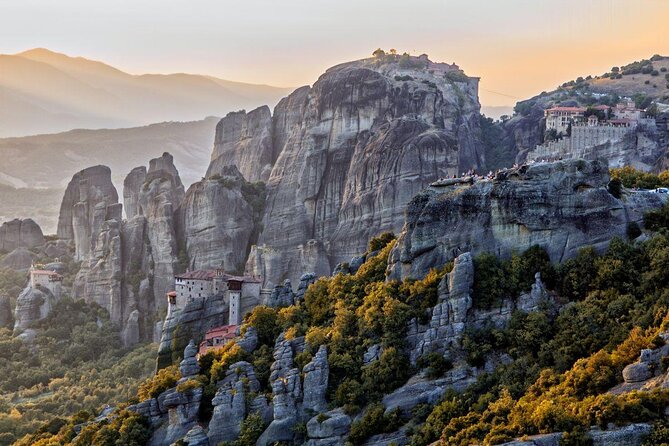
Meteora is one of those places where the “how did they do that?” question never really stops. Monasteries cling to towering rock pillars, built by monastic communities that needed isolation, safety, and a view all at once. The name itself comes from the idea of being “suspended in the air,” and once you’re there, it makes sense fast.
This tour is interesting because it targets Meteora’s big visual and spiritual beats in a single push: major monastery interiors, the hermit caves at Badovas, and then a breather in Kalambaka before the ride back to Athens. It’s a full day, but the structure helps you spend your limited hours in the places you came for.
You can also read our reviews of more tours and experiences in Athens.

Pickup in Athens: station vs hotel pickup, and why timing matters
Your morning starts early, with the main departure around 07:30 from opposite the Athens Railway Station (Meet-up at St. Larissis). If you chose hotel pickup, expect it about one hour before departure, and you should get exact instructions by email ahead of time.
Here’s the practical part: pickup confusion is usually what breaks these kinds of tours. Even the positive reviews mention it can be tricky finding the right bus among several options. So, do yourself a favor:
- confirm your pickup pin/location before you leave your hotel
- arrive early enough to handle delays and crowds
- have your phone ready with the meeting details
If you’re a nervous navigator, consider the station-area meet-up as your backup plan. Fewer moving parts.
The Athens to Kalambaka ride: scenic breaks that keep you human
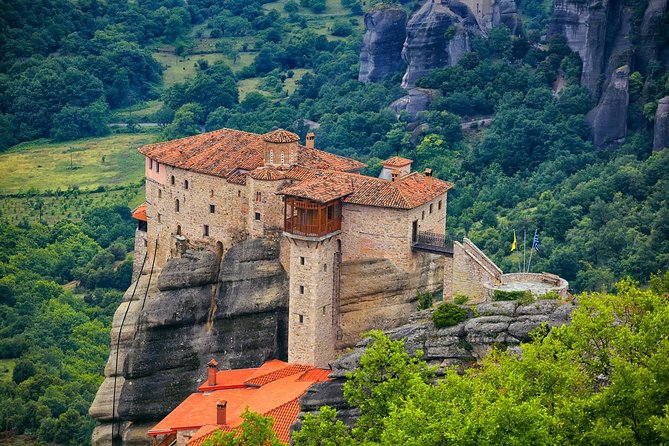
The drive from Athens to Kalambaka is about five hours, give or take, and it’s long enough that the stops really matter. You’ll roll out of Athens in a comfortable, air-conditioned coach and use the first stretch to reset: scrolling, music, or (my favorite) a book.
Along the way, there’s a seaside brunch stop in Kamena Vourla (about 30 minutes). The idea is simple: skip the dull highway rest stop and get ocean air instead. Meals are optional, and if you’re using the onboard app for pre-ordering, it can smooth the process when you get off the bus.
You also get downtime later in the day on the return trip, including another coastal dinner stop option. That matters because the Meteora experience is physically active, mentally focused, and best enjoyed when you’re not running on fumes.
Kalambaka staging: VIP minibus transfer and quick photo stops
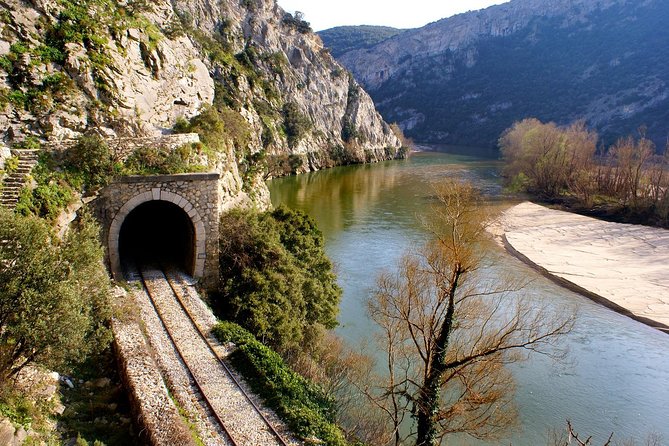
Once you arrive around 12:30 in Kalambaka, you switch to a local smaller vehicle for Meteora. This is where the tour becomes less like a simple bus ride and more like a guided route.
You’ll meet your English-speaking tour leader, then you’ll get transportation between key sites. Along the way, you’ll have short photo stops at multiple monastery viewpoints. These quick stops are useful if you want context—how the rocks, roads, and monasteries fit together—before you pick where to focus your time.
The best part here is the pacing. Instead of waiting in long lines for every move, the escort helps you flow through the day like it’s planned (because it is).
Great Meteoron: what makes the main monastery feel different
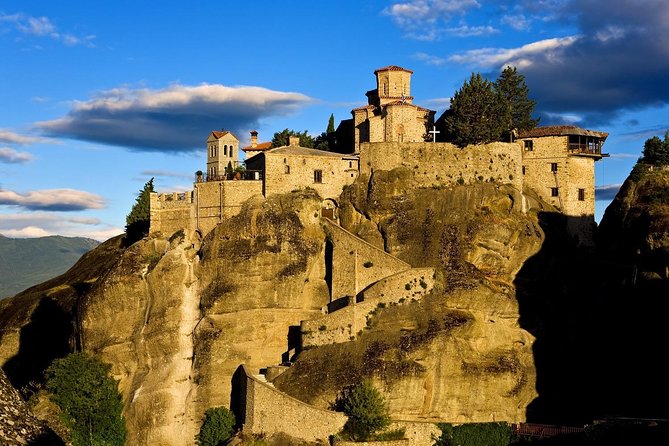
One highlight is the Holy Monastery of Great Meteoron, the largest and oldest in Meteora. It sits on a massive rock formation and became the foundation for organized monastic life in the area. If you’re the type who likes seeing religious art in context, the audio guide helps a lot. You’re not just standing in a church-you-visit; you’re learning why the place matters.
Inside, plan for walking and time at a church pace. The tour includes the multilingual monasteries audio tour, so you can focus on what catches your eye—fresco details, layout, and the story behind the monastic community—without feeling rushed by a group lecture.
Dress rules are real here: no short skirts for women, no shorts for men, and cover up with long sleeves. You don’t want to lose your spot while everyone waits because you brought the wrong clothes.
- All Day Cruise -3 Islands to Agistri,Moni, Aegina with lunch and drinks included
★ 5.0 · 4,958 reviews


Varlaam monastery and the rope-hauling story
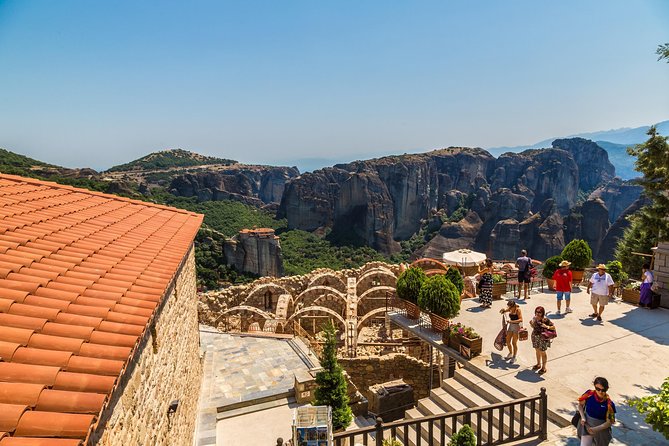
Varlaam Monastery is the second largest site in Meteora, perched high on its rocky pinnacle. The tour gives you time to explore, including a look at the frescoed chapel and historic relics, plus panoramic views over the valley below.
One detail worth paying attention to while you’re there: the monastery’s history includes the practical hardship of moving building materials up to the rock. The story isn’t just romance. It’s logistics—ropes, manpower, and persistence against gravity.
This is also a good stop for photography, but don’t treat it as a drive-by. Meteora’s best photos come when you’re standing still long enough to notice angles and light.
Badovas hermit caves: the quiet, human scale of Meteora
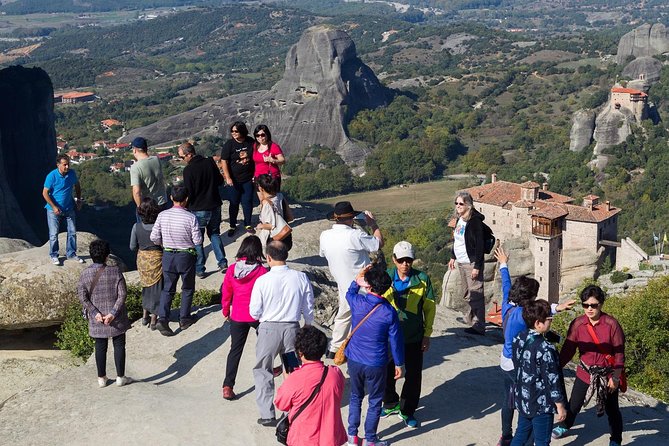
After the bigger monasteries, you get the stark contrast: the hermit caves of Badovas. These remote cliffside shelters connect you to the earliest monks who chose isolation as a spiritual tool. You’ll explore these spaces at your own pace while your tour leader stays close enough to help with context and logistics.
The time here is short compared to the main monasteries, but it’s memorable because it changes the mood. Great Meteoron and Varlaam are dramatic and public. Badovas feels small and personal—even if you’re sharing it with other visitors. If you want solitude in your day, this is where you find it.
St. Stephen’s, accessibility, and the stairs reality check
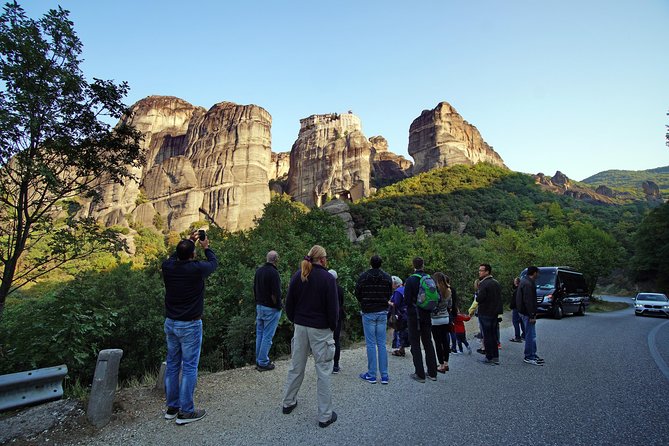
One monastery stop is Holy Monastery of Saint Stephen. It’s often the most accessible because you don’t need to climb stairs for approach—just a short walk across a small bridge to reach the entrance. That makes it a strong choice if stairs are your limiting factor.
Still, Meteora has stairs. The tour notes that you may climb stairs on approach, and if climbing is challenging, you can wait at the parking area where benches are available. For me, that’s the key planning insight: don’t assume every part of Meteora is equally steep. Pick the stops you can handle, and use the options you’re given if you need a breather.
On the tougher end, the day also includes access to Holy Trinity Monastery (Agia Triada), which can mean about 140 steps on a path to the summit. The views from up top are the payoff. Just don’t schedule this tour if your legs are having a bad week.
Audio guide vs a live guide: getting the story without slowing down
You’ll have a free audio guide inside the monasteries, and it’s a big advantage for pacing. You can pause, listen, and re-enter the flow when you’re ready. That’s especially helpful in churches where one person’s “I’ve seen enough” is another person’s “wait, look at that panel.”
Live interpretation can also make a difference. Several guides are praised for making Meteora’s history click, including names like Maria, Kate, and Maira. The consistent theme is not just facts—it’s energy: humor, clarity, and strong guidance on what to notice while you’re walking.
My tip: use the audio guide to set context before you wander off. Then when you spot something interesting, save the audio details for later and use your escort to ask quick questions on the spot.
Kalambaka free time: lunch on your terms
After the monastery blocks, you transfer back to Kalambaka and get time to stroll and grab a bite (own expense). This break is more important than it looks. It keeps the day from turning into nonstop transfers and standing.
You’ll usually have the lunch window before the bus departure at around 5:35 p.m., with the return arriving back in Athens around 9:58 p.m. That late arrival is normal for this itinerary style, so plan your evening buffer when you book.
Cost and value: what you pay for, and what costs extra
The listed price is $87.07 per person and includes a lot of the hard parts: roundtrip transportation from Athens to Meteora/Kalambaka, a local English tour leader, monastery audio, the hermit cave visit, and food stops (including a Greek lunch with 10 dishes, vegetarian option when selected).
What’s not included is the big variable: monastery entrance fees. The tour data states €5 per person per monastery, paid in cash on the spot. If your day includes multiple monasteries where interiors are open to the public, your extra cost can add up quickly—so I’d budget for it instead of hoping it stays small.
Practical money tip: bring euros in cash. One recurring frustration in this kind of outing is arriving ready to pay and finding credit cards aren’t accepted for entrance fees. Having cash avoids that awkward moment while the group waits.
The pickup and day-run risks: what to watch for
The Meteora portion is the star, and most experiences are smooth once you’re on site. The main weak points in real-world trips are usually the first 30 minutes: finding the right bus and not missing departure time.
A recurring theme from the less-favorable experiences is that delays in getting to the correct pickup point can mean you miss the tour, and refunds may not be offered for missed pickups. So treat the morning like a flight: be early, be visible, confirm the exact pickup location, and don’t assume the bus will circle back.
Also note the day can feel long—one more reason to pack a small comfort kit: water, a light layer (church interiors can be cooler), and something to keep you occupied during the drive.
Who should book this Meteora day tour
This tour makes sense if you want:
- one-day access to major Meteora sites without renting a car
- a plan that includes Badovas hermit caves plus monastery interiors
- a day with enough structure to keep you moving, but enough time to explore at your own pace
You might choose a different option if:
- stairs and long walks are a major issue for you
- you hate long travel days and late returns
- you’re the type who struggles with unclear meeting points (in that case, hotel pickup with very specific instructions can be safer than relying on the station-area meet-up alone)
Should you book it?
Yes, I’d book it if Meteora is on your must-see list and you’re okay with a long, early start. The value is in the transportation, the escort flow, and the fact that you’re not just staring at rocks—you’re getting interior visits and the Badovas caves, with an audio guide to add meaning.
If you do book, go in with two habits: arrive early for pickup, and bring cash for entrances. Get those right, and Meteora turns into one of Greece’s most memorable day trips for the simple reason that it feels impossible—then you’re standing in it anyway.
FAQ
What time does the tour start and how long is it?
The tour starts early in the morning (departure is about 07:30 from the station area) and the total day is about 14 hours. The return to Athens is listed as arriving around 9:58 p.m.
Where is the meeting point in Athens?
The meeting point is by St. Larissis in Athens (opposite the Athens Railway Station). Hotel pickup is offered from selected centrally located hotels about one hour before departure.
Is pickup offered from hotels?
Yes. Complimentary pickup is offered from selected centrally located hotels. The operator sends pickup details by email before your date.
How many monasteries do you visit?
You explore Meteora for several hours, including the Holy Monastery of Great Meteoron, and the tour includes visiting the interior of three monasteries. The day also includes additional monastery stops/photo stops.
Is the audio guide included for the monasteries?
Yes. A multilingual monasteries audio guide is included.
What about entrance fees for the monasteries?
Entrance fees are not included. The stated fee is €5 per person per monastery, and you pay in cash on the spot.
Are meals included?
A Greek lunch with 10 dishes is included (vegetarian options are available if selected). There is also a seaside brunch stop in Kamena Vourla, and there is an optional dinner stop on the way back.
Do you have free time in Kalambaka?
Yes. After returning to Kalambaka, you have time to stroll and have a light meal on your own before boarding the bus back to Athens.
How much walking and stairs should I expect?
The tour requires moderate physical fitness and includes stairs when approaching monastery sites. There is also mention of benches at the parking area if stairs are challenging. One monastery climb (Agia Triada) can involve about 140 steps.
What should I wear to enter the monasteries?
You need clothing that fits the monastery dress code: women should not wear short skirts and should have long sleeves; men are not allowed to wear shorts.
What happens if weather is bad?
The tour requires good weather. If it’s canceled due to poor weather, you’ll be offered a different date or a full refund.

More Tours in Athens

More Tour Reviews in Athens
- All Day Cruise -3 Islands to Agistri,Moni, Aegina with lunch and drinks included
★ 5.0 · 4,958 reviews