REVIEW · ATHENS
Athens: Meteora Monasteries, Caves & Coastal Stopovers with Lunch
Book on Viator →Operated by Visit Meteora · Bookable on Viator
Meteora feels like a movie set in stone. This full-day tour from Athens strings together air-conditioned coach comfort with three monastery interiors, plus the hermit caves of Badovas.
I love the built-in pacing: about 45 minutes inside each of the three monasteries you’ll enter, with extra photo time for the cliff views. I also like the two sea-adjacent breaks, including the Kamena Vourla coastal stop and a Kastraki lunch in a traditional taverna, so the day stays breakable.
The main consideration is simple: it’s a long day on the bus, with plenty of steps and a strict monastery dress code. You’ll also need cash for monastery entrances (no ATM nearby).
In This Review
- Key highlights at a glance
- Price and value: what your $88.28 actually covers
- The long Athens-to-Meteora bus ride: comfortable, but plan for a day
- Kamena Vourla coastal stop: optional brunch with real sea air
- Kastraki lunch in a traditional taverna: the menu is the point
- Meteora itself: why it feels unreal in person
- Inside three monasteries: how the timing works on a packed day
- Varlaam and Great Meteoro: the big “wow” churches
- Hermit caves of Badovas: a quieter side stop
- Agios Stefanos: easiest access, still real Meteora
- Outside viewpoint loop: Agios Nikolaos, Kalambaka panorama, Roussanou, Holy Trinity
- Lunch and meals: bottled water, optional seaside food, and what to expect
- Practical matters that can make or break your day
- Coach comfort, group size, and what the day feels like
- Who should book this Meteora day trip (and who might not)
- Should you book this Meteora day trip?
- FAQ
- Where does the tour start and end?
- How long is the day trip?
- How many monasteries do we go inside?
- Do I need to pay monastery entrance fees?
- Is lunch included?
- Are meals like brunch and dinner included?
- What’s the bus like and is there Wi-Fi?
- FAQ
- What’s the dress code for monastery visits?
- Does the tour operate in bad weather?
- Is the tour limited to small groups?
- Is this tour guided in multiple languages?
- Do you offer the hermit caves experience?
- Is there a lot of walking and stairs?
- What should I bring besides clothes and cash?
Key highlights at a glance
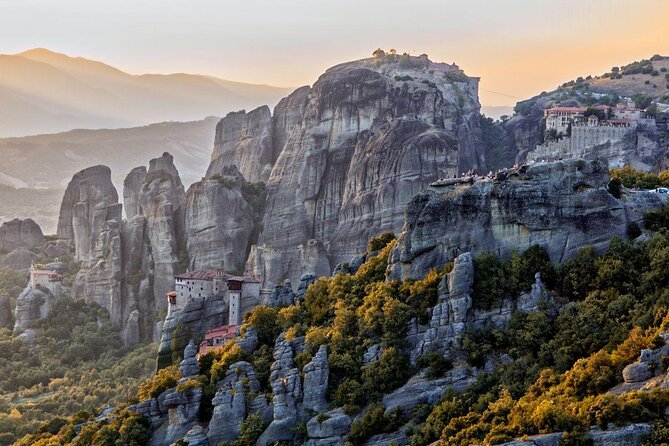
- Three monastery interiors with guided context, not just outside viewpoints
- Hermit caves of Badovas as an exclusive stop for a quieter, older-feeling side of Meteora
- Seaside stopovers in Kamena Vourla for brunch/dinner options and real downtime
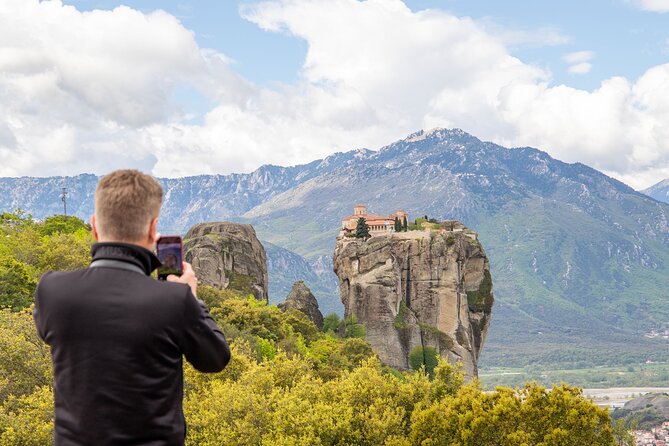
- Photo time at multiple monastery rocks (including several you see mainly from outside)
- Coach with Wi-Fi and USB charging, plus bottled water during the day
Price and value: what your $88.28 actually covers
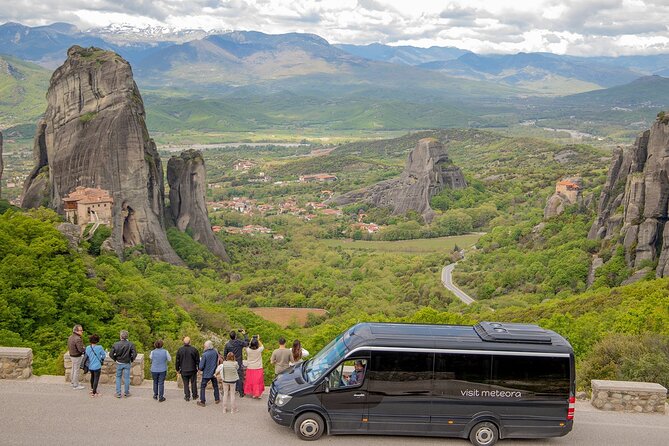
At $88.28 per person for roughly 14 hours, the value isn’t in “free time.” It’s in removing friction. You get round-trip coach transport from Athens, an English-speaking tour leader, bottled water during the monastery portion, and a day plan that squeezes multiple Meteora highlights into one trip.
What you’re not getting automatically: monastery entrance fees (you’ll pay on-site) and any optional meals like the Kamena Vourla brunch or sunset dinner. If you want the lunch included, make sure you’re on the rate that includes Greek lunch (the tour is explicit that lunch comes with the Day Trip + Lunch rate).
If you’ve never done Meteora before, this package makes sense because it handles the hard part—getting you there and keeping you moving—while still giving you real time inside multiple monasteries.
You can also read our reviews of more tours and experiences in Athens
- All Day Cruise -3 Islands to Agistri,Moni, Aegina with lunch and drinks included
★ 5.0 · 4,958 reviews


The long Athens-to-Meteora bus ride: comfortable, but plan for a day
The day starts at Larissis Railway Station in Athens around 8:00am, and you’ll be on a modern coach bus with air-conditioning, Wi-Fi, and USB chargers. The drive is about 4 hours each way in typical conditions, though real life can stretch it.
One practical benefit: the schedule is built around stops that prevent the day from feeling like nonstop highway time. You’ll break the road journey with a seaside stop in Kamena Vourla and a lunch break in Kastraki before you reach Meteora itself.
One caution: this is still a bus day. Even with Wi-Fi and charging, you’ll want water, a snack, and something to keep you comfortable through delays. Reviews consistently underline the same theme: it’s worth it, but it’s not short.
Kamena Vourla coastal stop: optional brunch with real sea air
You’ll pause in Kamena Vourla for about 30 minutes, which is a welcome change from typical “highway rest station” stops. You’re in a small coastal town where mountains and sea mix visually, and you can grab an optional seaside brunch. Meals and drinks can be ordered through an onboard app, or you can pay on-site.
If you like to stretch your legs before the climb, this stop helps. If you’re budgeting, treat it as optional—because your main paid meals still center around lunch in Kastraki (or whatever you choose that day).
Kastraki lunch in a traditional taverna: the menu is the point
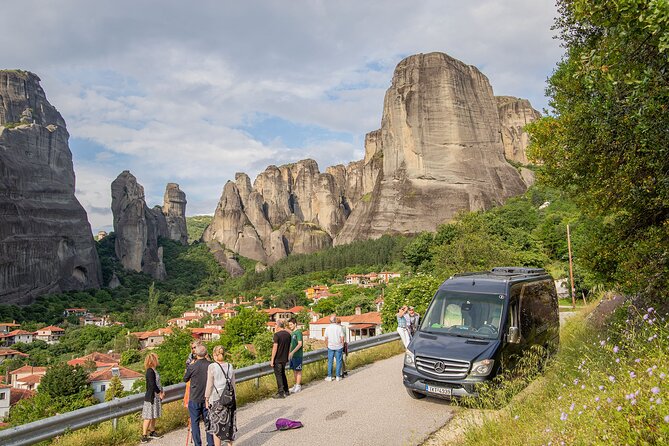
After reaching the Meteora area (Kalambaka region), the plan includes a 40-minute break in Kastraki. This is where you refuel and use the restroom before Meteora rock-top churches start eating up your attention.
Lunch is set up as a Greek taverna meal with dietary options. If you’re on the lunch-included rate, you can choose from a menu that includes meat dishes like chicken with potatoes, soutzoukakia, and pastitsio. Vegetarian options include Greek salad and spinach-feta pie. Vegan options are also spelled out, like stuffed peppers and tomatoes with risotto (gemista), briam, and baked giant beans (gigantes).
Bread and water come with the meal. If you’re not on the lunch-inclusive rate, you can still likely eat there, but you’ll be choosing and paying on your own.
Meteora itself: why it feels unreal in person
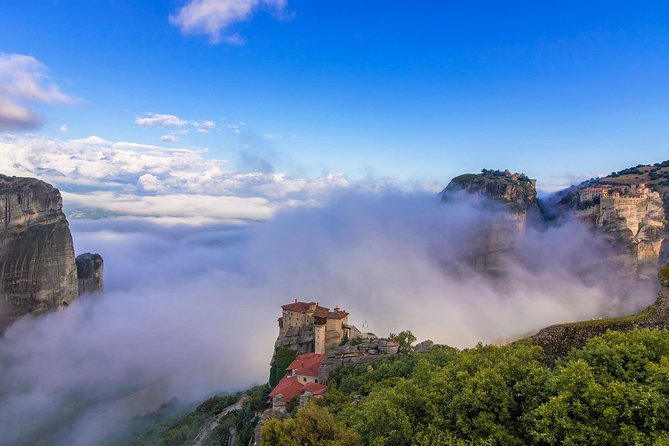
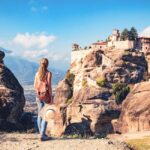
Meteora is a UNESCO-listed complex of Greek Orthodox monasteries built on towering rock formations. The big idea is simple: monks chose places that were difficult to reach. That remoteness shaped the architecture, the feel, and the history.
On this tour, you’ll get the story while you’re there—inside monasteries you enter with the guide—and you’ll also get the scale through outside viewpoints. Expect many “how is this built here?” moments as you move between rocks and look down into the valleys.
- All Day Cruise -3 Islands to Agistri,Moni, Aegina with lunch and drinks included
★ 5.0 · 4,958 reviews



Inside three monasteries: how the timing works on a packed day
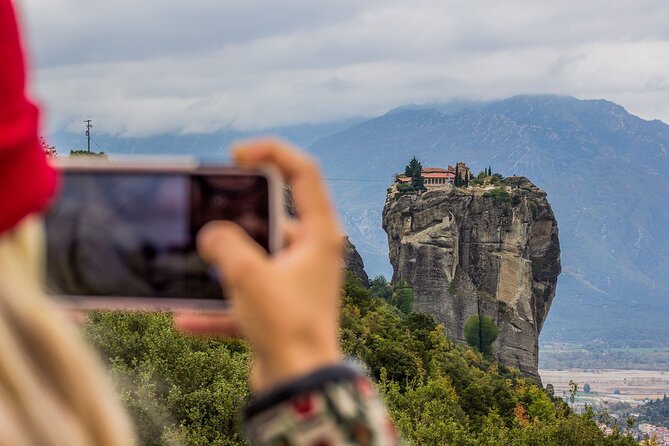
You’ll visit three active monasteries with a guide, spending about 45 minutes inside each one. Entrance fees are not included in your base price, so you’ll pay separately on the day (more on that below).
This is the trade-off of a one-day tour: you can’t spend hours inside every church. But 45 minutes is enough for two things you’ll appreciate:
- you can actually read the room and absorb the icon work and church space
- you can take photos without feeling like you’re rushing a guide
Several guides running this day are praised in particular for their ability to make the place make sense. Names that show up in real departures include Maria, Demetri, Apostolis, Ioannis, and Tillos. Even if you don’t recognize the name on your bus, the point is that you’re paying for the guide’s ability to connect architecture, history, and what you’re seeing.
Varlaam and Great Meteoro: the big “wow” churches
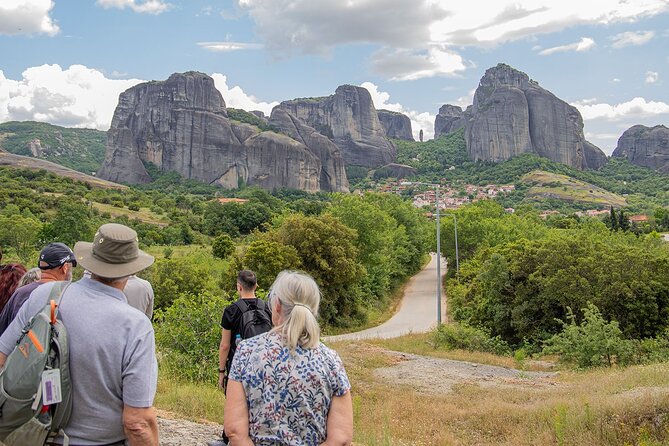
Two of the main monasteries you’ll encounter in the plan are Varlaam and the Great Meteoro Monastery.
Varlaam is described as one of the larger monasteries, founded in the mid-14th century by Hosios Varlaam. You’ll also learn about later additions like the catholicon and decorated church elements from the 16th century.
The Great Meteoro Monastery is the oldest and largest in the group, built on a giant rock formation. The tour explanation connects the name Meteoro to the rock’s towering presence—this is one of those times where the setting isn’t just backdrop. It’s part of the story.
In practical terms, these sites are where your guide’s timing and your photo stamina both matter most. Wear shoes you can trust on stone steps and plan for a lot of looking up.
Hermit caves of Badovas: a quieter side stop
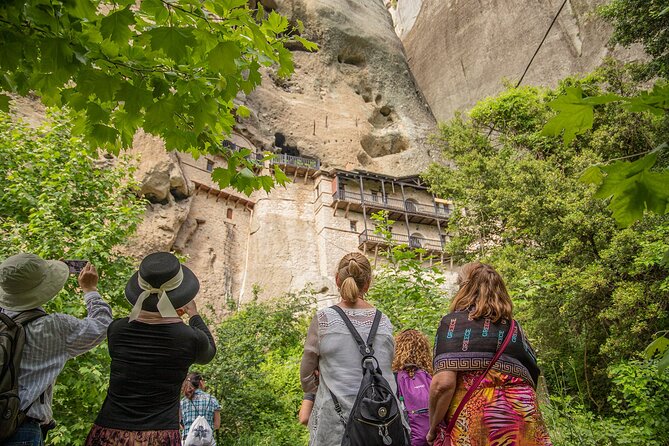
Between monastery interiors and outside viewpoints, the tour includes the hermit caves of Badovas, with a stop of about 25 minutes. This part of the program is highlighted as an exclusive experience.
Why it matters: monasteries get the attention, but hermit caves explain how devotion looked when people went even farther for solitude. The tour frames Badovas as a place that tells stories of monks and hermits who once lived in remote dwellings. Even if the stop is short, it adds a different emotional tone to the day—less “grand church,” more “human scale.”
Agios Stefanos: easiest access, still real Meteora
Agios Stefanos is called the most accessible monastery on the route. The key practical detail is that instead of climbing steps right away, you cross a small bridge to reach the entrance. That makes it a strong choice if you’re worried about step-heavy climbs.
The plan also notes the monastery’s long timeline, beginning as early as the 12th century, with major rebuilding and the present church linked to renovations completed around 1545. This is also where the structure includes two cathedrals—a quieter reminder that these sites evolved over centuries, not all at once.
If you’re sensitive to heights, or your legs want a break, this is the monastery you’ll likely feel most comfortable visiting.
Outside viewpoint loop: Agios Nikolaos, Kalambaka panorama, Roussanou, Holy Trinity
Not every monastery in Meteora gets a full interior visit in a day tour. Many are included as outside photo stops—still valuable because you get variety in rock shape, cliff placement, and architecture styles.
Here’s what the plan includes as quick viewpoints and stops:
- Agios Nikolaos Anapaphsas: a first monastery encountered on the way to Holy Meteora, founded end of the 14th century (entrance is free, and the stop is brief).
- Kalambaka panoramic view: about 10 minutes to look over the town.
- Roussanou Monastery: a lower-elevation rock that’s described as more accessible than others. It was severely damaged in WWII and became a convent in 1988.
- Holy Trinity Monastery (Agia Triada): the most difficult to reach, with a pathway that includes about 140 steps. The stop is short and primarily for the view and the sense of effort required.
These outside stops are efficient for one-day visitors. The drawback is that you won’t get the full interior experience at each site—so if you want maximum church time, you’ll probably think about a longer stay in the Meteora area.
Lunch and meals: bottled water, optional seaside food, and what to expect
Meals are split into set and optional pieces:
- Lunch in Kastraki can be included depending on your rate, with specific Greek dish choices and bread + water.
- Kamena Vourla brunch is optional and seaside—short stop, easy to grab something quick.
- Sunset dinner near Kamena Vourla is optional on the way back.
Bottled water is included, and the tour notes that water is offered during the monastery portion rather than continuously on the bus.
If you’re the type who gets hungry fast, plan for that. The day is long, and you don’t want to rely on buying snacks only at the very end.
Practical matters that can make or break your day
Here are the “show up prepared” basics that matter most at Meteora.
Monastery dress code
- For women: skirts below the knee or longer are required. Pants, shorts, or sleeveless tops are not allowed.
- For men: sleeveless clothing and shorts above the knee are prohibited.
If you travel with a light scarf or shawl, it’s often the simplest way to handle dress-code checks without changing your whole outfit.
Cash for entrance fees
You’ll need cash for monastery entrances. The tour specifies about €5 per monastery you enter, and it also says there’s no ATM in the area. Bring euros before you head up to the rocks.
Steps and mobility
There are no elevators. Getting to monastery tops involves stairs, sometimes steep and exposed. Even though Agios Stefanos is described as easier access, don’t assume the whole day is step-light. If mobility is a challenge, it’s worth thinking carefully before booking.
Weather
Rain or shine, the tour runs. Bring a layer and a rain option. Fog and rain can still affect visibility and photo opportunities, even if the monasteries remain open.
Coach comfort, group size, and what the day feels like
This tour is capped at a maximum of 35 travelers, which usually keeps the group manageable when everyone is trying to enter and exit churches and keep up on stairways.
On the bus, you’ll have Wi-Fi and USB charging, but it’s not luxury. Expect “practical comfort,” not a resort seat. Reviews do mention that bus conditions can vary—one complaint includes flies in the vehicle—so if you’re sensitive to cleanliness or smell, it’s worth arriving with wipes and expecting a big day.
The driver can also matter. Several departures get praise for safe driving and for negotiating alternative routes when highways close. That’s not something you can plan on, but it’s reassuring when it happens.
Who should book this Meteora day trip (and who might not)
Book it if:
- you want a first-time Meteora hit from Athens without arranging trains or rentals
- you like guided context inside churches, not just scenic viewpoints
- you want a day that includes both church interiors and the hermit-cave angle
Consider skipping (or adding time elsewhere) if:
- you’d rather spend more than 45 minutes inside each visited monastery
- you have limited mobility or dislike lots of stairs
- you prefer a slower pace with longer meals and less time on a coach
Also, if a long bus day sounds rough, think about whether you’d rather split the trip and stay overnight in the Meteora/Kalambaka area. This tour does include a sunset option on the way back, but it still completes the day in Athens.
Should you book this Meteora day trip?
Yes, if you’re chasing Meteora’s “how is this even possible?” mix of rock-top monasteries, guided stories inside real churches, and a couple of well-timed breaks that keep you functioning.
It’s especially worth booking if you value organization. Reviews repeatedly highlight how smoothly the day runs, with guides like Maria earning strong praise, and drivers like Helen also mentioned positively. You’ll still feel the length of the day, but the route and timing are designed to prevent total fatigue.
If you hate stairs, hate buses, or don’t want to pay entrance fees in cash, then this probably isn’t your best fit. But if you can handle a full day of steps and you’re ready to bring euros, you’re in for one of Greece’s most unforgettable day trips.
FAQ
Where does the tour start and end?
It starts at Larissis Station in Athens (Athens 104 44) at 8:00am, and it ends back at the same meeting point.
How long is the day trip?
The duration is listed at about 14 hours.
How many monasteries do we go inside?
You’ll visit the interior of three monasteries, with about 45 minutes inside each.
Do I need to pay monastery entrance fees?
Yes. Entrance fees are not included. The tour notes about €5 per monastery, and you should have cash because there is no ATM in the area.
Is lunch included?
Lunch is included only with the Day Trip + Lunch rate. The lunch stop includes vegetarian options, and the menu options are spelled out in the tour description.
Are meals like brunch and dinner included?
A seaside brunch in Kamena Vourla and a sunset dinner near the sea are optional and not included in the base price.
What’s the bus like and is there Wi-Fi?
The coach has air-conditioning, free Wi-Fi, and USB chargers.
FAQ
What’s the dress code for monastery visits?
You’ll need modest clothing: women require skirts below the knee or longer, and pants/shorts/sleeveless tops aren’t allowed. Men can’t wear sleeveless clothing or shorts above the knee.
Does the tour operate in bad weather?
Yes. The tour runs rain or shine.
Is the tour limited to small groups?
Yes. It has a maximum group size of 35 travelers.
Is this tour guided in multiple languages?
The tour leader is English speaking. A free SMART audio guide is available in several other languages.
Do you offer the hermit caves experience?
Yes. The hermit caves of Badovas are included, described as an exclusive experience on this tour.
Is there a lot of walking and stairs?
Yes. Reaching monastery areas involves climbing stairs, and there are no elevators.
What should I bring besides clothes and cash?
Because the day is long, bring essentials like a light layer for weather, comfortable shoes for steps, and cash for entrance fees.

More Lunch Experiences in Athens
- All Day Cruise -3 Islands to Agistri,Moni, Aegina with lunch and drinks included
★ 5.0 · 4,958 reviews
More Tour Reviews in Athens
- All Day Cruise -3 Islands to Agistri,Moni, Aegina with lunch and drinks included
★ 5.0 · 4,958 reviews