REVIEW · ATHENS
Athens Escape City Game “The Journey Through Time”
Book on GetYourGuide →Operated by Culture Hunters · Bookable on GetYourGuide
This Athens Escape City Game mixes an escape-room vibe with a street-level treasure hunt, using a time-travel story to guide you through key areas. I like that it’s built around story-driven clues and a walkable route that hits major landmarks without feeling like a standard tour.
I especially like the varied puzzle style and the way the game ties places to different eras of Greek life. From the myth-and-history feel around the Acropolis (including Phidias) to Queen Amalia’s presence in the National Garden, the route turns sightseeing into problem-solving.
One thing to consider: you’ll need one charged smartphone with internet for your team. If your phone battery is low, you may feel the pace slow, since hints depend on that connection.
In This Review
- Key things worth knowing before you go
- Why this Athens time-travel game feels different
- Price and value: what $34 buys you in real terms
- The backpack and the phone: your tools for the story
- Meeting point at Leonidas (Acropoli Metro): start fast, not stressed
- How the time-travel story is structured
- Makrygianni and Plaka: puzzle walking with real street atmosphere
- Secret stops and side clues: where the game does its best work
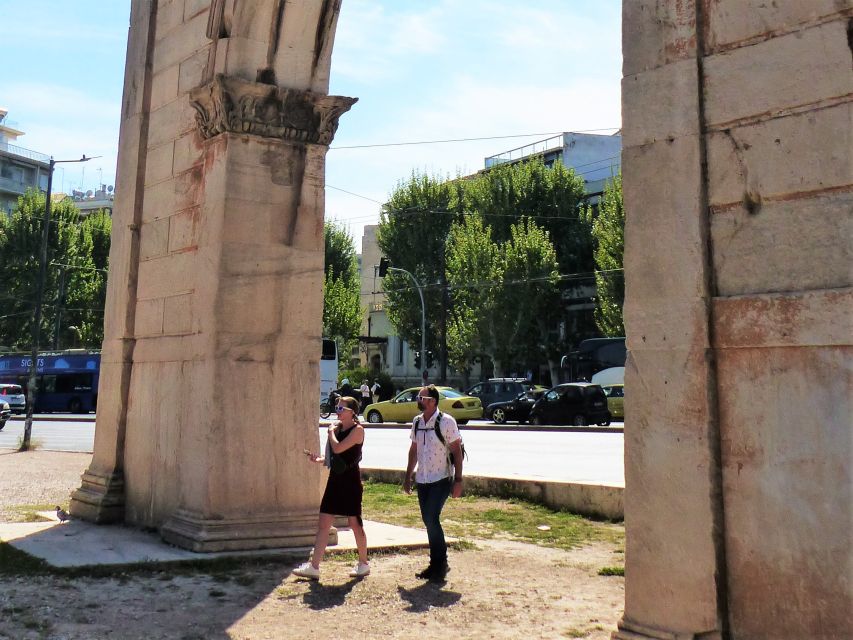
- Temple of Olympian Zeus: a quick pass with payoff
- Syntagma Square, the Tomb, and Parliament: drama without a long wait
- National Garden and Queen Amalia: the moment that slows you down
- Hints, timing, and why it feels good with a team
- What I’d watch for with kids and phones
- Who should book it (and who might not love it)
- A quick word on the game master experience
- Should you book the Journey Through Time?
- FAQ
- How long is The Journey Through Time?
- How much does it cost?
- Where do we meet, and how do we find the game master?
- What’s included in the ticket price?
- Do we need a smartphone?
- What ages is the game for?
- How many people can be in a team?
- Is it suitable for mobility impairments?
Key things worth knowing before you go
- A time-travel narrative across Greek eras keeps clues connected instead of random tasks.
- Iconic Athens landmarks on a foot-friendly route (Plaka, Syntagma, Temple of Olympian Zeus area, Parliament) reduce decision fatigue.
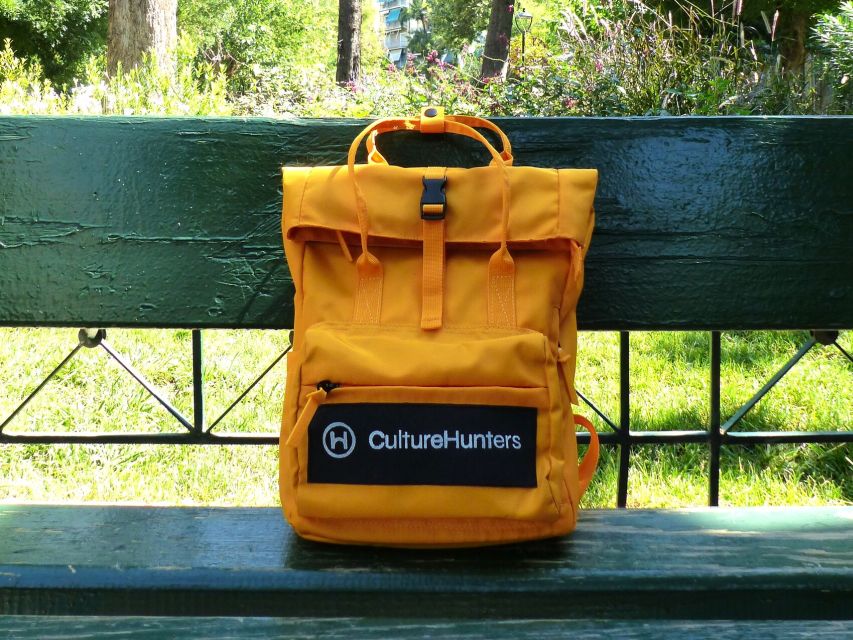
- A game backpack gives you props: maps, games, and mysterious items to work through on the street.
- Team play (2 to 6 people) means it works well for families and friend groups, not just solo history fans.
- Game master support by message helps you keep moving if you get stuck.
- War and violence themes appear briefly if kids are in your group, so you’ll want to judge comfort level.
Why this Athens time-travel game feels different
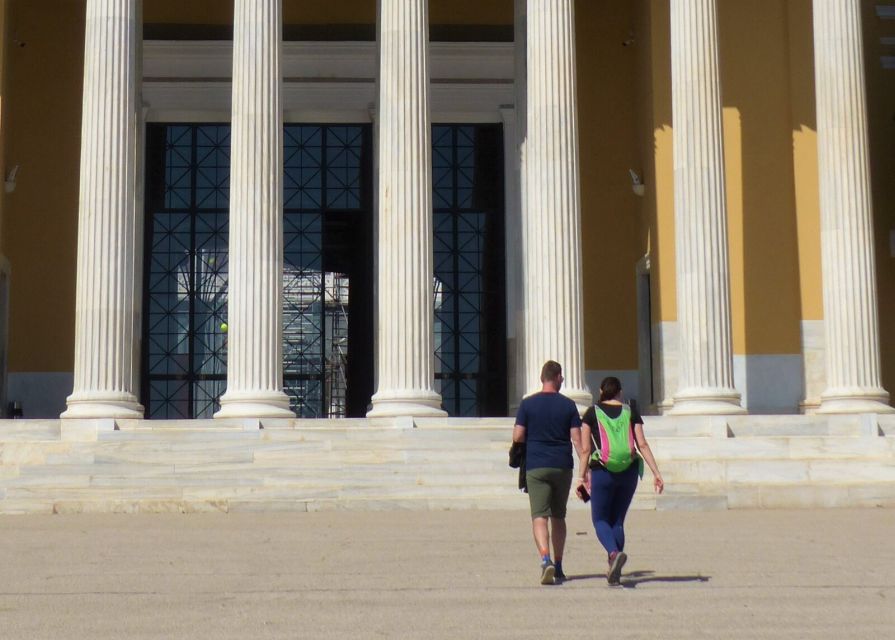
Athens is full of stone and big names. The problem is that a classic walking tour can turn into a long lecture while you try to keep up with both the route and the dates. This experience swaps that out.
Instead of stopping and listening, you’re pushed to act. You read clues, work through tasks as a team, and then walk to the next moment in the story. You still see the city’s headline spots—just in a different order and with a reason to look closer.
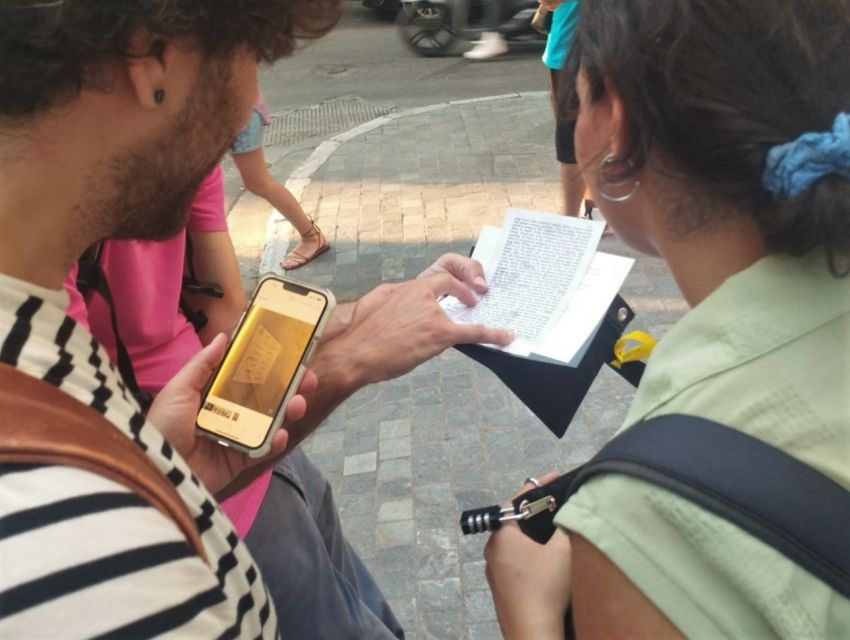
I like games that make you notice details without turning the whole day into homework. This one uses a backpack full of physical props plus your phone when needed, so the experience doesn’t live only in your screen.
You can also read our reviews of more city tours in Athens



Price and value: what $34 buys you in real terms
At $34 per person for about 150 minutes, you’re paying for more than a walk with a guide. You get:
- A game master briefing (then again at the end)
- A backpack with maps, games, and mysterious objects
- Hint support by message if you need help
That combination matters. A ticketed self-guided app usually gives you puzzles, but not a human handling the flow. A typical guided tour usually gives you interpretation, but not hands-on problem-solving. Here you get a hybrid: human storytelling plus puzzle momentum.
For couples, the “team” setup still works, but you’ll likely enjoy it more if you’re willing to collaborate instead of splitting off to admire views. For families, it can be a win because it turns the “we’re walking again” complaint into a shared challenge.
The backpack and the phone: your tools for the story

You’ll start with a backpack packed with what you need—maps, games, and mysterious objects. The whole point is that clues aren’t just read off a screen. You’ll interact with items and use them to progress.
Then there’s the smartphone. Your team needs one charged phone with internet to message the game master for hints. That’s not a small detail. If you show up with a low battery, the game becomes stressful instead of fun.
Practical tip: before you leave, turn on power saving only if it doesn’t affect messaging, and make sure you have mobile data or working Wi‑Fi. Also, bring it in a way you can access quickly; you’ll be coordinating while walking.
Meeting point at Leonidas (Acropoli Metro): start fast, not stressed
Meet at Acropoli Metro Station, in front of the chocolate shop Leonidas. The game master will be holding a sign.
This is a smart choice for two reasons. First, it’s easy to find once you’re in the area. Second, it sets you up close to the places your eyes will recognize right away, so the story feels grounded from minute one.
The game master greets you, explains how the backpack and the team challenges work, and then you’re off. Because you meet at the end of your travel day’s navigation work, you’re not spending your energy figuring out where to start.
How the time-travel story is structured
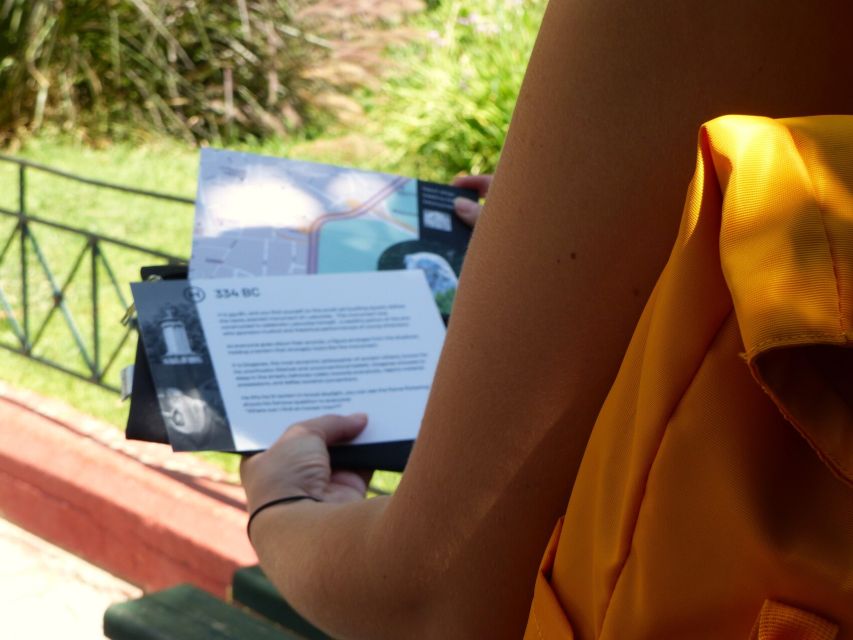
The game’s format is simple: you move through Athens while the story carries you across eras. You’ll see eras referenced like:
- Phidias and the sculpting of the Acropolis
- A walk with Queen Amalia connected to the National Garden
- Major turning points like independence from the Ottoman Empire
- The day connected to the first modern Olympics
What I like here is that it’s not only “ancient Athens.” You get the feeling of a city layered with different periods, not a museum timeline frozen behind glass.
You’ll also notice that the game uses landmark stops for clarity, then uses “secret stops” and smaller breaks as breathing room between the big names. That pacing makes the route feel manageable rather than like a nonstop sprint.
- All Day Cruise -3 Islands to Agistri,Moni, Aegina with lunch and drinks included
★ 5.0 · 4,958 reviews





Makrygianni and Plaka: puzzle walking with real street atmosphere
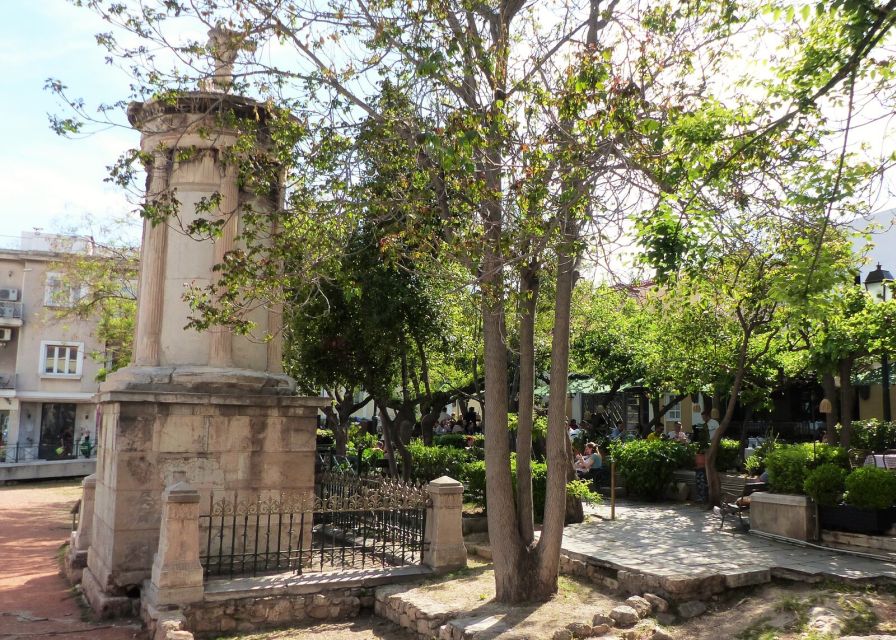
After your starting point, you head to Makrygianni for a short sightseeing/self-guided segment. Even if you don’t consider yourself a “neighborhood explorer,” this kind of first stretch helps you settle into the game. You learn how clue-solving works while your surroundings are still familiar-looking and easy to read.
Next comes Plaka, where you get a longer sightseeing/self-guided stop. Plaka is one of those areas where even a casual glance gives you that Athens-with-walking-feet feeling. In a standard tour, Plaka can become “pretty streets” with occasional facts. In this game, Plaka is a working area: you’re there to locate, interpret, and progress.
Why this works: your eyes learn the city as a map, not just as photos. You remember the streets because they’re part of the puzzle chain.
A small drawback to plan for: when you’re concentrating, you’ll likely move at a slightly faster pace than you would on a relaxed afternoon. If you prefer slow sightseeing, schedule this earlier in the day so you have time afterward to wander without pressure.
Secret stops and side clues: where the game does its best work
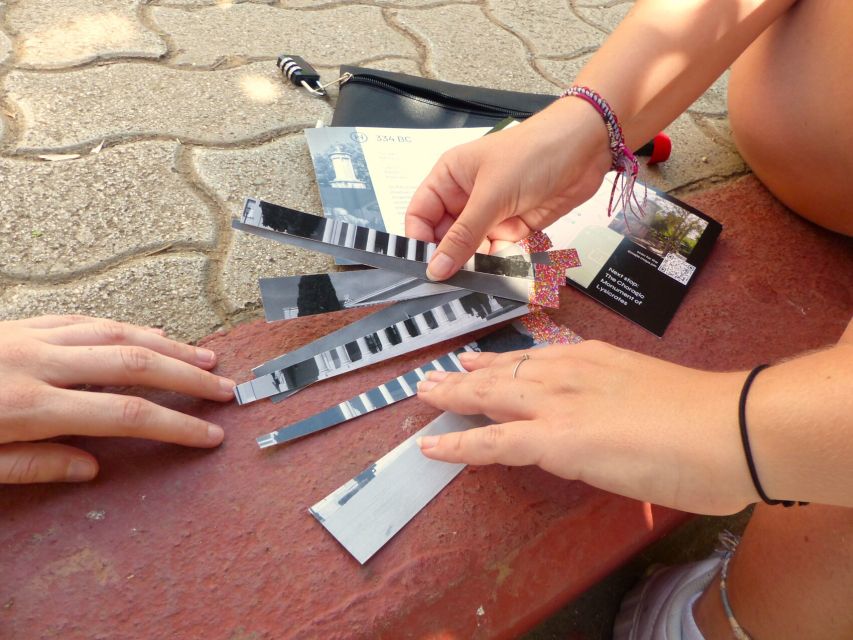
You’ll have multiple secret stops and smaller segments labeled as sightseeing or “hidden” points of interest. The key is not the label—it’s the role.
These stops are built to do two things at once:
- Break up the big landmark rhythm so the walk doesn’t feel like a checklist.
- Make you slow down for meaning, because clues usually require you to look around instead of just passing through.
In practice, this is where the game tends to feel most satisfying. You’re not only recognizing famous buildings; you’re learning how to orient yourself, spot references, and interpret details in context.
Temple of Olympian Zeus: a quick pass with payoff
You’ll pass by the Temple of Olympian Zeus for only about five minutes. That might sound short, but it’s actually a clever use of time.
The game isn’t trying to replace an all-day classical sightseeing plan. It’s using the area as a recognizable anchor in your story, then moving you on so you can keep momentum.
How to enjoy it: treat the pass-by moment as a preview. When you finish the game and return on your own, you’ll have a head start on where things are and what they’re connected to.
Syntagma Square, the Tomb, and Parliament: drama without a long wait
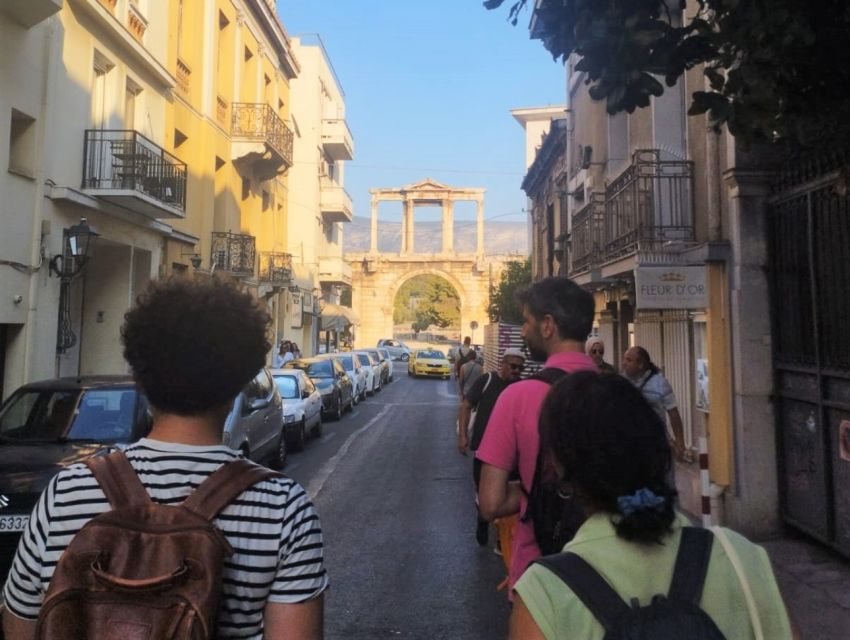
Later, you reach Syntagma Square for a short sightseeing segment. You’ll also pass by the Tomb of the Unknown Soldier and the Hellenic Parliament.
These are big, formal settings. In a puzzle format, they work well because they’re visually distinct and easy to orient in. You don’t need to be a historian to understand that these spaces are about national identity and public life.
Also, this is a nice contrast to the older-era story elements. The game keeps shifting time, so modern Athens shows up not as “just the capital,” but as a stage with meaning.
If you’re traveling with kids, this part often hits the sweet spot: there’s enough scale and atmosphere to feel special, but it’s not so long that attention fades.
National Garden and Queen Amalia: the moment that slows you down
One of the most memorable segments is the National Garden, which is tied in the game to Queen Amalia. You’ll have a short sightseeing segment there, plus additional “secret” and smaller stops around the wrap-up.
Gardens change your walking pace. You stop more often, you look less like a commuter, and the story focus can feel more personal than monumental.
If you want a simple takeaway: this is where the game gives your brain a break from solving and gives you a chance to absorb the surroundings. It’s also a smart way to end, since the National Garden area feels like a transition zone back toward the start.
Hints, timing, and why it feels good with a team
The game is designed for teams of 2 to 6 people, ages 8 to 99. That range matters because puzzle difficulty usually needs a sweet spot where kids can participate without adults feeling bored.
You can ask the game master for hints by message if you need them. That’s a safety net for avoiding the classic “we’re stuck so we just stand here” escape-game failure.
A practical strategy for a smooth experience:
- Assign roles early (who reads clues, who checks the phone, who navigates).
- If you’re stuck for more than a few minutes, message for a hint and keep moving. You’ll get more out of the day staying in flow rather than forcing one solution.
The experience also ends back at Acropoli Metro / Leonidas, and you’ll return the backpack there. That keeps the logistics tidy and makes the finish feel like a real conclusion.
What I’d watch for with kids and phones
A small note from the game description: there’s a brief part referring to the theme of war and violence if minors are in your group. This doesn’t mean the whole game is heavy, but you should judge comfort level based on your child.
Also, plan around the phone dependency:
- One team phone is required.
- You need it charged and with internet for communication.
If you’re traveling with teens, this usually becomes a fun coordination challenge. If you’re traveling with younger kids, consider appointing an adult to manage phone access so nobody has to juggle it mid-clue.
Who should book it (and who might not love it)
This experience is ideal if you want Athens to feel playful and active, not just “look but don’t touch.”
It’s a great fit for:
- Families who want history with movement
- Friend groups that enjoy puzzles and teamwork
- Travelers who prefer wandering with structure
It might be less ideal if:
- You hate phone-based hint systems
- You need fully accessible routes (the game isn’t suitable for people with mobility impairments)
- You want a slow, photo-only day with no multitasking
A quick word on the game master experience
The game master isn’t just a check-in. You meet them at the start for instructions, and you meet them again at the end.
In recent experiences, the guiding style described includes smart, varied puzzles and a friendly finish that feels thoughtful. One name that comes up in feedback is Maëlle, and the notes highlight that the riddles were varied and clever enough to pull in adolescents quickly.
Even if you don’t get the same person, the format tends to be the same: you’re supported, and you’re not left guessing forever.
Should you book the Journey Through Time?
Book it if you want a short-to-medium afternoon in Athens that feels like an adventure game, but still points you at the city’s real landmarks. At $34 for 150 minutes, the value is strongest when you’ll actually use the included backpack and team cooperation.
Skip it only if smartphone dependence will stress you out, or if your group needs a fully accessible experience. Otherwise, this is one of the better ways to see Athens without turning the day into a passive lecture.
If your goal is to leave Athens with more than photos—more like routes, remembered corners, and stories—you’ll likely enjoy how this one connects clues to place.
FAQ
How long is The Journey Through Time?
The experience lasts about 150 minutes.
How much does it cost?
It costs $34 per person.
Where do we meet, and how do we find the game master?
You meet at Acropoli Metro Station, in front of the chocolate shop Leonidas. The game master will be holding a sign.
What’s included in the ticket price?
Included are the backpack filled with maps, games, and mysterious objects, the game master greeting with instructions, and assistance by message if you need hints.
Do we need a smartphone?
Yes. You need one smartphone for your team with internet to communicate with the game master for hints.
What ages is the game for?
The team range is 8 years old to 99 years old.
How many people can be in a team?
The game is played by teams of 2 to 6 people.
Is it suitable for mobility impairments?
No, it is not suitable for people with mobility impairments.



More City Tours in Athens



More Tour Reviews in Athens
- All Day Cruise -3 Islands to Agistri,Moni, Aegina with lunch and drinks included
★ 5.0 · 4,958 reviews