REVIEW · ATHENS
Athens Acropolis Official E-Scooter Guided Tour Fat E-Bike
Book on Viator →Operated by Athens: Wheelz Fat Bike Tours in Acropolis Area, scooter, ebike · Bookable on Viator
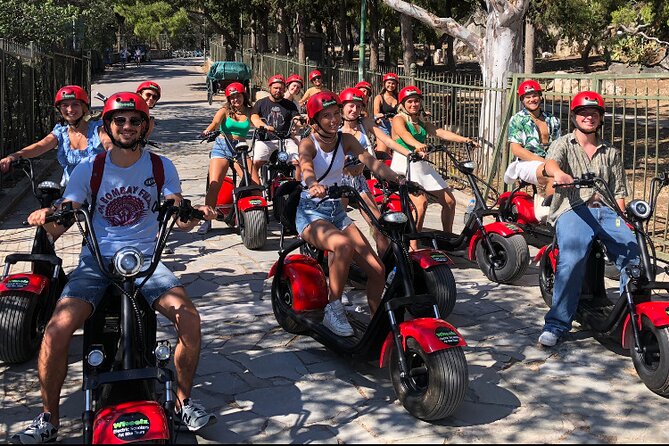
Want the Acropolis without the knee burn? This 2-hour Athens e-scooter tour is built for an easier way to see major sights, with a pro guide keeping you oriented and moving at a safe pace. You’ll roll past famous viewpoints and several landmarks tied to ancient Athens, plus a few quick photo moments that help you piece the city together fast.
I love how the tour stays guided, not just a ride. A professional guide (people like Venice, Giannis, and Nic have led groups) answers questions, points out what matters, and keeps the group organized—plus bikes and helmets come provided.
One thing to plan for: you need to know how to ride a bicycle. The bikes are easy to maneuver for most people, but if you cannot ride at all, you may not be able to join on the standard setup.
In This Review
- Key things to know before you book
- Why fat e-bikes make the Acropolis area make sense
- Price and timing: what you get for $71.35
- Where you’ll start: Chatzichristou 6 and getting on the right path
- First-hand safety in Athens traffic (without the stress)
- The guided route: what each stop does for your understanding
- Herod Atticus Odeon: a classic photo stop with big context
- Areopagus (Mars Hill): the moment that turns scenery into stories
- Pnyx: a quieter viewpoint with serious political weight
- National Observatory of Athens: a photo moment for the skyline
- St. Marina Church: a small stop that adds character
- Gazi viewpoint: where the city energy shows up
- First Cemetery of Athens: ceramics and everyday traces
- Temple of Hephaistos: the best well-preserved stop on the route
- Arch of Hadrian and the Temple of Olympian Zeus: the classics you’ll remember
- What I’d watch out for: bike skill and crowd handling
- Guides that keep it fun: names you might get and what they do well
- Who should choose this Athens e-scooter tour
- Should you book this Athens Acropolis e-bike tour?
- FAQ
- How long is the Athens Acropolis guided e-scooter tour?
- What does the tour cost?
- Is the tour offered in English?
- What’s included with the ride?
- Where do we meet for the tour?
- Do I need to know how to ride a bicycle?
- How big is the group?
- What if weather is bad or I need to cancel?
Key things to know before you book
- Small group feel (max 25) keeps the ride more personal and easier to manage on busy streets
- Helmet and bottled water included, so you’re not scrambling before you start
- A guide leads and tailors attention, helping everyone stay together in crowds
- Mostly photo-stop timing means quick looks, not long museum-style stays
- Fat bikes/e-scooters are built for easy control, with a slow, safety-first pace
Why fat e-bikes make the Acropolis area make sense

Athens can be surprisingly intense on foot. If you’ve been walking for hours already, your legs start to complain before your eyes finish appreciating the views. This tour gives you a middle ground: you still stop at key spots to look and learn, but you’re not crossing the whole area on sore feet.
The “fat” part matters in real life. People find the scooters/e-bikes easy to maneuver, and the pace stays slow enough to feel in control. The guide also handles traffic-smart movement when the route gets crowded with walkers and the occasional car or motorbike.
The tour is also set up for orientation. Even when stops are brief, you leave with a mental map of how the Acropolis area connects to other big names in Greek antiquity.
You can also read our reviews of more cycling tours in Athens



Price and timing: what you get for $71.35
At $71.35 per person for about 2 hours, you’re paying for three things you’d otherwise have to juggle: a guide, the ride, and time savings. If you tried to DIY this whole loop, you’d spend extra time figuring out routes, finding the right viewpoints, and moving between sites at a walking pace.
This is not a long, slow “spend the day here” tour. It’s more like a smart sampler: enough stops to understand themes and major landmarks, without the fatigue that can shut down your day.
The bonus is that the cost includes practical riding needs. Helmets are provided, bottled water is included, and you get an English-speaking guide—so you can focus on seeing rather than preparing.
Where you’ll start: Chatzichristou 6 and getting on the right path
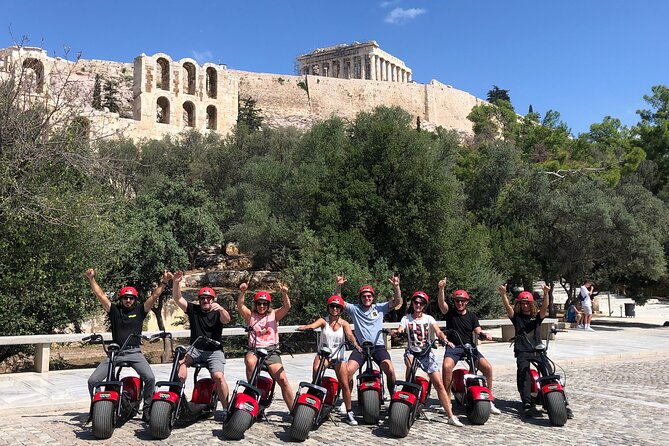
The meeting point is Chatzichristou 6, Athina 117 42, Greece. The address is in the Acropolis area, and the tour notes it’s near public transportation, which helps if you’re pairing this with other sights that day.
When you arrive, expect a quick setup and safety briefing before you roll out. You’ll be issued the bike/scooter and helmet, and the guide will explain how the group will move (including how they keep people together).
If you’re arriving late or confused, don’t guess your way around—use the meeting point address and aim to be early. With busy streets around Athens sights, being right on time matters.
First-hand safety in Athens traffic (without the stress)
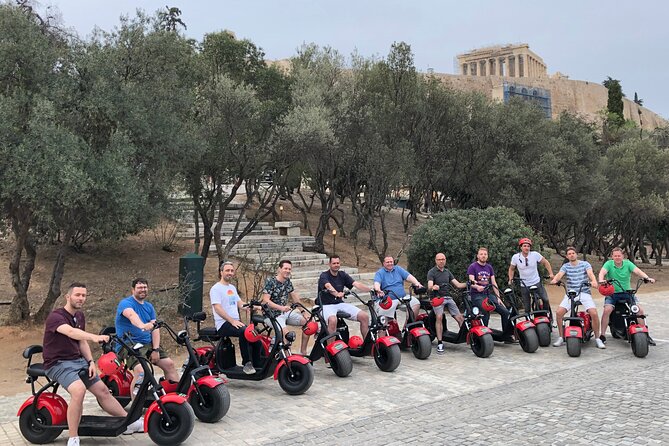
This is one of the tour’s strongest selling points: the ride is built around safety and control. The pace is fairly slow, which gives you time to react and stay calm when pedestrians are everywhere and streets are shared with cars and motorbikes.
Guides typically keep a simple structure—someone in front and someone bringing up the rear—so nobody gets left behind. That sounds basic, but it’s huge when you’re navigating crowds and trying to listen at the same time.
Helmets are provided, and you’ll have water on board. Small details like this lower the mental load, especially if it’s warm out or you’re coming in from a previous walk around Athens.
The guided route: what each stop does for your understanding
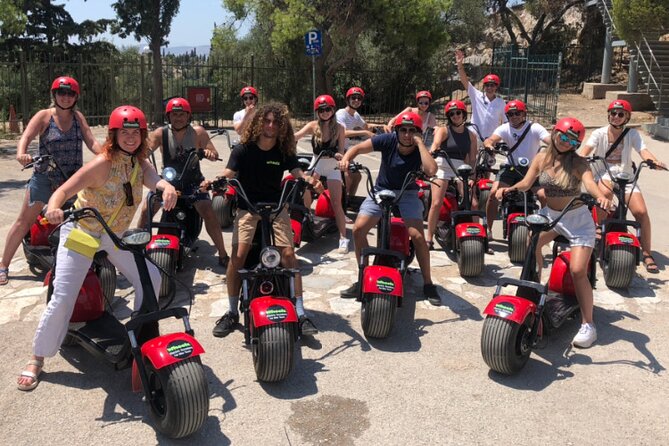
This tour moves through a string of major points around central Athens. Many stops are short photo moments (usually 5 minutes, with one longer 10 minutes), so the value isn’t lingering—it’s connecting the dots.
You can also read our reviews of more guided tours in Athens





Herod Atticus Odeon: a classic photo stop with big context
You’ll start with Herod Atticus Odeon for a photo stop. It’s one of the most famous ancient theatres in Athens, and even a brief look helps you understand why this area still feels theatrical: it’s built for crowds, speeches, and performances.
Expect to pause, take a few photos, and hear what made this site important in ancient times.
Consideration: with a quick photo stop format, you won’t get time for a long on-site study. Think of it as a scene-setter.
Areopagus (Mars Hill): the moment that turns scenery into stories
Next is Areopagus, often linked with Mars Hill. Even if you’ve heard the name before, the guide’s job here is to explain why this spot matters and how it fits into Athens’ identity.
This is the kind of stop where a short explanation can change your whole mental picture. You’ll likely leave seeing more than stone—you’ll see the layers of meaning.
Pnyx: a quieter viewpoint with serious political weight
Then comes Pnyx, described in the route as a special find. Pnyx is where you can start to feel the political gravity of ancient Athens—this is not just about temples and statues.
The payoff: even with a short stop, you get a sense of how public space worked. It helps you connect Athens monuments to civic life, not only mythology.
Consideration: the stop is 10 minutes, so bring your best photo/looking focus to make it count.
National Observatory of Athens: a photo moment for the skyline
At the National Observatory of Athens, you’ll have another photo stop. This part of the tour works well if you like panoramic views and want to see Athens from a higher angle.
It’s a good mental reset after the more “historical explanation” stops. You can look, take photos, and then refocus on what comes next.
St. Marina Church: a small stop that adds character
You’ll stop at St. Marina Church for photos. This is a less “headline ancient” stop, and that balance is useful. It reminds you Athens isn’t stuck in one era—it layers periods on top of each other.
If you like cities that feel lived-in, this kind of stop adds texture.
Gazi viewpoint: where the city energy shows up
Then you’ll pass through to Gazi for a viewpoint. This is where the tour shifts from pure monuments to the modern city feel around them.
The brief 5-minute stop is designed to give you a better sense of where everything sits in the real Athens street grid.
First Cemetery of Athens: ceramics and everyday traces
Next is the First Cemetery of Athens, with an emphasis on ceramics. This stop gives you a different angle on what ancient Athens can look like—less about grand structures and more about artifacts and the human scale of history.
Even in a short time window, the guide can turn “a cemetery” into something that feels like evidence, not just a location.
Consideration: if you expected a long visit inside, keep expectations aligned with the short timing.
Temple of Hephaistos: the best well-preserved stop on the route
The ride then highlights Temple of Hephaistos, often noted as the best well-preserved temple in Greece. This is one of the tour’s most satisfying stops because it’s tangible in a way that’s easy to appreciate quickly.
You’ll get a short stop to see it and take photos, but the attention is likely on what makes the temple so distinctive and how it stands out in architectural terms.
If you want a “big payoff” stop that doesn’t require a full day, this is it.
Arch of Hadrian and the Temple of Olympian Zeus: the classics you’ll remember
You’ll finish the pattern with Arch of Hadrian (photo stop) and Temple of Olympian Zeus (photo stop). These are big names, and the tour uses them to tie together the theme of Athens as a center of monumental building.
The Arch of Hadrian stop helps you visualize the scale of ancient influence and the way rulers marked the city. The Temple of Olympian Zeus gives you the grand finale feeling—massive, iconic, and hard to ignore even from a quick look.
With these final photo points, you’ll likely feel like you walked through a greatest-hits map of Athens antiquity.
What I’d watch out for: bike skill and crowd handling

If you can already ride a bicycle, you’re set. One clear note from the experience is that you need to know how to ride a bicycle to use their bikes.
If someone in your group cannot ride, there may be options. Some guides have offered a way for a non-rider to still participate—like having a child sit behind the guide—so it’s worth asking ahead of time if your situation is complicated.
Also, expect the streets to be busy around major sites. The tour handles this with a safety-first approach and careful pacing, but you should still mentally prepare for crowded sidewalks and shared roads.
Guides that keep it fun: names you might get and what they do well
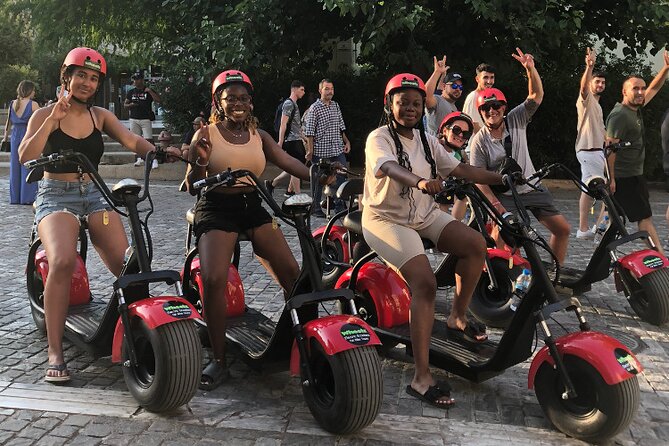
The quality of this tour is strongly tied to the guides. People have highlighted a few leaders by name, including Venice, Giannis, Nick, John, Celina, and Nic (Nicolas). The common thread: they’re friendly, patient, and focused on safety and clarity.
A big plus is how the guides pace the group. They help you keep up, answer questions, and stay comfortable even when the route gets crowded.
If you like tours where you ask questions and get real explanations back, this format fits.
Who should choose this Athens e-scooter tour
This is a great match if you want to:
- see several major sights in about two hours
- get a guided story while still having fun moving around
- reduce walking fatigue and keep your day enjoyable
It’s especially good for families who want an activity that feels like a ride but still includes meaningful stops. One reason: the guides seem used to mixed abilities and have found ways to keep different riders included.
It might be less ideal if:
- nobody in your group can ride a bicycle (because the standard bikes require skill)
- you want long sit-down time at each landmark (this route is mostly photo stops)
Should you book this Athens Acropolis e-bike tour?

Book it if you want an efficient, guided way to hit the Acropolis area plus major Athens antiquity highlights without wearing out your legs. The combination of helmets, bottled water, a pro guide, and a small group setup makes it feel like a well-run day—not just a rental scooter experience.
Skip or reconsider if your group includes people who can’t ride a bicycle and you’re hoping for a fully independent ride. Also, if you need long museum-style time, choose a slower format, because these stops are designed for quick photos and quick understanding.
If the day’s weather looks good, this is a strong value play: you trade a little spontaneity for structure, and in Athens, that structure often pays back fast.
FAQ
How long is the Athens Acropolis guided e-scooter tour?
It’s approximately 2 hours.
What does the tour cost?
The price is listed as $71.35 per person.
Is the tour offered in English?
Yes. The tour is offered in English.
What’s included with the ride?
Bikes and helmets are provided, and free bottled water is included. Service animals are allowed.
Where do we meet for the tour?
You meet at Chatzichristou 6, Athina 117 42, Greece.
Do I need to know how to ride a bicycle?
Yes. You need to know how to ride a bicycle to use their bikes.
How big is the group?
The tour has a maximum of 25 travelers.
What if weather is bad or I need to cancel?
The experience requires good weather. If it’s canceled due to poor weather, you’ll be offered a different date or a full refund. You can cancel up to 24 hours in advance for a full refund.




More Cycling Tours in Athens



More Tours in Athens



More Tour Reviews in Athens
- All Day Cruise -3 Islands to Agistri,Moni, Aegina with lunch and drinks included
★ 5.0 · 4,958 reviews