REVIEW · ATHENS
Argolis Olympia & Delphi Three-Day Tour
Book on Viator →Operated by H.P.Tours - Hellenic Private Tours · Bookable on Viator
Myth to museum in one private drive. This Argolis Olympia & Delphi three-day tour strings together the big-ticket ruins of Greece in a way that feels more human than big-bus sightseeing. I like the private setup and the way the schedule aims for less crowded site time, so you can actually read stones and not just pose for photos.
One thing to plan for: the tour price covers transport and the core program, but entrance fees and meals are extra, and you’ll also need to budget for hotel stays since accommodation isn’t included. The route is full, too, so if you prefer slow travel and long cafe hangs, you may feel a bit rushed on the road days.
In This Review
- Key highlights that make this tour work
- Why This 3-Day Argolis, Olympia, and Delphi Plan Feels Different
- Day 1: Corinth Canal, Ancient Corinth, Epidaurus, and Mycenae in One Flow
- Nafplio and Tolon: The Best Kind of Break Between Ruins
- Mycenae: Cyclopean Walls, Lion Gates, and the Drama of Agamemnon
- Olympia Day: Zeus, Hera, Pheidias, and a Museum Worth Your Time
- The Rio–Antirrio Bridge and Coastal Stops Before Delphi
- Delphi Sanctuary Morning: Castalia Spring, Treasury of the Athenians, Stadium, Theater
- Delphi Archaeological Museum Plus Arachova: Ancient Artifacts Then Mountain Town Life
- Hosios Loukas Monastery: Byzantine Mosaics as the Final Payoff
- Drivers, Optional Licensed Guides, and How Much You’ll Learn
- Price and Value: What You’re Paying For (and What’s Extra)
- Who This Private Argolis Olympia and Delphi Tour Fits Best
- Should You Book This 3-Day Argolis, Olympia, and Delphi Tour?
- FAQ
- How long is the Argolis Olympia & Delphi three-day tour?
- Is this tour private?
- What group size is this tour for?
- What’s included in the price?
- Are meals included?
- Are entrance fees included?
- Is hotel accommodation included?
- Do I need a licensed tour guide?
- Is pickup available?
- What is the cancellation window for a refund?
Key highlights that make this tour work
- Smart timing at major sites: the pacing is built to reduce the crush you get with large bus groups
- A do-not-miss route: Corinth Canal, Ancient Corinth, Epidaurus, Mycenae, Olympia, Delphi, and Hosios Loukas
- Private group comfort: you ride in a well kept, air-conditioned vehicle with WiFi and bottled water
- Pro English-speaking drivers: smooth logistics in English, with help during the day (and optional licensed guides if you want more depth)
- Real Greek stops: Nafplio, Tolon, and Arachova add local texture between the monuments
Why This 3-Day Argolis, Olympia, and Delphi Plan Feels Different
This is a classic Greece itinerary, but the delivery matters. You’re not just ticking off ruins. You’re moving through them in a sequence that makes sense geographically, and you’re given time to actually look at what you came for.
I love that the day-by-day structure links the Peloponnese’s ancient power centers to Greece’s oracle country next. Corinth and Mycenae bring the Bronze Age and early Greek world into focus, then Olympia shifts you to ritual, sport, and myth in a single theme. Delphi closes the loop with religious politics and the famous sanctuary complex.
The other big plus is that the operator builds in a goal of visiting sites at different times than the largest tour groups. That doesn’t turn ruins into empty museums, but it can change your experience from chaotic to readable. If you’ve ever tried to take in a theater or a mosaic while dodging crowds, you’ll understand why that matters.
You can also read our reviews of more tours and experiences in Athens.


Day 1: Corinth Canal, Ancient Corinth, Epidaurus, and Mycenae in One Flow
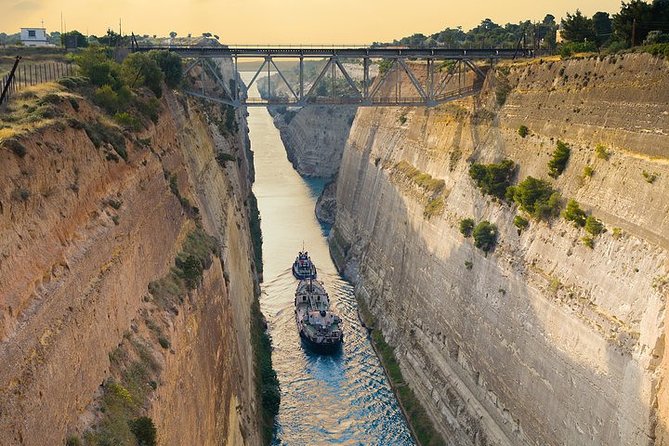
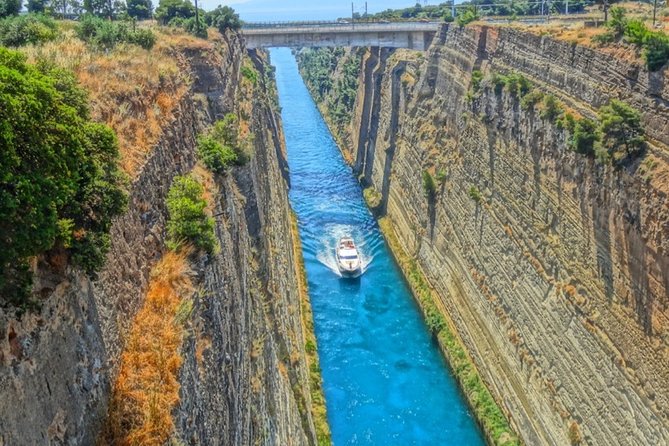
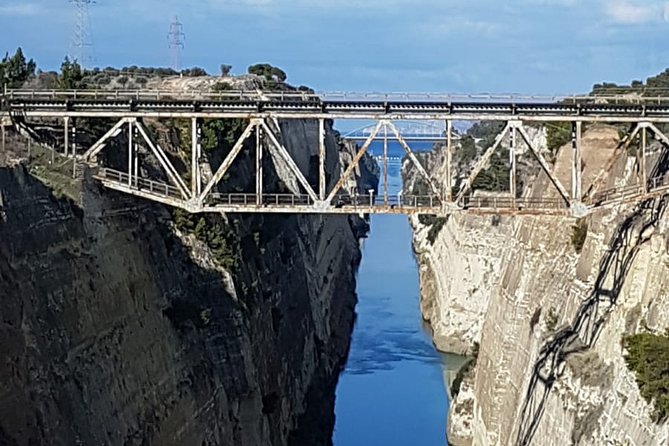
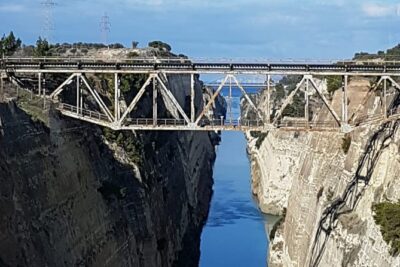
Day 1 starts with a quick, scenic hit at Corinth Canal. It’s short and free, and it gives you a clear sense of how the geography of Greece shapes history. The canal cuts through the Isthmus of Corinth, separating the Peloponnese from the mainland. It’s narrow enough to make most modern ships unable to pass, so today it’s mainly a tourist landmark, but it’s an excellent first mental map maker.
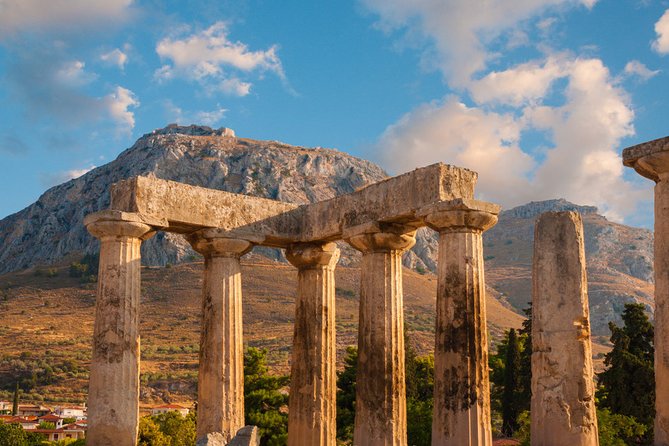
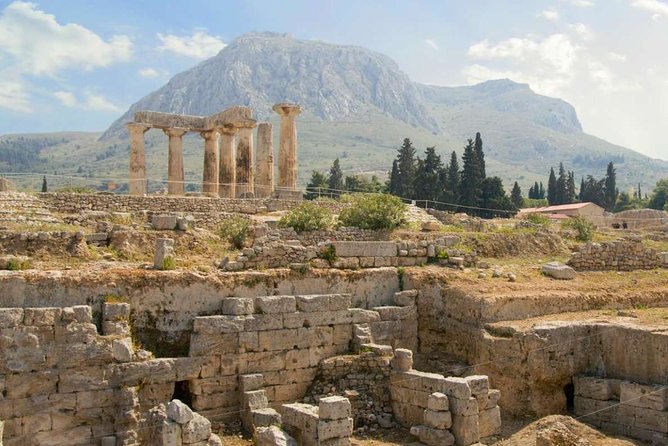
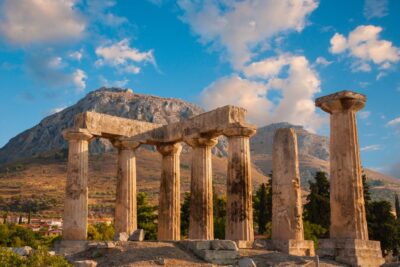
Then you move into Ancient Corinth (Archaia Korinthos), where the highlights feel very different from each other. The temple of Apollo is an early Doric statement in the region, built around 560 BCE. You get the feeling of a city projecting power from a rocky hill nearby, not just sitting quietly in the valley.
From there you’ll also see the Bema tradition connected to Paul’s trial. Even if you’re not religious, it’s a powerful example of how ancient public spaces became stage sets for major historical moments. It’s the kind of stop that adds meaning to what you’re seeing in other ruins later.
Next comes the Archaeological Museum of Corinth. This is the stop that helps you understand the city instead of just walking through it. You can expect material from prehistoric areas, then the major eras of Corinth: Geometric, Archaic, Classical, Hellenistic, plus Roman, Byzantine, and Frankish layers. There are also sculptures, inscriptions, and finds tied to the Jewish community in the region. It’s a reminder that Corinth wasn’t one museum object; it was a living place for ages.
After that, you’ll head to Epidaurus, and that’s where the tour mood often changes. Epidaurus is famous for its healing sanctuary setting, and the centerpiece is the ancient Theater of Epidaurus with its remarkable acoustics. The theater retains its original circular orchestra, and it’s still used today. If you like architecture that actually performs, this stop is a real win.
One practical note: Epidaurus and Corinth museum time can stack together into a long, information-heavy day. If you want to slow down, you can do it by saving questions for later and using your breaks to recharge your eyes. The tour is designed to keep moving, but you don’t have to cram every detail into the moment.
Nafplio and Tolon: The Best Kind of Break Between Ruins
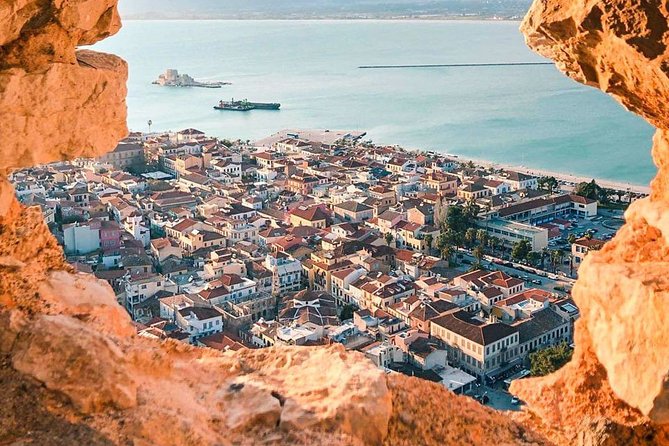
After Epidaurus, the route shifts toward the sea with a stop in Nafplio. It’s a port town with medieval layers and later status as a capital in Greece’s 19th-century political story. Even when you keep it brief, Nafplio gives you that satisfying change from stone sanctuaries to everyday streets.
Then you continue to Tolon, just about 7 kilometers east of Nafplion. Tolon is a sea town, and the plan includes a lunch at a traditional family-owned restaurant with views toward the Saronic Gulf. Meals aren’t included in the tour price, but lunch time being built into the schedule is helpful. It means you’re not scrambling to find something once the sites are done for the day.
For me, stops like Nafplio and Tolon are what make an ancient itinerary feel like a trip, not a lecture. You get scenery, you get pacing relief, and you get a chance to eat in a setting that matches the geography you’ve been driving through.
Mycenae: Cyclopean Walls, Lion Gates, and the Drama of Agamemnon
The day continues with Mycenae, and this is one of those sites where the scale hits you fast. Mycenae was a Late Bronze Age center, lasting from the 16th century BCE into the 11th century BCE. The acropolis and the Cyclopean walls show you power built with heavy stone and tight control.
You’ll go by the famous Lion Gates and then follow the steep paths that lead into the palace complex. This is where the names start turning from mythology into a real spatial story: Agamemnon’s palace, and the darker note of Clytemnestra and her lover after the Trojan War victory.
Then there’s the second major hit: a short stop across to the Treasury of Atreus, also called the Tomb of Agamemnon. Even without a huge narrative background, the monument feels intentionally theatrical, like an exclamation point after the acropolis drama.
My practical advice here: wear shoes you trust and bring water. The site involves walking on slopes and uneven ground. It’s not a long museum floor, but it demands steady footing, especially when you’re coming from other stops.
Olympia Day: Zeus, Hera, Pheidias, and a Museum Worth Your Time
After your first night in Olympia, Day 2 centers on the sanctuary complex. You’ll visit the Archaeological Site of Olympia, starting with the Temple of Zeus. It’s the biggest temple in the Peloponnese in this sanctuary context and a celebrated Doric example. Standing in the middle of the Altis is one way to understand why Olympia mattered beyond athletics.
Then you’ll shift to the Temple of Hera, one of the oldest monumental temples in Greece, located at the northwest corner of the Altis precinct. It’s connected to the Olympic Flame lighting tradition every four years, so it carries both ancient and modern resonance.
The plan also includes the workshop of Pheidias, where the great sculptor crafted the chryselephantine statue. Even if you’re not a sculpture specialist, it helps connect the monument size to the artistry that made it feel alive.
After the site, the Archaeological Museum of Olympia adds perspective. The museum is especially known for sculpture, and it features a famous bronze collection described as the richest of its type in the world. You can also expect long coverage of the sanctuary from prehistoric times through the Early Christian period, which helps you place Olympia’s rise and transformation over centuries.
If your day feels full, remember: museum time is what turns ruins into context. You’ll likely come away with clearer mental links between what you saw outside and what the sanctuary represented.
- All Day Cruise -3 Islands to Agistri,Moni, Aegina with lunch and drinks included
★ 5.0 · 4,958 reviews



The Rio–Antirrio Bridge and Coastal Stops Before Delphi
Driving from Olympia to Delphi isn’t just a transfer day. The route includes big geography moments and small local breaks.
On the way, you’ll pass by the Charilaos Trikoupis bridge, the Rio–Antirrio span. It’s known as one of the world’s longest multi-span cable-stayed bridges and opened right before the Athens 2004 Summer Olympics. It even had a connection to the Olympic Flame transport. The bridge is one of those modern structures that fits nicely with the theme of Olympia and the Olympics.
Then you get quick stops in coastal towns: Nafpaktos Old Port for photos or coffee by the sea, and Galaxidi for its seafront feel and older harbor story tied to shipbuilding and the local nickname connected to widows waiting for sailors.
These stops are brief, but they matter. They keep the trip from turning into constant driving and wall staring. You also get a sense of how the route moves between gulfs and valleys before you hit Delphi’s mountain-side sanctuary world.
Finally, you’ll reach Delphi and stay overnight.
Delphi Sanctuary Morning: Castalia Spring, Treasury of the Athenians, Stadium, Theater
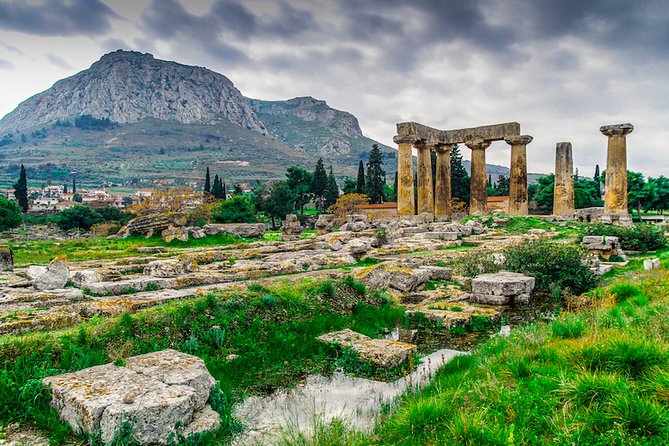
Day 3 is the Delphi day, and it follows a smart order: start with the sanctuary landscape and work your way through the famous buildings.
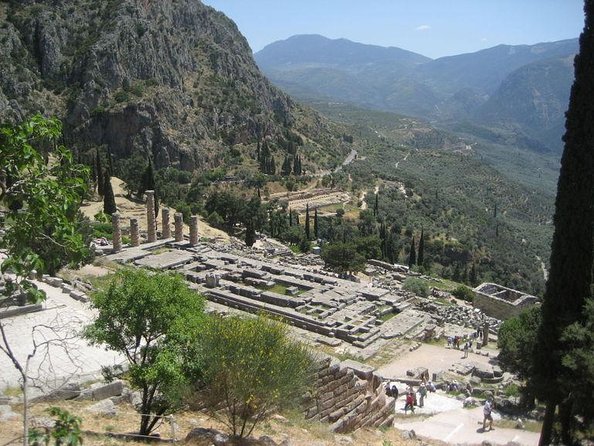
You begin at Castalia spring, then move into the ancient Sanctuary of Apollo. From there, you’ll see the Treasury of the Athenians, which ties into the sanctuary’s political religious identity. You’ll also cover the ancient stadium and the ancient theater, including the well-known unique bronze Charioteer. The list of stops continues with the Temple of Athena Pronea and the gymnasium, so you get more than one angle on the site’s purpose.
What I like about this structure is that Delphi isn’t reduced to one photo spot. You see the sanctuary as a complex, with ritual spaces, athletic arenas, and monuments that reflected civic identity.
If you want a simple approach to making the most of Delphi: take 10 seconds at each stop to identify where you are within the sanctuary flow. It sounds basic, but it turns your walk into a mental map instead of a set of separate wonders.
Delphi Archaeological Museum Plus Arachova: Ancient Artifacts Then Mountain Town Life
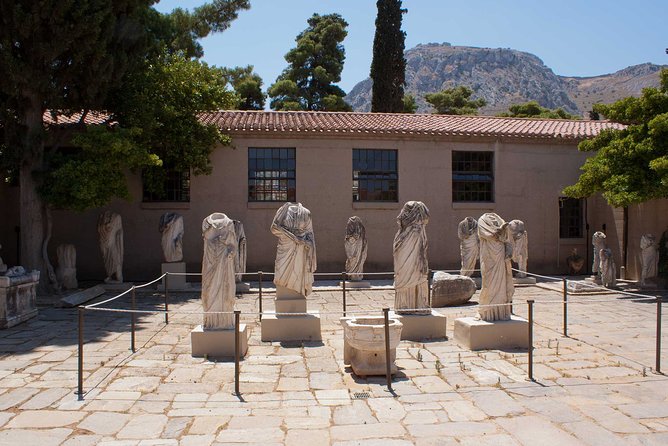
After the sanctuary walk, you’ll visit the Delphi Archaeological Museum. This is where Delphi becomes more understandable. The museum focuses on the history of the sanctuary and the oracle, with collections that include architectural sculpture, statues, and smaller donated objects. You’re looking at religious, political, and artistic activities from the 8th century BCE through decline in Late Antiquity.
The museum being two-storey and organized into multiple rooms and storage spaces matters because it signals depth. Even with a shorter visit, you’ll get the feeling that Delphi’s story is built from many kinds of objects, not just the famous pieces.
Then the plan includes a visit to Arachova, a traditional town about 10 kilometers from Delphi. It’s described as combining old and new, and it adds a human-scale break after the monumental site time. Even a short stop can help you feel where people live, not only where ancient people once lived.
If you’re the type who always wants to end the day with a photo and a meal plan, Arachova gives you that.
Hosios Loukas Monastery: Byzantine Mosaics as the Final Payoff
The tour ends at Hosios Loukas Monastery, meaning esteemed Saint Luke. It’s built around the burial of Saint Luke, and the entrance draws you in through the striking gold mosaic of the saint above the entrance.
The monastery complex includes the Katholikon church and a smaller Theotokos temple. The frescoes and mosaics are noted as well preserved, and the crypt under the Katholikon holds the remains of the saint.
I like this finale because it shifts your focus from ancient Greece into Byzantine-era faith and art. If you’ve been staring at columns for two and a half days, these mosaics deliver a different kind of visual intensity.
The comparison to major European basilicas or famous Byzantine art is tempting, but you don’t need that. Just go expecting a high-impact mosaic setting and plan to slow down a bit here.
Drivers, Optional Licensed Guides, and How Much You’ll Learn
This is a private tour with English-speaking professional drivers, and you’ll have a comfortable vehicle with air-conditioning and WiFi. That matters on long routes, because the vehicle time becomes part of the experience when logistics are handled and you’re not stuck translating.
One key detail: the drivers are not licensed to accompany you into the sites. That’s why the tour offers an option for three local licensed tour guides upon request (depending on availability) at an additional cost.
In plain terms: if you want deeper, site-by-site explanation while you’re actually standing among the stones, plan on adding licensed guides. If you’re fine with self-guided reading and general orientation from the driver, you can still get a strong trip from the itinerary.
When the staffing works well, it can also feel like you’re traveling with someone who’s happy to answer questions and point you toward good food. On this route, names like Panos and Michael have been associated with outstanding service, including help with questions and making the day feel smooth.
Price and Value: What You’re Paying For (and What’s Extra)
The price is $2,388.27 per group, up to 2 people, for about three days. For two people, private transportation and multi-day planning can be a fair trade, especially when you compare it to paying separately for several day excursions plus transfers.
The tour also includes bottled water, air-conditioned vehicle, WiFi on board, and private transportation. Those are small items, but over three days they add up to comfort and sanity.
What’s extra:
- Entrance fees are not included, with a total of about 60 Euros per adult
- Meals are not included
- Hotel accommodation is not included
- Licensed guides (three local guides upon request) are an additional cost of 620 Euros
- Airport pickup and drop-off costs extra
To me, the value hinges on one thing: how much you care about experiencing the sites at better times than the biggest bus groups. If you want that calmer feel at theaters, sanctuaries, and ruins, the private pacing and timing goal make the price easier to justify.
Who This Private Argolis Olympia and Delphi Tour Fits Best
This tour is a strong fit for couples or small groups who want a complete ancient Greece highlight reel without the hassle of arranging multiple day trips. It also works for people who like archaeology plus mythology but still appreciate breaks in real towns like Nafplio, Tolon, and Arachova.
If you’re the kind of traveler who reads signs, collects names (Apollo, Hera, Pheidias, Athenians, Athena Pronea), and wants time to look, you’ll likely enjoy the pacing. And because it’s private, you can adapt it to your needs more easily than a fixed group tour.
If you hate driving days, this may feel like a lot. The itinerary includes long stretches between regions, and Day 1 can be especially full: Corinth Canal, Corinth, a museum, Epidaurus, Nafplio, Tolon, Mycenae, then Olympia overnight.
Should You Book This 3-Day Argolis, Olympia, and Delphi Tour?
Book it if you want a private, well-paced route that covers the essential ancient sites—Corinth, Epidaurus, Mycenae, Olympia, Delphi, plus a Byzantine art finale—and you value the chance to see major monuments with fewer crowds.
Consider passing or adjusting if:
- you don’t want to budget extra for entrances, meals, and hotel
- you prefer very slow travel with lots of free time in towns
- you’d rather have licensed commentary everywhere, since the drivers aren’t licensed to accompany you into the sites
If your goal is a smooth three-day “greatest hits” journey with comfortable transport and smart timing, this is a very workable choice.
FAQ
How long is the Argolis Olympia & Delphi three-day tour?
It lasts about 3 days.
Is this tour private?
Yes. It’s totally private, and only your group participates.
What group size is this tour for?
The price is per group for up to 2 people.
What’s included in the price?
Included items are bottled water, an air-conditioned vehicle, WiFi on board, and private transportation with professional drivers fluent in English.
Are meals included?
No. All meals are not included.
Are entrance fees included?
No. Entrance fees are not included, with a total cost listed as 60 Euros per adult.
Is hotel accommodation included?
No. Hotel accommodation is not included, even though the itinerary includes staying overnight in Olympia and Delphi.
Do I need a licensed tour guide?
Licensed tour guides are available upon request (three local licensed tour guides, depending availability) for an additional 620 Euros. The professional drivers are not licensed to accompany you into the sites.
Is pickup available?
Pickup is offered, and airport pickup and drop-off are available for an additional cost.
What is the cancellation window for a refund?
You can cancel up to 6 days in advance for a full refund. For a 50% refund, cancel 2–6 days before the start time. If you cancel less than 2 days before, the amount paid is not refunded.

More Tours in Athens

More Tour Reviews in Athens
- All Day Cruise -3 Islands to Agistri,Moni, Aegina with lunch and drinks included
★ 5.0 · 4,958 reviews