REVIEW · ATHENS
Acropolis and Agora Tour: The Rise & Fall of Democracy
Book on Viator →Operated by Alternative Athens · Bookable on Viator
Athens reads differently when democracy is the lens. This Acropolis and Agora tour connects major monuments with the political ideas, stories, and civic life that made ancient Athens famous.
I especially liked how the route keeps moving, so you’re not stuck staring at one view for an hour. You’ll also get a small-group experience (up to 15) with time for questions as you connect sites to Athenian democracy.
One thing to plan for: entry fees aren’t included (you can pre-purchase for about €50 per person), and the Acropolis has strict rules about strollers and big bags.
In This Review
- Key takeaways before you go
- Athens, explained through democracy and theater
- The tour length and meeting point that keep things sane
- Acropolis first: Parthenon, Nike, Erechtheion in order
- Theatre of Dionysus: where performance met public life
- Temple of Athena Nike: victory tied to staying put
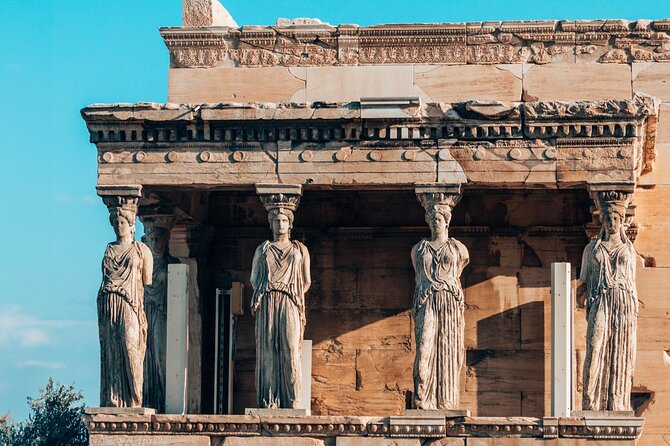
- Erechtheion: a temple built on tricky ground and big symbolism
- Parthenon: the architecture lesson with a civic angle
- Ancient Agora: the real engine room of Athenian life
- Temple of Hephaestus: craft, trade, and city protection
- Small group size: why 15 people makes a difference
- The guide matters most on a democracy-focused tour
- Tickets, entry fees, and what your $67.43 buys
- Map and mobile ticket: small things that save time
- Practical tips: what to bring and what to avoid
- Who should book this Acropolis and Agora tour?
- Quick advice: should you book?
- FAQ
- How long is the Acropolis and Agora tour?
- What does the tour cost, and what about entry fees?
- What is included in the price?
- What is not included?
- Where do I meet the guide, and where does the tour end?
- What time does the tour start?
- Is the tour offered in English?
- How big is the group?
- Are there restrictions on bags or strollers?
- Do I need an ID?
- Can I cancel and get a full refund?
Key takeaways before you go
- A democracy-themed route from the Acropolis down to the Ancient Agora
- Iconic Acropolis monuments explained with myth and civic meaning, not just dates
- Theatre of Dionysus stop for the origins of Greek drama tied to Athenian culture
- Ancient Agora focus on political, commercial, social, religious, and justice life
- Small-group size capped at 15 for easier conversation and pacing
- A take-home map of ancient Athens to keep your bearings after the tour
Athens, explained through democracy and theater
If you’ve ever wondered why Athens gets wrapped up in words like democracy, this tour gives you a physical answer. You’ll walk from the Acropolis, the symbolic high point of the city, down to the Ancient Agora, where real decisions happened.
What makes this experience click is the way the guide links architecture and mythology to civic life. You’ll see the Parthenon and other key structures, then you’ll get the context for why those spaces mattered to people making laws, trading goods, judging disputes, and debating ideas.
And yes, you’ll still get the jaw-drop views of the Parthenon hill. But you’ll also learn what those stones were for in everyday Athenian thinking.
You can also read our reviews of more tours and experiences in Athens.



The tour length and meeting point that keep things sane

The tour runs about 3 hours. In practice, I’d plan for a little extra time because the flow between hilltop stops and the Agora can stretch with questions and photo stops.
It starts at 9:00am at Dionysiou Areopagitou 45, Athens (117 42). The tour ends at the Ancient Agora of Athens (Athens 105 55), so you can continue exploring nearby without doubling back.
Transfers aren’t included. The good news is the meeting point is near public transportation, so you can keep your day flexible.
Acropolis first: Parthenon, Nike, Erechtheion in order
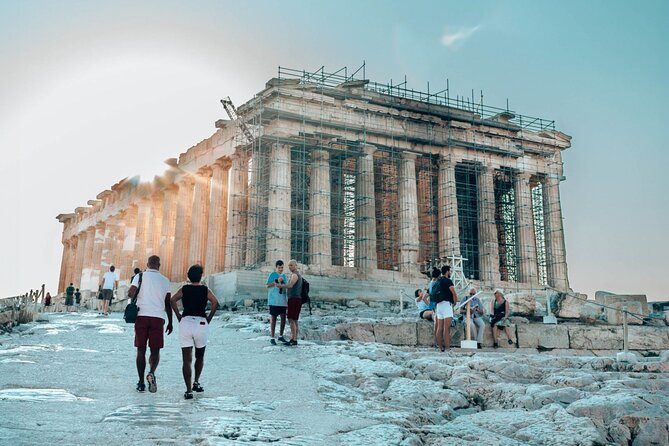
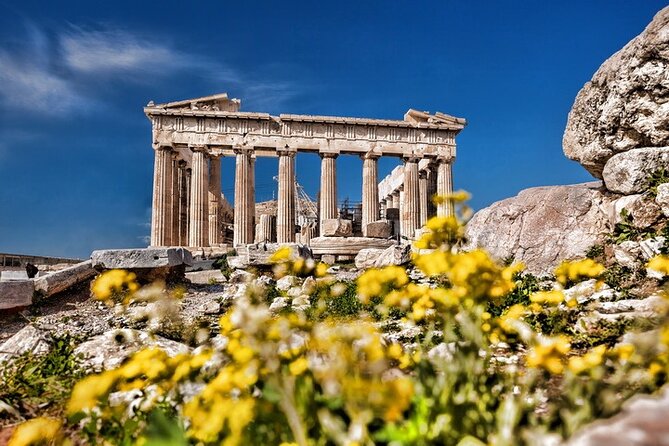
The tour begins on the Acropolis, Athens’ center of gravity for more than a few centuries. Even if you’ve seen photos, being on the hill changes the scale. You can’t help but notice how the buildings sit together like a planned argument.
Expect a first stretch focused on the sacred story of Athens and Athena. You’ll also get pointed attention on major monuments, including the Parthenon, Temple of Athena Nike, Erechtheion, and the Propylaea area, plus time to connect the physical layout to the city’s identity.
Theatre of Dionysus: where performance met public life
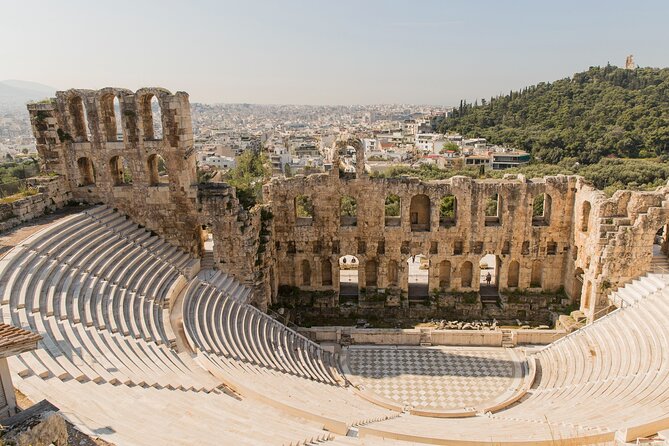
After the Acropolis introduction, you’ll stop at the Theatre of Dionysus Eleuthereus. This is one of the earliest major theatres in Athens, and it’s tied to the cultural engine that helped shape public conversation.
You’ll learn why that matters: Greek tragedies and comedies weren’t only entertainment. They were part of how Athenians wrestled with ideas, power, ethics, and human behavior in front of large audiences.
This stop is short, so it works best if you’re okay with a focused taste rather than a long museum-style visit. If you love theatre history, you may wish there was more time, but the payoff is the link back to civic life.
Temple of Athena Nike: victory tied to staying put
Next comes the Temple of Athena Nike, connected to both Athena and Nike, the goddess of victory. One of the most memorable stories attached to this site is the claim that Athena’s cult statue had no wings, so victory would never leave Athens.
It’s a small stop by time, but it’s a strong one for meaning. You’ll see how victory wasn’t just battlefield luck; it was imagined as something the city could protect through its values and identity.
- All Day Cruise -3 Islands to Agistri,Moni, Aegina with lunch and drinks included
★ 5.0 · 4,958 reviews




Erechtheion: a temple built on tricky ground and big symbolism
The Erechtheion is where the tour starts feeling more personal and less postcard-perfect. The temple is designed to house a wooden cult statue of Athena (as described in the tour info), and it also reflects the city’s confidence at the height of its power.
The structure’s layout is part of why people remember it. Even if you don’t catch every architectural detail, you’ll understand the basic idea: the Acropolis wasn’t just one monument, it was a statement built in layers of belief.
Parthenon: the architecture lesson with a civic angle
Then you’ll get the Parthenon. It was built in the mid-5th century BCE and dedicated to Athena Parthenos, with the tour framing it as the culmination of Doric architectural development.
This is the stop where you’re likely to pause longer just because the building demands it. Still, the value here is that you’re not only absorbing beauty. You’re also being asked to look at the Parthenon as part of the wider Athenian story.
The time allocation is limited, so if you want long, slow study, I’d treat this as your guided orientation. You’ll be able to return later on your own with better context.
Ancient Agora: the real engine room of Athenian life
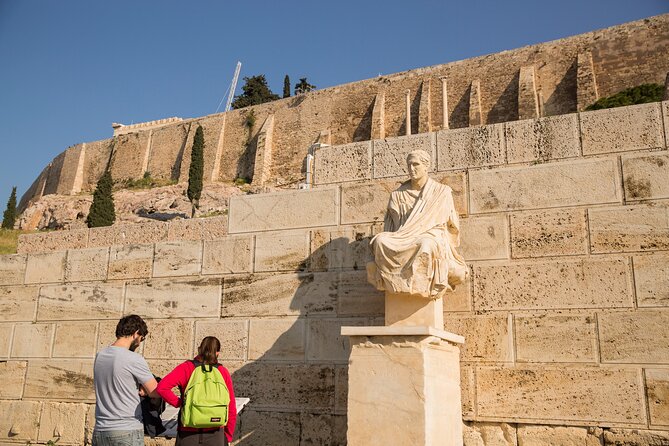
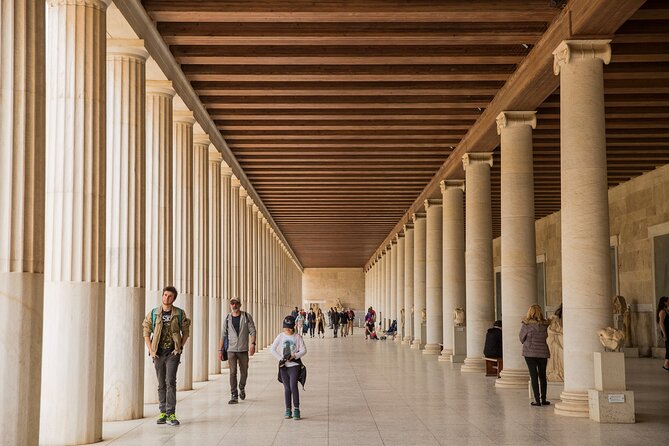
After the Acropolis, the tone shifts in the best way. The Ancient Agora is described as the heart of Athens: the focus for political, commercial, administrative, and social activity, plus religious life and the seat of justice.
That’s the point of this tour. Democracy wasn’t only argued about on a hill; it was handled in spaces where people met, worked, traded, and settled disputes.
You’ll want to keep your attention here, because the Agora can feel like open ruins if you don’t have a story to follow. With a guide, the scattered stones become a map of everyday civic life.
Temple of Hephaestus: craft, trade, and city protection
The last stop is the Temple of Hephaestus, one of the best-preserved ancient temples mentioned in the tour details. It’s tied to commerce-related worship, including Hephaestus as protector of metallurgists and Athena Ergani as protector of potters and cottage industries.
That detail matters because it helps you picture Athens as a living city, not just a political idea. People built things, sold things, made tools, and made a society that needed rules to function.
This stop is short, but it closes the loop nicely. You go from monumental religious symbolism to the day-to-day civic ecosystem—then you finish with a temple that connects gods to work.
Small group size: why 15 people makes a difference
This is a small-group tour with a maximum of 15 travelers. That’s not a gimmick. Fewer people means the guide can slow down when you’re curious, and you’re less likely to get lost in a crowd at each viewpoint.
You’ll likely spend time listening at key spots, but the pace is meant to keep you moving between stops. If you prefer tours where you stop often for photos and questions, this size helps.
A couple of visitors have noted hearing tech like headsets in some cases, which can make it easier when ambient noise is high. If you don’t get a headset, keep close to the guide and choose a spot where you can actually hear. It’s a simple fix, and it makes the whole tour feel smoother.
The guide matters most on a democracy-focused tour
This tour lives or dies on explanation. The monuments are impressive, but the real value is the guide turning stone into meaning—especially with a theme like the rise and fall of democracy.
You may get different guides, but the operator’s named guides in the information provided include people like Athena, Demi, Christina, Kimon, and Vassia. Each has been described as strong at answering questions and adapting to the group.
That adaptability is key on a tour like this. If your group includes history lovers, they’ll want more context. If your group has casual sightseers, they’ll want the big picture fast. A good guide balances both.
Tickets, entry fees, and what your $67.43 buys
The tour price is $67.43 per person, and it’s a separate deal from the entry fees (listed as €50 per person). That means the headline price looks good, but you should budget for the additional admission.
Is it still good value? For me, yes—because the included parts (expert guide, small-group format, and the map) are exactly what most visitors need at these sites. You’re paying for interpretation and pacing, not just a ticket stamp.
Also, the tour notes you can have entry tickets pre-purchased if you want. That’s a convenience win when lines, timing, and walking routes aren’t what you came to Athens to manage.
Meals and transfers aren’t included, so plan a simple breakfast or grab food afterward. The end point at the Agora also sets you up for lunch nearby.
Map and mobile ticket: small things that save time

You’ll receive a fun map of ancient Athens, which is more useful than it sounds. After a tour like this, your brain tends to blur the locations. A quick reference map helps you place what you saw, so your next walk makes sense.
You’ll also have a mobile ticket, which is handy if you don’t want to worry about printouts. Just make sure your phone battery is healthy for the morning.
Practical tips: what to bring and what to avoid
Here’s what I’d do to make the day easier based on the rules and stop types:
- Wear shoes you can walk in for uneven stone paths and stairs on the Acropolis.
- Don’t bring strollers, backpacks, or big bags for the Acropolis. This is a firm rule for that site, and getting hassled ruins the mood.
- Plan your phone photos, but also plan a moment to just look. The Parthenon views are worth it, even when you think you’ve seen them all already.
- If you’re sensitive to hearing in noise, position yourself well near the guide. Some groups use headsets, but not every setup is guaranteed in the information you’re given.
Also note the tour is in English and runs in a small group format that says “most travelers can participate.” If you have mobility concerns, you’ll want to consider the walking and stairs at the Acropolis.
Who should book this Acropolis and Agora tour?
Book it if you want Athens with context, not just checklists. This tour suits you best if you enjoy:
- connecting monuments to how people actually lived and voted
- mixing mythology with real civic history
- guided explanation that keeps the stops moving
It’s also a solid choice if you’re traveling with people who vary in interest. The sites are famous enough for casual sightseeing, while the democracy lens gives serious history lovers something to chew on.
If you’re the kind of traveler who wants long, slow stays at each ruin with minimal guidance, you might find the stop times a bit tight. In that case, consider using this as orientation and then return later for deeper independent time.
Quick advice: should you book?
If your goal is to understand why Athens still matters—why democracy, theatre, religion, and public space were tangled together—this is a strong, practical tour. The small-group size and expert guide mean you’ll spend your time learning instead of guessing.
I’d book this when:
- you want a one-day structure that covers both Acropolis and Ancient Agora
- you like guided storytelling with a clear theme
- you’re okay paying for entry fees on top of the base price
Skip it (or pair it differently) if you need long unstructured time at the monuments or you’re traveling with a lot of bulky gear that won’t work with Acropolis rules.
FAQ
How long is the Acropolis and Agora tour?
It lasts about 3 hours.
What does the tour cost, and what about entry fees?
The tour price is $67.43 per person, and entry fees are not included. The entry fees can be pre-purchased for you for about €50 per person.
What is included in the price?
You get an expert certified guide, a small-group tour, and a fun ancient Athens map.
What is not included?
Entry fees to the attractions, meals, and transfer from or to the meeting point are not included.
Where do I meet the guide, and where does the tour end?
The tour starts at Dionysiou Areopagitou 45, Athens 117 42 and ends at the Ancient Agora of Athens, Athens 105 55.
What time does the tour start?
The start time is 9:00am.
Is the tour offered in English?
Yes, the tour is offered in English.
How big is the group?
The maximum group size is 15 travelers.
Are there restrictions on bags or strollers?
Strollers, backpacks, and big bags are not allowed at the Acropolis, and you should not bring them on the tour.
Do I need an ID?
If you’re under 25, you’ll need an ID card or passport for possible discounts.
Can I cancel and get a full refund?
Yes. You can cancel up to 24 hours in advance for a full refund. If you cancel less than 24 hours before, you won’t be refunded.



More Tours in Athens


More Tour Reviews in Athens
- All Day Cruise -3 Islands to Agistri,Moni, Aegina with lunch and drinks included
★ 5.0 · 4,958 reviews