REVIEW · ATHENS
Acropolis & Agora: The Rise & Fall of Democracy
Book on GetYourGuide →Operated by Alternative Athens · Bookable on GetYourGuide
Democracy starts with stone and stories. This 3-hour Acropolis to Ancient Agora walk connects big ideas to the actual places where Athens staged politics and power. I especially like how the Parthenon area gets treated as political messaging, not just a dramatic viewpoint.
I also like the clean route logic: you move from major landmarks of the Acropolis down to the Ancient Agora, so you can see how government, daily life, and public debate all fit together. The stops give you enough time to understand what you’re looking at, not just snap a photo and rush off.
One thing to consider: this is a walking tour with rules on bags and strollers, and the terrain around the Acropolis is not wheelchair-friendly. If you need easy access, plan carefully and wear shoes you trust.
In This Review
- Key reasons this tour works
- Entering the Acropolis: propaganda, power, and the Parthenon’s job
- Odeon of Herodes Atticus: a reminder that public life was staged
- Propylaea, Erechtheion, and the Nike temple: details that help the story land
- The Ancient Agora: where people-power started to take form
- A city, not a single ruler
- How the tour compares ancient democracy to your voting world
- The guided approach: what your money is paying for
- Entry tickets: included only if you pick the option
- Stop-by-stop: what the 3 hours feels like on foot
- Practical tips that make the tour feel easier
- Wear shoes you can trust
- Don’t bring the wrong bag
- Bring your ID
- Expect it to be mostly for adults and older kids
- Who this tour is best for
- Price and logistics: is $69 a good deal?
- Should you book the Acropolis & Agora Democracy Tour?
- FAQ
- How long is the tour?
- Where does the tour meet?
- Are entrance tickets included in the price?
- Can you pre-purchase the archaeological site tickets?
- What languages are the guides?
- Is there a cancellation window for a refund?
- Who is this tour not suitable for?
Key reasons this tour works
- Acropolis framed as politics: you’ll understand why these monuments mattered to power and public persuasion.
- Agora as the testing ground: the Ancient Agora is presented as the core space where “people-power” became real.
- Clear democracy structure: the guide helps you compare ancient and contemporary democracy using practical building blocks.
- Short, guided stop times: each landmark gets focus, with more time allowed where it counts most.
- Guides who teach, not just narrate: past groups have singled out guides like Maria, Nathalia, Anastasia, and Helena for strong explanations and good pacing.
- A small-group feel: you get to ask questions and get guidance without feeling swallowed by a crowd.
Entering the Acropolis: propaganda, power, and the Parthenon’s job

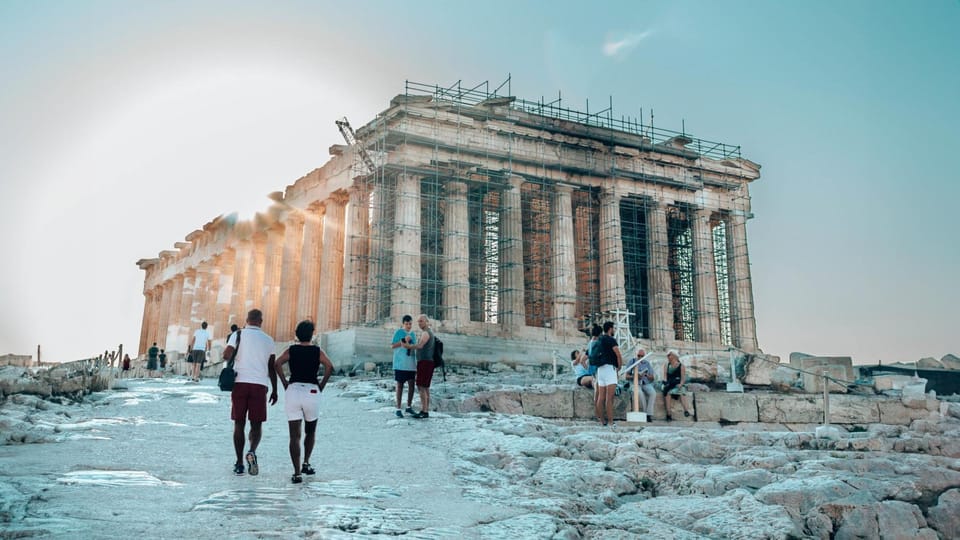
If you’ve ever wondered why the Acropolis looks so “official,” this is exactly the question this tour leans into. The Acropolis isn’t presented as a neutral pile of ruins. It’s treated as a statement—Athens broadcasting its identity through architecture, ceremonies, and public display.
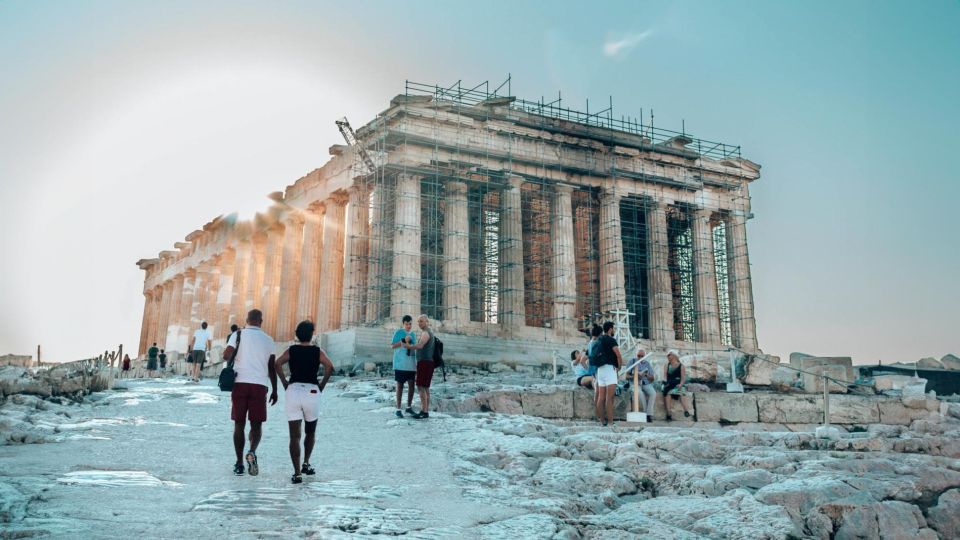
The Parthenon is the anchor here. You won’t just hear that it’s impressive (you’ll see that in seconds). You’ll also learn why it was part of an argument about who belonged, who should lead, and what Athens wanted people to think. That change in angle is what makes the experience click.
The tour’s theme is democracy—its birth, its principles, and then why it struggled. Starting on the Acropolis helps because the contrast is immediate: big stone monuments can project unity, even when the political system underneath is messy, contested, and experimental.
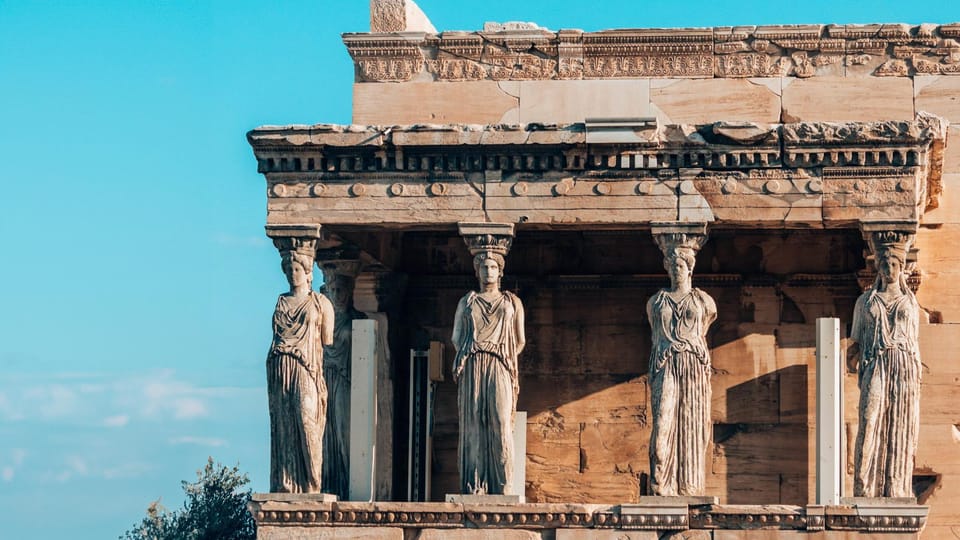
You’ll also move past several signature stops on the Acropolis stretch—Odeon of Herodes Atticus, Propylaea, Erechtheion, and the Temple of Athena Nike—each one given enough guided time to connect to the story you’re hearing rather than turning into a checklist.
You can also read our reviews of more tours and experiences in Athens.



Odeon of Herodes Atticus: a reminder that public life was staged
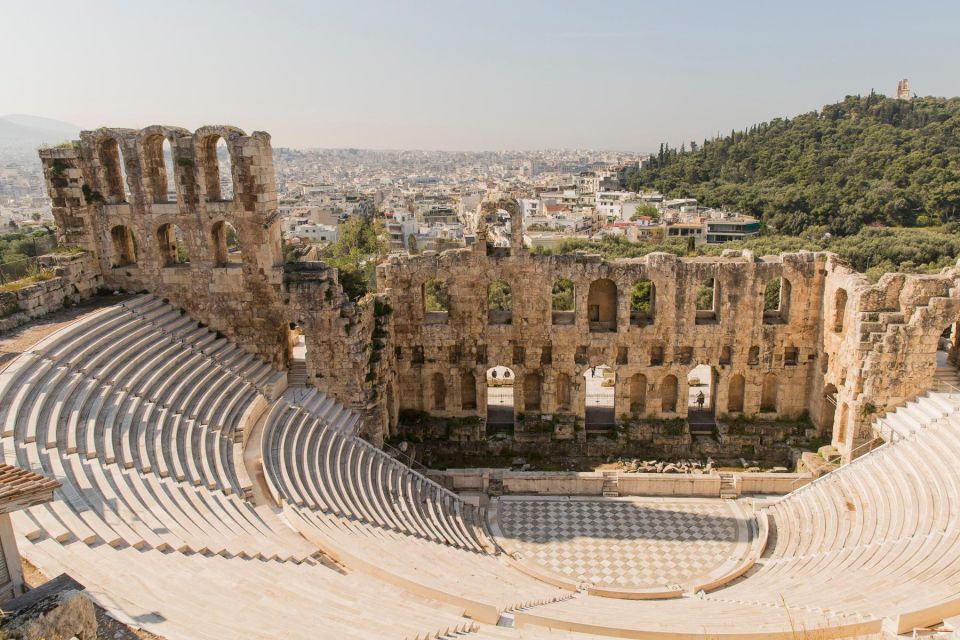
The Odeon of Herodes Atticus gets a guided stop early in the route. It’s a good moment to notice how Greek public culture worked through spaces built for gatherings and performances. Even before you get to the Agora, you’re being trained to look at architecture as a social tool.
Propylaea, Erechtheion, and the Nike temple: details that help the story land
The Propylaea area sets the pace as a kind of gateway into sacred space. Erechtheion offers a chance to slow down and actually look at what you might otherwise skim over. And Temple of Athena Nike brings you back to the theme of civic identity—Athena as both protector and symbol for Athens’ self-image.
Guides on this tour have a reputation for making these stops understandable without turning the explanations into a lecture. People have pointed out that there’s time for questions and that the guide keeps the pace human, which matters when you’re already doing a lot of walking.
The Ancient Agora: where people-power started to take form
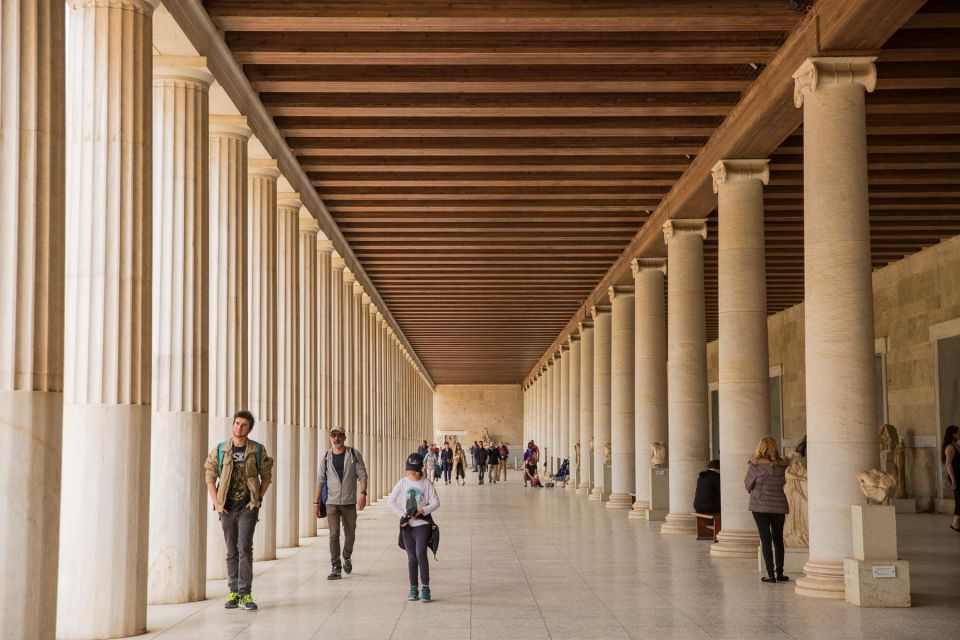
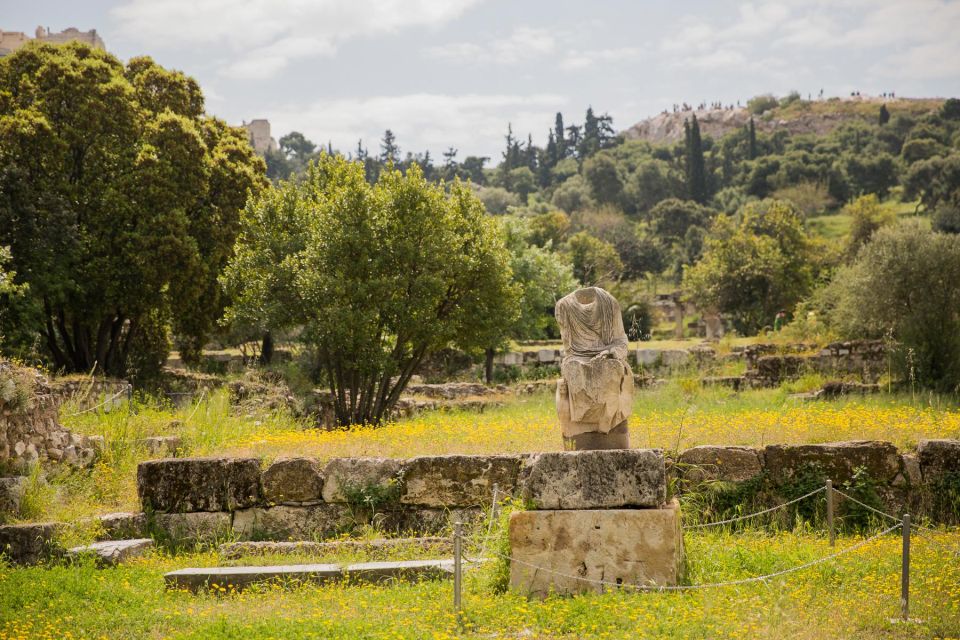
Then the tour shifts to the Ancient Agora of Athens, the heart of ancient Athens’ political, commercial, and administrative life. This is where the theme stops being abstract.
The key idea you’ll take away here is that democracy wasn’t just a slogan. The tour uses the Agora to show democracy as an experiment—what the word demokratia meant in practice, who counted as the people, and what power they held inside a real civic machine.
You’ll also get guided time at key sites around the Agora, including the Temple of Hephaestus. This matters because it anchors the discussion in physical space: politics wasn’t tucked away in one building. It was mixed into the places where people came to exchange goods, handle civic matters, and talk in public.
A city, not a single ruler
The tour’s tone echoes a famous idea attributed to Sophocles: a city that belongs to just one man isn’t a true city. The Agora section is where that concept becomes concrete. You can’t miss the point that a “people-centered” government depends on shared spaces and shared participation.
If you like learning with a story rather than isolated facts, this part is built for you.
- All Day Cruise -3 Islands to Agistri,Moni, Aegina with lunch and drinks included
★ 5.0 · 4,958 reviews




How the tour compares ancient democracy to your voting world

One of the most useful parts of this tour is the last section of the thinking: similarities and differences between ancient and contemporary democracy. Instead of treating ancient Athens as a museum exhibit, the guide pushes toward comparison using structures—what still works, what tends to fail, and what we should carry forward.
That comparison is the real value if you’re traveling with a modern question in your head, like:
- What makes a political system function day-to-day?
- Where do democracies get strained?
- What do people actually need in order to participate meaningfully?
The tour frames democracy as radical for its time. That’s important because it reminds you that Athens’ system wasn’t “the obvious best solution.” It was a new arrangement, and it came with trade-offs and contradictions.
This is also where the Acropolis stops matter again. Monuments can project an image of unity, while politics in the Agora can be conflict-heavy, procedural, and imperfect. Seeing both sides gives you a more honest picture of what democracy was trying to do.
The guided approach: what your money is paying for
At $69 per person for a 3-hour small-group walking tour, the value depends on what you want from Athens.
If you want a simple sightseeing circuit, you can find cheaper options. But this one pays for interpretation: a certified guide, a small-group format, and guided time inside major areas of the Acropolis and Agora where the stories are tied directly to what you’re seeing.
You’ll also receive an Ancient Athens fun city map. It’s not the tour itself, but it helps you keep your bearings once you’re out of the guided bubble and back on your own.
Entry tickets: included only if you pick the option
A practical note: Acropolis and Ancient Agora entry tickets are included only if you choose the option that adds tickets. If you don’t, the tour listing treats tickets as separate.
Good news: you can ask to have tickets pre-purchased for you. That’s a big help because archaeological sites can have timed realities, and Athens weekends can get packed. If you’d rather stay flexible, pre-purchasing can still simplify the day, as long as the tour plan matches your schedule.
Stop-by-stop: what the 3 hours feels like on foot

You’re looking at a compact route, with guided stops broken into segments. The flow is basically: start near the Acropolis area, go up and around the key Acropolis landmarks, then down to the Agora for the democracy-focused heart of the tour.
Here’s how the pacing tends to feel:
- Acropolis guided tour gets you the overall framework for what you’re seeing and why it mattered politically.
- Short guided moments at Odeon of Herodes Atticus, Propylaea, Erechtheion, and Athena Nike give you context without stalling your momentum.
- The Parthenon time is the longest single stop, about 1 hour guided. That’s where the ideas can settle in, and you can ask questions while you’re still oriented.
- Once you move to the Agora, you get a focused Ancient Agora guided session (about 30 minutes).
- The day also includes Temple of Hephaestus with guided time (about 30 minutes).
If you hate rushed tours, this structure is a solid middle ground. You’re not stuck in one room or one viewpoint for so long you get bored, and you’re not sprinting between landmarks with no guidance.
If you love photos, you’ll still want patience. The guide’s job is to explain, so the group pace won’t be “stop whenever you want.” But guides on past groups have been praised for giving time for pictures and for pausing when people needed it.
Practical tips that make the tour feel easier
This is Athens. The air and the stairs can be real. A few practical things matter:
Wear shoes you can trust
The Acropolis area is uneven and steep in places. Bring comfortable shoes with good grip. If you’re the kind of traveler who wears fashion sandals anyway, this is your cue to choose stability over style.
Don’t bring the wrong bag
Strollers, pets, and backpacks aren’t allowed at the Acropolis area. Big bags also don’t work. Plan for a day bag that fits the rules so you don’t waste time figuring it out at the gate.
Bring your ID
You’ll want passport or ID card with you. It comes up for age-based free entry for certain visitors: EU citizens under 25, and EU and non-EU under 18, can qualify for free access with valid ID.
Even if you’re not expecting to use those discounts, bringing your passport/ID is just smart.
Expect it to be mostly for adults and older kids
This tour is not suitable for children under 8. It’s also not suitable for wheelchair users or people who are visually impaired. If that describes your group, you’ll want to look for a different format in Athens that matches access needs.
Who this tour is best for
I’d put this tour at the top of the list if you want Athens with a brain attached.
It’s a great match for you if:
- You like history with a political lens, not only myth and architecture.
- You want a clear explanation of how democracy was framed as people-power and why it was a big experiment.
- You’re curious about how ancient systems compare to modern democracy, including what tends to work and what tends to break.
It may not be your best fit if:
- You only want sweeping views and minimal walking.
- You need step-free access.
- Your main goal is a casual photo tour with no deeper context.
Also, if you’re visiting with questions, the format seems built for interaction. Guides like Maria have been praised for strong explanations and helpful focus points in the Ancient Agora area. Nathalia has been praised for gentle pacing and lots of anecdotes while leaving time for photos. Anastasia has been singled out for bilingual clarity, lots of answers to questions, and even thoughtful breaks in shade. Helena has also been praised for connecting mythology to democracy so the story feels less like a textbook.
Price and logistics: is $69 a good deal?
For $69 per person over 3 hours, the price can feel fair or pricey depending on what you’re comparing.
Here’s the value math:
- You’re paying for a certified guide and a guided route through high-demand ancient sites.
- It’s a small group walking tour, which usually means more Q&A and less standing around.
- Tickets are included only if you choose that option; otherwise, you’ll pay site entry fees separately.
If you’re the type who hates wasting time trying to figure out the basics on your own at the start of a big day, the guided interpretation is where the price makes sense. If you already know you’ll buy skip-the-line or timed tickets elsewhere and don’t care about the democracy storyline, you may find cheaper sightseeing options.
Should you book the Acropolis & Agora Democracy Tour?
Book it if you want Athens that explains why democracy was invented, what it meant by people-power, and why it didn’t last the way people hoped. The mix of Acropolis political messaging and Ancient Agora civic space gives you a full arc, and the guide-led comparison to modern democracy is the part you’ll likely remember after the photos fade.
Skip it if you need step-free access, you’re traveling with very young kids, or you want a purely relaxed sightseeing day with minimal walking and minimal context.
If you fall in the middle—curious, active, and happy to learn while you walk—this is a strong choice for a 3-hour block in central Athens.
FAQ
How long is the tour?
It lasts 3 hours.
Where does the tour meet?
The meeting point may vary depending on the option you booked.
Are entrance tickets included in the price?
Acropolis and Ancient Agora entry tickets are included only if you select the option that includes them.
Can you pre-purchase the archaeological site tickets?
Yes. You can ask for tickets to be pre-purchased for you.
What languages are the guides?
The live tour guide speaks French and English.
Is there a cancellation window for a refund?
Yes. You can cancel up to 24 hours in advance for a full refund.
Who is this tour not suitable for?
It’s not suitable for children under 8, wheelchair users, or visually impaired people. Baby strollers and pets are also not allowed.



More Tour Reviews in Athens
- All Day Cruise -3 Islands to Agistri,Moni, Aegina with lunch and drinks included
★ 5.0 · 4,958 reviews