REVIEW · ATHENS
8 Days Apostle Paul tour/Neapolis, Philippi, Veria,Thessaloniki, Athens,Corinth
Book on Viator →Operated by GREECE TAXI · Bookable on Viator
Apostle Paul, by car, across Greece. This 8-day route links Macedonia’s early Christian sites to Athens’ speech at the Areios Pagos, with big scenic drives through a mainland that’s famously mountainous. You get a flexible day rhythm, and the focus stays on Bible-era places without losing the classical Greece context.
I especially like the Meteora days: driving around the rocks for different angles, then waking up early to catch the monasteries with better light and fewer crowds. The second thing I love is how the itinerary connects towns you hear about—Neapolis/Kavala, Philippi, Thessaloniki, Corinth—so the route feels like a story instead of a checklist.
One drawback to think about: it’s a lot of ground covered. Even with a private vehicle, you’ll spend serious time on the road and you’ll pay separate site and museum tickets throughout, especially in summer.
In This Review
- Key highlights to expect
- The big idea: tracing Apostle Paul from Macedonia to Athens
- Price and logistics: what your $2,961.45 really covers
- Day 1 Thermopylae, Trikala, and Meteora’s dramatic first look
- Day 2: early Meteora, Vergina (Aigai), Veroia, and Aristotle’s Mieza
- Day 3 Thessaloniki: Saint Demetrius, White Tower, and the Rotunda
- Day 4 Philippi and Lydia’s baptistery, then Neapolis/Kavala
- Day 5 Amphipolis, Dion, and an overnight near Mount Olympus
- Day 6 Delphi and Mount Parnassus: oracles, monuments, and big skies
- Day 7 Boeotia’s oracles, Eleutherai’s Dionysus, and Ancient Corinth
- Day 8 Corinth Canal and Athens: Areios Pagos, Acropolis Museum, and the final drop-off
- One important note about guides and site walkthroughs
- Should you book this Apostle Paul tour across Greece?
- FAQ
- Is pickup available for this tour?
- How long is the tour and when does it start?
- Are museum and site entrance fees included?
- Does the tour include accommodation?
- Will the driver act as an archaeological guide?
- What happens if I cancel?
Key highlights to expect
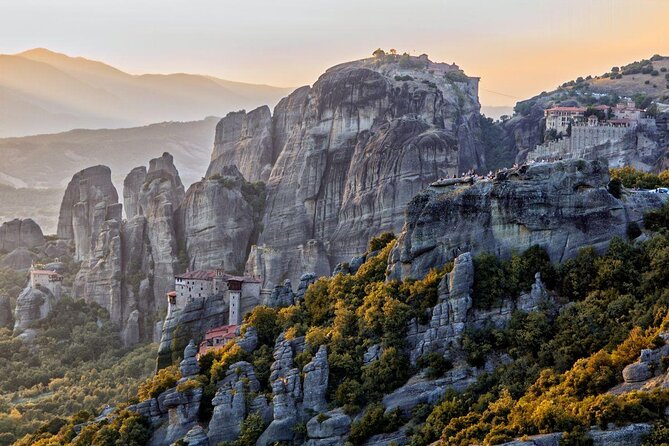
- Meteora with monastery visits plus photo-focused drive time (and sunrise/early-day light on day two)
- Thessaloniki sites tied to early Christian memory, including Saint Demetrius and the Rotunda
- Paul’s European stops made practical, with Philippi, Lydia’s baptistery, and the broader Macedonia route
- Vergina/Aigai and Alexander/Philip context, not just Bible locations
- Delphi as a worldview stop, paired with Mount Parnassus for that “Greece feels huge” feeling
- Corinth + Athens ending, including Areios Pagos area and the Acropolis Museum
The big idea: tracing Apostle Paul from Macedonia to Athens
This is the kind of tour where you keep realizing the geography matters. You’re following Apostle Paul steps across Central Greece, Thessaly, and Macedonia, and then tying it back to Athens—the place where his message reaches a different audience and a different cultural machine. The route also respects the way Greece works in real life: big distances, steep valleys, and switchbacks that make every change of scenery feel earned.
The private setup helps. You’re not stuck pacing a large group, and the operator describes the schedule as flexible enough to match your needs and lifestyle. Translation: you can ask for a pause, a slow walk, or more time at a viewpoint—without the whole day collapsing.
And because it’s Greece Taxi with professional English-speaking driving and even an audio documentary during travel, you’re never sitting in total silence. That matters on a route this long. You’re moving, but you’re also learning.
You can also read our reviews of more tours and experiences in Athens.

Price and logistics: what your $2,961.45 really covers
The listed price is $2,961.45 per person for an 8-day tour. What you’re paying for is mostly the “moving parts”: private, air-conditioned transportation; pickup/drop-off in Athens or Piraeus; and a professional English-speaking driver who provides audio while you travel.
What you should plan to add on:
- Entrance fees for sites and museums (summer can average roughly 20€ per stop, and each site has its own ticket rules)
- Accommodation for you (the included info lists accommodation for the driver only; the operator can arrange hotels for an extra cost)
- Overnight upgrades when noted (some nights like Kastraki near Meteora, and Mount Olympus/Parnassus area, are described as additional cost depending on the period)
Here are a few real ticket examples from the route, so you can ballpark:
- Thermopylae interactive museum: 3€ (not included)
- Meteora monasteries: about 3€ per monastery
- Vergina (Royal Tombs of Aigai): around 6€ winter / 12€ summer
- White Tower in Thessaloniki: 6€
- Delphi combined ticket: about 12€ summer / 6€ winter
- Archaeological Museum of Pella: 8€ full / 4€ reduced (not included)
So the math is simple: if you want “Bible + classics + museums,” budget extra. If you focus mainly on outdoor walking and choose only the best museum tickets on the day, you can keep costs lower.
Day 1 Thermopylae, Trikala, and Meteora’s dramatic first look
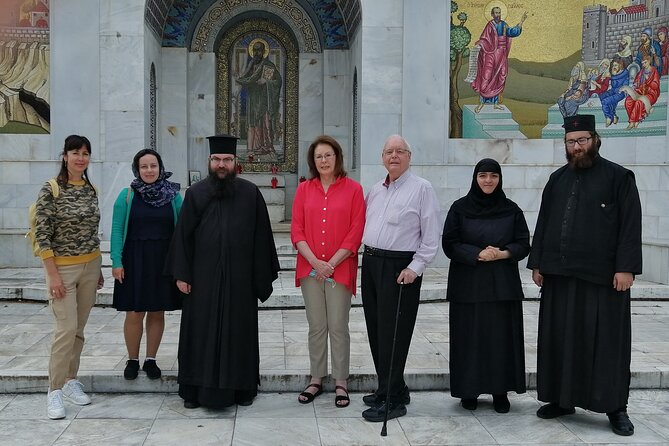
Day one sets the tone: you start with a battlefield that shaped Greek memory, then you roll into the medieval/ancient layers of central Greece, and you land in Meteora, one of the most visually intense places in the country.
Thermopylae is your first stop. You’ll be at the famous pass where the 480 BC battle changed the course of Greek history. The interactive museum by the monument is the kind of ticket that helps the place stop being just a name. It’s not long—plan about 30 minutes if you want the museum layer—then you move on.
Next comes Old City of Trikala. It’s a smaller stop, but it’s a nice break from “big-ticket monuments.” You’ll see how ancient cities used geography, including the river and bridges. Trikala also ties into Asclepius and healing temples, adding a different angle to “religion and belief” beyond church sites.
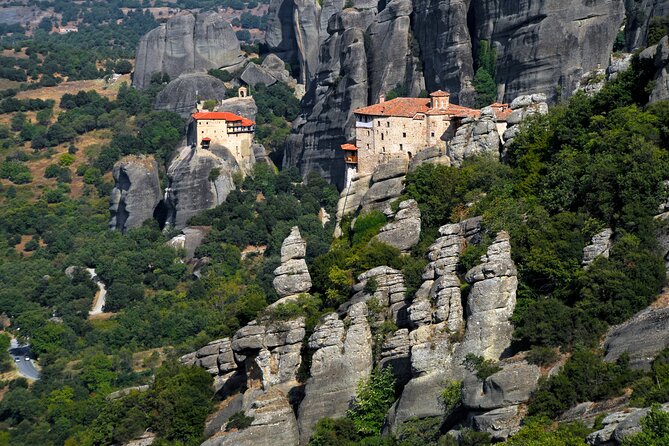
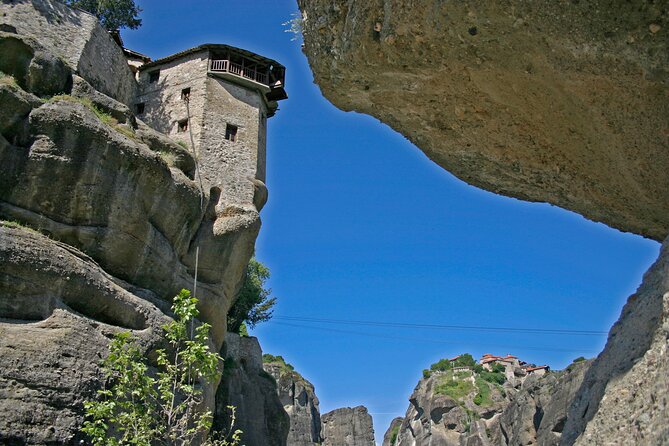
Then you hit Meteora. You’ll drive around the rocks and take in the monasteries built on natural pillars. The UNESCO listing here isn’t just paperwork—it shows up in how the monastery settings dominate the area. You’ll visit at least two monasteries if you choose to add tickets, and then you sleep in Kastraki, described as a quiet village that looks like it’s perched at the base of the rocks.
Practical note: sunset/photography time is built in. That’s when Meteora goes from impressive to unforgettable.
Day 2: early Meteora, Vergina (Aigai), Veroia, and Aristotle’s Mieza
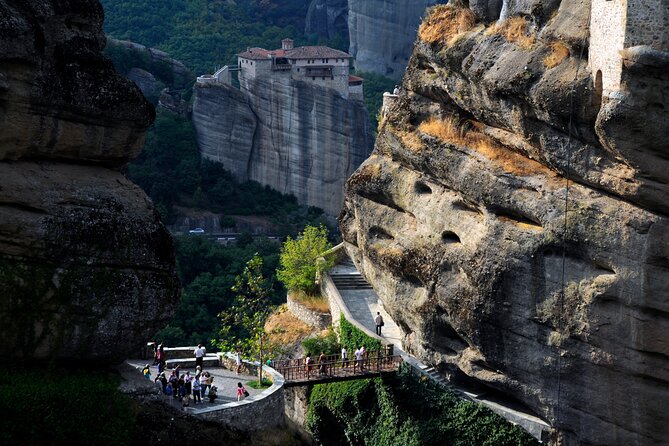
Day two starts with the smart move: go early. Meteora early means better light and easier timing for monastery visits. The route includes driving around the rocks again, but with that different morning feel you’d normally miss if you only see it once.
After Meteora you travel to Vergina (Royal Tombs of Aigai). This is where Paul’s world meets Alexander’s world. Vergina was Macedonia’s first capital, and it’s tied to Philip II and the moment Alexander becomes king. The key draw here is the royal tomb finds (including Philip II’s tomb, described as undisturbed), and the museum’s collections that bring those objects into view.
From there, you move to Vima Apostolou Pavlou in Veroia. This is a direct Bible connection stop tied to Paul preaching after Thessaloniki. It’s short, but it’s the kind of stop that helps you mentally map Acts into real streets and real geography.
Then comes Mieza, the school site where Aristotle taught Alexander. Even if your main interest is Christian history, this stop helps you understand the intellectual backdrop of the era. It’s also a great reminder that Paul traveled through a world already shaped by Greek education.
The day ends with Loutra Pozar Thermal Baths near Loutraki/Arideas. It’s described as metal springs at about 37°C and even traditionally seen as a recovery place for Macedonian kings after battles. If you’ve been walking and riding all day, this is one of the few “slow down” moments on the route.
Day 3 Thessaloniki: Saint Demetrius, White Tower, and the Rotunda
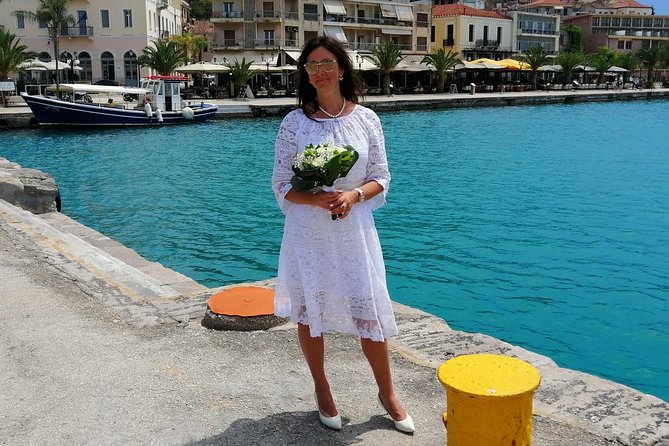
Thessaloniki is where the tour leans hardest into early Christian memory—especially because multiple sites connect to the life of the city’s patron saint and the way Christianity took root in a Roman setting.
Start with the Holy Church of Saint Demetrius. It’s on UNESCO’s World Heritage list, and what stands out is the martyrdom memory under the church in the crypt setting. The route describes how later changes in ground level formed the crypt over time and how the martyr site became part of later church structure. This stop tends to feel meaningful because it ties together narrative, architecture, and location.
Then you see White Tower on the waterfront. This is both a monument and a museum, and it comes with the city symbolism: it served as a prison during Ottoman rule and became Thessaloniki’s symbol after remodeling. If you go up top, plan for a panoramic view—your eyes get a workout along the coastline.
Finally, you visit the Rotunda (INSPOT Rotunda). It started as a vaulted circular monument associated with Emperor Galerius, and later transformed into Christian worship space, including the niche openings and mosaics. The building gives you a literal “two religions, one space” story.
- All Day Cruise -3 Islands to Agistri,Moni, Aegina with lunch and drinks included
★ 5.0 · 4,958 reviews
Day 4 Philippi and Lydia’s baptistery, then Neapolis/Kavala
Day four is where Paul’s mission becomes real history you can walk around.
You begin at the Archaeological Museum of Philippi. Philippi was a major city in eastern Macedonia, strategically placed. After the battle of Philippi in 42 BC, it became a Roman colony. That Roman layer matters because early Christianity grew in a world with Roman administration and culture, not in an isolated religious bubble. The museum stop is long enough to connect the dots, especially if you want the archaeological context, not just the Bible name.
Then you go to Saint Lydia’s Baptistery. Lydia of Thyatira is presented as an early Christian convert connected with hospitality to Paul and his companions in Philippi (Acts 16). This is one of those stops where you’ll likely pause longer than expected, because it’s tied directly to the story of Paul’s group and the people who welcomed them.
Next comes Palea Kavala. This is framed as a place with long history, and it’s specifically tied to Paul arriving in the region around AD 49—where Neapolis (today’s Kavala) is described as the first European city that accepted Christianity. You’ll also see a monument of Apostle Paul outside the Church of Agios Nikolaos, which gives you a tangible marker in the modern city.
If you want your route to end each day with a “this is why it matters” feeling, day four does that.
Day 5 Amphipolis, Dion, and an overnight near Mount Olympus
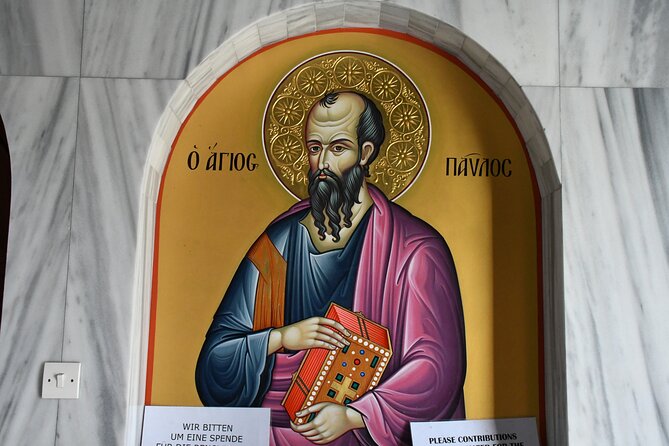
This day moves through the shadow of Alexander’s campaign world, then shifts into myth and nature.
You start with the Archaeological Museum of Amphipolis. Amphipolis ties into both Spartan-Athenian conflict and Alexander’s preparation for Asia campaigns. It also connects to Roxana and Alexander IV after Alexander’s death. Then the tour brings it back to Acts-style travel: Paul and Silas passing through in the early AD 50s between Philippi and Thessaloniki.
Next is Dion Archaeological Park. It’s known for the sanctuary of Zeus and an ancient city presence, and you’ll see the sites connected to celebrations of victories by Philip II and Alexander the Great, plus the idea of sacrifices performed before campaigns. Dion is a good “classical Greece intermission” without breaking your tour’s Christian thread.
Finally, you overnight near Mount Olympus. It’s presented with the scale you expect—52 peaks, Mytikas as the highest peak—and it’s also tied to biodiversity and protected status. If you’re the type who wants your Biblical history to breathe alongside real geography, this is the night for it.
Day 6 Delphi and Mount Parnassus: oracles, monuments, and big skies
Delphi is one of Greece’s most intense archaeological sites for a reason. Even before you connect it to Paul’s world, the place explains how the ancient Greeks made decisions: through oracles, political unity, and sacred architecture.
You visit the Temple of Apollo and the Delphi Archaeological Museum with combined ticket guidance. The route also highlights Delphi’s UNESCO role—how it influenced the ancient world and carried monuments from major Greek city-states.
You’ll also stop at the Tholos of Athena Pronaia, described as part of the Sanctuary of Athena Pronaia. It’s a shorter stop, but it’s a nice way to break up the main ruins and keep your eyes fresh.
Then you drive by Mount Parnassus, which towers above the countryside north of the Gulf of Corinth. Myth ties it to Dionysus and Apollo and even the Muses. You spend the night on the slopes in a traditional village, which is where you’ll likely notice the difference between “tour-day sightseeing” and actual mountain village rhythm.
Day 7 Boeotia’s oracles, Eleutherai’s Dionysus, and Ancient Corinth
Day seven has a mix that makes sense: stop for myth and religious practice in Boeotia, then head straight to one of Christianity’s most famous cities—Corinth.
First you drive through Boeotia and stop in Livadia. There’s a drink stop by the river Karya, and the tour connects Karya to the Oracle of Trophonius Zeus, including springs named Mnemosyne (Remembrance) and Lethe (oblivion). It’s the kind of stop that gives you a sense of how people in ancient Greece expected the supernatural to work.
You continue via Mount Kithaeron and through Eleutherai, tied to the cult and birthplace legends of Dionysus Eleuthereus. This is another “belief system context” moment—useful if you want Paul’s preaching to feel like it happened in a real cultural landscape, not a vacuum.
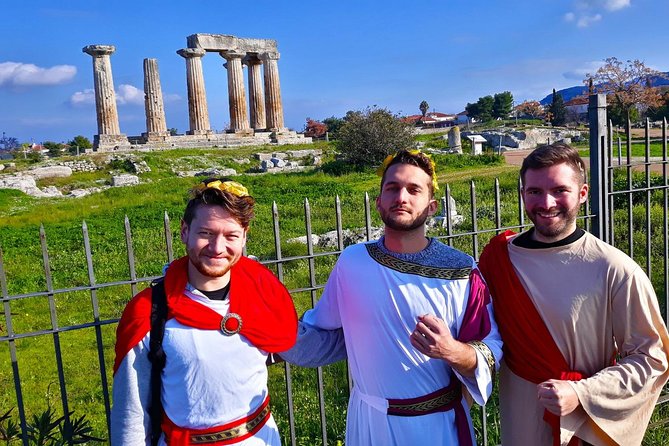
Then you reach Ancient Corinth. The tour calls it one of the largest ancient Greek cities, and for Christians the big hook is Paul’s two letters. You’ll also see the Apostle Paul Vema in the middle of the Ancient Agora area. The ticket info points to a combined ticket for Ancient Corinth that includes museum access.
After that, you head to Nafplio for overnight. Nafplio is described as the first capital of Greece in modern times, and it’s a great end-of-day base because it gives you a break from nonstop historical sites.
Day 8 Corinth Canal and Athens: Areios Pagos, Acropolis Museum, and the final drop-off
The final day starts with something fun and very “engineering Rome meets Greek geography”: the Corinth Canal. You stop for photos and can walk across a pedestrian bridge to admire the canal from about 80 meters high. This is quick, scenic, and a good way to reset your legs before the big Athens finale.
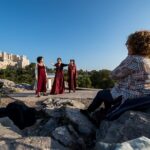
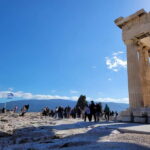
Then you head to Athens for Acropolis hill and Areios Pagos. The route frames Areios Pagos as the place where Paul was led to preach to Athenians around AD 51, with references to converted listeners afterward. Even if you’re not into speech scenes, the view from the hill gives context for why a public talk would land with impact.
Next you go to the Acropolis Museum. It’s described as one of the most important museums in the world and housing findings only from the Athenian Acropolis site. That focus tends to make your museum visit feel cleaner and more efficient.
Finally, you get general Athens highlights and drop-off at your hotel. It’s a nice finish: you end with city energy, not another long museum circuit.
One important note about guides and site walkthroughs
Your driver provides the English explanations and audio documentary, but the tour data also states the driver is not a licensed archaeological guide for museum walk-throughs. If you want a guided “inside the ruins” explanation with an archaeologist, you’d need to hire one separately in advance.
That doesn’t make the tour worse. It just changes how you should plan your expectations. Use this tour to get the story and orientation. Add a specialist if you want the deepest layer at one or two key sites.
Should you book this Apostle Paul tour across Greece?
Book it if you want a Bible-based route that still makes room for Greek classics, and you don’t mind a day-by-day geography marathon. The Meteora sequence is a major reason to choose this one, and the way the route connects Philippi → Thessaloniki → Corinth → Athens helps your understanding feel linked, not scattered.
Skip it (or at least rethink) if your budget is tight and you prefer fewer ticketed sites. Entrance fees stack quickly in summer, and accommodation for you is an extra. Also, if you hate long road days, the mountain terrain across Greece might feel like a lot—even though the private vehicle and flexible pace are designed to help.
FAQ
Is pickup available for this tour?
Yes. Pickup and drop-off are offered from/to your hotel or apartment in Athens or Piraeus. You can also request another location.
How long is the tour and when does it start?
The tour runs about 8 days and the meeting time is 8:00 am.
Are museum and site entrance fees included?
No. Entrance fees to sites and museums are not included, and the tour notes that summer costs are higher than winter.
Does the tour include accommodation?
Accommodation for the driver is included, but accommodation for you is listed as an additional cost. The operator can arrange hotels, depending on the city and season.
Will the driver act as an archaeological guide?
No. The driver provides professional English explanations and audio during travel, but they are not a licensed archaeological tour guide for museum or site walkthroughs.
What happens if I cancel?
The tour is non-refundable and cannot be changed for any reason.
If you want, tell me your travel month and how many people are in your group—I can help you estimate the likely extra budget for tickets and hotels based on the season.

More Tours in Athens

More Tour Reviews in Athens
- All Day Cruise -3 Islands to Agistri,Moni, Aegina with lunch and drinks included
★ 5.0 · 4,958 reviews