REVIEW · ATHENS
Private Biblical Ancient Corinth Tour from Athens
Book on Viator →Operated by LS Tours · Bookable on Viator
Corinth rewards the curious eye. This private, English-speaking day trip stitches together biblical place-names and real-world engineering, with time to breathe between stops instead of sprinting like a group-tour lemming.
I love the way the day pairs the Corinth Canal with the ancient overland ship route of the Diolkos, so you understand why people fought, traded, and prayed here. I also really like the payoff at Acrocorinth, where you get the big, fortress-level views that make the whole region click.
One thing to consider: the museum and Ancient Corinth entrances cost extra, and the Acrocorinth climb can feel steep and slippery if you’re not used to uneven terrain.
In This Review
- Key highlights to know before you go
- Why this private Corinth day feels different from a bus tour
- The Athens to Isthmus drive: get your bearings fast
- Corinth Canal: engineering you can actually see
- The Diolkos and Kenchreai: when trade routes meet biblical place-names
- The Diolkos: moving ships over land
- Kenchreai: a Corinth port with Paul’s story attached
- Acrocorinth: the fortress climb with the best payoff
- The Museum of Ancient Corinth: how to make the ruins less confusing
- Ancient Corinth: Paul’s world in walking distance (and what to spot)
- Lunch in Corinth: real food and a breather in the middle of the day
- Price and value: what you’re paying for, and what costs extra
- Practical tips to get the most from the day
- Should you book this Private Biblical Ancient Corinth Tour from Athens?
- FAQ
- How long is the Private Biblical Ancient Corinth Tour from Athens?
- Does the tour include pickup from hotels, apartments, or Piraeus port?
- Is the tour in English?
- Are entrance fees included for the Archaeological Museum of Corinth and Ancient Corinth?
- Is there a licensed tour guide included?
- Which stops are admission free?
- What if the weather is poor?
Key highlights to know before you go
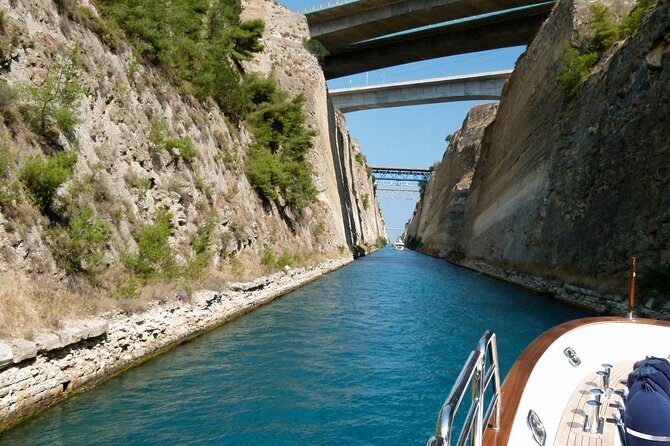
- Corinth Canal viewpoint: see the narrow Isthmus cut and watch vessels pass below
- Kenchreai and Paul: stop tied to Acts 18:18 and Romans 16:1 (Phoebe)
- Diolkos: understand the ancient system for rolling boats across the land
- Acrocorinth views: a fortress acropolis with commanding sightlines over the isthmus
- Museum stop built for the finds: Ancient Corinth artifacts in a 1932 museum with two atriums
- Private pacing plus a real lunch break: shops, souvenirs, and time for an authentic Greek meal
Why this private Corinth day feels different from a bus tour
A private tour from Athens is about control. You start with pickup and you don’t have to worry about rounding up strangers at every stop. The schedule is built around a classic Corinth loop: canal and ports, an acropolis viewpoint, a museum reset, then Ancient Corinth ruins, with a proper lunch window in the middle.
It’s also the kind of day where your brain wants context, not just photo ops. Having a driver (not a licensed guide) who can explain what you’re seeing matters, especially with the biblical thread. Several drivers have been praised for being friendly and patient with questions, including Bill, Alex, George, Chris, Dimitirous, Nico, and Petros Nikitas. That’s a big deal when you’re trying to connect Acts and Paul’s letters to actual places on the map.
You can also read our reviews of more private tours in Athens

The Athens to Isthmus drive: get your bearings fast
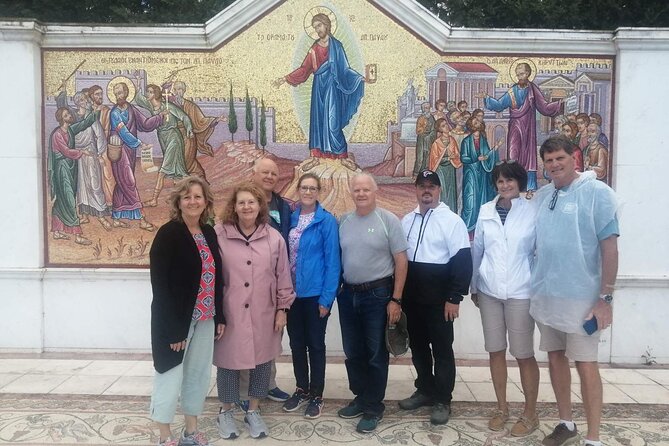
You’ll be picked up from your hotel lobby, apartment entrance, or the Piraeus port disembarkation area. From there, it’s about an hour drive to start the day’s first real historical hit. The vehicle is air-conditioned, with WiFi on board and bottled water, which helps on a long day when you’re bouncing between viewpoints and sites.
This is also a good moment to plan your mindset. Corinth is spread out: canal, ports, hilltop fortress, museum, then ruins. The timing works because the day has short, focused stops before you go up, rather than dropping you straight into a long climb.
Corinth Canal: engineering you can actually see
The Corinth Canal is one of those places where “interesting” becomes “how is this even real?” quickly. It connects the Gulf of Corinth (Ionian Sea) to the Saronic Gulf (Aegean Sea). It cuts through the narrow Isthmus of Corinth and separates the Peloponnese from mainland Greece—functionally turning the peninsula into an island.
What makes this stop worth your time is the way you view it. From high up, you can see the steep limestone walls and watch how vessels navigate below. The canal is only 6.4 kilometers long, and it’s just 21.4 meters wide at its base, so many modern ships can’t use it. That detail matters because it explains why this geography has always been a traffic bottleneck—and why people have dreamed up shortcuts for centuries.
Practical tip: the viewpoint is outdoors, so bring sunglasses and water. Even on mild days, wind off the canal can feel sharper than you expect.
The Diolkos and Kenchreai: when trade routes meet biblical place-names
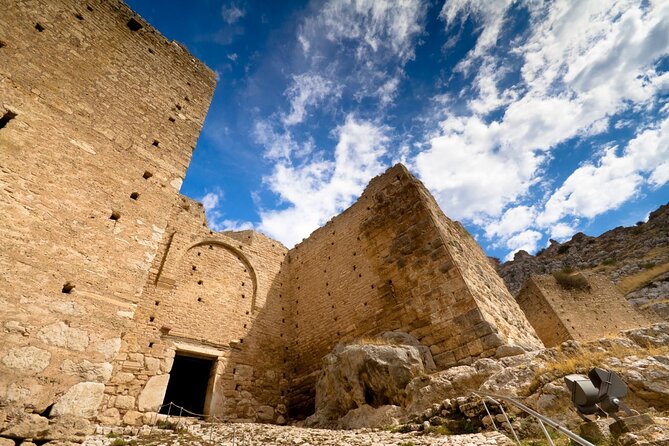
After the canal, the day shifts into “why this place mattered” territory.
The Diolkos: moving ships over land
The Diolkos was a paved trackway near Corinth in Ancient Greece that let boats be moved overland across the Isthmus of Corinth. The payoff was huge: it avoided the long, dangerous circumnavigation of the Peloponnese peninsula. In other words, people didn’t just build a canal idea in the abstract. They built a transportation workaround that combined the logic of a railway with overland ship hauling—an approach that was rare in antiquity.
This stop is usually fast, but it’s the kind of 30-minute moment that makes the rest of your day make sense. Once you grasp the Diolkos, you start to understand why ships, armies, and goods were all drawn to this narrow strip.
- All Day Cruise -3 Islands to Agistri,Moni, Aegina with lunch and drinks included
★ 5.0 · 4,958 reviews




Kenchreai: a Corinth port with Paul’s story attached
Then you reach Kenchreai (Kenchreai/Kenchreai), one of the two ports of the Corinth city-state. Kenchreai served eastern routes via the Saronic Gulf, while Lechaion handled the west-facing routes toward Italy and Europe. The port sat at a natural crossroads for ships and for the overland traffic between central Greece and the Peloponnese.
This is where the biblical focus becomes concrete. Christianity reached Kenchreai early, and the stops here connect directly to Paul’s travels. Acts 18:18 places Paul at Kenchreai during his second missionary journey, where he had his hair cut to fulfill a vow, likely a Nazirite vow. Paul also mentions Kenchreai and Phoebe in Romans 16:1—Phoebe is described as part of the local assembly.
Even if you’re not a Bible-history superfan, I like this stop because it gives you named geography tied to specific text. You’re not just “seeing ruins.” You’re seeing the kind of real-world docking place where a traveler would have paused, traded, and carried letters onward.
Acrocorinth: the fortress climb with the best payoff
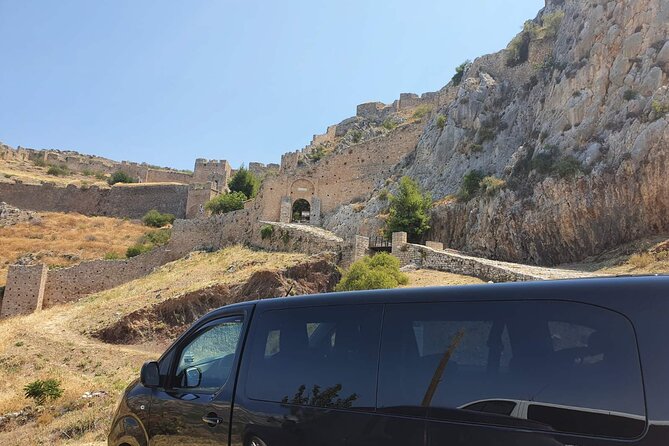
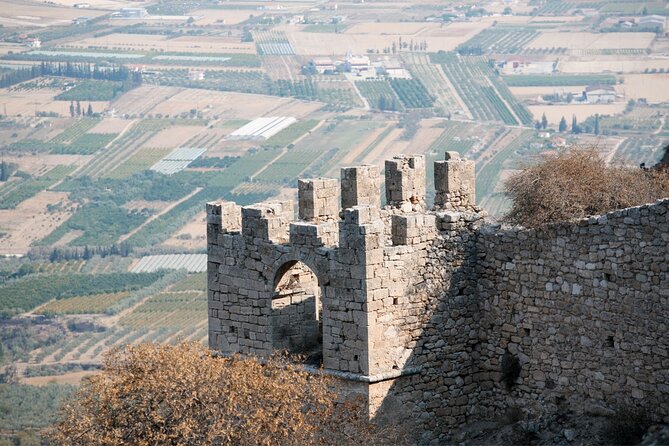
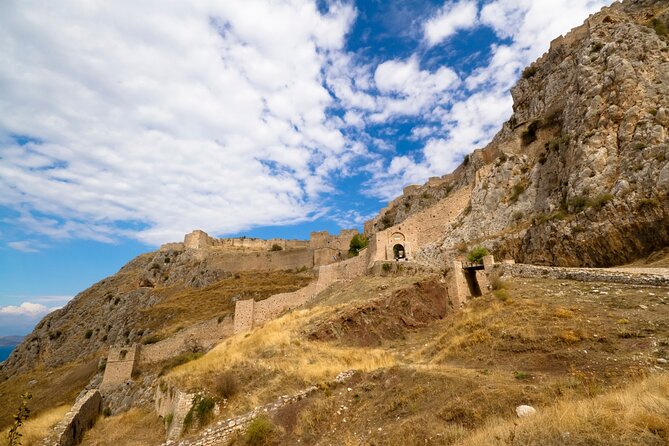
Acrocorinth is the acropolis of ancient Corinth, on a monolithic rock overlooking the city below. It was a fortress with a secure water supply, used as a last line of defense because it commanded the Isthmus of Corinth—repelling threats from land entry into the Peloponnese.
This stop is one hour. That sounds short until you’re on the ground and realize you’re dealing with elevation, uneven surfaces, and serious views. The views are the whole point: you get an overview that flattens the confusion. From up here, Corinth isn’t a scattered set of names. It’s a geography problem and a strategic stronghold all at once.
One consideration: it can be steep and rocky, and it can feel slippery depending on conditions. Wear shoes with real grip. If you know you dislike climbs, plan how much effort you can handle before you go, because the route can wear you down faster than expected.
The Museum of Ancient Corinth: how to make the ruins less confusing
The Archaeological Museum of Corinth (often called the Museum of Ancient Corinth) gives you the “what you’re looking at later” context. It was built in 1932 to house objects brought to light by archaeological excavations. The building was undertaken by the American School of Classical Studies, and it uses an architectural design around two atriums, which makes the space feel airy and easier to navigate than many small museum buildings.
This is also where you slow down. If you want a meaningful day, you need one point where you’re not just walking and scanning. Here, you can read placards, get a sense of everyday objects, and start connecting the dots between what’s buried and what’s still visible outside.
One note: the museum entry fee is not included. You’ll want to budget the paid admission for the archaeological site and museum entrances.
Ancient Corinth: Paul’s world in walking distance (and what to spot)
After lunch break time, you head back toward Ancient Corinth (Archaia Korinthos). Here you’re stepping into the city-state at the center of the Isthmus, roughly halfway between Athens and Sparta.
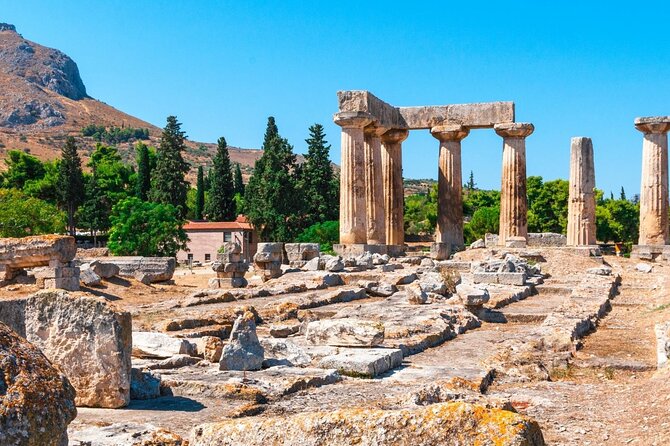
Ancient Corinth was one of the biggest cities of Greece, with a population estimated around 90,000 in 400 BC. That scale helps explain why it was such a major stop for travel and communication—and why Paul’s letters sent from Corinth landed with weight.
For Christians, Corinth is well known through First and Second Corinthians in the New Testament. It’s also referenced in Acts as part of Paul’s missionary travels. In addition, Pausanias’ Description of Greece devoted a section to Corinth.
When you visit the ruins, look for places tied to Paul’s story. In past experiences, people have pointed out areas connected to the Bema and a stone associated with where Paul preached, plus details like the Roman marketplace and the Temple of Apollo. You might also find connections to the Church of Saint Paul, depending on how the site area is set up during your visit. If you’re bringing curiosity to the site, this stop rewards it.
Admission for the archaeological site is not included, so bring cash/card for that final entrance.
Lunch in Corinth: real food and a breather in the middle of the day
Right between the museum and Ancient Corinth, you get free time in modern Corinth for village shops and a lunch break at a local taverna. The whole block is about two hours, which is exactly what you want on an eight-hour day.
I like this portion because it keeps the trip human. You’re not eating sandwiches on the curb. You’re taking a pause in the middle of a history marathon—then you can go back into the ruins with fresh energy.
If you have dietary needs, you can ask your driver for suggestions, since lunch is handled through the local taverna time on the day.
Price and value: what you’re paying for, and what costs extra
At $204.81 per person, you’re paying for a private day structure: pickup and return to the same place, a private air-conditioned vehicle, WiFi on board, bottled water, and a driver who provides fluent English commentary. You also get a mobile ticket.
The part that costs extra is site access. The archaeological site and museum entrances run €15.00 per person (and those specific entries are listed as not included). So yes, your final total is a bit more than the base price.
To me, the value makes sense if you want:
- fewer crowds and more pacing
- a driver who can answer questions between stops
- a full day that connects canal engineering, port geography, and Paul’s routes
If you’re comfortable self-guiding, you might feel the museum and ruins entry fees are the only true add-on you care about.
Practical tips to get the most from the day
- Bring good walking shoes for Acrocorinth. Plan for uneven ground and possible slipperiness.
- Wear sun protection. The canal and fortress viewpoints are exposed.
- Use the free stops strategically. If a site is listed as admission free, spend your time reading and looking closely instead of treating it like a pass-through photo stop.
- Set expectations about guides: the drivers are knowledgeable and can explain what you’re seeing, but they are not official tour guides entering archaeological sites. If you need a licensed, in-depth guide inside the sites, you’ll want to plan for that separately.
Also, the tour requires good weather. If conditions are rough, your day might be adjusted or rescheduled, since outdoor walking and viewpoints are central to the experience.
Should you book this Private Biblical Ancient Corinth Tour from Athens?
I’d book it if you want a day that feels like a guided story with enough stops to actually connect the dots. The canal viewpoint explains why this corridor mattered. Diolkos and Kenchreai give you the “how ships moved” and “where Paul fit in” pieces. Acrocorinth then pays off with the views that make the geography stick.
I’d think twice if:
- you can’t do a steep, rocky climb at Acrocorinth
- you strongly prefer a licensed guide inside museums/ruins (since the driver doesn’t enter sites as a licensed guide)
- you’re trying to keep entrance fees to zero, since the museum and Ancient Corinth site admission aren’t included
If you fit the first group, this is a very solid way to spend your day. You get a private schedule, biblical place-names tied to real geography, and a route that moves logically from water routes to hilltop strategy to the ruins.
FAQ
How long is the Private Biblical Ancient Corinth Tour from Athens?
The tour is approximately 8 hours.
Does the tour include pickup from hotels, apartments, or Piraeus port?
Yes. Your driver picks you up and returns you to the same place. The driver waits at the hotel lobby, apartment entrance, or the Piraeus port disembarkation area.
Is the tour in English?
Yes, the tour is offered in English.
Are entrance fees included for the Archaeological Museum of Corinth and Ancient Corinth?
No. Entry for the Archaeological Museum of Corinth and the Ancient Corinth site is not included. The entry/admission for the archaeological site and museum is listed as €15.00 per person.
Is there a licensed tour guide included?
A licensed tour guide is not included. The driver is not an official tour guide, but they are knowledgeable and can provide fascinating commentary in fluent English. They do not enter the archaeological sites with you.
Which stops are admission free?
Admission is listed as free for stops including the Corinth Canal, the Diolkos, Kenchreai, Acrocorinth, the Corinth village break/shopping area, and the return drive portion. The museum and Ancient Corinth entries are not included.
What if the weather is poor?
The tour requires good weather. If it’s canceled due to poor weather, you’ll be offered a different date or a full refund.

More Private Tours in Athens


More Tours in Athens


More Tour Reviews in Athens
- All Day Cruise -3 Islands to Agistri,Moni, Aegina with lunch and drinks included
★ 5.0 · 4,958 reviews