Athens turns big ideas into a street-level walk. This Philosophical Tour threads tragedy, democracy, happiness, and daily ethics through the actual landmarks around the Acropolis—then connects the themes to modern questions like psychology and even AI.
What I like most is the small private group setup and the way the guide uses multimedia (speakers and presentations) to make the concepts stick. You’ll also get frequent pauses for shade and short videos, so it doesn’t turn into a nonstop lecture.
One thing to plan for: this is still a 2.5-hour walking experience between key points, so comfortable shoes and water matter, especially in warm weather. If conditions are too rough, the tour can be rescheduled or refunded.
In This Review
- Key Things You’ll Notice on This Tour
- Turning Athens Into a Live Philosophy Class
- Price and Group Size: Why This Feels Like a Private Class
- Stop 1: Theatre of Dionysus Eleuthereus and Tragedy as Therapy
- Stop 2: Herod Atticus Odeon and the Personality Lens
- Stop 3: Prison of Socrates and Plato’s Allegory of the Cave
- Stop 4: Agios Dimitrios Loumbardiaris and the Birth of Democracy
- Stop 5: Philopappos Monument for Happiness and the Best View Payoff
- Stop 6: Pnyx, Eudaimonia, and the Assembly of Citizens
- Stop 7: Keramikos and Epicurean Happiness in an Ancient Cemetery
- The “Stoicism Was Born Here” Stretch and a Walk on the Most Beautiful Street
- Roman Agora, the First Meteorological Station, and the Mnisikleous Stairs Moment
- Lysikratous Square for Nietzsche’s Apollonian and Dionysian Sides
- Anafiotika: A Cycladic Feeling Inside Athens
- What You Should Bring and How to Get the Most From the Walk
- Should You Book This Philosophical Tour in Athens?
- FAQ
- How long is the Philosophical Tour in Athens?
- How much does the tour cost?
- What language is the tour offered in?
- Is this a private tour?
- Where does the tour start and end?
- Are entrance tickets included?
- What happens if it’s bad weather or you need to cancel?
Key Things You’ll Notice on This Tour
- Private group up to six: more conversation, less crowd noise.
- Multimedia + speakers at the stops: philosophy translated into something you can grasp quickly.
- Free admission at most stops (and Pnyx included): you’re not juggling ticket logistics all morning.
- Views built into the route: Philopappos and Pnyx are timed for payoff.
- Thoughtful pacing in the heat: shady spots and short video clips keep you comfortable.
- Lampros guides the discussion in a way that adapts to your level, whether you know Plato or just like good questions.
Turning Athens Into a Live Philosophy Class
This tour works because it treats philosophy as something physical. You don’t just look at ruins. You stand where the ideas were argued about—then talk about how those same mental habits show up today.
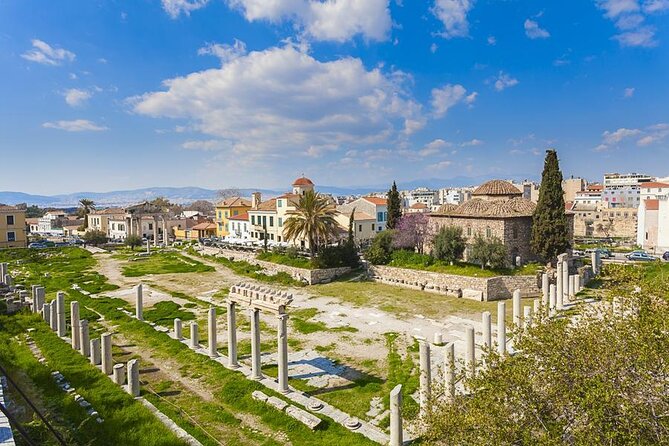
The route hits the big Greek “origins” moments in order: theater and judgment, personality and self-understanding, perception and the mind’s shadows, and then the citizen practices behind democracy. After that, you move through areas tied to ethics schools like Epicurean thinking and Stoicism. It’s a clean mental arc, not a random list of stops.
And because it’s small-group private, the conversation can bend. If you want history-only, the guide can keep it grounded. If you want meaning and modern parallels, the talk can follow that path too. That mix is exactly why this tour earns such strong scores.
You can also read our reviews of more tours and experiences in Athens.


Price and Group Size: Why This Feels Like a Private Class
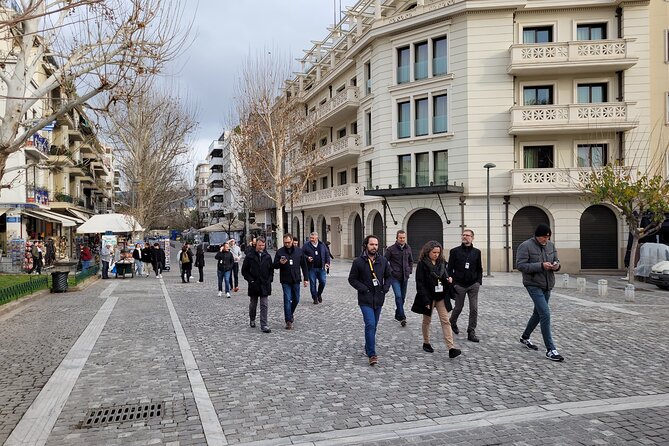
At $90.11 per person for about 2 hours 30 minutes, the value isn’t just the price tag. It’s the format: you’re not sharing your guide with strangers. The tour is priced for a group, up to six people, and it explicitly aims to keep your guide’s attention on you.
Two more value signals matter:
- Most stops have free admission, so you spend your time learning instead of figuring out fees.
- The ticketing is mobile, so you’re not hunting for paper tickets before you start.
If you’re traveling with a friend or family member, this is one of those tours where the math often improves fast. Even if you’re going solo, the small group size keeps things from turning into a rush-and-point tour.
One practical note: the tour is commonly booked about 21 days in advance. If your dates are fixed (school breaks, busy weekends), book earlier rather than later.
Stop 1: Theatre of Dionysus Eleuthereus and Tragedy as Therapy
You begin at the Theatre of Dionysus Eleuthereus, described as the birthplace of tragedy. From the outside, you get the key idea that tragedy wasn’t only entertainment. It was framed as a cure for easy judgment—something that trains perception and emotional balance.
The guide brings in psychology angles as you look toward the space where plays mattered. You’ll hear connections to how Carl Jung reads tragedy, plus other comparisons that link Buddhist ideas and evolution psychology. Even if you’re not an academic person, the point is simple: this is where Greek theater started doing mental work.
Why this stop is worth it: it sets expectations. You learn early that the tour isn’t here to memorize dates. It’s here to practice thinking.
Possible drawback: because you’re standing outside, you won’t get the full inside-theater feeling. Still, the concept framing makes up for that.
Stop 2: Herod Atticus Odeon and the Personality Lens
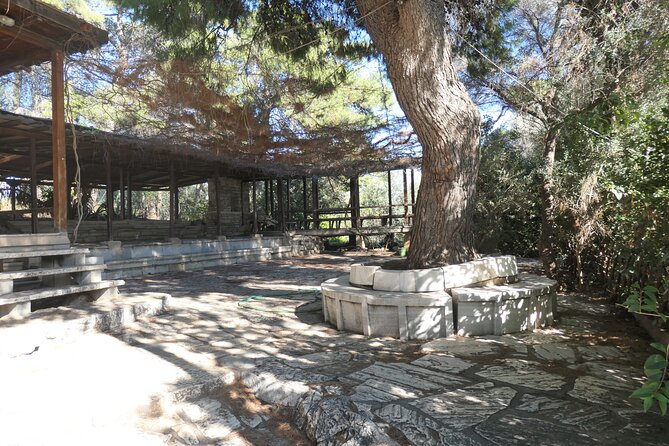
Next is Herod Atticus Odeon, often called one of the best-known open-air theaters. Here, the focus shifts from tragedy’s purpose to the way personality is discussed in symbolic terms.
You’ll hear the language of persona, animus, and anima—terms often used to talk about different layers of the self. The guide uses the theater setting to connect symbolism and identity: who we show, who we hide, and how we interpret the world.
This stop also gives you a quick visual reset. You’re not just walking from one ruin to another. You’re stopping at a structure that still feels designed for performance, which makes the philosophy feel less abstract.
Stop 3: Prison of Socrates and Plato’s Allegory of the Cave
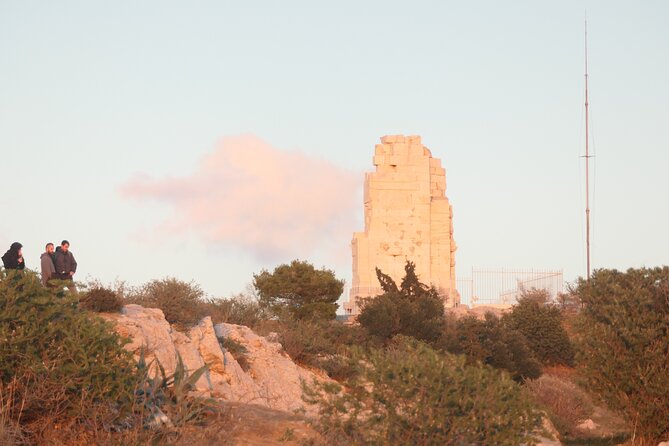
Then comes Prison of Socrates, used as a launch point for Plato’s cave allegory. The message here is about perception: what you think is real, what your mind ignores, and how awareness changes your behavior.
It’s one of the strongest concepts for a walking tour because it ties directly to seeing. You look at an ancient setting, then talk about how the mind filters reality. That gets your attention in a way that pure sightseeing can’t.
Tip for getting more out of it: don’t try to “win” the argument. Ask yourself what part of the cave allegory fits your own habits—news scrolling, online comments, quick judgments in daily life. The guide’s discussion style tends to invite that kind of reflection.
- All Day Cruise -3 Islands to Agistri,Moni, Aegina with lunch and drinks included
★ 5.0 · 4,958 reviews




Stop 4: Agios Dimitrios Loumbardiaris and the Birth of Democracy
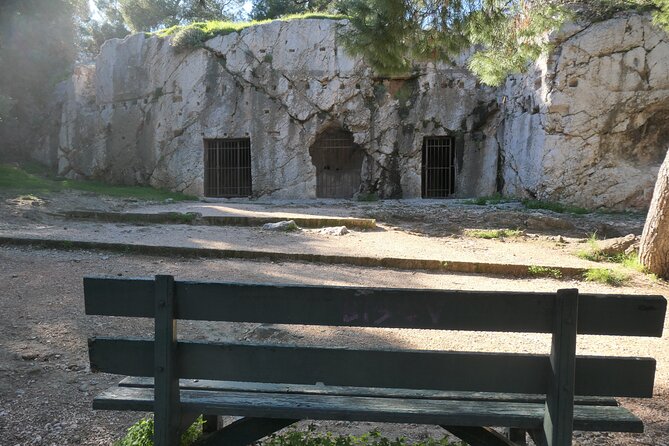
At Eglise d’Agios Dimitrios Loumbardiaris (spelled as shown on the tour info), the tour frames the stop as tied to the birth of democracy.
This is where the tone shifts from individual mindwork to collective decision-making. You’re talking about democracy not as a slogan, but as a practice: assembly, argument, and responsibility.
One nice effect of doing democracy inside a walking route: it becomes real. You can feel how the city layout supports discussion and visibility, rather than treating democracy like a chapter in a textbook.
Stop 5: Philopappos Monument for Happiness and the Best View Payoff
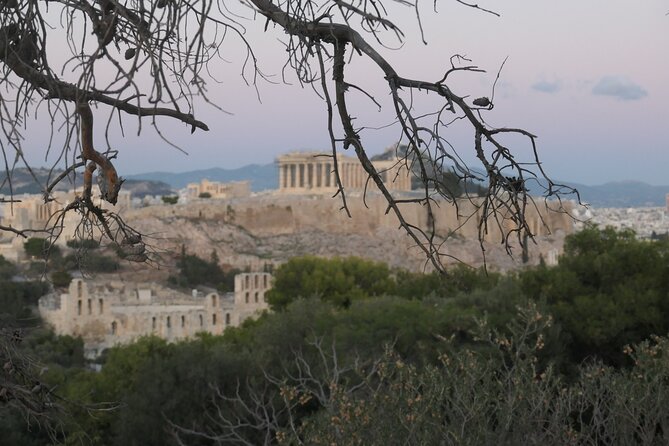
Philopappos Monument brings in two things that guests tend to remember: a strong viewpoint and a happiness framework.
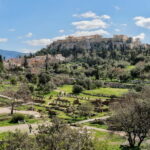
The tour calls it a highly energetic point, with what it describes as the best view of the Parthenon and Acropolis. After you soak in the sightline, the guide connects it to the “recipe of happiness” attributed here to Plato and Socrates.
Even if you don’t take every philosophical claim literally, the view plus the theme works like a memory anchor. You’ll associate the happiness discussion with an actual physical panorama, which makes it easier to recall later.
Practical note: this is a great place to slow down. If you’re prone to walking too fast, save your energy here.
Stop 6: Pnyx, Eudaimonia, and the Assembly of Citizens
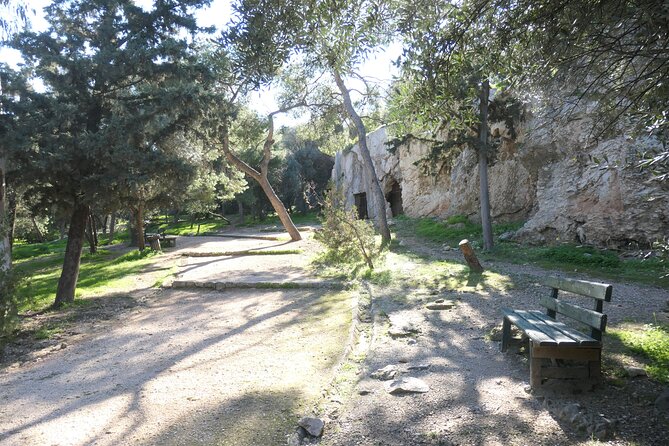
Next is Pnyx, the assembly area of Athenian citizens. The tour also frames it as a secret place of Socrates and focuses on Aristotle’s perspective of eudaimonia, often described as flourishing or blissful well-being.
This is where you start to see how the tour links three themes:
- how we judge (tragedy),
- how we decide together (democracy),
- how we live well (happiness and flourishing).
Also: Pnyx admission is included in this experience. That matters because it reduces friction and keeps your route smoother.
Why the stop feels special: you’re walking into a setting that was meant for speaking and weighing ideas. You’re literally in the body position that matches the philosophy.
Stop 7: Keramikos and Epicurean Happiness in an Ancient Cemetery
At Keramikos Archaeological Site, the tour reframes Athens through the lens of mortality and values. Kerameikos is described as the ancient cemetery, and the tour ties it to Epicurian thinking, specifically an Epicurian recipe for happiness (often connected to Epicurus and the idea of a calm, well-ordered life).
This stop is powerful because it makes happiness feel less like constant pleasure and more like mental steadiness. In a city full of monuments, a cemetery-centered stop can cut through the tourist noise fast.
Possible drawback: if you want only iconic landmarks, this is the stop where the mood can feel quieter and more reflective. That’s not a flaw; it’s just a different flavor.
The “Stoicism Was Born Here” Stretch and a Walk on the Most Beautiful Street
Between major named stops, the tour includes segments that point to broader ideas:
- the place where Stoicism was born,
- the idea that philosophy, theater, and democracy were “for the first time executed,”
- and a segment described as the most beautiful street in Athens.
You won’t get bored here if you like symbolic reading. The guide uses these short transitions to connect schools of thought to real geography. It’s the kind of route design that turns the city into an argument you can walk through.
Roman Agora, the First Meteorological Station, and the Mnisikleous Stairs Moment
Then you move to the Roman Agora, described as a place where Stoicism was taught as a philosophy of life. It’s a strong fit: the Roman Agora setting supports the “ethics in daily living” theme.
After that, the tour adds a stop tied to the first meteorological station in the world. That sounds like a curiosity stop at first, but it supports the theme: humans don’t just speculate. They observe patterns.
The route then touches the discussion point of philosophers and the atmosphere of the Mnisikleous stair. This is also flagged as the best place for lunch. In other words, you get a built-in recovery break right where the city energy feels concentrated.
If you plan your timing: grab lunch here and keep moving. This stop makes the tour feel like it’s paced around real life, not just around monuments.
Lysikratous Square for Nietzsche’s Apollonian and Dionysian Sides
At Lysikratous Square, the conversation shifts again using the Apollonian and Dionysian framework credited here to Nietzsche (spelled as Nitze in the tour notes). You’re meant to see Athens as two complementary forces:
- order, form, reason (Apollonian),
- and emotion, impulse, performance (Dionysian).
This works because by now you’ve already visited tragedy and theater. The guide can connect the concept directly to what you’ve already seen in earlier stops.
Anafiotika: A Cycladic Feeling Inside Athens
The tour closes in Anafiotika, described as the second most energetic point in Athens with a feeling like a Cycladic island. That contrast is the perfect ending. You’re coming out of dense philosophical density and stepping into neighborhood charm, narrow streets, and a different kind of light.
It also gives you a clean mental “bookend” for the whole experience. The tour starts with the roots of theater and judgment. It ends with a place that feels like a small escape inside the city.
What You Should Bring and How to Get the Most From the Walk
I’d treat this as an active morning:
- Wear comfortable shoes. You’ll be on foot for about 2.5 hours.
- Bring water, especially because the guide tends to use shaded breaks, which suggests heat can be a real factor.
- If you want the modern connections, say so early. This tour is built for discussion, and the guide’s style adapts to your interests.
One more thing: the guide is known for using short videos and choosing shady spots during the hot parts. That makes it easier to follow the ideas without burning out before the best viewpoints.
If you want a stronger experience, come with one or two themes in mind:
- How should we handle judgment and bias?
- What’s a practical definition of happiness?
- How do we make better decisions in groups?
- How do ethics change when you live with uncertainty?
Then watch how those questions map onto the stops.
Should You Book This Philosophical Tour in Athens?
Book it if you want Athens to do more than impress you. This tour is a good match for you if you like thinking while moving and you enjoy guides who connect ancient ideas to real mental habits.
Skip it if you prefer a strict museum-style pace or you only want the biggest skyline views with minimal talking. The main value here is the ideas, not just the photo ops—though you do get viewpoints along the way.
For most people, the decision comes down to format: a private group up to six, English, multimedia support, and a route packed with free or included admission stops. That combination makes the price feel reasonable for what you actually get: a guided walk that turns philosophy into something you can use the moment you finish.
FAQ
How long is the Philosophical Tour in Athens?
It runs for approximately 2 hours 30 minutes.
How much does the tour cost?
The price is $90.11 per person.
What language is the tour offered in?
The tour is offered in English.
Is this a private tour?
Yes. It’s a private tour/activity, and only your group participates. The tour notes a group size of up to six people.
Where does the tour start and end?
It starts at AcropoliAthens 117 42, Greece and ends back at the meeting point.
Are entrance tickets included?
Most stops are marked admission ticket free, and Pnyx has the admission ticket included.
What happens if it’s bad weather or you need to cancel?
The tour requires good weather. If it’s canceled due to poor weather, you’ll be offered a different date or a full refund. There’s free cancellation up to 24 hours in advance, with no refund if you cancel less than 24 hours before the start time.



More Tours in Athens

More Tour Reviews in Athens
- All Day Cruise -3 Islands to Agistri,Moni, Aegina with lunch and drinks included
★ 5.0 · 4,958 reviews