REVIEW · ATHENS
Mythology, Philosophy and Democracy Tour
Book on Viator →Operated by Athens Classic Tour · Bookable on Viator
Democracy has street addresses. This 3-hour Athens walk strings together mythology, early science, and politics, so the city feels like a living argument, not a museum. I love how it links the famous funeral speech of Pericles to the citizen assembly spirit at Pnyx.
I also like the pacing: a small group (max 12) keeps things moving at an easy rhythm, and you still get time to absorb big ideas at Tower of the Winds. The route is built for “head + feet” learning, with discussion moments along the way.
The main drawback is weather and heat. This experience requires good weather, and in very hot conditions you’ll want those built-in breaks, like the guide’s water and ice cream stops (heat can be real).
In This Review
- Key things that make this Athens tour worth your time
- From mythology to democracy: why this tour feels different
- Where you start and how the walk is paced
- Kerameikos: the quieter cemetery where Pericles spoke democracy
- Ancient Agora: where debate was part of everyday life
- Monastiraki Square and Plaka: Athens culture between big ideas
- Roman Agora and Hadrian’s Library: when order and learning took a new form
- Tower of the Winds: the moment the city turns into science
- Pnyx Hill: the first parliament feel, plus sunset views
- Philopappos Hill at night: the finishing viewpoint
- Price and value: why $50.69 can make sense for this route
- Practical tips so the walk stays enjoyable
- Who should book this tour, and who might want a different option
- Should you book the Mythology, Philosophy and Democracy Tour?
- FAQ
- How long is the Mythology, Philosophy and Democracy Tour in Athens?
- How much does the tour cost?
- Where does the tour start and where does it end?
- Is the tour offered in English?
- Are there entrance fees for the stops?
- Is a mobile ticket used?
- How big is the group?
- Does the tour run in any weather?
- Can I get a full refund if I cancel?
Key things that make this Athens tour worth your time
- Myth → philosophy → democracy in one continuous story across the city
- Pericles’ democracy speech area at Kerameikos (a less touristed stop with major weight)
- Ancient Agora debates in context, tying thinkers and civic life to the streets
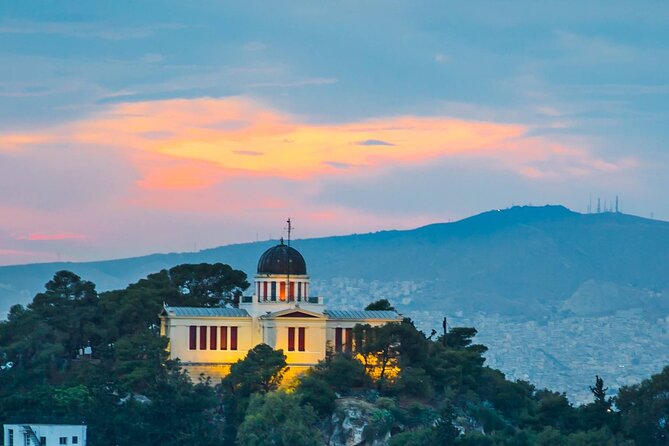
- A real science moment at the Tower of the Winds, with wind-measuring and timekeeping
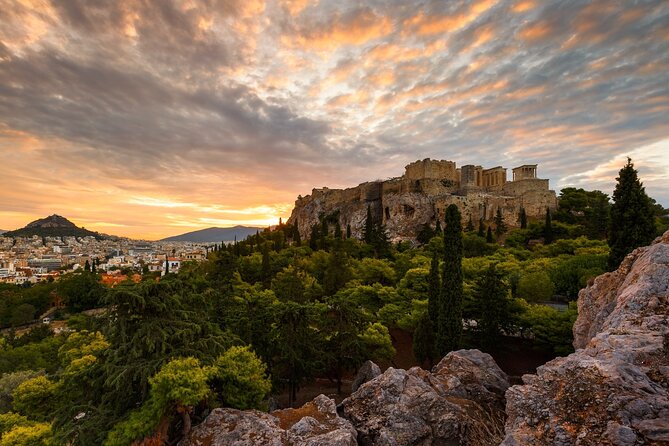
- Two best viewpoints: Pnyx for sunset and Philopappos Hill for Athens at night
- Guide Panos brings it to life, with humor and an end-of-tour philosophy symposium
From mythology to democracy: why this tour feels different
Athens can be overwhelming fast. You see ruins, sure. But this kind of walking tour gives you a way to connect the dots: how stories, arguments, and experiments gradually replaced blind faith with reason.
What makes this experience work is the theme. Instead of treating the sites like separate postcards, you get a line of thinking that moves from mythology and literature, to philosophy and politics, and then into how the city practiced democracy.
And you’re not just staring at stone. The tour is structured like a conversation, guided by Panos, whose style (witty, high-energy, and story-driven) turns concepts into something you can hold in your mind.
You can also read our reviews of more tours and experiences in Athens.


Where you start and how the walk is paced
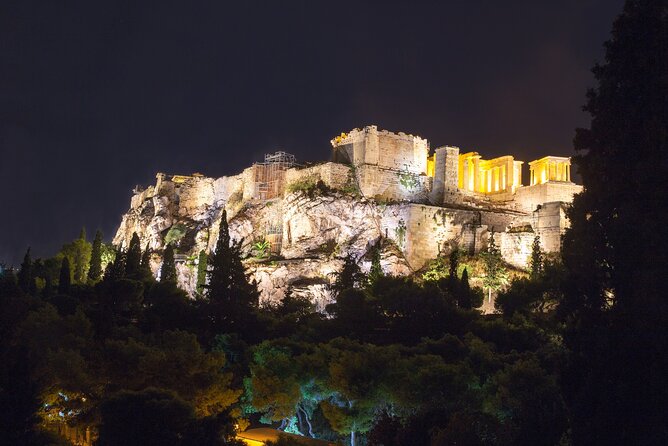
You meet at the Statue of Theseus area in Athens and finish on Philopappos Hill. That start-to-finish setup matters: you’re essentially walking a thought-map from historic civic ground upward toward the views.
The tour runs about 3 hours, and the group size tops out at 12. That’s big enough to meet people, but small enough for the guide to keep the pace thoughtful instead of rushed.
It’s also offered in English, uses a mobile ticket, and is near public transportation. If you like planning your day with less stress, this kind of structure makes it easier to slot into your itinerary.
Kerameikos: the quieter cemetery where Pericles spoke democracy
Kerameikos is one of those Athens places that you might miss if you’re just “sightseeing.” Yet it’s tied to something major: it served as the cemetery of Athens for many centuries, including the burial of prominent Athenians.
The smart angle here is how the tour frames the site as civic memory. When you stand where important citizens were laid to rest, Pericles’ funeral speech becomes more than a famous text. It lands as a moment when Athens defended its values during the Peloponnesian War, praising the virtues of democracy and the way Athenians lived.
You also get a sense of how the city’s public identity was shaped by both politics and cultural storytelling. This stop alone gives your tour a moral and philosophical backbone.
Time on the ground: about 25 minutes.
Admission: listed as free.
Ancient Agora: where debate was part of everyday life
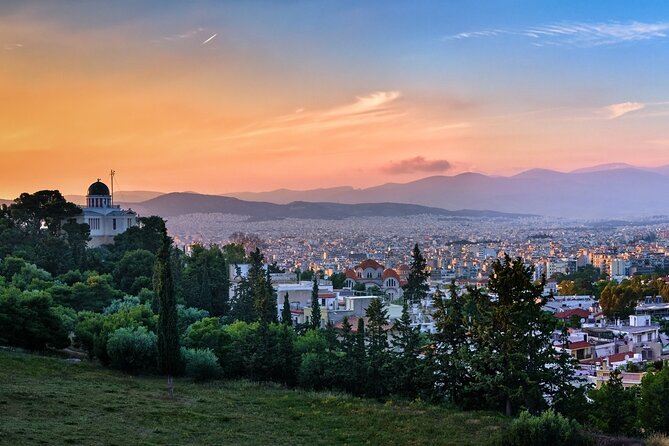
If Kerameikos gives you the emotional and political stakes, the Ancient Agora gives you the action. This was the heart of Athens, where philosophers, statesmen, artists, and ordinary citizens walked and talked through questions that mattered.
Here’s the value: you start seeing “philosophy” as something practiced in public. It wasn’t only lectures in a classroom. People gathered, argued, and tried to reason their way through life—religion, government, justice, and daily choices.
The tour connects the site with names you likely recognize: Socrates, Plato, Solon, Themistocles, Pericles, Thucydides, Sophocles, and Aristophanes. Seeing those names attached to real streets changes the feeling of the whole city.
Time on the ground: about 10 minutes.
Admission: listed as free.
Monastiraki Square and Plaka: Athens culture between big ideas
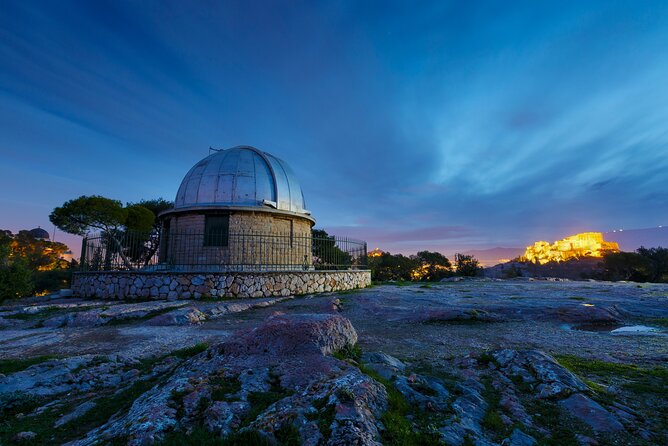
Not every moment here is high philosophy. The tour intentionally includes urban texture—especially around Monastiraki Square and Plaka.
Monastiraki is an easy-paced walk through the colorful flea-market area, with antique and tourist shops nearby. Plaka sits just beyond that as the scenic neighborhood with small houses and narrow, picturesque streets. These stops are useful even if you mainly came for “ancient Athens,” because they show how the city layers eras on top of each other.
Think of it like breathing space. After the Agora and civic themes, you get to reset your brain with real street life—still central Athens, still walkable, but with a lighter pace.
Time on the ground: about 10 minutes each.
Admission: listed as free.
- All Day Cruise -3 Islands to Agistri,Moni, Aegina with lunch and drinks included
★ 5.0 · 4,958 reviews




Roman Agora and Hadrian’s Library: when order and learning took a new form
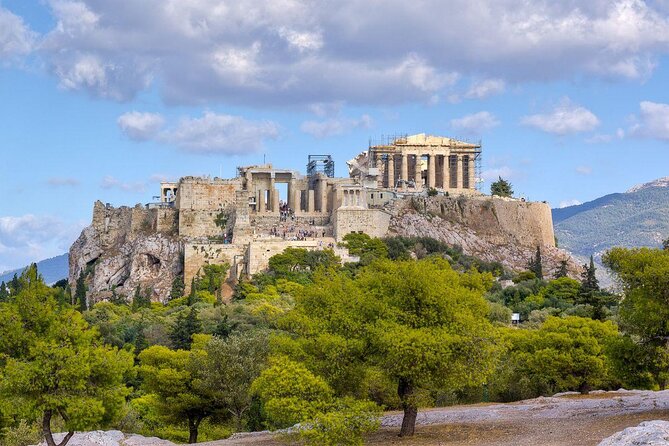
The Roman Agora sits north of the Acropolis and to the east of the Ancient Agora. It’s a reminder that Athens kept evolving long after the Classical period. Even when the language of power changed, public space and civic life still mattered.
Then you move into a very different kind of “public building”: Hadrian’s Library. Built under Roman emperor Hadrian around AD 132, it was described as the second largest library in the world at the time. That size matters because it signals ambition: knowledge was treated as something worth investing in at scale.
This part of the route helps you avoid the common trap of thinking ancient Athens ended when Greece’s Golden Age ended. It didn’t. Ideas, education, and public institutions kept adapting.
Time on the ground: about 10 minutes at each stop.
Admission: listed as free.
Tower of the Winds: the moment the city turns into science

If you want one stop that really brings the tour’s “from blind faith toward science” theme into focus, it’s the Tower of the Winds.
This octagonal building was made by Andronicus of Kyrristos in the 1st century BC. It worked as a wind indicator and also as a clock—like Athens’ version of a time-and-weather station.
The details are what make it click:
- The clock was solar
- In cloudy conditions, there was also a hydraulic mechanism that produced a sound every hour
That’s a big deal for how you think about the ancient world. This isn’t just “pretty ruins.” It’s applied observation—using instruments to track patterns in air and time.
Time on the ground: about 10 minutes.
Admission: listed as free.
Pnyx Hill: the first parliament feel, plus sunset views

Now you get the civic centerpiece: Pnyx. This hill was the first parliament of the world, and it also gives you a wide view over Athens and the Acropolis area.
If you care about democracy as an idea, this is where the tour becomes physical. You’re standing where the citizen assembly model happened, so the concept stops being abstract. You can almost feel the difference between a system based on authority alone and one based on discussion and collective decision-making.
Pnyx is also one of the best spots on the walk for sunset viewing. Even if your timing is earlier, the perspective from here is still excellent.
Time on the ground: about 25 minutes.
Admission: listed as free.
Philopappos Hill at night: the finishing viewpoint
The tour ends at Philopappos Hill, sometimes called the Hill of the Muses. It’s designed for one last, powerful shift: from civic sites and ideas into a calmer payoff view.
This is one of the best vantage points for Athens by night, with strong sightlines toward the Acropolis area. Ending here works because it gives your brain a chance to relax after the philosophy and politics—then re-attach the big ideas to a city you can actually see.
Time on the ground: about 45 minutes.
Admission: listed as free.
Price and value: why $50.69 can make sense for this route
At $50.69 per person for about 3 hours, value depends on what you get for that time. Here, you’re paying for three things that usually cost extra on your own:
- A structured story connecting myth, philosophy, politics, and early science
- A guide who keeps the experience entertaining and interactive (Panos is repeatedly praised for this style and for pushing thinking beyond facts)
- Access to multiple major sites along one coherent walk
Another value signal: the tour lists admission tickets as free for the stops included. That means you’re not stacking your day with surprise entrance fees across the route.
Also, the group size cap (12) matters. You’re less likely to feel like you’re just shuffling behind someone while trying to read a sign.
If you’re trying to choose between a generic “see the ruins” walk and something that teaches you how the pieces connect, this one usually offers the better return per hour.
Practical tips so the walk stays enjoyable
This experience is near public transportation, and most travelers can participate, including service animals.
The main practical reality is walking time and weather. The tour requires good weather, and one honest concern is heat (the guide handled it with water and ice cream stops). So if you’re visiting during a hot stretch, plan to treat the tour like an actual outing, not a quick hop between monuments.
One more tip: if you’re also planning to visit the Acropolis separately, I’d consider doing this walk first. The way it frames the surrounding civic and philosophical sites makes the Acropolis feel more connected afterward.
Who should book this tour, and who might want a different option
This tour is a great fit if you:
- Like ideas as much as stones
- Want to understand how democracy and philosophy grew together
- Enjoy guides who tell stories and keep you thinking
- Want viewpoints of the Acropolis without spending the whole day in ticket lines
It might feel like too much if you:
- Only want short stops and minimal walking
- Prefer purely archaeological details without the philosophy and politics thread
- Struggle in hot conditions and don’t plan for breaks
Should you book the Mythology, Philosophy and Democracy Tour?
Yes, if you want Athens to make sense. This is the rare route where the city becomes a classroom you can walk through—myth turning into literature, literature turning into philosophy, and philosophy turning into civic life.
Book it if you appreciate a guide like Panos who blends humor with real context, and if you’re excited by the idea that democracy wasn’t invented out of thin air. You finish with viewpoint time on Philopappos Hill, which makes the whole experience feel complete.
Skip it only if your goal is strictly ruins-only sightseeing or you know you won’t do well with a longer walk in heat.
FAQ
How long is the Mythology, Philosophy and Democracy Tour in Athens?
It runs for about 3 hours (approx.).
How much does the tour cost?
The price is $50.69 per person.
Where does the tour start and where does it end?
You start at the Statue of Theseus in Athens and end at Philopappos Hill (open in Google Maps from the listing).
Is the tour offered in English?
Yes, it’s offered in English.
Are there entrance fees for the stops?
The stops on this route are listed as admission ticket free.
Is a mobile ticket used?
Yes, the tour uses a mobile ticket.
How big is the group?
The maximum group size is 12 travelers.
Does the tour run in any weather?
It requires good weather. If it’s canceled due to poor weather, you’ll be offered a different date or a full refund.
Can I get a full refund if I cancel?
Free cancellation is available up to 24 hours in advance for a full refund.


More Tours in Athens

More Tour Reviews in Athens
- All Day Cruise -3 Islands to Agistri,Moni, Aegina with lunch and drinks included
★ 5.0 · 4,958 reviews