REVIEW · ATHENS
Athens Riverside: A Journey in Mythical Athens
Book on Viator →Operated by Urban Athens Collective · Bookable on Viator
Mythology runs under Athens. This 3-hour walk traces the Heridanos and Ilissos riverbeds beneath the modern streets, then layers it with stops at the Ancient Agora and the Acropolis. I especially like the way the tour turns geography into story—ancient watercourses that later got covered, forgotten, and rediscovered. I also like the hilltop sightlines from Pnyx and Philopappos that make the myths feel less like homework and more like scenery. A possible drawback: if you’re chasing only the biggest, most obvious sights, this route can feel a bit out of the way and it does include some uphill walking.
You start at Monastiraki Square (the meeting point is listed at Ermou 111), right in central Athens where you can already picture how old and new city layers overlap. The walk ends in front of the Acropolis Museum (listed as Str. Makryianni 1), so you don’t have to do mental logistics twice in one day. It’s also a private tour, meaning only your group joins, not a free-for-all.
The biggest payoff is the guide. Different leaders bring different voices, but names like Helena, Dionysus, Eleni, and Arthur show the caliber of people you might spend your time with—storytellers who connect the classical world to the Athens you’re walking through now. One more practical note: there’s no food or drinks included, so plan on grabbing water and a snack before you set out.
In This Review
- Key things that make this Athens Riverside walk work
- Mythology runs under Athens: the premise in plain English
- Where you start at Monastiraki and why the meeting point matters
- The Heridanos trail: a river god’s route through the modern city
- Ancient sanctuaries, Christian remnants, and Roman bath ruins: seeing eras overlap
- From the rivers to the Agora and Acropolis: classic Athens with a twist
- The hill stops: Ares rock, Nymphs hill, and the Assembly area
- Roman Conservatory of Athens: a detour that makes the timeline feel real
- Pnyx and Philopappapos views: planning for light, heat, and your camera
- Duration, walking pace, and comfort: what 3 hours actually feels like
- Price and value: how $83.77 makes sense (if it matches your style)
- Guide quality: what to expect from leaders like Helena, Dionysus, Eleni, and Arthur
- Who this tour suits best (and who might prefer something else)
- Should you book Athens Riverside: A Journey in Mythical Athens?
- FAQ
- Where do I meet the guide?
- Where does the tour end?
- How long is the experience?
- Is it offered in English?
- What is the price per person?
- Do I need to bring food or drinks?
- Is the tour private?
- Does it run in bad weather?
- Will I get a ticket on my phone?
- What’s the cancellation window?
- What should I wear?
Key things that make this Athens Riverside walk work
- Hidden riverbeds, not just ruins: You follow the paths of ancient rivers that run through and under the city.
- Heridanos meets the Metro story: You see where the Heridanos (Eridanos) river was uncovered during metro construction in the 1990s.
- Ilissos in mythology and writing: The Ilissos is tied to major thinkers, including Socrates as a teaching locale.
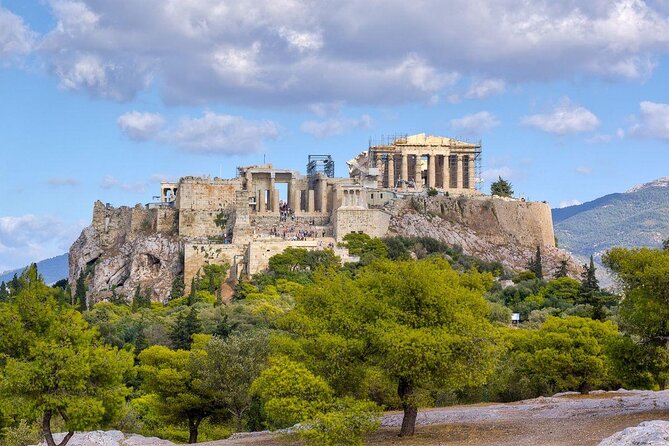
- Myths tied to specific hills: Ares’ rock, the hill of Nymphs, the Athenian Assembly area, and the hill of Muses.
- Hill views that change with timing: Pnyx and Philopappos hills can give you great city panoramas, including sunset depending on the departure time.
- A mix of eras along the route: Expect ancient sanctuaries, remnants of Christian churches, Roman bath ruins, and more.
Mythology runs under Athens: the premise in plain English
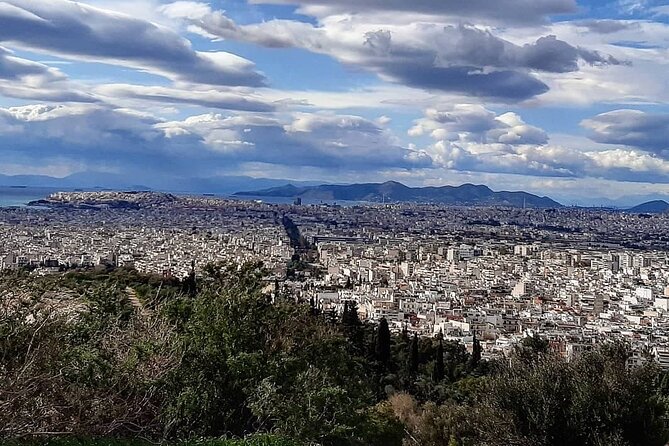
This is not a typical “major sites only” Athens tour. The core idea is simple and smart: Athens has old river systems running under it, and those water stories shaped where people lived, worshipped, and taught.
The tour starts with the Heridanos (also spelled Eridanos) river. You trace its ancient route through the modern city, starting from a point on Mount Lycabettos and once flowing toward the Kerameikos archaeological area. For many centuries it was hidden—then, during metro construction in the 1990s, parts of it were uncovered. That gives you a real-life reminder that archaeology in Athens isn’t always a clean dig site. Sometimes it’s a surprise reveal under your feet.
Then you follow the Ilissos river too. Unlike the Heridanos, it runs mostly underground through much of modern Athens. The Ilissos matters because it shows up in mythology and writing—one notable link is Socrates using the area as a teaching spot. So while you’re walking, the guide isn’t just pointing at rocks; they’re connecting place to people and ideas.
You can also read our reviews of more tours and experiences in Athens.


Where you start at Monastiraki and why the meeting point matters
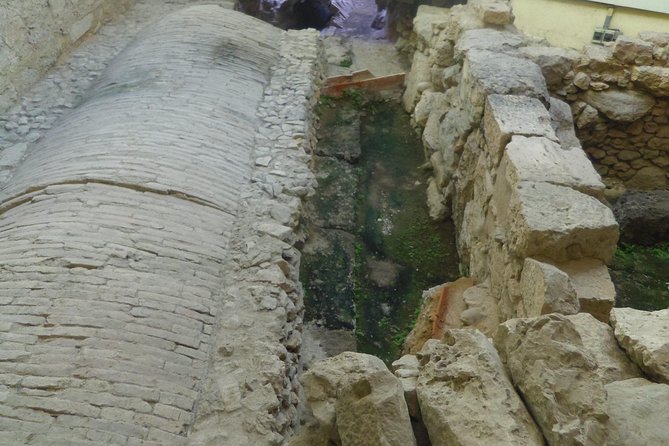
Meeting at Monastiraki Square isn’t random. It’s central, it’s walkable from a lot of places, and it sits right in the overlap zone where Athens constantly layers the ancient over the modern. That’s exactly what this tour is built around.
In the meeting area, you’ll see a portion of the Heridanos river that was uncovered during Athens metro work in the 1990s. Even if you’ve visited Athens before, this type of detail can make the whole day click: you’re not just moving between famous monuments. You’re stepping into a city that still has hidden infrastructure from antiquity.
The tour is designed to be a smooth walking experience, and it’s listed as near public transportation. Still, do yourself a favor: wear walking shoes and don’t plan on a lot of stops where you can duck into shops. This is about moving.
The Heridanos trail: a river god’s route through the modern city
The Heridanos story is one of the tour’s best “wait, what?” moments. The river’s name connects to a Greek river god, so the guide can treat it as both geography and legend. You’re walking along the path of ancient riverbeds—water channels that once guided daily life but later disappeared from view.
What I like about this part is how it changes your perspective fast. In Athens, most history feels like marble blocks and temples. Here, history feels like water flow, street-level construction, and the way centuries cover and then uncover old routes.
This also sets up the rhythm of the walk. You’ll keep passing layers: ancient sites, later religious structures, and Roman-era remnants. The tour doesn’t treat history like a museum timeline pinned to a wall. It treats it like a stack of living city parts.
Ancient sanctuaries, Christian remnants, and Roman bath ruins: seeing eras overlap
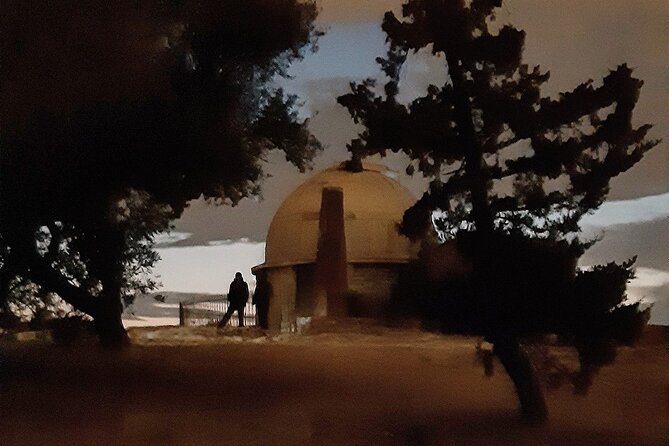
As you move along the river paths, you’re meant to notice how different periods reused (and sometimes repurposed) the same ground. The route can include:
- ancient sanctuaries dedicated to Greek gods
- remnants of Christian churches
- mystical cave areas
- ruins of Roman baths
Even if you don’t catch every single detail, the overall effect is memorable. Athens becomes less like a list of separate attractions and more like a continuing story. You’ll also get the sense of why the rivers mattered: neighborhoods grew around water, rituals clustered around revered places, and later empires and faiths built over earlier footprints.
One thing to keep in mind: this kind of sightseeing rewards attention. If your preference is big, open, photo-friendly monuments with obvious signage at every step, some stops may feel more subtle.
From the rivers to the Agora and Acropolis: classic Athens with a twist
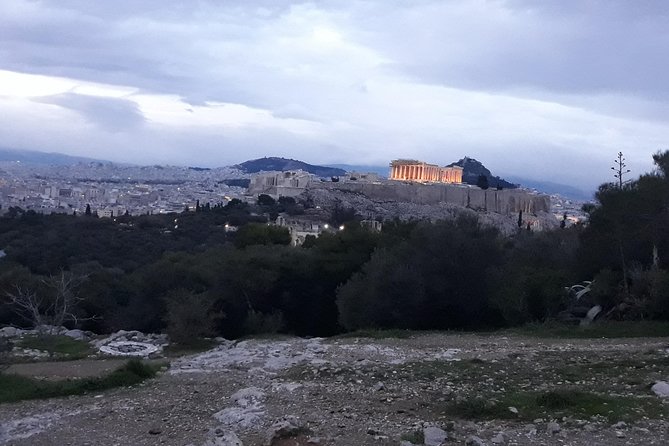
You don’t skip the headline classics. The tour includes visits to the Ancient Agora and the Acropolis, which means you still get the Athens most people come for.
What’s different is the approach. Instead of jumping straight from one landmark to the next, you arrive at those places with a fresh mental model. You’ve already walked along the lines where life organized itself, where people gathered, and where ideas were taught and debated. So when you reach the Agora, it feels less like a standalone site and more like the logical next chapter.
And when the walk brings you to the Acropolis area, the scenery payoff is strong. Even if you’ve seen the Acropolis before, you’ll likely notice more because you’ve been learning the city’s geography in the background.
- All Day Cruise -3 Islands to Agistri,Moni, Aegina with lunch and drinks included
★ 5.0 · 4,958 reviews




The hill stops: Ares rock, Nymphs hill, and the Assembly area
The itinerary includes a sequence of myth-linked stops on sacred hills. This is where the tour leans hardest into storytelling—and where it can feel surprisingly fun, not just educational.
Here’s how the day’s hill portion typically reads:
- You enjoy views of a sacred hill and its slopes while hearing legends tied to the city.
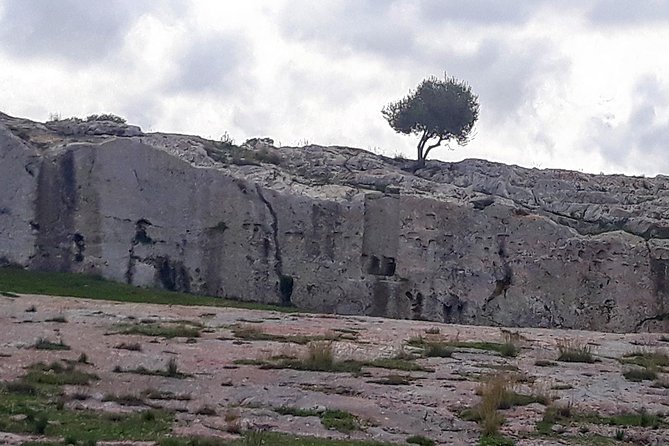
- You learn about the small naked rock of Ares.
- You move through the mythical hill of Nymphs toward the area tied to the Athenian Assembly.
- You walk on the hill of Muses.
This is the kind of Athens where the geography is the clue. The hills aren’t just scenic overlooks. In the guide’s telling, they’re connected to worship, public life, and the cultural habit of anchoring stories to real spots. That connection can make myths feel specific and grounded instead of vague.
Practical note: hills mean effort. Even a 3-hour tour can feel long if you’re not used to climbing. In spring it can be easygoing; in summer it can be brutal if you’re not strategic with water and timing.
Roman Conservatory of Athens: a detour that makes the timeline feel real
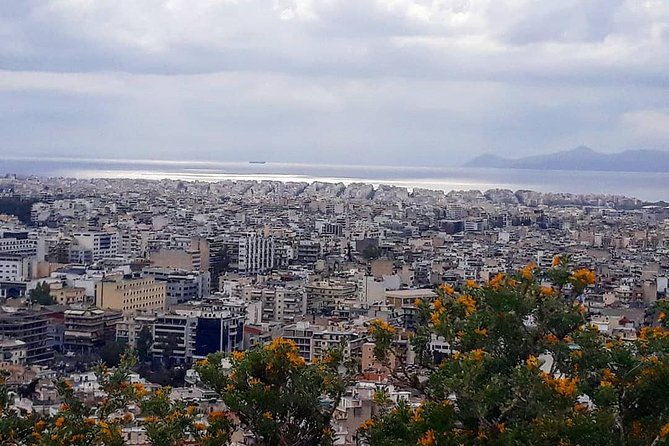
One of the stops is near the Roman Conservatory of Athens. This is a great example of how the tour keeps showing you Athens as a layered city rather than a single era snapshot.
If you’re the type who enjoys spotting how later Romans reused and reshaped earlier urban spaces, this segment helps. It’s also a nice change of pace from the ancient Greek myth angle, because you get another era’s imprint on daily life.
Pnyx and Philopappapos views: planning for light, heat, and your camera
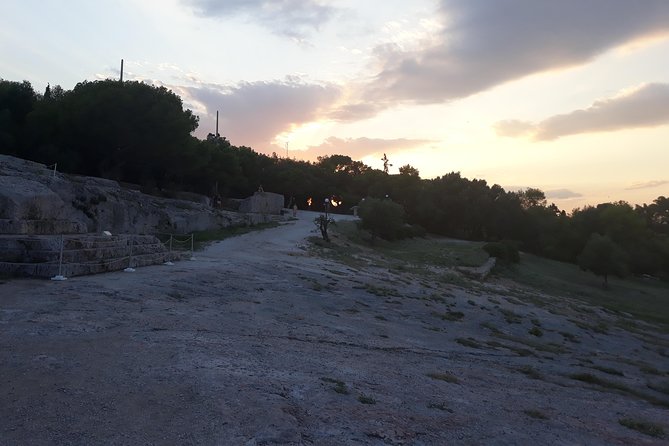
One of the tour’s listed highlights is panoramic viewing from Pnyx and Philoppapos Hills. These are the spots where Athens turns into a big wide view.
When to go matters. The tour has several departure times, and the schedule can influence what you see. If you catch it near sunset, you might get a more dramatic sky over the city. Earlier departures can feel calmer and cooler, especially outside of spring.
Also, the walking is real. The hills and viewpoints mean you should treat this as an actual hike-lite, not a stroll around flat streets. If you plan to visit other sites afterward, build in time to rest your legs before you commit to more climbing.
Duration, walking pace, and comfort: what 3 hours actually feels like
The tour is listed at about 3 hours. That sounds short until you’re walking uphill and staying focused on story points.
Casual dress is fine, but I recommend dressing for weather first. The tour operates in all weather, so Athens rain or wind is part of the equation. Bring a light layer you can handle, and if rain is in the forecast, you’ll be glad you did.
Also remember: food and drinks aren’t included. This is one of the most practical reasons to arrive prepared. Even if you don’t want a full meal, you’ll want water. A small snack can also keep the tour fun when the guide is taking you from myth spot to myth spot.
Price and value: how $83.77 makes sense (if it matches your style)
At $83.77 per person, this isn’t a budget-only activity. So the value question is really about your priorities.
You’re paying for:
- a local guide who connects the route to multiple eras and myth stories
- a focused 3-hour walking route that links rivers, hills, and major archaeological stops
- a private group format (only your group joins)
If you like Athens as a place you study with your feet—following routes and noticing layers—this price can feel fair. You’re getting more than sightseeing; you’re getting a guided interpretation of why this city looks the way it does now.
If you mainly want the standard highlights with minimal walking and minimal narration, you might feel like this costs more than what you personally need. One of the less-positive notes from a repeat-Athens visitor basically boils down to this: if you’ve already done the big-name sites, you’ll either love the off-the-beaten-path approach or you’ll want more of what you already know.
Guide quality: what to expect from leaders like Helena, Dionysus, Eleni, and Arthur
The guide can make or break a myth-and-geography tour. The information you get here is story-led, and a strong guide does two things well: explains what you’re seeing and ties it back to people you can imagine.
Names that show up in the experience include Helena, Dionysus, Eleni, and Arthur. The praise pattern is consistent: friendly delivery, solid command of the material, and an ability to link past and present so the walk doesn’t feel stuck in ancient time.
There is also a cautionary note from one experience where the guide arrived a few minutes late and mentioned nightlife connections. That isn’t the standard you should plan around. But it’s worth knowing that Athens guide schedules can sometimes get messy, like everywhere else. The best way to handle that? Start your day with a calm plan and keep your expectations flexible.
Who this tour suits best (and who might prefer something else)
This is a strong fit if you:
- want a different Athens angle than the usual temple-and-museum routine
- like myths tied to actual places, not just generic story time
- enjoy walking tours and don’t mind some uphill
- care about how modern Athens covers ancient features (and gets them back)
It might be less ideal if you:
- want flat walking with minimal hills
- are only interested in the most famous monuments and nothing else
- hate being away from the easiest cluster of tourist sights for long stretches
If you visit Athens often or you’re a site-collector who already checked off the classics, this can feel either refreshing or like extra work. The deciding factor is whether you enjoy the in-between parts: neighborhoods, river stories, hill viewpoints, and smaller archaeological spaces.
Should you book Athens Riverside: A Journey in Mythical Athens?
Book it if you want Athens to feel like a living puzzle. The riverbed route—Heridanos and Ilissos—gives you a storyline that connects neighborhoods and monuments in a way that’s hard to replicate on your own. Add the Ancient Agora and the Acropolis, plus hill views from Pnyx and Philopappapos, and you get both depth and payoff.
Skip it if you’re mainly after the quickest, most famous stops with little walking and minimal story. For that kind of day, a more direct highlights tour may match you better.
FAQ
Where do I meet the guide?
You meet at Monastiraki Square in central Athens. The meeting location is listed as Ermou 111, Athina 105 55, Greece.
Where does the tour end?
The tour ends in front of the Acropolis Museum. The end point is listed as Str. Makryianni 1, Athina 117 42, Greece.
How long is the experience?
It runs for about 3 hours.
Is it offered in English?
Yes, the tour is offered in English.
What is the price per person?
The price is $83.77 per person.
Do I need to bring food or drinks?
Food and drinks are not included, so plan to bring or buy your own.
Is the tour private?
Yes. It’s listed as private, meaning only your group will participate.
Does it run in bad weather?
It operates in all weather conditions, so dress appropriately.
Will I get a ticket on my phone?
A mobile ticket is included.
What’s the cancellation window?
You can cancel for a full refund up to 24 hours in advance of the experience’s start time.
What should I wear?
Dress code is casual. Comfortable walking shoes and weather-appropriate layers are a smart idea.
More Tour Reviews in Athens
- All Day Cruise -3 Islands to Agistri,Moni, Aegina with lunch and drinks included
★ 5.0 · 4,958 reviews