REVIEW · ATHENS
Athens: Mythology Tour for Families
Book on GetYourGuide →Operated by Alternative Athens · Bookable on GetYourGuide
One hill, a whole bunch of Greek gods. This family tour turns the Acropolis into a kid-friendly storybook, with mythology tied to real landmarks and a small group kept to 15. I also love how the guide answers questions patiently and keeps the pace workable for children. The main drawback to plan around is the no strollers/no backpacks rule at the Acropolis and the fact that the tour can feel long in peak summer heat.
You’ll see big names in Greek archaeology—Parthenon, Theatre of Dionysus, Propylaea, Erechtheion, Temple of Athena Nike—while hearing why each place mattered to the myths. It’s especially good for families who don’t want to “just look around,” but want stories with momentum and a simple way to remember what you saw. If your kids are younger than about 5, you might find the walking and waiting stretches tougher than the legends themselves.
In This Review
- Key things that make this tour work for families
- Why a mythology walk makes the Acropolis easier for kids
- The group size and guide style that kids tend to love
- Theatre of Dionysus: where drama got its start
- Propylaea and Temple of Athena Nike: entering a myth-shaped city
- Erechtheion: where stories stick to details
- Parthenon time: the iconic stop (and how to handle it)
- Walking to the Pnyx: from temples to community
- The Pnyx activity: a hands-on family moment
- Value and price: does $79 make sense?
- Practical tips that will save your day
- Who should book this (and who might want another option)
- Should you book this Athens mythology tour for families?
- FAQ
- FAQ
- How long is the Athens mythology tour for families?
- What group size should I expect?
- Is the tour kid-friendly, and what age range is it best for?
- Where does the tour start?
- What languages are the guides?
- Are entry tickets included?
- Is food or drinks included?
- Does the tour include an activity for children?
- What should we bring?
- Is the tour accessible for wheelchair users, and are strollers allowed?
Key things that make this tour work for families

- Kid-focused myth storytelling: Gods and heroes are explained in plain, age-appropriate ways, not a lecture.
- Max 15 people: You get a group size that lets a guide actually respond to questions.
- Acropolis stops that match the story: The route links buildings to characters like Zeus, Athena, Poseidon, Dionysus, and more.
- Drama at the Theatre of Dionysus: You start where Greek theater took shape, so the myth makes more sense.
- A hands-on moment at the Pnyx: The tour includes a family activity inspired by the legends you’ve been hearing.
- Guides who handle mixed ages: The guide roster includes standouts like Christina, Kelli, Chrysa, Maria, Viki, Demi, Dani, Marika, Angelica, and Sophia.
Why a mythology walk makes the Acropolis easier for kids
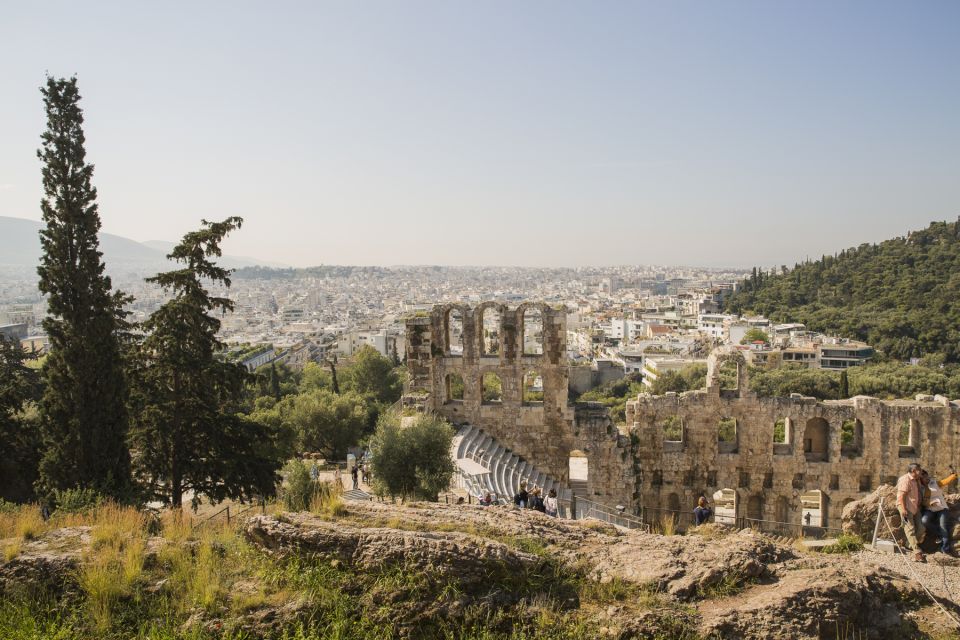
If you’ve ever tried to explain the Acropolis to children without a guide, you already know the problem: it’s impressive, but it can feel like random stone. This tour gives your kids a story map. As you move from one landmark to the next, the myths give the buildings meaning you can actually recall later.
I also like that the tour is designed around attention spans. It’s only 3 hours, and the pace is built for stopping, looking, and listening without dragging. On top of that, you get a guide who’s trained for this specific family format, so kids aren’t just tolerated—they’re part of the experience.
You can also read our reviews of more tours and experiences in Athens.



The group size and guide style that kids tend to love

A big part of the value is the way the tour is run. You’re in a small group (15 people max), and the guide is explicitly family-friendly. That matters at the Acropolis, where the space can feel tight and the crowds can be unpredictable.
In the guide feedback I saw, standout names came up again and again—Christina, Kelli, Chrysa, Maria, Viki, Demi, Dani, Marika, Angelica, Amarylis, and Sophia. What’s consistent is engagement: guides stay patient, keep explanations lively, and make room for questions from children (even when kids ask a lot).
One more practical note: the tour runs in English (and also French). If your family includes different language needs, it can be a relief that you can pick from the two options listed.
Theatre of Dionysus: where drama got its start
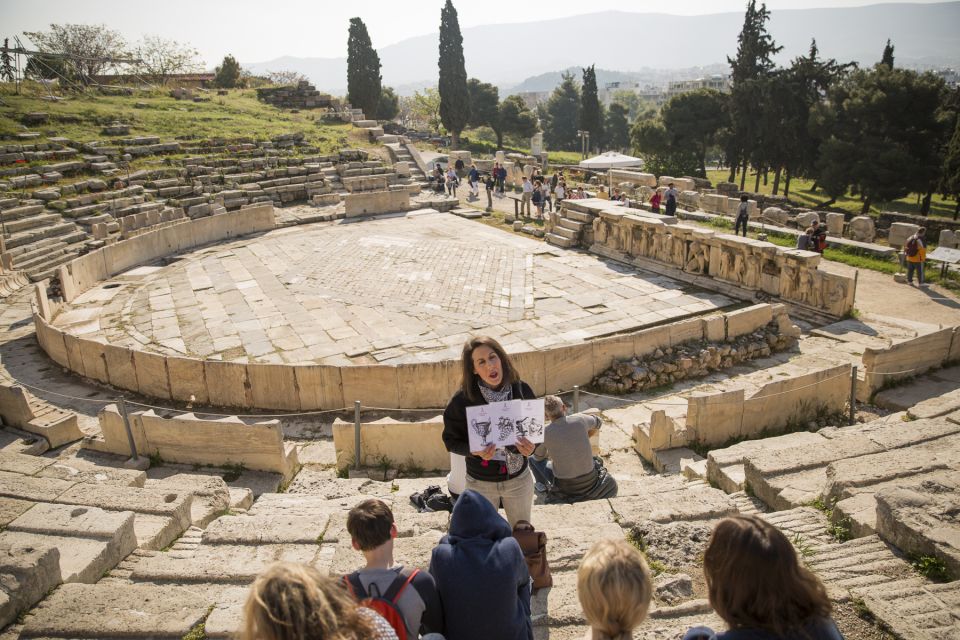
You begin at the Theatre of Dionysus, and this is a smart opening stop. You’re not starting with the Parthenon first (the usual move that can feel like overload). Instead, you start with the place tied to Dionysus, the god of wine and theater, and you learn how drama was born in this setting.
What I like here for families is that theater is an idea kids already grasp. They understand performance, roles, and stories. Once Dionysus is introduced, the rest of your mythology makes more sense—especially because Greek gods weren’t just “characters,” they were part of how people explained art, festivals, and community.
The visit is short (about 15 minutes), which is perfect. You get context without losing momentum.
Propylaea and Temple of Athena Nike: entering a myth-shaped city
Next comes Propylaea, the grand entrance way into the Acropolis zone. If you’ve ever walked into a big historic site and thought, Okay, but what is the point of all this, this stop helps. You learn how the city’s layout and architecture connect to power, protection, and the gods.
Then you move to Temple of Athena Nike. Athena is the goddess of wisdom, and this stop lets you see how the Greeks “stamped” their values into stone. Even if kids don’t remember architectural terms, they can grasp symbolism when it’s tied to a character they’ve already met in the stories.
This segment is broken into shorter guided stops—around 10–15 minutes each—so it stays manageable. Just keep an eye on the sun and plan for quick rest moments.
Erechtheion: where stories stick to details
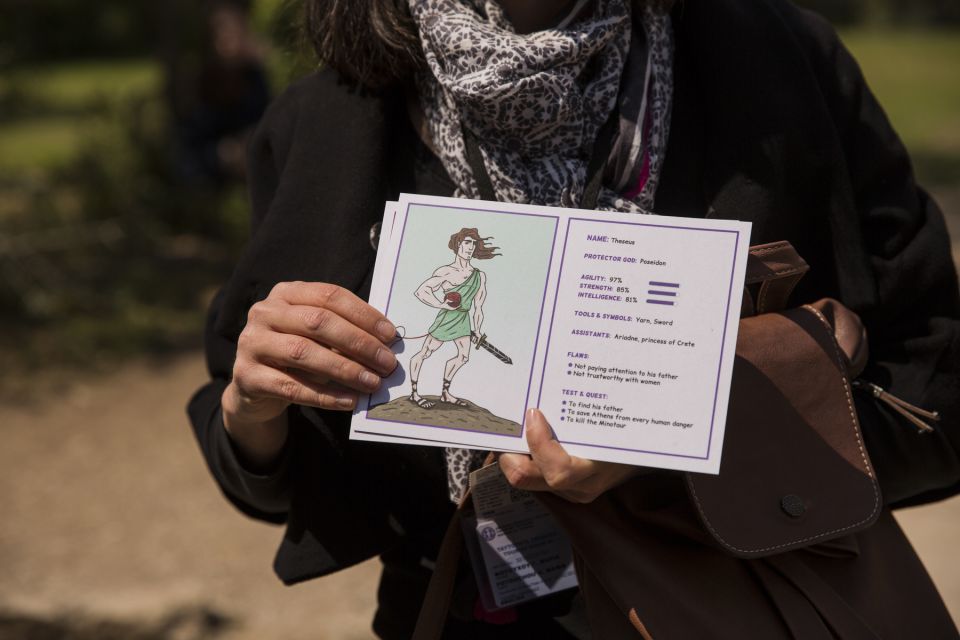
The Erechtheion is next, and it’s the kind of place that rewards your imagination. This area is associated with key myths and the sacred feel of the Acropolis. For families, it’s also a nice change of pace from the “big view” moments, because you can focus on the story connections rather than just the scale.
Your guide ties these stops to major characters—this tour explicitly covers gods and heroes like Zeus, Athena, Poseidon, and others. The goal isn’t memorization. It’s pattern recognition: kids start to notice that each place has a reason to exist in myth, not just in history.
- All Day Cruise -3 Islands to Agistri,Moni, Aegina with lunch and drinks included
★ 5.0 · 4,958 reviews




Parthenon time: the iconic stop (and how to handle it)
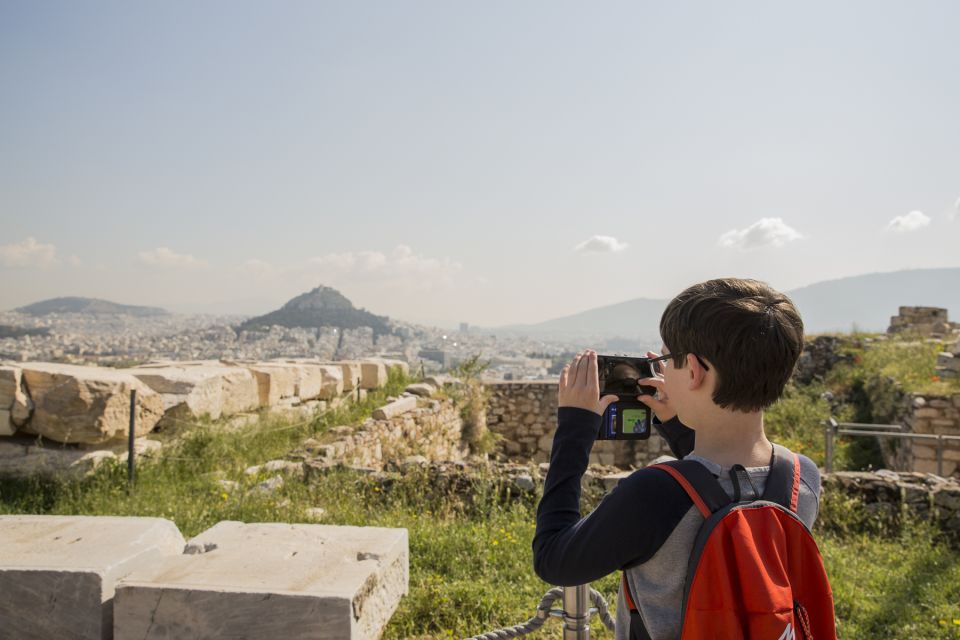
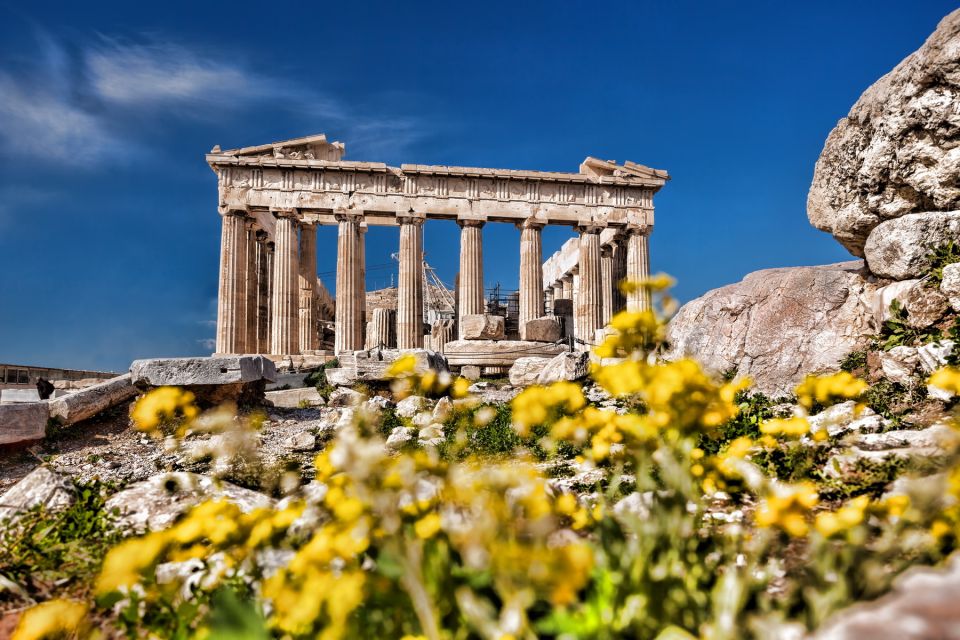
The Parthenon is the big one, and the tour gives it a longer guided look (about 70 minutes). That’s where many families either feel thrilled or get overheated and tired. The good news is that you’re not left wandering alone. The guide keeps the story moving so the building stays interesting even if kids start to fade.
What makes this stop valuable is the myth-to-architecture connection. Instead of only saying the Parthenon is important, your guide explains why it became such an enduring symbol and how myths shaped the way Athenians understood their world. The result is that the Parthenon becomes a memory cue, not just a photo opportunity.
Drawback: in hot weather, 70 minutes can feel long for younger kids. If you’re going during summer, plan for extra hydration and build in your own micro-breaks when your guide pauses for questions.
Walking to the Pnyx: from temples to community
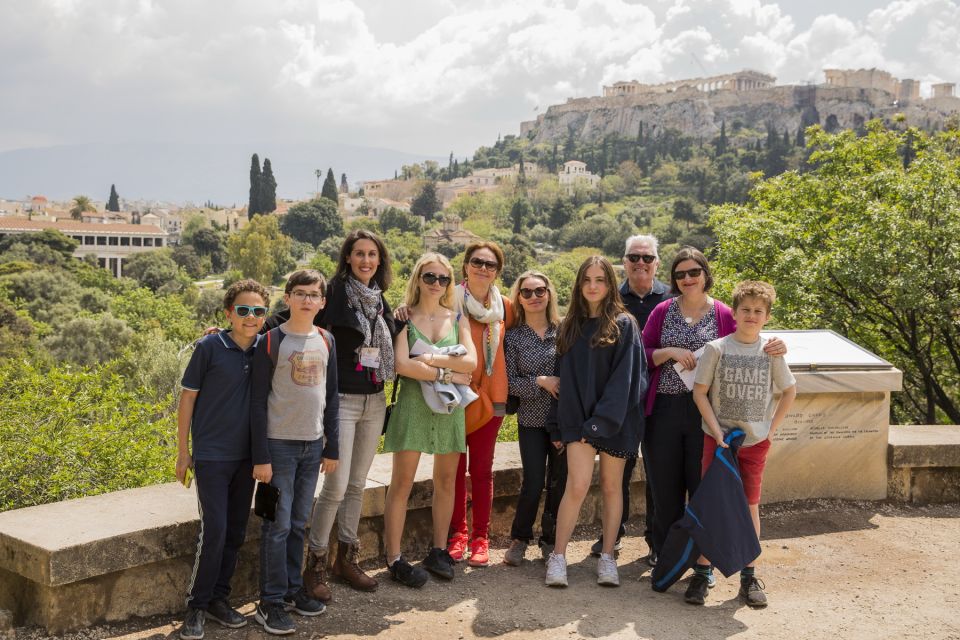
After the Acropolis area, you take a short walk to Pnyx (about 15 minutes). This is one of the best transitions on the tour because it changes the mood. The mythology theme continues, but you’re now moving from divine worship zones to a place tied to how people organized themselves.
At the Pnyx, you learn it’s often called the birthplace of democracy, where Athenians gathered to discuss politics. The tour then brings the myths back into view through stories involving figures like Theseus and the Minotaur, plus gods like Hera and Aphrodite.
For kids, this is a clever pivot. You’ve got heroes, monsters, love, jealousy, and political decision-making in the same hour range. It’s not random. It helps them understand that Greek myths were part entertainment, part explanation, and part identity.
The Pnyx activity: a hands-on family moment

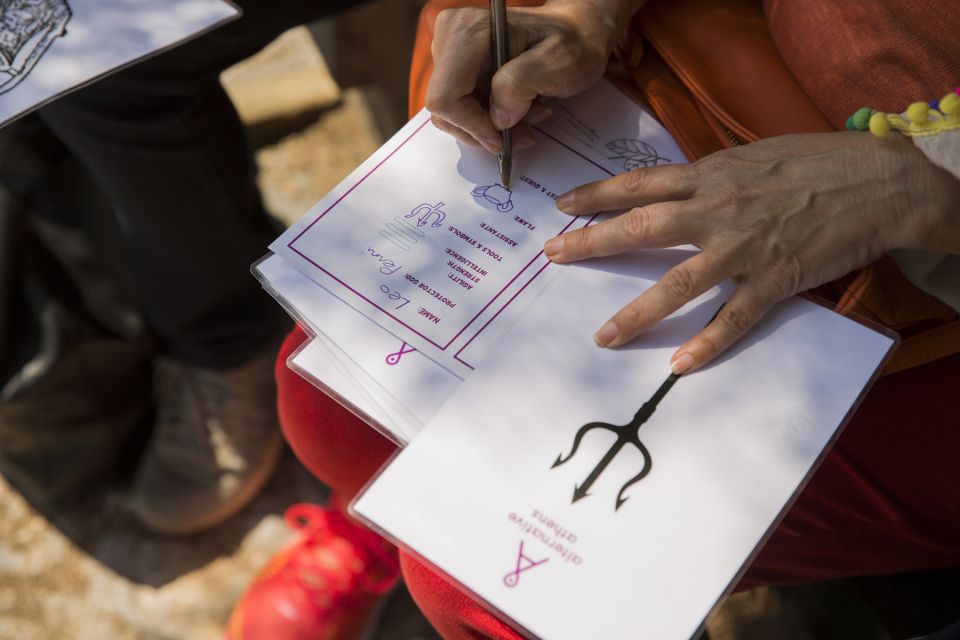
The finale is guided and includes a group family activity inside the Pnyx area. It’s inspired by the ancient legends you just heard. You get a chance for kids (and adults) to interact imaginatively with the surroundings rather than only listening.
I love this part because it creates a “do something” memory. Photos are nice, but the activity is what makes the myths feel like a personal story rather than a list of names.
The guided time here is about 45 minutes, and then you finish at Pnyx Hill. It’s a good wrap point because you can take a final look around without the pressure of another long stop.
Value and price: does $79 make sense?
At $79 per person for a 3-hour guided experience, this tour can be a solid value—especially if you’re traveling with children who need structure. You’re paying for two things that are hard to recreate on your own: (1) a guide who can translate mythology into kid-friendly storytelling, and (2) a route that hits the highest-impact landmarks without wasting time.
A couple of value notes to keep in mind:
- Acropolis entry tickets are included only if you choose the option that includes them. If not, you’ll need to handle entry fees separately (entrance fees are described as prepurchasable).
- The tour includes fun and educational activity material for children, so the Pnyx moment isn’t just a talk—it’s planned.
- Food or drinks are not included, so you’ll want to budget for water and a snack stop if needed.
Also, if you (or a family member) qualify for free Acropolis entry under the posted EU/age rules, that can make the tour even better value. Just be ready with your passport or ID as required.
Practical tips that will save your day
Here’s how I’d set you up for an easier, happier tour.
Bring
- Passport or ID card (important for any free-entry eligibility and to avoid delays)
- Comfortable shoes (you’re walking and standing at multiple stops)
- Sunglasses and sun hat (Acropolis sun is no joke)
Plan around what’s not allowed
- Baby strollers are not allowed at the Acropolis.
- Backpacks are not allowed (so plan a small day bag that fits what you bring).
Know what to expect
- This tour is more suitable for children 5–11.
- It is not suitable for wheelchair users, based on the information provided.
A small summer reality check: one review-style note that matters is that the tour can feel long in heat. If you’re traveling in warmer months, schedule this earlier in the day if possible, and bring water even if the tour doesn’t provide it.
Who should book this (and who might want another option)
You should book if:
- You’re traveling with children around 5–11 and want mythology in a form they can actually follow.
- You want the Acropolis explained in a way that connects stories to specific landmarks like the Parthenon, Theatre of Dionysus, and the Pnyx.
- You prefer a guided structure over wandering, especially at a site that draws crowds.
You might choose something else if:
- Your group needs stroller access (strollers aren’t allowed at the Acropolis).
- Your mobility needs include a wheelchair (this tour is noted as not suitable).
- Your kids are very young or easily overwhelmed by walking and sun.
Should you book this Athens mythology tour for families?
Yes—if your family wants the Acropolis with context, not just sights. The best part is how the tour ties gods and heroes to the places you’re standing in, then gives you a kid-friendly activity at the Pnyx to lock it in. With a 15-person cap, you also get a calmer experience than the big, chaotic tours.
If you’re sensitive to heat, plan smart for hydration and consider timing. And double-check what you bring, since no strollers and no backpacks are real-world constraints here.
FAQ
FAQ
How long is the Athens mythology tour for families?
The tour lasts 3 hours.
What group size should I expect?
It’s a small group with a maximum of 15 people.
Is the tour kid-friendly, and what age range is it best for?
It’s described as more suitable for children 5–11 years old.
Where does the tour start?
The meeting point can vary depending on the option booked.
What languages are the guides?
The live tour guide offers English and French.
Are entry tickets included?
Acropolis entry tickets are included only if you select the option that includes them. The info also notes that tickets can be prepurchased if you let the provider know.
Is food or drinks included?
No. Food or drinks are not included.
Does the tour include an activity for children?
Yes. You’ll have a group family activity inspired by ancient legends at the Pnyx.
What should we bring?
Bring passport or ID, comfortable shoes, sunglasses, and a sun hat.
Is the tour accessible for wheelchair users, and are strollers allowed?
It is not suitable for wheelchair users. Baby strollers are not allowed at the Acropolis, and the info says backpacks are not allowed as well.


More Tours in Athens


More Tour Reviews in Athens
- All Day Cruise -3 Islands to Agistri,Moni, Aegina with lunch and drinks included
★ 5.0 · 4,958 reviews