REVIEW · ATHENS
Apostle Paul’s missionary journys in Athens Private Tour 4Hours
Book on Viator →Operated by Yomadic.Tours & Transfers · Bookable on Viator
Paul’s Athens felt real, not academic. This private tour strings together places tied to Acts—port, marketplace, Mars Hill, and the Acropolis—so Paul’s story lands in real streets and real stone, not just a Bible reading. I especially like how the day mixes big-name landmarks with quieter stops that explain why Paul’s message collided with Greek ideas.
I also love the Daphni Monastery stop. The mosaics there are world-class, and it’s a smart add-on because it’s UNESCO and visually stunning without feeling like a fast photo-op.
Second, I like that you start with smooth private pickup and an efficient route. Still, here’s the main drawback: key archaeological sites have separate entrance fees (especially Acropolis/Parthenon and the Ancient Agora), so the final cost depends on how many interiors you choose to visit.
In This Review
- Key Highlights You’ll Feel in Real Time
- Private Pickup and a Route That Makes Paul’s Story Stick
- Daphni Monastery: Byzantine Mosaics That Don’t Need Translation
- Flisvos Marina and the Port of Faliro: Why This Stop Feels Specific
- Ancient Agora: Marketplace Noise Meets Ideas and Idols
- Mars Hill (Areopagus): The Unknown God, Explained Where It Happened
- Acropolis and Parthenon: Big Views, Big Tickets, Big Payoff
- St. Dionysius the Areopagite: A Christian Link to Acts 17:34
- Mount Lycabettus: Quick Scenic Reset with a Church on the Hill
- Price and Value: What €154.74 Really Buys You
- Should You Book It? My Quick Decision Guide
- FAQ
- FAQ
- How long is the Apostle Paul’s missionary journeys in Athens private tour?
- Is pickup and drop-off included?
- Is this tour private or shared?
- What language is the tour?
- Are entrance fees included in the price?
- What’s included in the tour experience?
- Can the schedule be customized?
- What if weather is bad or plans change?
Key Highlights You’ll Feel in Real Time
- A Paul-focused route you can follow in the order of Acts: port area, marketplace, then Mars Hill.
- UNESCO mosaics at Daphni Monastery: Byzantine art that’s clear, detailed, and worth your time.
- Mars Hill explained on the hill: you get the story of the Unknown God where it would have been discussed.
- St. Dionysius tie-in near the Areopagus: a Christian link to Acts 17:34 that adds meaning to the views.
- Acropolis time without chaos: private transport helps you spend your energy where it counts.
- Views from Mount Lycabettus: a quick breather with panoramic Athens payoff.
Private Pickup and a Route That Makes Paul’s Story Stick
This tour is built for people who want a “grab-and-go” day without the stress of figuring out transit or hunting for meeting points. You get hotel (or Airbnb) pickup and return, and the vehicle is set up for comfort with A/C, WiFi, and bottled water. For cruise passengers in particular, that matters—Athens can eat your time if you misjudge distances.
What I find works well is the flow: you start outside the core hill area, then move into the city’s intellectual and religious center, and finally end up around the Acropolis orbit. When you understand where you are in the day, Paul’s message feels more logical. You’re not just jumping between random famous ruins; you’re walking through a sequence.
English is part of the experience (drivers/guides are described as English-speaking and used to explaining Greek history). In the reviews, guides like Andreas, Panos, and Costas stand out for making the Paul connection feel personal, not academic.
One note for planning: the tour duration is listed around 5 hours. In real life, that’s enough time for meaningful stops, but not enough to treat every site like you have a full day in a museum.
You can also read our reviews of more private tours in Athens

Daphni Monastery: Byzantine Mosaics That Don’t Need Translation
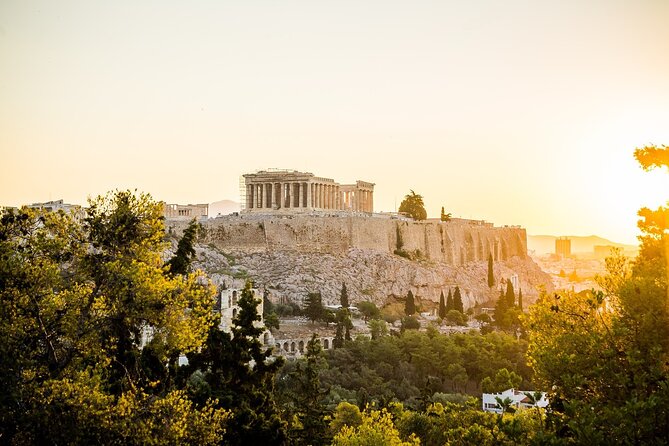
Daphni Monastery is about 11 km northwest of Athens, and it’s a UNESCO World Heritage site that dates to the 6th century. This is the kind of stop that changes your mood fast. You arrive thinking you’ll see a church. You leave understanding why the Byzantines mattered so much for art and craft.
The headline here is mosaics. The monastery is famous for Byzantine mosaic work considered among the finest examples of its kind. It also gives you strong architectural context with a main church (the katholikon) in a cross-in-square style with a large dome. If you’re the type who likes seeing how buildings reflect the culture behind them, you’ll appreciate the structure as much as the artwork.
Practical angle: the stop is short (about 30 minutes), and admission is listed as free. If you want to do photos, do them early, because time moves quickly once the group starts rolling.
Flisvos Marina and the Port of Faliro: Why This Stop Feels Specific
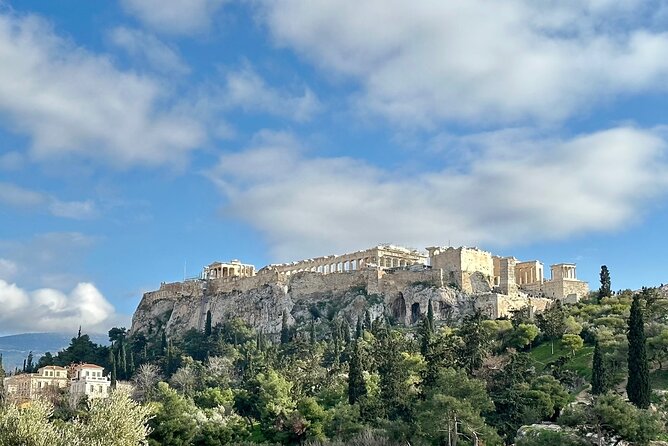
The day connects Paul’s arrival to a point tied to Faliro—an older port area where ships are believed to have docked, before Athens’ later main harbor location took over. At Flisvos Marina, the story is about geography and timing: this is where Paul’s journey to Athens begins in the narrative.
What makes this stop interesting is the level of “place-based” detail. The port location is described as an area between the mouth of Kifissos and a small church of Agios Georgios, tied to the idea that it sits on or near ancient Faliros wharf. The tour frames it as a traditional/biblical geography connection, not a random dock visit.
The emotional value is the moment right before Paul starts teaching: waiting for companions like Silas and Timothy (from Macedonia), then walking around the city, speaking with people in the synagogue and market, and dealing with what the tour describes as the abundance of idols. It’s not just scenery. It’s context for why his message matters.
This stop is brief (around 15 minutes), and admission is included, so treat it like a story beat more than a sightseeing block.
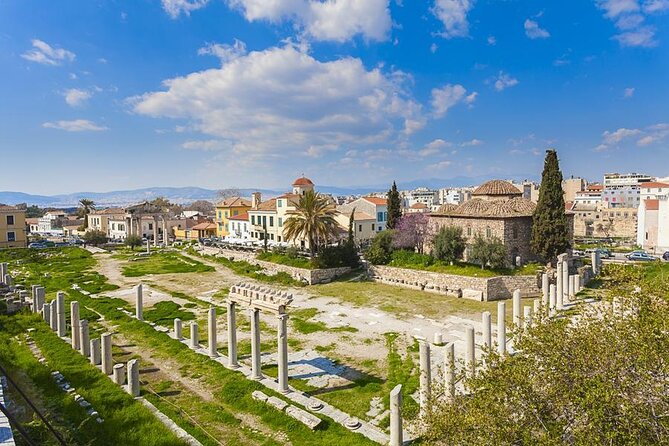
Ancient Agora: Marketplace Noise Meets Ideas and Idols
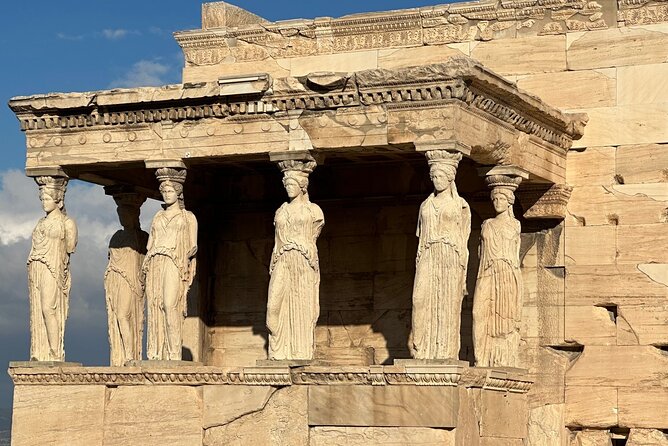
Then you step into a place that really fits Paul’s kind of argument. The Ancient Agora of Athens was the city’s central marketplace—where commerce happened, yes, but also where philosophy and debate played out in public.
This is the setting associated with Paul’s preaching in the Acts account (Acts 17:16–21). The tour explains that the Agora functioned as a hub for philosophical discussions, and also as a display space for idolatry—so Paul’s message lands directly in the environment that prompted his reactions.
You’ll get around 1 hour 10 minutes here, and admission is not included. If you want to keep the day smooth, I suggest you decide ahead of time whether you want to go inside/within ticketed areas. If you skip entrances here, you may lose some of the “you’re standing where the debate happened” feeling.
What I like about this stop is how it connects Greek philosophical culture to early Christian teaching. Even if you’re not religious, it’s a great way to understand Athens as a debate culture, not just a sculpture-and-columns culture.
Mars Hill (Areopagus): The Unknown God, Explained Where It Happened
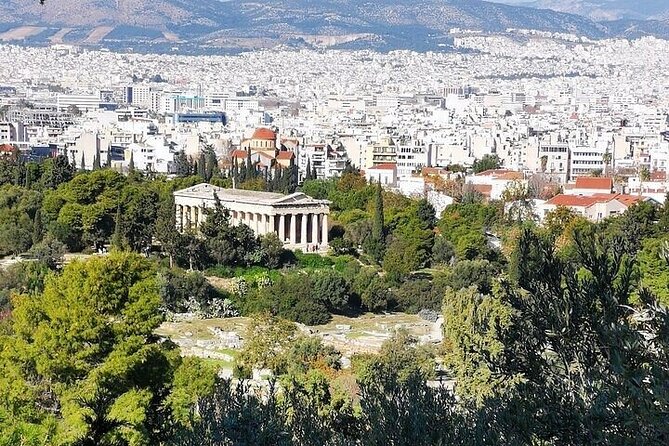
This is the emotional core for many people. Areopagus / Mars Hill is where Paul delivers a famous sermon (Acts 17:22 is referenced for the sermon at Mars Hill). The tour gives you the hill viewpoint and the narrative setup: philosophers bringing Paul into the conversation because they’re curious about his teachings on Jesus and the resurrection.
On the hill, it’s easier to picture what “one God” would have sounded like in a culture that was comfortable naming many divine forces. The tour specifically mentions Paul referencing an altar to the unknown god, then using Greek cultural references to make his point land. It also covers the mixed response—some mock, some are intrigued, and some convert.
You can expect around 20–30 minutes for the Areopagus area, and admission is listed as free for these segments. Still, I’d treat this as a moment where you pause and actually listen. If you treat it as a quick overlook, you miss the best part.
One more practical detail: the tour also includes a Catholic cathedral dedicated to St. Dionysius the Areopagite and connects him to Paul through Acts 17:34. If you’re curious how later Christian figures attached themselves to Paul’s story, this is the add-on that makes the day feel continuous.
- All Day Cruise -3 Islands to Agistri,Moni, Aegina with lunch and drinks included
★ 5.0 · 4,958 reviews




Acropolis and Parthenon: Big Views, Big Tickets, Big Payoff
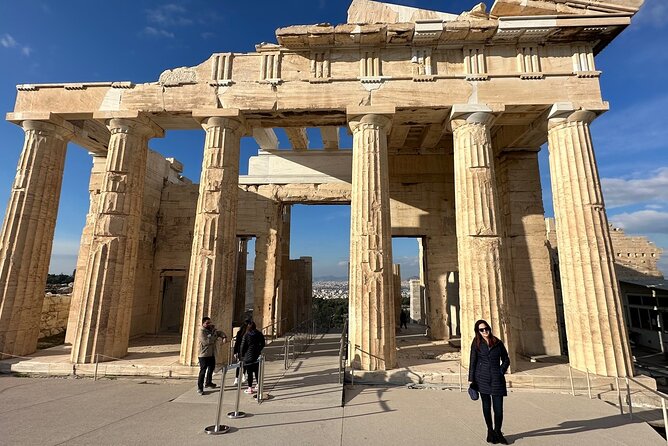
You’ll reach the Acropolis area as a major highlight. Expect visits around the Acropolis and key structures like the Parthenon (and the Erechtheion is mentioned as part of what you’ll see). This is where Athens turns from “story sites” into “global landmark.”
Here’s the reality check: entrance fees are not included. The data lists Acropolis Parthenon at €30 per person, and the Ancient Agora at €20 per person. If you do both major interiors, you should budget about €50 extra on top of the tour price.
Is it worth it? For most people, yes. Standing on the Acropolis hill with context about how Athens saw politics, culture, and religion intertwined makes the Parthenon feel more than postcard material. It helps you understand why Paul’s message—coming into a city so proud of its civic identity—would have been heard against a backdrop of deep belief and public ideas.
Time is about 1 hour at this stop. That’s enough for the Parthenon area and the big views, but not enough for a slow, detailed architectural tour. If you’re visiting the Acropolis with the mindset of: see the main things, get the story, take smart photos, you’ll be happy.
St. Dionysius the Areopagite: A Christian Link to Acts 17:34
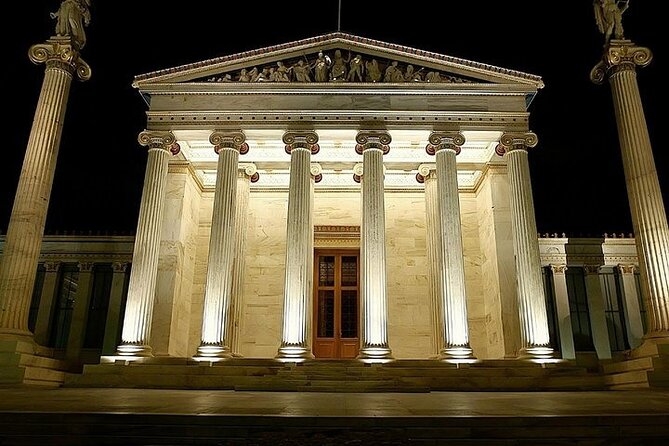
Between the hill and the big monuments, you’ll also visit the Agios Dionysios Areopagitis Catholic Cathedral. This stop is short (around 20 minutes) and admission is listed as free, so it fits well into a tight schedule.
The cathedral is described as a three-aisled neo-Renaissance basilica style, with impressive frescoes and stained glass windows. But the real hook is the Paul connection: Saint Dionysius the Areopagite is linked to Acts 17:34, as a convert associated with Mars Hill. Tradition also connects him to being part of the Areopagus council.
Even if you don’t follow the theology, this stop works because it answers a simple question: what happened to Paul’s ideas after the speech? The tour treats the cathedral as a tangible reminder of how Paul’s message was carried forward in Athens memory.
Mount Lycabettus: Quick Scenic Reset with a Church on the Hill
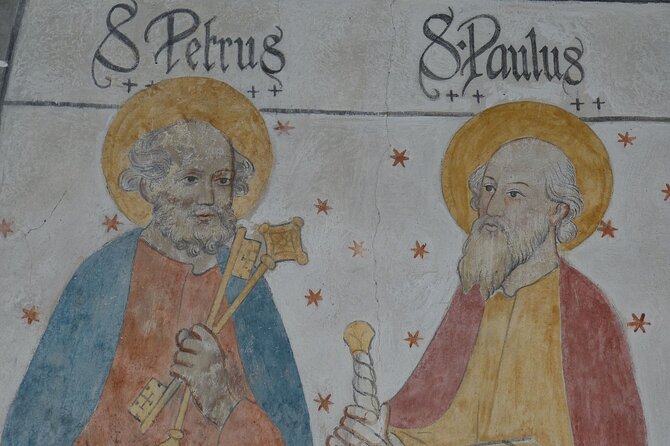
After the heavier history sites, the tour includes a lighter-feeling visual stop: Mount Lycabettus. You’ll spend about 15 minutes here for views, and it’s one of those moments that helps you digest the day.
At the southwestern slope is the church of Agioi Isidoroi, built in the 15th or 16th century on top of a cave and associated with Byzantine architecture and pilgrimage. The dedication includes Saints Isidore of Chios (a 3rd-century martyr) and Isidore of Pelusium (a 4th-century monk and scholar).
This isn’t going to replace a full hike. It’s more like the Athens “look back at everything you just saw” moment. If you like panoramas, you’ll get your money’s worth out of the short time here.
Price and Value: What €154.74 Really Buys You
The tour price is listed at $154.74 per person for a private experience around 5 hours, including pickup/drop-off and private transport with A/C, WiFi, and bottled water. That’s the foundation.
Then there are the extras that can change the total:
- Acropolis/Parthenon entrance: €30 per person
- Ancient Agora entrance: €20 per person
- Panathenaic Stadium optional photos: €20 per person
- Temple of Olympian Zeus optional photos: €20 per person
So the simple “major sites” version (Acropolis + Agora) adds about €50. If you add both optional photo stops, you could add another €40. Your final all-in number depends on whether you want to enter buildings or just take photos from outside.
In terms of value, I think this tour makes sense if:
- you want a private route that reduces logistics stress,
- you care about the Paul story being tied to place,
- you’re comfortable paying for a few key entrances to make the day feel complete.
If you plan to skip multiple ticketed sites, the day can feel more like driving around viewpoints than stepping into the “where it happened” feeling.
Should You Book It? My Quick Decision Guide
You’ll probably be happy with this tour if you want Paul’s Athens in one controlled day—port-to-market-to-hill-to-Acropolis—with a driver who explains what you’re seeing and why it connects to Acts.
I’d skip it or adjust expectations if you’re trying to avoid archaeological entrances entirely. The tour’s strongest moments are tied to places where you’ll want to go in, even if only briefly. Also, if you’re very tight on time windows, you’ll want to make sure ticket times for the Acropolis are compatible with your day, since Acropolis entry is a timed issue in most seasons.
If you do your homework on tickets and keep the “5 hours, main hits” mindset, this is a good-use-of-time private tour that makes Apostle Paul’s story feel grounded in the city.
FAQ
FAQ
How long is the Apostle Paul’s missionary journeys in Athens private tour?
It runs about 5 hours (approx.). Time at stops is limited, so it’s designed for key highlights rather than a slow pace.
Is pickup and drop-off included?
Yes. You can be picked up from your Athens hotel, Airbnb residence, or the port, and you’ll be returned to the same place or a preferred drop-off point.
Is this tour private or shared?
It’s a private tour, so only your group participates.
What language is the tour?
The tour is offered in English, with an English-speaking tour driver.
Are entrance fees included in the price?
Not all of them. The Acropolis/Parthenon and the Ancient Agora have separate entrance fees. Optional photo visits (like Panathenaic Stadium or Temple of Olympian Zeus) also have listed fees.
What’s included in the tour experience?
Pickup and drop-off, private transportation in a modern vehicle with A/C, WiFi, and bottled water, and an English-speaking driver. A mobile ticket is also listed.
Can the schedule be customized?
Yes. The tour is described as private and customizable to your needs, within the overall plan.
What if weather is bad or plans change?
The experience requires good weather. Cancellation is free up to 24 hours in advance for a full refund, and if poor weather cancels the tour, you’re offered a different date or a full refund.


More Private Tours in Athens


More Tours in Athens


More Tour Reviews in Athens
- All Day Cruise -3 Islands to Agistri,Moni, Aegina with lunch and drinks included
★ 5.0 · 4,958 reviews