REVIEW · ATHENS
Ancient Sparta & Mystras Private Day Tour from Athens
Book on Viator →Operated by Olive Sea Travel · Bookable on Viator
A day-trip to Sparta can feel like a squeeze. This one earns its place by bundling Corinth Canal stops with Mystras and a focused Sparta circuit, all with private pickup.
I especially like the drive time used for stories—on these roads you get context, not just transit. And I love the flexibility of a private car, so you can spend your minutes where your feet and questions want to go.
One caution: site access isn’t always totally predictable. If the Sparta archaeological area is closed on your day, or if parts of Mystras are under restoration, you’ll need to adjust expectations and lean into the churches and museum that are open.
In This Review
- Key things you should know before you go
- The drive that turns travel time into context
- Corinth Canal: the first wow-factor in 15 minutes
- Mystras: the ghost city that still runs on daily life
- Sparta in a few focused stops: theater, kings, and Leonidas
- Olive Oil Museum: why this stop isn’t just filler
- Driver vs licensed guide: know the difference before you book
- What you actually pay for: the value check
- Logistics that matter: shoes, timing, and day length reality
- Who should book this private Sparta and Mystras day
- Should you book Ancient Sparta and Mystras from Athens?
- FAQ
- How long is the tour?
- Is hotel pickup and drop-off included?
- Are entrance fees included in the price?
- Does the tour include a licensed guide inside sites?
- Is this a private tour?
- What language is the tour in?
- Can I do bungee jumping at the Corinth Canal?
- How far in advance should I book?
- Can I get a full refund if I cancel?
Key things you should know before you go
- Private transport from Athens means you’re not waiting on a big bus schedule. You’re on your own pace.
- Corinth Canal is quick but memorable: the pedestrian bridge gives you a close-up look, and bungee is possible on some days.
- Mystras is the real star for atmosphere—fortified Byzantine-era layers, churches still in use, and big views from the citadel.
- Sparta gets tight and meaningful: a short visit to the ancient theater and the Leonidas Monument area, not an all-day dig through museums.
- Driver guidance is informative, not a licensed site guide—if you want someone who can lead inside museums and sites, you’ll need a licensed guide add-on.
The drive that turns travel time into context
Leaving Athens early is the kind of decision that pays off here. You get a full day without feeling like you’re racing from stop to stop, and the scenery along the way is part of the story. After pickup from your hotel (or a listed Athens-area location), you head toward the Peloponnese through mountainous countryside, with built-in stops that keep the day from feeling like a long car ride.
A big practical plus is that the vehicle is designed for comfort. The company notes it uses a Mercedes mini van, which makes the highway stretch easier on your back and shoulders than you’d expect for a 10-hour day. You also get bottled water.
In the best versions of this experience, the driver is more than a driver. People have praised drivers by name—Andreas, Nikkos, Terry, George, Jimmy, Petros, Chris, Demostines, Vasilis, and Alex for mixing driving skill with human, on-the-road explanations. You shouldn’t count on any one person, but the pattern is consistent: the route is treated like part of the tour.
You can also read our reviews of more private tours in Athens

Corinth Canal: the first wow-factor in 15 minutes
The day starts with a coast drive and a reminder that Greece’s coastline is always tied to history. You’ll view seaside villages and catch sight of Salamis, linked to the famous Athenian-versus-Persian naval battle.
Then you hit the Corinth Canal—a manmade cut that opened in 1892. It separates the Peloponnese from the rest of Greece and connects the Saronic Gulf to the Corinthian Sea. Even if you don’t care about engineering, it’s one of those places where your brain goes: oh, this is why people talk about geography like it’s destiny.
You’ll have about 15 minutes at the canal, and the admission ticket for the canal stop is free. The key move is simple: walk out to the pedestrian bridge so you can see the water up close instead of just from a viewpoint by the road.
One optional thrill exists too. On some days, bungee jumping can be offered from the canal area. If that’s your thing, it’s there as an add-on to the sightseeing.
Mystras: the ghost city that still runs on daily life
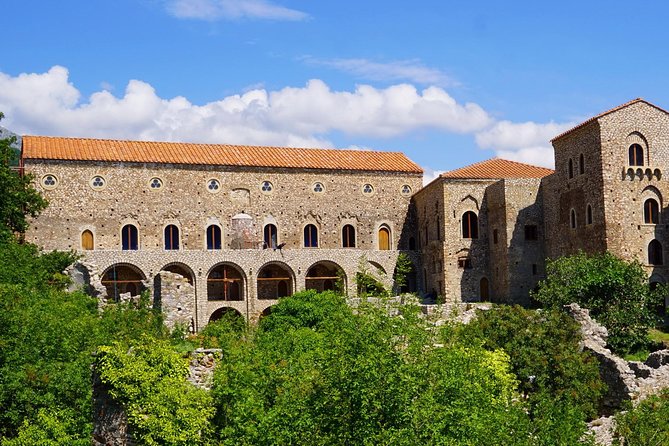
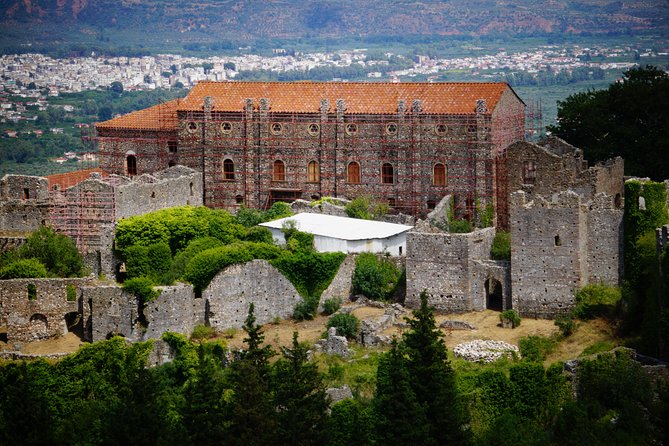
If you only remember one place from this day, make it Mystras. This is where the “two eras at once” feeling becomes real. Mystras is often called the ghost city, but it’s not abandoned. It’s a fortified citadel area with Byzantine medieval churches, plus Frankish influences woven into the architecture. That combination is a big reason it’s considered unique among Greek historical sites.
You’ll drive into the southern Peloponnese through mountain roads and arrive with your first real sense of scale. Then comes the walking. From the upper viewpoints, the citadel area gives you sweeping views of the surrounding region. As you move downhill, you encounter spaces tied to palace life and royal courtyards—so you’re not just looking at ruins. You’re moving through a complex that once functioned as a living center.
A standout detail: monasteries are still in use. Monks can show you around their small society, which changes the mood from sightseeing-only to something more human. Plan on 2 hours at the archaeological site.
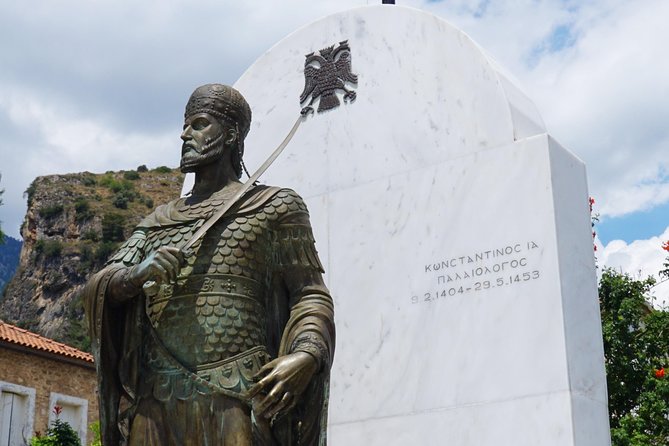
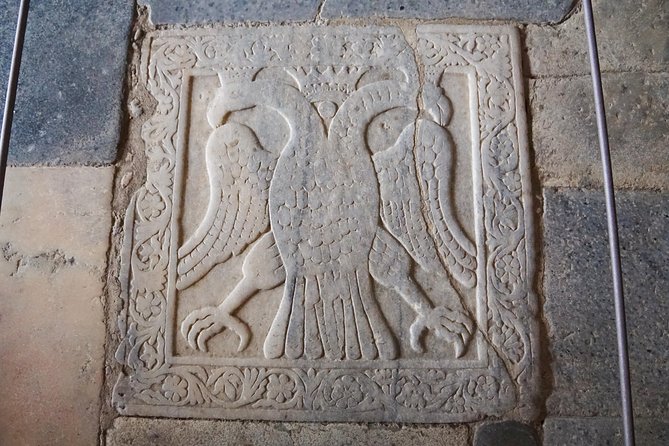
You’ll also have a strong historical moment at the chapel of St. Demetrios. On the floor survives a plaque showing a two-headed eagle, tied to the Byzantine symbol system. The story connected to it is about Konstantine Palaiologos kneeling before being crowned the last emperor of Byzantium.
A practical note for your expectations: parts of Mystras that are described as palaces can be affected by restoration status. What you should count on more reliably is the churches and the museum areas that are open to the public.
Sparta in a few focused stops: theater, kings, and Leonidas
Sparta is compact on this tour, and that’s not a bug. It’s a trade. Instead of trying to make you see every possible artifact and museum wing, you get the best “feel” moments in a limited time window.
You’ll spend about 30 minutes at the Acropolis and the ancient theater area. This is where the setting matters. The driver-style storytelling helps connect Sparta to what it represented: a society organized around military discipline and a very different worldview than Athenian democracy. You’ll also hear the bigger myth-and-king layers that connect Sparta to Helen of Troy and Menelaus in earlier Greek tradition, plus Leonidas and the 300 Spartans marching toward Thermopylae in 480 BCE.
Will you see everything Sparta offers in one day? No. But you’ll understand why people come here in the first place: the site is about atmosphere and alignment with the landscape rather than only about big-ticket museum objects.
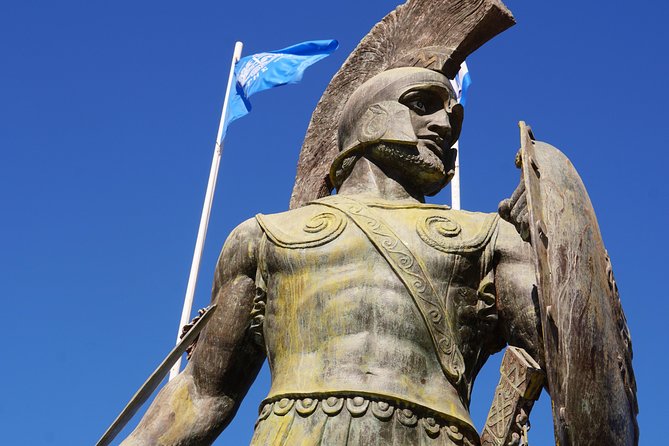
Then you move to the Leonidas Monument area. You’ll pass in front of the stadium and see the statue of King Leonidas marking the ending point of Spartathlon—the race route connecting Athens to Sparta, spanning 245.3 km. It’s short, about 10 minutes, but it lands because it connects ancient identity to a modern tradition you can actually picture.
If you want more museum time than this offers, consider adding a licensed guide and/or a longer stay. If you want a day that’s balanced—Mystras first, Sparta second—this pacing can work well.
Olive Oil Museum: why this stop isn’t just filler
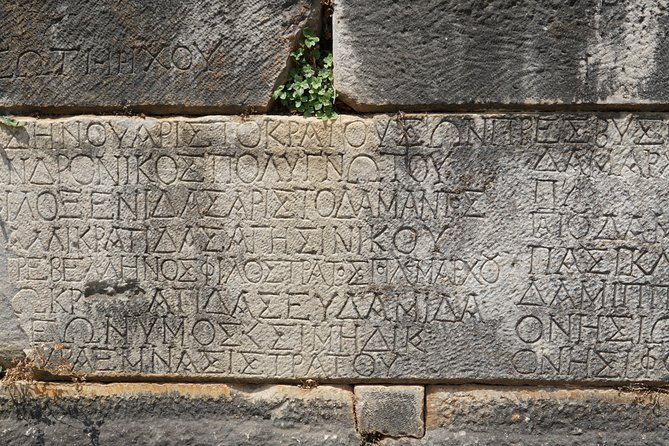
Not every tour throws in an agriculture-themed museum. This one does, and it makes sense. The Museum of the Olive and Greek Olive Oil gives you a practical look at what the olive tree has meant for Greek life.
You’ll have about 20 minutes here. Entrance isn’t included, but the time is short enough that it won’t steal from Mystras. It’s the kind of stop that helps you connect what you saw on stone and steep hills back to something everyday: food, trade, work, and local identity.
If you like cultural details that go beyond temples and battle dates, you’ll enjoy the change of pace.
- All Day Cruise -3 Islands to Agistri,Moni, Aegina with lunch and drinks included
★ 5.0 · 4,958 reviews





Driver vs licensed guide: know the difference before you book
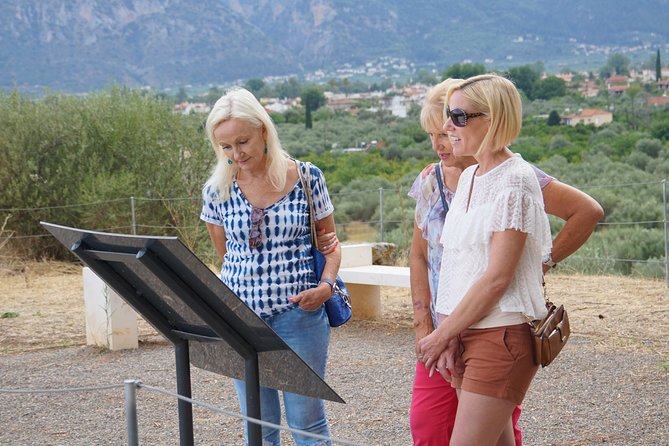
This tour includes a professional driver with deep historical storytelling, but there’s a hard boundary: the drivers are not licensed to accompany you inside sites or museums. That means you’ll get context on the drive and at key meeting points, but if you want a licensed person to lead you inside specific locations, you’ll need to hire one separately.
There is an option to request a licensed tour guide for an additional 390 € depending on availability. If you’re the type who loves museum labels and wants every inscription explained in real time, that add-on can be worth it.
If you’re more about atmosphere and walking—with your own curiosity doing the exploring—the driver narration may be enough.
What you actually pay for: the value check
The advertised price is $340.93 per person for a roughly 10-hour private day. That’s not cheap. But here’s where the value comes from:
- You’re paying for private hotel pickup and drop-off.
- You get private transportation across a long, practical route between Athens and the Peloponnese.
- You get water, comfort, and a driver who’s set up the timing to make the day feel efficient.
- You’re also paying for less stress. With a private setup, you’re not juggling a group bus schedule or sprinting between stops.
Then add the entrance fees you should budget. Entrance isn’t included and is listed as €34.00 per person for Ancient Sparta, Mystras, and the Olive Oil Museum. If you request the licensed guide add-on, that’s 390 €.
So the true cost picture is: private logistics plus day structure, then relatively modest additional site fees. If you’re comparing against bus group tours, the math usually works best when you’re traveling as a couple or small group who wants control of pacing.
Logistics that matter: shoes, timing, and day length reality
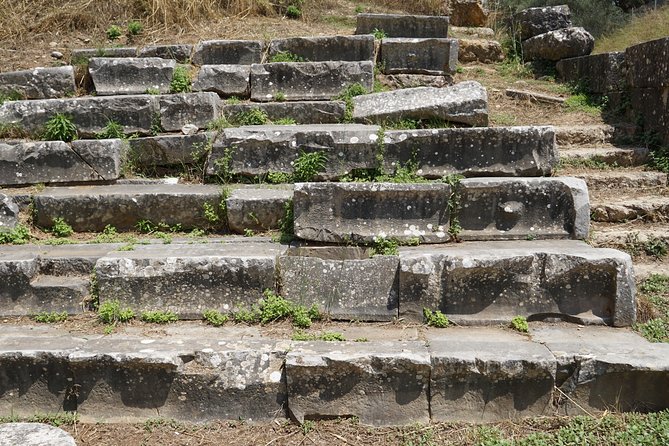
This is a long day. Even with good roads, you’re still spending real time on the route. The company notes duration can shift with the time of day and traffic. You should plan around the idea that you’ll be active, especially at Mystras, where walking around the citadel and moving through downhill areas can add up.
I’d treat comfortable shoes with solid grip as non-negotiable. People have specifically flagged the need for proper footwear for the Mystras walk and photo stops from viewpoints.
Also, bring patience for the fact that history doesn’t run on your watch. Some site closures can happen. In at least one documented case, the Sparta archaeological site was closed on the scheduled day, and the company responded after the fact about the situation. Plan to be flexible in your expectations and focus on what you can still access: the portions that are open, and the big atmosphere of the places you do reach.
Who should book this private Sparta and Mystras day
This tour fits well if you want:
- A one-day Sparta fix paired with Mystras, without turning it into a marathon of museums
- Private pacing and pickup from Athens
- A driver who tells stories during the drive, so you leave with a clearer mental map
- A mix of myth, Byzantine-era sites, and a practical olive-life context
It might not be the best match if you’re determined to spend lots of time inside every museum space with a licensed educator leading every room. In that case, you should plan on hiring a licensed guide add-on or choosing a different format.
Should you book Ancient Sparta and Mystras from Athens?
If you’re short on time in Athens and you want the most meaningful “South Greece” day possible, I’d book this. The big reasons are the private pickup, the Mystras emphasis, and the way the day is paced so you’re not stuck in a bus line.
Do it with one clear expectation: Mystras is where your heart will go, Sparta is where you’ll get the key icons and atmosphere, and the olive museum keeps the day from being only about battles. If you’re traveling on a weekday that could affect access, build flexibility into your day plan. Otherwise, this is a strong way to see why people keep coming back to this corner of Greece.
FAQ
How long is the tour?
The tour is listed at about 10 hours (approx.), and the exact timing can change with the time of day and traffic.
Is hotel pickup and drop-off included?
Yes. You get hotel/AirBnb/port pickup and drop-off from Athens.
Are entrance fees included in the price?
No. Entrance fees are not included. The listed entrance cost is €34.00 per person for Ancient Sparta, Mystras, and the Olive Oil Museum.
Does the tour include a licensed guide inside sites?
No. The included driver is not licensed to accompany you inside sites or museums. A licensed tour guide can be arranged on request for an additional 390 € depending on availability.
Is this a private tour?
Yes. It’s a private tour/activity, meaning only your group participates.
What language is the tour in?
The tour is offered in English.
Can I do bungee jumping at the Corinth Canal?
Bungee jumping is mentioned as an option on some days. It’s not guaranteed, and it’s optional if available.
How far in advance should I book?
On average, this experience is booked about 60 days in advance.
Can I get a full refund if I cancel?
Yes. Free cancellation is available up to 24 hours before the experience start time for a full refund.




More Private Tours in Athens


More Tours in Athens


More Tour Reviews in Athens
- All Day Cruise -3 Islands to Agistri,Moni, Aegina with lunch and drinks included
★ 5.0 · 4,958 reviews