REVIEW · ATHENS
Ancient Corinth, Mycenae, Epidaurus, Nafplio Full Day Private Tour From Athens
Book on Viator →Operated by CRISPY LOCAL MONOPROSOΡΙ Ι.Κ.Ε. · Bookable on Viator
Peloponnese in a single, well-run sweep beats the usual Athens chaos. This private full-day outing strings together three UNESCO World Heritage sites plus the big sights of Nafplio, with a driver who fills the long stretches with history.
I especially like the hassle-free private transportation—you get picked up from your Athens accommodation and dropped back at the end, so the day stays focused on places instead of logistics. I also like that the driver provides historical facts while you ride, so even the short stops like Corinth Canal feel meaningful, not just scenic.
One thing to consider: most major archaeological entrances are not included, so you’ll want to budget for tickets (Corinth, Mycenae, and Epidaurus each cost separately).
In This Review
- Key things to know before you go
- Private Peloponnese day trip from Athens: what you’re really buying
- Corinth Canal first: a 10-minute wow with zero pressure
- Ancient Corinth plus its museum: Paul’s footsteps meet big-city ruins
- Mycenae: Lion Gate to the Tomb of Agamemnon
- Epidaurus theatre and Asclepius sanctuary: acoustics with a purpose
- Nafplio with Venetian castles: harbor views, lunch time, and 913 steps
- Price and tickets: where the real value is
- Timing and pacing: long days, smart breaks
- Who should book this UNESCO-focused private route
- Should you book this Athens-to-Peloponnese private day trip?
- FAQ
- What is the duration of this private tour?
- How early does the tour start, and do they pick you up in Athens?
- Is the tour price all-inclusive for admissions?
- Which UNESCO sites are included in the day?
- Is this tour private or shared with other groups?
- Can you cancel for a full refund?
Key things to know before you go
- Private, not crowded: it’s just your group in the car for the full route
- Driver-led context: you get historical facts during the drive, not a site-by-site guide license
- Fast UNESCO check-off: Ancient Corinth, Mycenae, and Epidaurus are all handled in one long day
- Ticket extras add up: major site admissions are separate from the tour price
- Lots of walking, some stairs: Nafplio includes serious step climbing at Palamidi
- You can shape the pacing: the schedule allows for some personal time at the sites
Private Peloponnese day trip from Athens: what you’re really buying
This is built for people who want the Peloponnese highlights without turning the day into a bus-and-train puzzle. The price is listed per person, but the value comes from the format: you’re paying for a private vehicle and a driver who keeps the whole loop moving from Athens out to the classic sites and back.
The tour runs about 9 to 10 hours, starting at 8:00am, with pickup offered from any accommodation in Athens. You’ll ride in an air-conditioned luxury car or minivan, with bottled water included. If you get motion-sick easily, plan like you would for any full-day route: keep your seat comfortable and stay hydrated.
A key detail: the driver shares history facts, but you’re not automatically getting a licensed archaeological guide inside the sites. If you want that deeper commentary, it’s offered upon request and depending on availability. For many people, that’s exactly the right balance—enough context to understand what you’re looking at, without paying for a formal guide at every single stop.
You can also read our reviews of more private tours in Athens

Corinth Canal first: a 10-minute wow with zero pressure
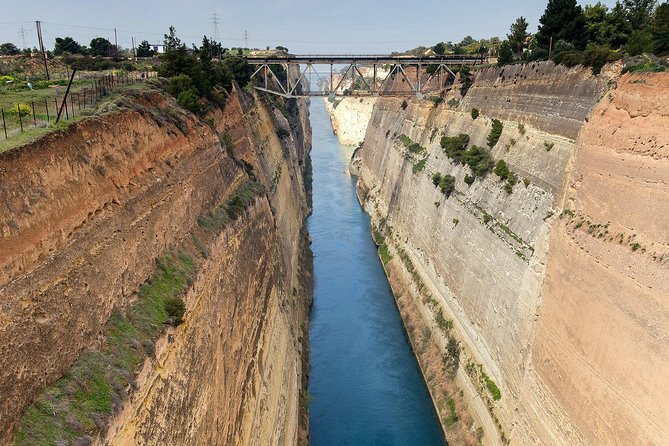
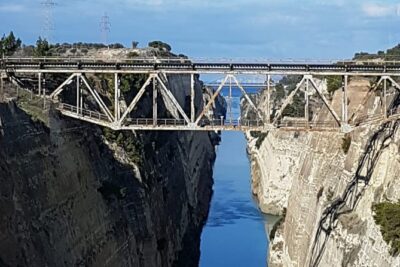
The day starts with a quick stop at Corinth Canal. It’s only around 10 minutes, and there’s no admission ticket required for this stop. Even so, it’s a strong start because the canal is not just scenic—it explains why this whole region matters.
You’ll see the canal connecting the Gulf of Corinth with the Saronic Gulf through the narrow Isthmus of Corinth. It’s 6.4 kilometers long and about 21.4 meters wide at its base. The narrow width means many modern ships can’t pass, so what you’re watching is usually vessels going through a tight corridor of steep limestone walls.
Practical tip: bring your camera-ready attitude for the view from higher ground. The stop is short, so don’t waste time deciding whether you want photos—commit fast, take them, then move on.
Ancient Corinth plus its museum: Paul’s footsteps meet big-city ruins
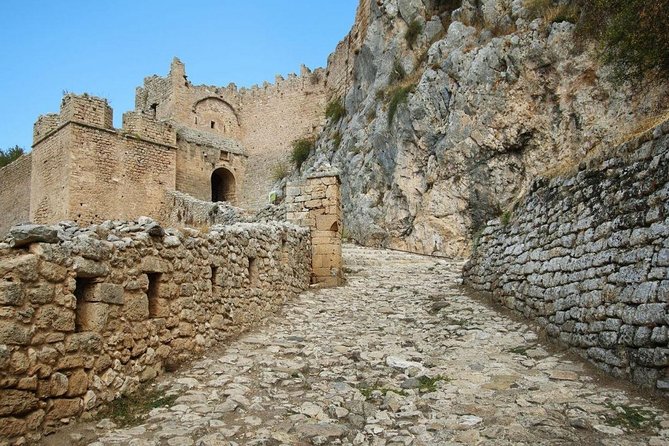
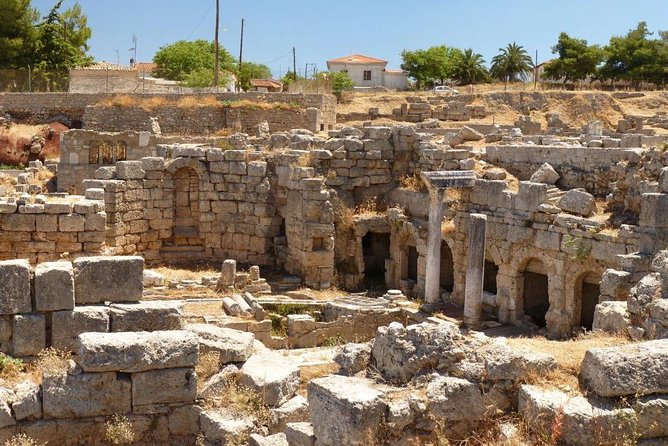
Next comes Ancient Corinth for about 1 hour, followed by the Archaeological Museum of Corinth for about 30 minutes. Entrance for Ancient Corinth and the museum is not included, so plan on adding ticket costs if you want both.
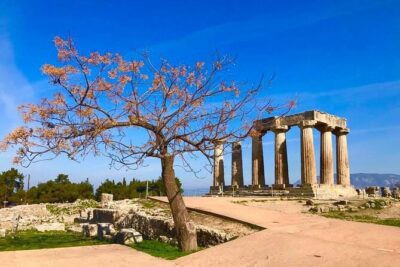
Ancient Corinth was a major city-state on that same Isthmus of Corinth, halfway between Athens and Sparta. What makes it hit on a personal level is how often Corinth shows up in the Christian story. Saint Paul’s letters to the Corinthians are tied to this area, and Corinth is also mentioned in Acts during Paul’s missionary travels. If you’ve read those passages, you get a physical sense of the setting instead of just names on a page.
Then there’s the bigger archaeological story: Corinth was one of the largest Greek cities, with a reported population of 90,000 in 400 BC. The Romans demolished Corinth in 146 BC, rebuilt it in 44 BC, and later made it a provincial capital. That layered timeline is one reason Ancient Corinth feels like more than a single snapshot.
Museum time is useful here. You’ll see how archaeologists interpret the ground truth behind the ruins, and the museum’s purpose is straightforward: it was built (1931 to 1932) to display results from excavations connected to the site.
Drawback to plan around: this area is not a quick stroll through one highlight. You’ll get value if you’re willing to walk and look for details, and you may want to take a short break if the midday sun is intense.
Mycenae: Lion Gate to the Tomb of Agamemnon
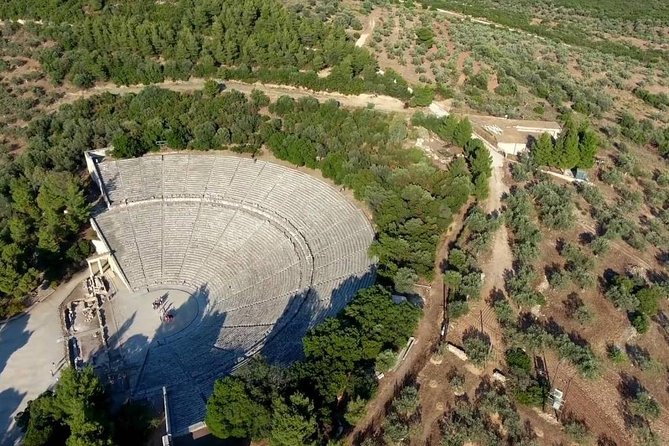
Mycenae is the big one for many first-time visitors. You get about 1 hour at Mycenae itself, where admission is listed as free for this stop. You’ll then have time for the Archaeological Museum of Ancient Mycenae (about 30 minutes), and a short stop at the Citadel and Treasury of Atreus (about 10 minutes). Museum admission is not included, and the Mycenae ticket cost is listed separately.
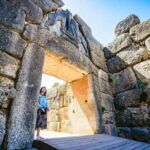
Mycenae is famous as the fortress citadel linked to mythical King Agamemnon, and the name even gave its label to the Mycenaean civilization (roughly 1600 BC to 1100 BC). At its peak around 1350 BC, the citadel and lower town are described as having about 30,000 people across 32 hectares. That’s large enough to help you imagine a real power center, not just a fortress for show.
What you’ll want to watch for:
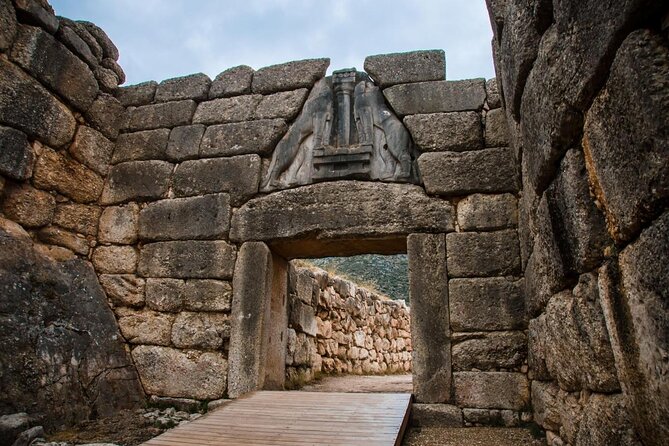
- Lion’s Gate, a landmark entrance
- Cyclopean walls, the massive stone construction style that still feels unreal
- The Tomb of Clytemnestra, plus other structures tied to the myth-and-empire story
- The broader sense of Mycenae as a military stronghold dominating parts of southern Greece, Crete, the Cyclades, and southwest Anatolia
Then comes Treasury of Atreus, a tholos or beehive tomb on Panagitsa Hill dating to around 1250 BC. One detail that makes this stop memorable is the scale: the stone lintel above the doorway weighs 120 tons, and the dimensions listed for the lintel are enormous. It’s the kind of fact that changes how you look at the entrance.
Practical tip: because this is an important site, you’ll get more out of it if you slow down for a few minutes to take in the walls and the gate before you start chasing individual photos.
Epidaurus theatre and Asclepius sanctuary: acoustics with a purpose
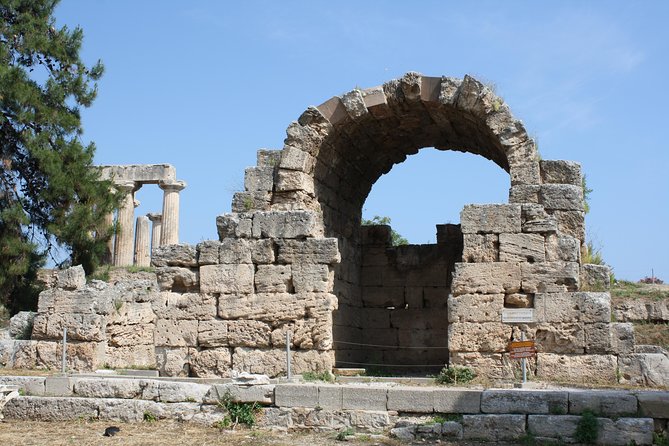
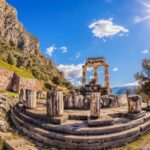
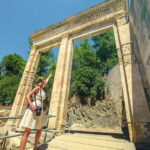
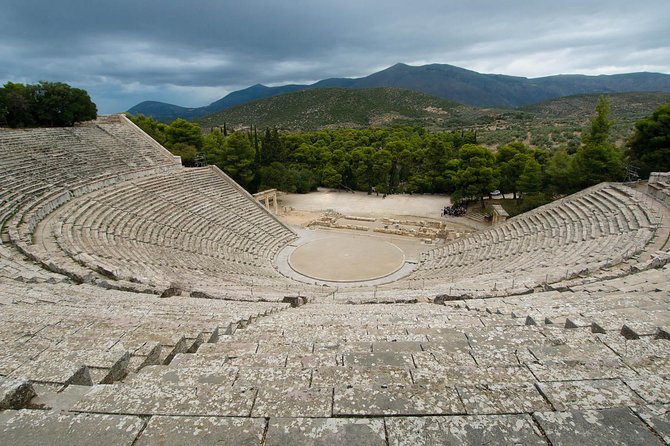
The schedule keeps momentum by moving you from Mycenae to Epidaurus, starting with the Ancient Theatre of Epidaurus (about 1 hour) and then the Sanctuary of Asklepios (about 20 minutes). The theatre and sanctuary admissions are not included, with Epidaurus ticket costs listed separately.
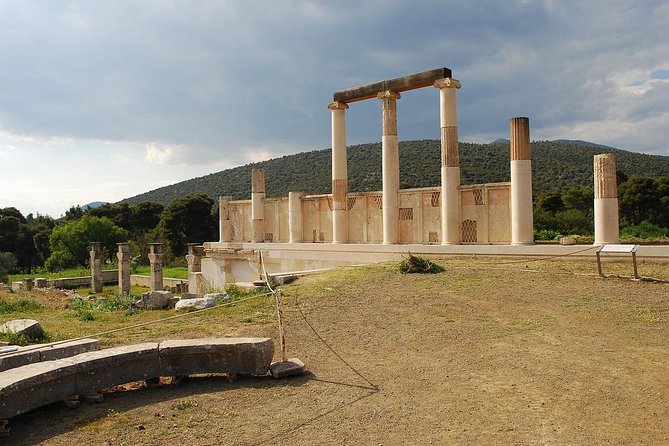
The theatre is described as the most perfect ancient Greek theatre for acoustics and aesthetics, and it’s easy to see why people care. It retains the typical Hellenistic structure with the theatron, orchestra, and skene. You’re also told something useful for context: unlike many Greek theatres, it didn’t suffer Roman-era modifications.
Even if you’re not an audio nerd, this is where you start to appreciate ancient architecture as design for real human experience. You can stand in the space and feel how the layout is meant to carry sound and sightlines.
Then you shift to the Sanctuary of Asclepius, the main holy site dedicated to the god associated with medicine. The temple there is described as built in the early 4th century BC, and the sanctuary is compared to major rival cult sites like Olympia and Delphi. This helps you understand that epidaurus was not just a pretty ruin; it functioned as a place people came to in a serious cultural world.
Practical consideration: the itinerary’s timing here is tight enough that you’ll need to choose your focus. If theatre is your priority, spend your attention there first, then treat the sanctuary time as a shorter, meaningful add-on.
You can also read our reviews of more tours and experiences in Athens
- All Day Cruise -3 Islands to Agistri,Moni, Aegina with lunch and drinks included
★ 5.0 · 4,958 reviews


Nafplio with Venetian castles: harbor views, lunch time, and 913 steps
By the time you reach Nafplio, the tour finally gives you a chance to slow down a bit. You have about 2 hours here, with time for lunch, coffee, or shopping. Admission isn’t listed for this part, and the town is described as the so-called Naples of the East, known for Venetian architecture, cobbled squares, and castles with commanding views over the Argolic Gulf.
Nafplio is also historically loaded. It served as capital of the First Hellenic Republic and the Kingdom of Greece from the start of the Greek Revolution in 1821 until 1834, which turns this port town into more than a pretty stop on the way back.
The itinerary includes harbor time and an opportunity to photograph Bourtzi, the Venetian castle in the middle of Nafplio’s harbor. After that, you’ll move toward forts, including Palamidi Castle (about 30 minutes) built by the Venetians during their occupation period 1686 to 1715.
Here’s the workout reality: the route to Palamidi is described as 913 steps from the town, with locals saying there are 999 steps to reach the top. The tour doesn’t frame it as optional, so plan your body accordingly. If you think you might want to rest, consider doing it slowly and taking breaks as needed. The views over the Argolic Gulf are the payoff.
The day also points you toward Acronauplia, the oldest part of Nafplio. It was a town on its own until the 13th century, and later became part of the fortifications under Venetians and Franks. It’s also noted that part of it was used as a prison, and later a hotel complex was built to take advantage of the viewpoint. Even if you don’t go deep into buildings, the setting gives you a strong sense of how the town was defended.
Price and tickets: where the real value is
At $259.03 per person, this tour isn’t the cheapest way to see the Peloponnese. But it’s also not paying for a travel headache. You’re buying convenience: private car, air-conditioning, pickup and drop-off from your Athens accommodation, and a driver who gives you context along the way.
Now add the separate admissions. The tour lists these as not included:
- Mycenae: €20 per person
- Ancient Corinth: €15 per person
- Epidaurus: €20 per person
That totals €55 for the major listed archaeological admissions. Depending on current exchange rates, that changes the final figure, but it’s still fairly predictable. The canal stop is free, and Nafplio is a free town stop. Mycenae’s citadel entrance is listed as free within the itinerary timing, while the museum has separate admission.
This is the part where you should do quick math based on your group size. Because it’s private, you get the advantage of splitting the car experience across your own group. If you’d rather not rent a car, navigate parking, and keep your own timing together, paying for a driver-led plan often feels like the best kind of spending.
My practical advice: treat the tour price as transportation + time-saving, then budget the archaeological sites on top. It keeps surprises low and helps you decide how much to snack and shop in Nafplio.
Timing and pacing: long days, smart breaks
This is a classic 9 to 10 hour day trip: you’ll be on the road long enough that you’ll want the ride to be comfortable. The vehicle is air-conditioned and includes bottled water, which helps more than it sounds like.
Pacing is built into the itinerary: quick hit at Corinth Canal, longer structured time at Ancient Corinth, then Mycenae and Epidaurus, then a more flexible human-hour in Nafplio. That matters because the sites aren’t equal in energy. Nafplio gives you a chance to reset with lunch and harbor views. Palamidi is the one that can drain you if you’re not ready for stairs.
A real-world note from the guide experience: drivers on this route are often praised for being safe and for keeping things on schedule. People also report that the pace allows for exploring without feeling constantly rushed. That matches the itinerary’s structure: most stops have defined time windows, but the day isn’t described as breakneck.
One heads-up for personal comfort: one past comment complained about uncomfortable conversation and boundary-crossing remarks. If you prefer a strictly historical tone and nothing personal, you should set that expectation right at pickup. You’re in a private car for hours, so your preferences matter.
Who should book this UNESCO-focused private route
This tour makes sense if you want:
- Three UNESCO sites in one day without juggling logistics
- A private ride that keeps the day from feeling like a scavenger hunt
- A historical narrator in the car so the ruins connect to the story
- A mix of archaeology and a real town break in Nafplio
It may not be ideal if you want lots of free-roaming independence. Even though you get time to explore, the itinerary is structured. You’re trading absolute spontaneity for efficiency.
It also works best for people who can handle a long day and don’t mind stairs—especially with Palamidi in the mix. If stairs are a hard limit for you, consider whether you’d rather skip Palamidi or whether you’d feel comfortable taking it very slowly.
One more fit point: if you’re especially interested in the stories tied to Paul and the Corinth setting, Ancient Corinth is the anchor stop of the day. If you’re more focused on architecture and monumental stonework, Mycenae and the Treasury of Atreus will likely be your favorite.
Should you book this Athens-to-Peloponnese private day trip?
I’d book it if your top priority is value through time. You get a tight loop of highlights—Corinth Canal, Ancient Corinth, Mycenae, Epidaurus, and Nafplio—without the stress of planning transport between far-apart sites. The private format plus driver-led context is the real selling point.
Before you go, do three things:
- Budget the site tickets (Corinth €15, Mycenae €20, Epidaurus €20 per person).
- Wear shoes for walking and expect stairs at Palamidi.
- If conversation style matters to you, say so early.
If you want an easy, structured Peloponnese day that still feels personal, this itinerary is a strong bet.
FAQ
What is the duration of this private tour?
The tour lasts about 9 to 10 hours.
How early does the tour start, and do they pick you up in Athens?
It starts at 8:00am, and pickup is offered from any accommodation in Athens.
Is the tour price all-inclusive for admissions?
No. Archaeological site admission fees are not included. The listed fees are €15 for Corinth, €20 for Mycenae, and €20 for Epidaurus.
Which UNESCO sites are included in the day?
The tour is described as checking off three UNESCO World Heritage sites, tied to the classical sites of Ancient Corinth, Mycenae, and Epidaurus.
Is this tour private or shared with other groups?
This is a private tour/activity, and only your group participates.
Can you cancel for a full refund?
Yes. You can cancel up to 24 hours in advance for a full refund. If canceled due to poor weather, you’ll be offered a different date or a full refund.

More Private Tours in Athens

More Tours in Athens




More Tour Reviews in Athens
- All Day Cruise -3 Islands to Agistri,Moni, Aegina with lunch and drinks included
★ 5.0 · 4,958 reviews