REVIEW · ATHENS
Acropolis Group Tour in German or Dutch
Book on Viator →Operated by Little Owl Tours · Bookable on Viator
That first metro stop sets the tone. You head straight from the Acropolis metro exit into a tight, story-led walk of the most important monuments on the hill, with a licensed guide and small groups. It is built for people who want more than photos—you get the myths, the context, and the little architectural surprises that make the Acropolis click.
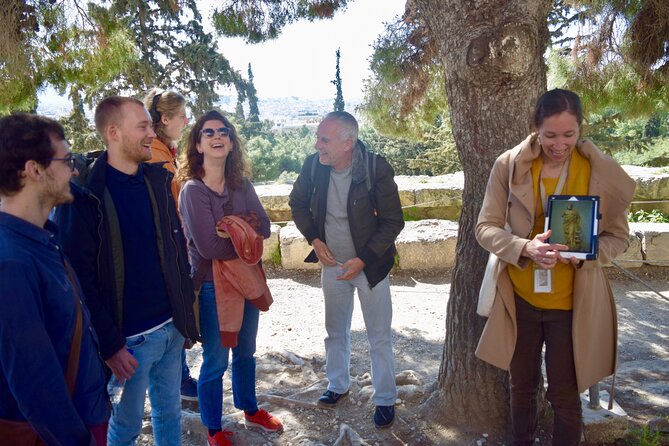
I especially like the small group size (max 20) because it feels easy to follow, ask questions, and keep moving without losing the thread. I also like the guide style: colorful storytelling that puts each building into its historical and mythological setting, including details like carved seat names at the theatre and the way the Parthenon’s design isn’t as rigid as it looks.
The main drawback to plan for is that entrance fees are extra (listed as 30 EUR per adult) and you also need solid weather, since the tour is outdoors and requires it.
In This Review
- Key highlights worth your time
- A Small-Group Acropolis Story in German or Dutch
- Where You Start at the Metro and Where You Finish on the Hill
- The Real Value: You Get the Guide’s Context, Not Just Sightseeing
- Stop 1: Acropolis Entrance, Full Pass, and the 360° Reward
- Stop 2: Theatre of Dionysus Eleuthereus and the Birth of Performance
- Stop 3: Temple of Athena Nike, a Small Stop with Big Meaning
- Stop 4: Propylaea, the Monumental Gateway Moment
- Stop 5: Parthenon, Curves Instead of Straight Lines
- Stop 6: Erectheion and the Caryatids, Plus the Athena vs Poseidon Myth
- Stop 7: Herod Atticus Odeon, a Roman Concert Hall with Modern Echoes
- Price and Tickets: Is $46.26 Good Value for the Acropolis?
- Who This Tour Suits Best (and Who Might Want Something Else)
- Should You Book This Acropolis Group Tour?
- FAQ
- What languages is the Acropolis group tour offered in?
- How long is the tour?
- Where do I meet the guide?
- Are entrance fees included in the price?
- How big are the groups?
- Can I cancel, and is it free?
Key highlights worth your time
- German or Dutch guided visit: one clear language track, with a licensed guide focused on stories, not just facts
- Max 20 people: enough group energy to be lively, small enough to stay personal
- Signature 360° Acropolis view: built right into the route so you don’t have to hunt for the best angle
- Theatre, temples, and the Parthenon in one run: you see the key monuments without doing a full day of wandering
- Caryatids plus a myth showdown: Athena vs Poseidon is part of what the guide explains
- Herod Atticus Odeon with modern concert vibes: even if you don’t attend a show, you learn what this space was built for
A Small-Group Acropolis Story in German or Dutch
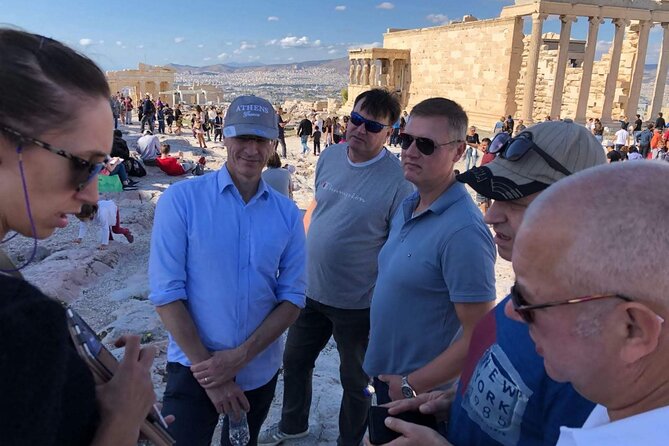
If Athens is your first big city stop, the Acropolis can feel like an overwhelming scrapbook of stone. This tour helps you sort it out fast by guiding you through the hill in a logical order and then tying each monument to the myth and the people behind it.
You’re not stuck listening to a lecture either. The approach is to tell colorful stories and connect them to what you’re looking at—so when you stand by a theatre seat or a temple doorway, you understand what the place was for. The tour language is German or Dutch, which is a big deal: you get a smoother experience when the guide’s explanations match your language.
Group size matters here. With a maximum of 20 people, you’ll have a better chance of hearing the guide clearly and keeping your pace aligned. And if you’re traveling with kids, this format tends to work well, since one guide named Jessica is specifically praised for being kind, patient, and good at sharing interesting stories in a family-friendly way.
One more practical note: the tour is run by Little Owl Tours. That matters because it typically means you’re dealing with a structured meeting point, a real guide, and a route designed to move efficiently across the hill.
You can also read our reviews of more tours and experiences in Athens.


Where You Start at the Metro and Where You Finish on the Hill
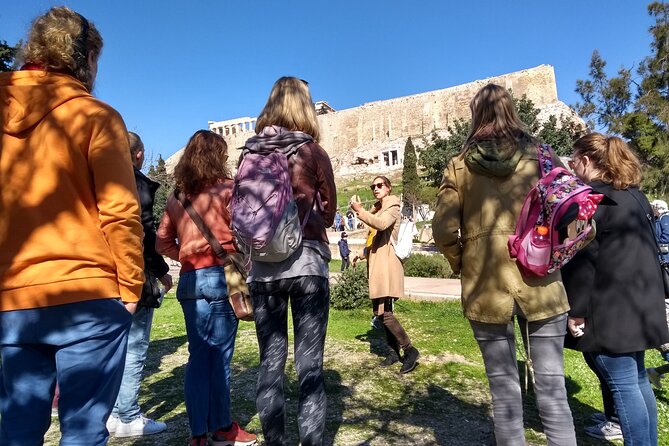
This is not a bus tour. It is a guided walk that starts at the exit of the Acropolis metro station—Exit Makriyianni / Dionysiou Areopagitou—and then leads you to the entrance of the site.
That starting point is useful because it can save time and stress. Instead of trying to guess where the tour begins, you meet directly at a transit hub, then follow the guide to the monuments.
The tour ends on top of the Acropolis Hill. That’s great if you want to finish with views and keep exploring independently right after. It can also be a consideration if you’re thinking about how you’ll get down afterward—plan for stairs and uneven walking, since you’re finishing at elevation.
Timing-wise, the total duration is about 1 hour 30 minutes. That is short enough to fit into most itineraries, but long enough for a guided sequence through the main highlights. If you like to linger and take lots of your own photos, you may want extra time before or after.
The Real Value: You Get the Guide’s Context, Not Just Sightseeing
At $46.26 per person, this isn’t an expensive add-on for Athens. The value comes from what’s included: a licensed guide and a guided route where each stop has a reason.
What’s not included is the entrance ticket. Entrance fees are listed as 30 EUR per adult, and the guide team will arrange them for you. That matters because it keeps your time from turning into a ticket line search, and it lets the tour stay on its planned rhythm.
Also, bring bottled water if you can. Food and drinks aren’t included, and a bottle of water is strongly recommended. On the Acropolis, the sun can make a 90-minute walk feel longer than it is, especially if you’re hopping between bright stone surfaces and shaded explanations.
The tour’s greatest strength is mental momentum. You don’t just see the Parthenon and move on. You see the theatre where performance traditions took shape, the small temple connected to victory, and the gate structures that control movement on the hill. When you do it in this order with a guide, the hill turns into a story you can remember.
Stop 1: Acropolis Entrance, Full Pass, and the 360° Reward
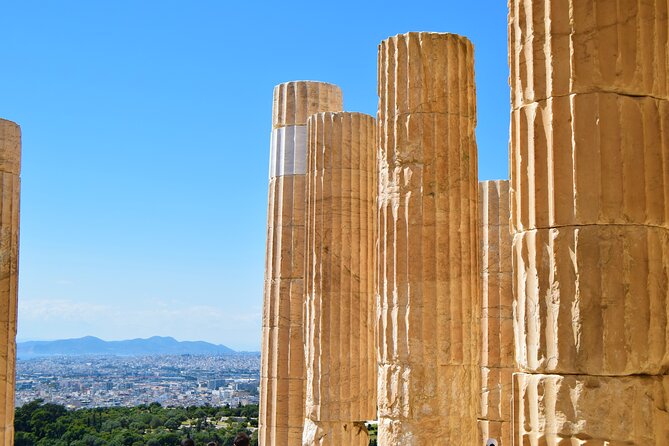
Your tour begins with the guide leading you from the metro-area exit to the entrance of the site. From there, you pass key monuments on the hill as you move toward the viewpoint, and you get a stunning 360-degree view over Athens at the top.
This is the part where the Acropolis stops being a single building and becomes a city-within-a-city. From up high, you can pick out the scale of Athens—the mix of modern neighborhoods and ancient foundations becomes obvious fast.
The time allocation is about 20 minutes, so you’ll have enough room to take in the view and still hear how the guide frames what you’re seeing. If you care about photos, aim to stand slightly off the busiest foot traffic so you can orient yourself, then capture a few frames while the group is still positioned for viewing.
Possible drawback: since the tour is only 90 minutes, the first stop is designed to get you oriented, not to let you fully explore every angle of the hill. If you want to spend a long time photographing from multiple points, treat this as a smart warm-up, then extend your sightseeing after.
Stop 2: Theatre of Dionysus Eleuthereus and the Birth of Performance
Next you visit the Theatre of Dionysus Eleuthereus—the birthplace of ancient Greek theater. This is not just a pretty ruin. It connects the origins of theatre to the worship of Dionysos, the god associated with wine.
One of the coolest on-site details here is that you can admire the ancient marble seats with incised names. That tiny, human touch is what makes a theatre feel real. You’re not looking at a generic “old building”—you’re looking at a place where people sat, identified themselves, and participated in civic life through performance.
The stop lasts about 15 minutes, which is just right for the setting plus explanation. If you tend to enjoy cultural context—how ideas grew and spread—this stop will likely feel like one of the most satisfying pieces of the tour.
Tip for getting the most out of it: when the guide explains how theatre developed from Dionysos worship, look for how the seating area shapes the experience. Even without a performance, the design communicates why crowds could gather and share the same story at once.
- All Day Cruise -3 Islands to Agistri,Moni, Aegina with lunch and drinks included
★ 5.0 · 4,958 reviews




Stop 3: Temple of Athena Nike, a Small Stop with Big Meaning
You then reach the Temple of Athena Nike, dedicated to the goddess associated with victory. The tour highlights how Nike’s presence influenced a famous sport brand, which gives you a modern bridge to what might otherwise feel like distant mythology.
This stop is short—about 5 minutes—so you won’t get a long, slow walk around it. Still, it’s worth it because the temple’s role is specific. It’s not just another structure on the hill; it’s connected to the idea of victory and the way Athenians imagined strength and success through divine symbolism.
The value here is speed with interpretation. Even in a few minutes, you should leave understanding why this temple matters, rather than just remembering its size.
If you’re the type who wants every stop to feel equally long, you might find this one brief. But in a 90-minute format, the quick hit is intentional: it keeps the sequence moving while still covering the essentials.
Stop 4: Propylaea, the Monumental Gateway Moment
Now you approach Propylaea, the monumental entrance gate. This is basically the ceremonial threshold that shapes how you experience the rest of the Acropolis.
You pass through the gate to reach the top, and the guide points out the huge marble block up close. That close-up moment helps you understand the scale and craftsmanship without needing to guess.
This stop is about 5 minutes, so again, it’s designed as a transition with meaning. You’ll feel the shift from “approaching ruins” to “entering the sacred zone.”
One consideration: if you’re sensitive to crowds or timing, this portion can feel like a checkpoint in the flow of visitors. But the benefit of having the guide manage the movement is that you’re not constantly deciding where to stand or when to go next.
Stop 5: Parthenon, Curves Instead of Straight Lines
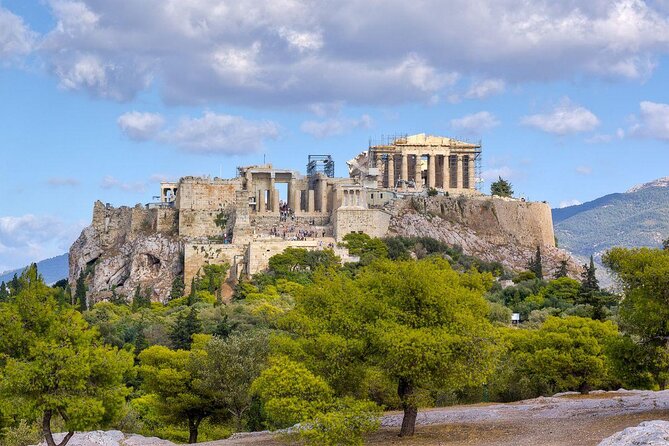
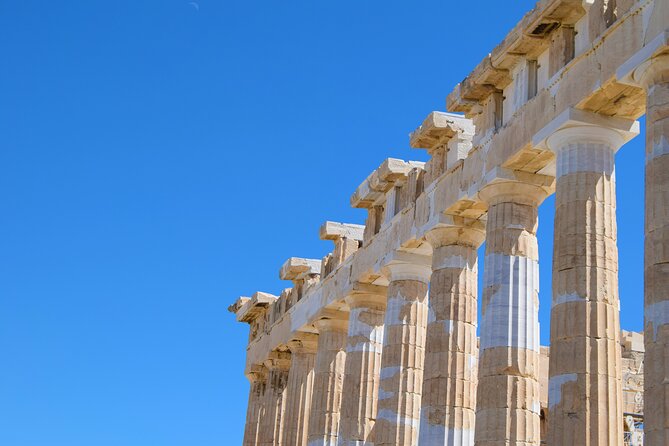
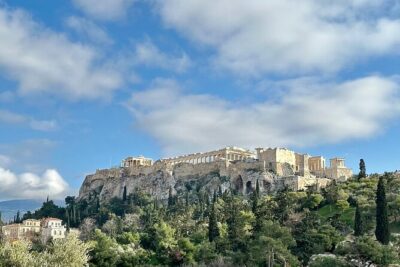
The main event arrives at the Parthenon, the biggest temple on the Acropolis hill and the one dedicated to Athena.
Here the guide makes a key point: this enormous building does not have straight lines. That might sound like a trivia note, but it changes how you see the Parthenon. Instead of thinking the architects made something stiff and geometric, you start noticing how the design is meant to look right to human eyes.
The tour time for this stop is about 20 minutes, which is a solid chunk. You’re getting enough time to see the building with intention, rather than only snapping a photo and moving on.
If you enjoy architecture as a language—how buildings communicate power, order, and belief—this stop will land. The tour also mentions that the design inspired architecture throughout the world. Even without a technical background, you can sense how influential a design becomes when it solves real visual problems.
Drawback to keep in mind: because you’re in a short guided window, you may not have time to step away and study every section in detail. Use this as your guided orientation; then if you love it, plan an independent second visit with more time.
Stop 6: Erectheion and the Caryatids, Plus the Athena vs Poseidon Myth
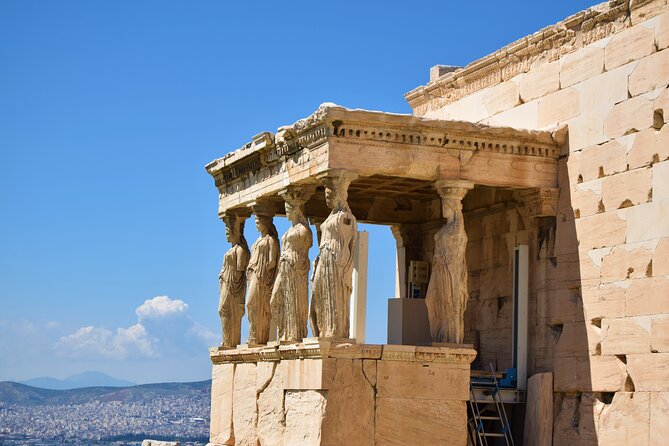
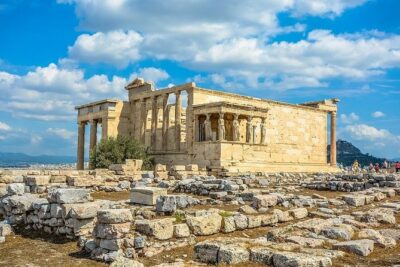
The next stop is the Erectheion, known for the Caryatids—female columns. This is one of those places where the guide’s explanation turns art into story.
The tour also includes an interesting detail: learn what happened to one of the Caryatid columns and where it is nowadays. The guide explains it on site, so be ready to look closely while listening rather than trying to multitask with photos.
Another layer is myth. You’ll hear the battle story between Athena and Poseidon, connected to the temple’s significance. This is where the Acropolis becomes more than a collection of temples. The stone structures link to myths about claims to the land, divine power, and civic identity.
The Erectheion stop is about 10 minutes, which is fairly efficient. It’s long enough to understand why the Caryatids are famous and why the myth matters, without turning it into an exhausting detour.
Tip: when you look at the Caryatids, focus on how they serve as both structural support and visual storytelling. The name alone doesn’t explain the effect; the guide does.
Stop 7: Herod Atticus Odeon, a Roman Concert Hall with Modern Echoes
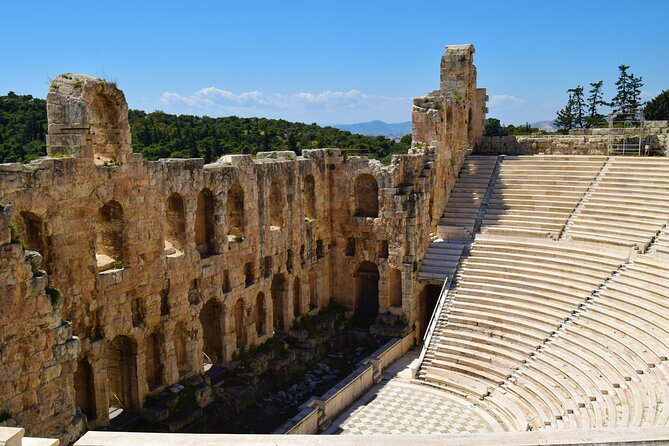
Finally, you see the Herod Atticus Odeon, a restored Roman concert hall built in AD 161 by wealthy Roman Herodes Atticus in memory of his wife Regilla.
Even if you aren’t planning to attend a live show, the tour gives you the feel of a space that still matters. The information shared includes that you can still see great artists like Sting or Patti Smith perform during the summer. That helps you picture the venue not as dead stone, but as performance infrastructure with a long life.
This stop is about 10 minutes. It’s not about a deep dive into Roman theatre design; it’s about helping you connect the dots between ancient performance culture and what Athens kept reusing, restoring, and living with over centuries.
If you love music, this is a particularly fun ending. The idea that you’re standing in a hall that has hosted both ancient gatherings and modern headline acts can make the whole hill feel more alive.
The only real caution: because your tour is short, you’ll want to arrive comfortable and ready to keep moving. This is not a stop where you can slowly wander and lose track of time.
Price and Tickets: Is $46.26 Good Value for the Acropolis?
Let’s talk value in plain terms. You pay $46.26 per person for the guided tour, and you’ll also need the entrance ticket, listed as 30 EUR per adult (arranged for you by the tour team).
So you’re not paying only for “being shown the sites.” You’re paying for a licensed guide with a story framework and a tight route that covers the biggest names: Acropolis views, theatre origins, Nike, Propylaea, the Parthenon, Erectheion, and the Odeon.
If you were to do this on your own, you would still need the ticket and you’d still have the same physical experience—walking, heat, crowds, and visual overload. The difference is that a good guide tells you what to notice and why it matters, and that’s exactly what this tour is designed to do.
Also, the group size is small. With max 20 participants, you’re less likely to feel lost in a sea of people while the guide tries to speak over everyone. That improves the experience quality in a way that’s hard to measure but easy to feel.
One more detail: water and snacks aren’t included. If you’re not already planning to buy water on your own, budget for it. But that’s a small add-on compared to the time you save with entrance arrangement and the guided sequence.
Overall, if you want a smart, efficient Acropolis overview with real context, the price structure looks fair. If you’re already fluent in Greek history and architecture and prefer self-paced exploration, you might not need a guide for just 90 minutes. But most people benefit from the structure.
Who This Tour Suits Best (and Who Might Want Something Else)
This is a good fit if you want an Acropolis highlights loop without sacrificing meaning. The story-led approach works well for first-timers and people who feel overwhelmed when everything is labeled but nothing is explained.
It’s also a solid choice for families. The feedback includes praise for the guide being especially patient with children and making the stories engaging, not just long explanations. In short, it’s kid-friendly in the way that matters: you can keep the attention of younger listeners without dragging a slow pace.
Pick this tour when:
- You’re aiming to see the key monuments in about 90 minutes
- You like myths and want them connected to what you’re standing in front of
- You prefer a small group and a licensed guide
You may want a different option if:
- You need a full, slow exploration of one monument (this is a fast-but-informed route)
- Your language preference isn’t German or Dutch
- Weather is questionable—this tour needs good conditions, since it’s outdoors
Also, keep in mind the route ends on top of the hill. If you don’t like stairs, plan your next move carefully so the finish doesn’t feel like an afterthought.
Should You Book This Acropolis Group Tour?
If your goal is to understand what you’re seeing—not just collect snapshots—then yes, I think you should book it. The biggest win is the combination of small group size, a licensed guide, and storytelling that connects the monuments to myth and history in an order that makes sense.
The $46.26 price is reasonable, especially because the entrance ticket logistics (30 EUR per adult) are handled for you. Add a bottle of water, wear shoes you trust on uneven ground, and treat the 90 minutes as your guided orientation.
If you’re only coming for a quick glance, you might find it rushed. If you want context and momentum, this is exactly the kind of Acropolis experience that turns the hill into a coherent story you’ll remember long after you leave.
FAQ
What languages is the Acropolis group tour offered in?
The tour is offered in German or Dutch.
How long is the tour?
The duration is approximately 1 hour 30 minutes.
Where do I meet the guide?
You meet at the exit of the Acropoli metro station (Exit Makriyianni / Dionysiou Areopagitou) and the guide leads you to the entrance of the site.
Are entrance fees included in the price?
No. Entrance fees are listed as 30 EUR per adult, and the tour team will arrange your entrance fees.
How big are the groups?
The tour has a maximum of 20 travelers.
Can I cancel, and is it free?
Yes. You can cancel up to 24 hours in advance for a full refund. If you cancel less than 24 hours before the start time, the amount paid is not refunded.

More Tours in Athens


More Tour Reviews in Athens
- All Day Cruise -3 Islands to Agistri,Moni, Aegina with lunch and drinks included
★ 5.0 · 4,958 reviews