REVIEW · ATHENS
8 Hours Private Tour to Athens Landmarks with a Pickup
Book on Viator →Operated by Visit Greece with a private tour · Bookable on Viator
Athens can fit a lot into one day. This private tour with pickup strings together the city’s top ancient hits and classic neighborhoods, with time for Cape Sounion and a scenic stop along the Riviera. I like the pacing that keeps major sites from feeling random, and I like having a guide who can adapt the route to your group. One catch: several big-ticket admissions are not included, and the guide is set up for exterior commentary unless you add an archaeologist escort.
You’ll get an air-conditioned ride, WiFi onboard, and water, which matters when you’re hopping between viewpoints and museums. The day is also built for focus: you spend solid time at the Acropolis and Acropolis Museum, then move through the rest like a greatest-hits playlist. The main drawback to plan around is that with an ~8-hour schedule and many stops, some sights are brief stops rather than slow wandering.
In This Review
- Key things that make this tour worth your time
- Private Pickup and an Athens Route That Works in 8 Hours
- Entering the Acropolis: More Than the Parthenon Photo
- Acropolis Museum: Where the Pieces Click
- Temple of Olympian Zeus and Kallimarmaro: Scale With a Side of Marble
- Plaka and Monastiraki: Walkable Athens on Foot
- Lycabettus Hill: The Panoramic Payoff
- Lake Vouliagmeni: A Thermal Detour From Ancient Stones
- Cape Sounion and the Temple of Poseidon: Sea-Air Classic
- Palaia Fokaia Taverna Break: Lunch by the Waves
- Syntagma Square and the Ancient Agora: Modern Politics on Top of Ancient Life
- Price and Tickets: What You Pay for, What You’ll Still Owe
- Who This Private Athens Day Best Fits
- Should You Book This Athens Landmarks Private Tour With Pickup?
- FAQ
- How long is the tour?
- What is the group size for this private tour?
- Is pickup included?
- Where do you meet if I’m staying in a hotel or apartment?
- What about airport or port pickups?
- Is the tour in English?
- Are tickets included in the price?
- What ticket fees should I expect to pay extra?
- Is Acropolis Museum included?
- Can I cancel for a full refund?
Key things that make this tour worth your time
- Door-to-door pickup so your first hour in Athens isn’t spent hunting taxis.
- Acropolis + Acropolis Museum pairing so you see the buildings, then the artifacts that explain them.
- Corinthian drama at the Temple of Olympian Zeus and a quick marble sprint at Kallimarmaro.
- View time at Lycabettus Hill plus city-walk stops in Plaka and Monastiraki.
- Cape Sounion added to the classic core, with a sea-front tavern break in Palaia Fokaia.
Private Pickup and an Athens Route That Works in 8 Hours
The biggest practical win here is logistics. You’re not joining a bus tour and hoping you’re on the same schedule as everyone else. It’s a private group up to four, with pickup arranged to match where you’re staying. If you’re in a hotel, you meet at the lobby. In an apartment, you meet at the building entrance. For an airport or port pickup, you meet at arrivals or at the gate with your name sign.
Inside, you get air-conditioned comfort, plus WiFi onboard and water. That sounds basic, but it’s a real quality-of-life upgrade in Athens, especially on a day that includes hill viewpoints and a seaside drive.
One more detail worth knowing: the guide is described as a professional driver guide who can provide only exterior insights, and a licensed professional archaeologist tour guide is an extra fee. If you’re the type who wants deep, interpretive commentary inside the museums and archaeological spaces, ask ahead about the archaeologist add-on so you’re not surprised later.
You can also read our reviews of more private tours in Athens

Entering the Acropolis: More Than the Parthenon Photo

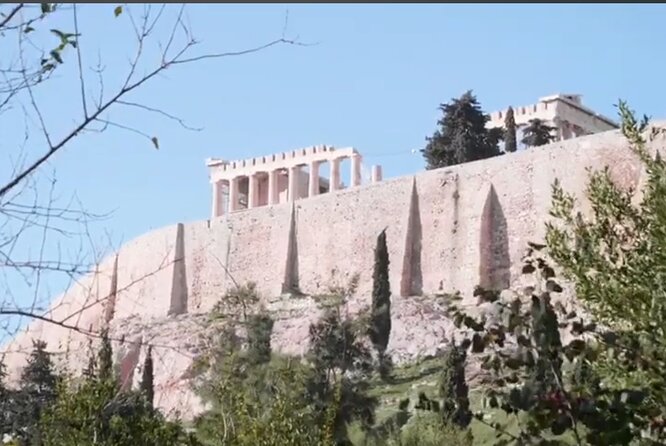
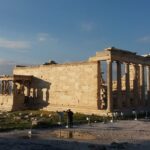
The day’s anchor stop is the Acropolis, with about an hour on site and admission not included. This is the place where Athens stops being a city and starts being a timeline. The Parthenon, built in the 5th century BCE during Pericles’ Golden Age, sits at the center of the story—but the Acropolis itself has been layered and re-used again and again.
You’ll see why this site hits hard: it wasn’t just one civilization’s project. It went from Mycenaean palaces and temples to a Roman temple, then a Byzantine church, a Frankish palace, and later an Ottoman mosque. Wars, earthquakes, and looting left scars, including removal of sculptures by Lord Elgin in the 19th century. Even with that, the Acropolis remains a UNESCO World Heritage site and a symbol people still use to describe Western heritage.
For you, the practical value of having time here is simple: you can pace yourself. In a group setting, the clock can force you to sprint. Here, about an hour is enough to get oriented, see the main structures, and understand what you’re looking at without rushing.
Possible drawback: the Acropolis ticket cost is extra, and the stop is about one hour. If you want a slow, close-up, archaeologist-level walk across every corner, you’ll need either more time or the optional archaeologist escort.
Acropolis Museum: Where the Pieces Click
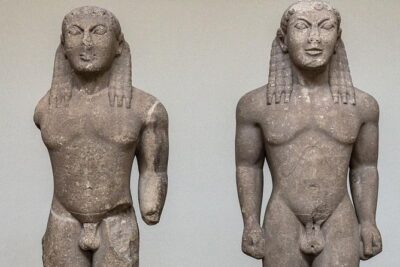
Next comes the Acropolis Museum for about an hour, again with admission not included. This is one of those moves that turns a pile of ruins into a coherent story. The museum opened in 2009, designed by Bernard Tschumi, and it holds over 4,000 artifacts connected to the Acropolis—from the Greek Bronze Age through Roman and Byzantine times.
What makes this museum feel smart is how it’s built to match the geography above. The layout follows the topography and history of the Acropolis, so you’re not just staring at objects—you’re connecting them to where they came from.
Highlights that matter in a real way:
- The Caryatids from the Erechtheion.
- Parts of the Parthenon frieze.
- Original sculptures from the Temple of Athena Nike.
- A glass floor showing an ancient Athenian neighborhood beneath the building.
And yes, the views are part of it. The top floor, the Parthenon Gallery, aligns with the temple above, so the setting helps you place the sculptures in context. The museum also supports the idea of reunification of the Parthenon marbles still held in the British Museum, which adds a modern layer to what you’re seeing.
If you only do the Acropolis and skip this museum, you miss the why. If you do both, your brain gets the connection fast.
Temple of Olympian Zeus and Kallimarmaro: Scale With a Side of Marble
After the museum, you’ll spend about 10 minutes at the Temple of Olympian Zeus. Admission is not included, and the ticket price listed here is €20 per person. This temple is a study in ambition and unfinished outcomes.
Construction started in the 6th century BCE under Peisistratos, but political unrest stopped it for centuries. Emperor Hadrian completed it in 132 CE. It was built in the Corinthian order and originally had a jaw-dropping 104 columns. Today, only 15 remain standing, so you feel the drama through scale rather than completeness.
There’s also a mythic and political punch to the story: the temple once housed a giant gold-and-ivory statue of Zeus, modeled after a statue at Olympia, and Hadrian added his own statue and a nearby arch.
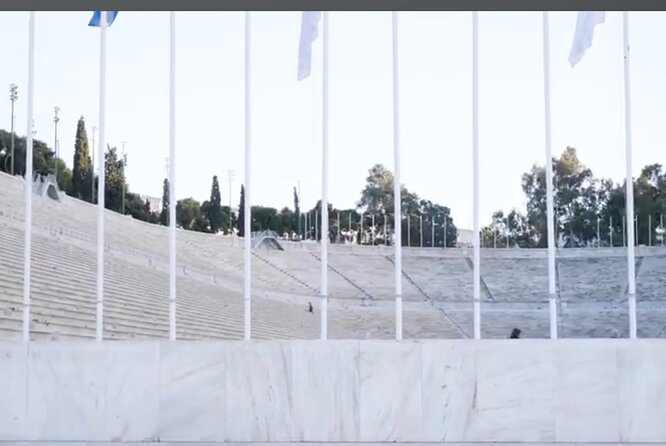
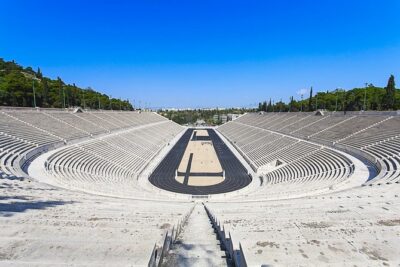
Then comes Panathinaiko Stadio (Kallimarmaro) for about 10 minutes. This stop is marked free in the tour details. It’s famous because it’s built entirely of white Pentelic marble, and it’s one of the few ancient sporting spaces that still feels like a direct line into modern Athens.
What you’ll learn just by being there: it was first built in the 4th century BCE for the Panathenaic Games, rebuilt in marble in the 2nd century CE, and then restored in the late 19th century by Georgios Averoff for the 1896 modern Olympics. Capacity is listed at around 50,000, and it hosts the final stretch of the Athens Marathon.
Practical note: with such short time here, think of it as a photo-and-stretch stop, not your main deep dive.
Plaka and Monastiraki: Walkable Athens on Foot
After the big archaeological hits, the route shifts into neighborhoods—time to slow down and pick up the local vibe. Plaka sits at the foot of the Acropolis and has been continuously inhabited since antiquity. The area grew from ancient residential quarters, stayed active through Roman and Byzantine periods, and under Ottoman rule it developed a mix of residents and cultural influences. Many houses date to the 18th and 19th centuries, and modern Plaka still follows strict preservation laws.
You’ll see why it’s popular for visitors: narrow stone-paved streets, everyday life, and tavernas that feel connected to the neighborhood rather than staged for tourists. It’s also a good place to take a breather and regroup after the heat of sightseeing.
Then there’s Monastiraki Square, a short hop away in spirit if not in minutes. Its name traces back to a small 10th-century Byzantine church, Pantanassa, once part of a monastery. Ottoman-era history leaves a mark too: the Tzistarakis Mosque built in 1759 still stands. Monastiraki is also known for its flea market tradition, and the square sits atop ancient remains like parts of Hadrian’s Library and the Roman Agora visible nearby. In the 2000s, the area was renovated and connected to the Athens Metro.
For your planning: bring a little time cushion for snack stops. These neighborhood pauses are where your day starts to feel like Athens, not just monuments.
- All Day Cruise -3 Islands to Agistri,Moni, Aegina with lunch and drinks included
★ 5.0 · 4,958 reviews





Lycabettus Hill: The Panoramic Payoff
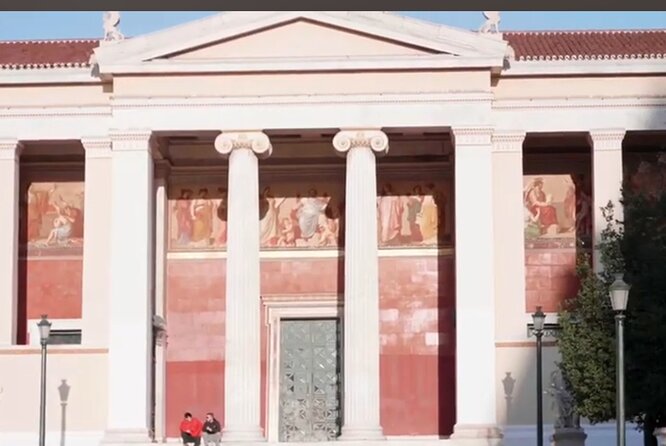
Next you’ll head to Lycabettus Hill for about an hour, with ticket cost not included. It’s described as the highest hilltop in Athens, with panoramic views over the city.
This stop is valuable even if you’re not a view person, because it gives you mental orientation. From up there, Athens makes more sense: you can see how the neighborhoods relate to each other and how the ancient sites fit into the modern city.
The trade-off: hill viewpoints come with ticket costs listed for Lycabettus Hill at €12 per person. If you’re budget-tight, clarify which parts are ticketed on your chosen day, since ticket listings also mention an Olympic-related stop separately.
Lake Vouliagmeni: A Thermal Detour From Ancient Stones
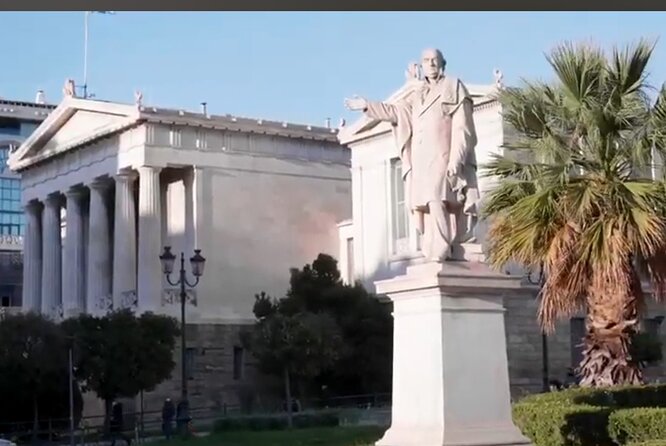
If your idea of a perfect Athens day includes at least one natural break, Lake Vouliagmeni is that moment. The stop is brief—about 10 minutes—and marked free, with no admission fee in the tour details.
This isn’t just a scenic pond. It’s a natural thermal lake on the Athenian Riviera, created when a large limestone cave collapsed due to erosion and underground water activity. The waters mix seawater and underground thermal springs, with a steady temperature listed between 22–29°C year-round.
There’s also a myth and healing angle: in antiquity, the area was considered sacred, possibly dedicated to nymphs, and used for healing purposes. The name Vouliagmeni means sunken, referring to the collapsed cave. The site is protected as a natural monument and includes an underwater labyrinth of tunnels, with some reportedly unexplored.
Real talk for your expectations: with only 10 minutes, you’re not doing a full spa day. You’re checking it off and enjoying the setting before the seaside grand finale.
Cape Sounion and the Temple of Poseidon: Sea-Air Classic

Then you move to the big maritime icon: the Temple of Poseidon at Cape Sounion. Plan on about 30 minutes, and admission is not included, with the ticket price listed at €20 per person.
This is built in the mid-5th century BCE during Athens’ Golden Age. It sits dramatically on a cliff over the Aegean Sea, originally with 34 Doric columns—and today you’ll see 16 standing. The temple is made of white marble from Agrileza, and it was both a religious site and a naval lookout. Even if you know nothing about ancient Greek politics, the location tells you why it mattered.
There’s a legend here too: King Aegeus is said to have leapt to his death from the cliff, and the Aegean Sea takes its name from that story. The site was abandoned for a long stretch, rediscovered in the 18th century, and today it’s one of Greece’s most recognizable classical settings—especially for that classic sea-and-stone feeling.
Because sunset is part of why people love this place, bring a good attitude for timing. In an 8-hour day with many stops, the exact feel of golden hour depends on your schedule that day.
Palaia Fokaia Taverna Break: Lunch by the Waves
Between ancient stops, you get a tasting moment at Palaia Fokaia, with about an hour at a traditional seaside tavern called 4 Αδέρφια (4 Brothers). Admission is listed as free because this is a food break rather than a museum stop.
This place is connected to the region’s fishing culture, shaped by refugees from Asia Minor who settled here in the 1920s and 1930s. The menu reflects that heritage with seafood and meat dishes.
This is where the day stops being purely historical and turns into something you’ll actually remember with your stomach. The standout detail from the experience description is the reputation for fast, friendly service and generous portions, with seafood especially recommended. One highlight mentioned is seabass smothered in olive oil.
Practical advice: eat something that suits your appetite, because the day continues afterward. If you’re the type who hates feeling rushed while eating, just know this is a structured stop with about an hour.
Syntagma Square and the Ancient Agora: Modern Politics on Top of Ancient Life
After the coast, you come back to central Athens for the modern pulse.
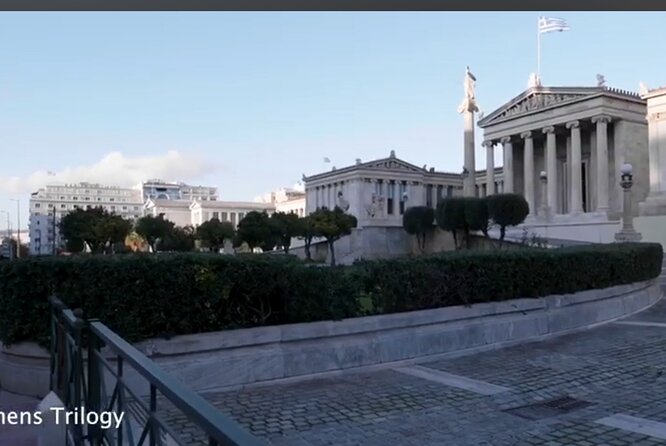
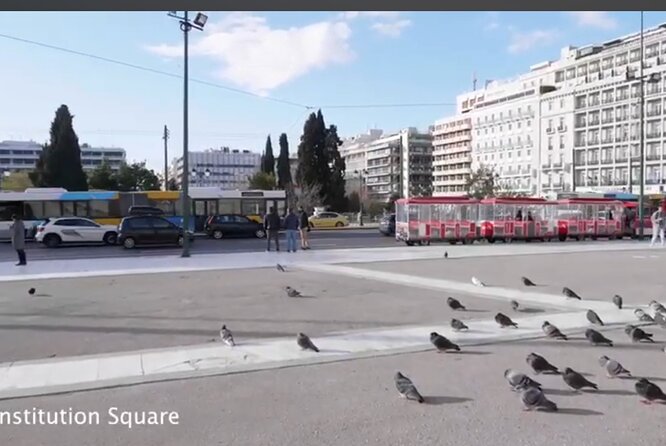
First: Syntagma Square for about 10 minutes, admission free. This is the heart of modern Athens and politically loaded. The square’s name comes from the Greek Constitution (Syntagma) that King Otto was forced to grant after an uprising on September 3, 1843. The square faces the Old Royal Palace, now the Hellenic Parliament.
Under Syntagma is also where history shows up unexpectedly: a major metro station has ancient artifacts on display from construction. And at the center, the Tomb of the Unknown Soldier is guarded by the Evzones, with ceremonial guard appearances you’ll see during your visit.
Then comes the Ancient Agora of Athens for about 30 minutes, admission not included. The ticket price listed for Ancient Agoras is €12 per person.
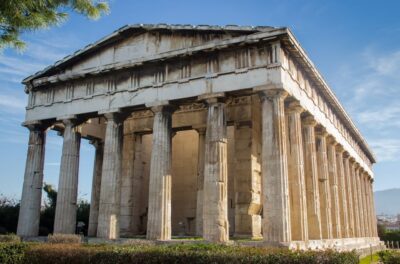
This site was the heart of public life in the classical era—political, commercial, social, and religious. Established in the 6th century BCE, it hosted assemblies, markets, festivals, and trials. Philosophers like Socrates and Plato walked these paths, teaching and debating in open air.
Two structures are often the “you can picture it” elements:
- The Stoa of Attalos, rebuilt in modern times as a museum.
- The Temple of Hephaestus, still well preserved.
It evolved through Roman times, then declined and was buried under later development. Systematic excavations began in the 20th century. Today, it gives you a vivid sense of how democracy and everyday life intersected.
A small reality check: 30 minutes is enough to get a strong feel for the space, not enough to master it. Still, pairing the Agora with Syntagma makes a point you’ll remember: modern governance runs in the same urban space as ancient debate.
Price and Tickets: What You Pay for, What You’ll Still Owe
The base price is $600.76 per group up to 4, so you’re not paying per person for the private vehicle and guide time. That’s where the value sits—privacy, pickup, air-conditioned transport, and a planned route through multiple areas that would otherwise take you hours of coordination.
But you will pay additional site admissions. Here are the ticket prices explicitly listed as extra:
- Acropolis: €30 per person
- Temple of Poseidon: €20 per person
- Temple of Zeus (Olympian Zeus): €20 per person
- Lycabettous Hill, first Olympic stadium, and Ancient Agora: €12 per person for each of those sights listed
Some stops are marked free in the tour details:
- Panathenaic Stadium (Kallimarmaro)
- Lake Vouliagmeni
- Palaia Fokaia (the tavern stop)
- Syntagma Square
Other stops are marked admission not included but without prices shown here, including the Acropolis Museum.
So the smartest way to think about value is this:
- You’re paying for smooth private time and a route that hits many major landmarks.
- You’re also paying extra for several key admissions on top.
One more cost consideration: if you want the deeper interpretive layer inside sites, the option for a licensed professional archaeologist tour guide comes with an extra fee. That can be worth it if your group is very history-driven.
Who This Private Athens Day Best Fits
This works best for you if:
- You want an organized day but still keep it private for up to four.
- You have limited time, like a cruise day, and want both ancient and sea views in one run.
- You like the idea of pairing ruins with the objects that explain them, especially through the Acropolis Museum.
- Your group includes mixed interests, like someone who wants to focus more on museums while others prioritize outdoor ruins. That flexibility is part of the private format.
You might want a different setup if:
- You want a long, slow, detailed walk at fewer sites. Here, the day is packed.
- You expect all commentary to be archaeologist-level inside every stop without extra cost, since the guide is described as limited to exterior insights unless you add the archaeologist escort.
Should You Book This Athens Landmarks Private Tour With Pickup?
I’d book it if you want a smart, time-efficient Athens day that covers the anchors: Acropolis, Acropolis Museum, major classical landmarks, then neighborhoods like Plaka and Monastiraki, plus the sea-at-the-end mood of Cape Sounion.
Don’t book it blindly if your budget can’t stretch for ticket add-ons, or if you know you want deep indoor interpretation at every stop. In that case, ask early about the licensed archaeologist option and confirm which admissions apply for your exact date.
If you want one private day that feels like Athens in layers—ancient to modern, city to sea—this route is a strong fit.
FAQ
How long is the tour?
The tour duration is listed as approximately 8 hours.
What is the group size for this private tour?
The price is per group up to 4 people, and it’s a private tour where only your group participates.
Is pickup included?
Yes. Pickup is offered, and the pick-up time is arranged upon your request. You’re returned to the same place or to another point you prefer.
Where do you meet if I’m staying in a hotel or apartment?
If you’re in a hotel, you wait at the hotel lobby. If you’re in an apartment, you meet at the building entrance.
What about airport or port pickups?
For airport pickup, you meet in the arrivals hall holding a sign with your name. For port pickup, you meet at the gate after you disembark holding a sign with your name.
Is the tour in English?
Yes, it’s offered in English.
Are tickets included in the price?
No. Admission ticket fees for multiple sights are listed as not included.
What ticket fees should I expect to pay extra?
The provided prices include: Acropolis €30 per person, Temple of Poseidon €20 per person, Temple of Zeus €20 per person, and Lycabettous Hill, first Olympic stadium, and Ancient Agora €12 per person each (as listed).
Is Acropolis Museum included?
The museum stop is included in the itinerary, but its admission ticket is listed as not included.
Can I cancel for a full refund?
Yes. Free cancellation is available up to 24 hours in advance for a full refund.

More Private Tours in Athens


More Tours in Athens


More Tour Reviews in Athens
- All Day Cruise -3 Islands to Agistri,Moni, Aegina with lunch and drinks included
★ 5.0 · 4,958 reviews