REVIEW · ATHENS
The Apostle Paul’s Missionary Journey in Athens and Corinth
Book on Viator →Operated by Colours of Greece · Bookable on Viator
Paul’s footsteps in Greece feel real.
What makes this outing interesting is the way it mixes biblical story points with the classical sites Paul would’ve recognized—then stitches it together with practical, door-to-door transport. I love how the schedule is tight enough to cover both Athens and Corinth in one day, without turning it into a rushed blur. You’ll also get Wi‑Fi on board, bottled water, and a driver who keeps the context clear as you move between locations.
I also like the private setup: it’s just your group, so you’re not competing for answers or getting bounced along on someone else’s pace. In past runs, guides and drivers like Ruslan, Yannis, Kostas, Katerina, Giannis, and Karas have been praised for clear English and making the sites click, not just listing facts. That kind of attention matters when you’re trying to connect Paul’s letters to actual places you can walk around.
One consideration: you’ll do quite a bit of walking on uneven ground, and the day runs 8–9 hours, so comfortable shoes are non-negotiable. Also, entrance fees are not included for key archaeological stops, so budget extra for tickets you’ll want to pay at the sites.
In This Review
- Key things I’d plan around
- What You’re Really Buying for $200.25: a private Paul trail with real context
- Door-to-Door Transport from Athens hotels and the port (and why it matters)
- Paul in Athens: Ancient Agora and the Areopagus debate stage
- Saint Dionysius in Kolonaki: a conversion story turned into a real place
- Corinth Canal and Kenchreai: seeing the mission through geography
- Ancient Corinth: the Bema, the Agora, and the Temple of Apollo
- Corinth Museum plus Acrocorinth views: putting the day into context
- How the best guides keep Paul from becoming text on a page
- Walking time, uneven ground, and what to pack for the full day
- Should you book this Apostle Paul tour from Athens and Corinth?
- FAQ
- How long is the tour?
- What’s included in the price?
- Are entrance fees included?
- Is this a private tour?
- Do you offer hotel or port pickup?
- Do I need to speak another language?
- What should I bring or wear?
- Can I cancel for a full refund?
- What if the weather is bad?
Key things I’d plan around
- Door-to-door pickup and drop-off from Athens hotels or the port means less stress, more time on the sites.
- Private tour format (often 1–4 people in a sedan) keeps questions and pacing in your control.
- Paul’s story points are placed geographically: Athens → Corinth Canal → Kenchreai → Ancient Corinth → Acrocorinth.
- Wi‑Fi on board and bottled water help when you’re out all day in warm weather.
- Main archaeological entrances cost extra, especially at the Ancient Agora and Ancient Corinth.
What You’re Really Buying for $200.25: a private Paul trail with real context
At $200.25 per person, you’re paying for a full-day, private “go-and-see” experience that focuses on connection, not just sightseeing. The value comes from bundling: air-conditioned transport, hotel/port pickup, Wi‑Fi on board, bottled water, and an English-speaking driver with history know-how. That’s a lot more convenient than trying to coordinate buses, tickets, and rides across two major areas of Greece on your own.
Timing also plays into the value. This is an 8–9 hour day, and it’s booked about 76 days in advance on average, which tells you the experience has steady demand. If you’re traveling in peak season, planning ahead helps you lock in the time window that fits your itinerary.
Two money points to keep straight:
- Entrance fees are not included for some stops (notably the Ancient Agora of Athens and Ancient Corinth).
- A licensed guide to accompany you inside archaeological sites is also not included, so you should expect the driver’s explanations and guidance, but not a separate official site guide at every excavation.
If your goal is to understand Paul’s presence in the region—religious message plus the surrounding Greek and Roman world—this format makes that easier.
You can also read our reviews of more tours and experiences in Athens.


Door-to-Door Transport from Athens hotels and the port (and why it matters)
The day starts with pickup, and that’s not a small detail. In practice, the driver waits outside your hotel/apartment, or at the port arrival area holding a signboard with your name. That matters a lot if you’re coming from a cruise ship schedule—getting lost for the first 20 minutes can ruin the flow of the entire day.
You’ll also get drop-off back at your starting point. For people who don’t want to spend energy figuring out transit between Athens and Corinth, this is the best kind of convenience: it buys you time on the sites.
One more logistics detail: for airport pickup, it’s optional and costs extra. So if you’re arriving by air and want to roll right into the tour, plan that cost into your day.
Finally, private tours here can use a sedan vehicle for groups of 1–4 people. That usually means a calmer day—less stop-and-start movement inside a larger bus, and easier conversation with your driver while you’re traveling.
Paul in Athens: Ancient Agora and the Areopagus debate stage
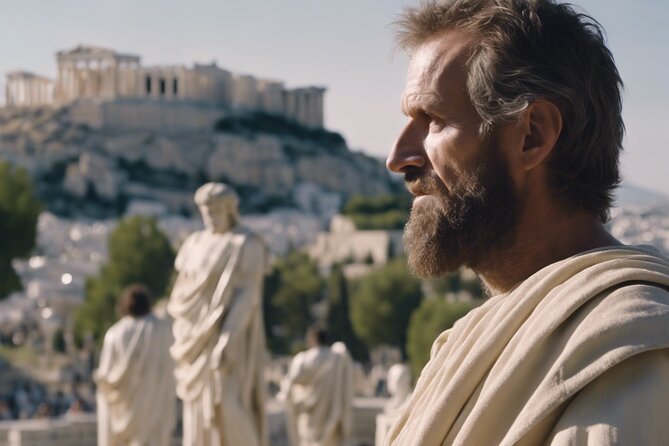
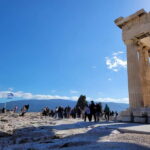
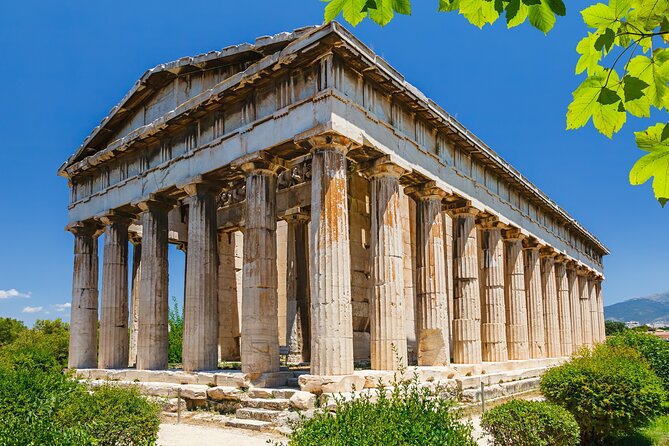
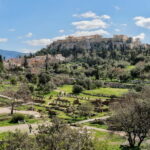
You begin at the Ancient Agora of Athens, the city’s hub for politics, commerce, social life, and religion. This is where Paul would have felt the energy of public debate—markets buzzing, civic life running, and ideas being argued in real time rather than in a classroom.
Expect about 1 hour here. Entrance tickets are not included, so you’ll want to be ready to purchase. The payoff is that you’re seeing the setting where philosophers and thinkers gathered, and where a message like Christianity didn’t arrive in a vacuum—it landed in an atmosphere of persuasion, argument, and competing worldviews.
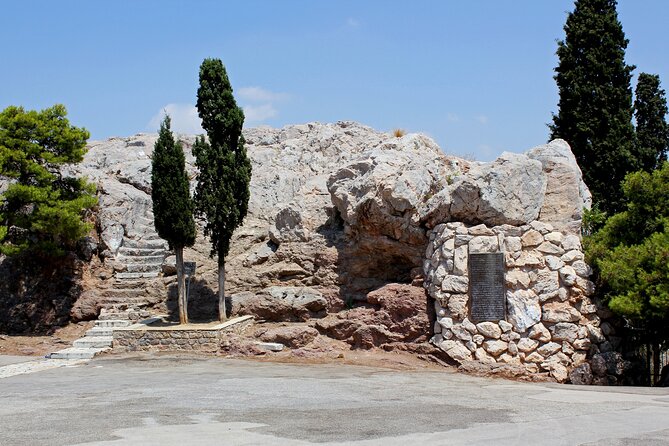
Next is the Areopagus, a marble hill just northwest of the Acropolis. Historically, it served as a judicial and political meeting place. During Paul’s era, it was also associated with intellectual discussion—so it’s a fitting stop for understanding the kind of public “conversation” his message triggered.
This stop is shorter—about 30 minutes—and admission here is free. The story you’ll connect to matters: the council listening to Paul is traditionally linked with a broad mix of influential men (philosophers, scholars, former officials). Whether or not every detail matches perfectly to a modern visitor’s imagination, the location still helps you understand what kind of audience a messenger would face in Athens.
What to watch for on this stretch:
There’s a lot to see, and you’ll likely do some uneven walking. I’d keep your pace easy and focused, not sprinting for the most dramatic photo angle. The meaning comes from letting the sites explain the mindset of the time.
Saint Dionysius in Kolonaki: a conversion story turned into a real place
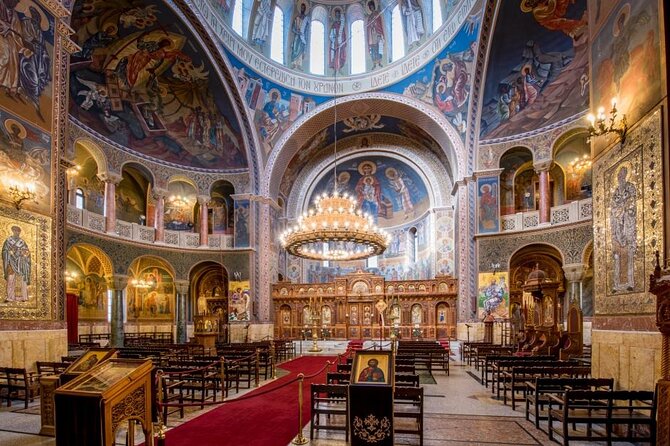
After Athens’ ancient core, the tour shifts to modern-day Athens through the Church of Saint Dionysius the Areopagite in the Kolonaki area on Skoufa Street. It’s a free admission stop and lasts around 20 minutes.
Why it matters: this church is tied to the tradition that Dionysius—the man said to be converted through Paul—later became Athens’ first bishop. So instead of staying in archaeology land, you get a thread that connects the story of early Christianity to the way Athens remembered it.
This is a great “breather” moment in the day. You’re still thinking about Paul, but the pace slows and you get a sense of the living religious layer in Athens, not only the ancient ruins.
Practical tip: This isn’t a long stop. If you’re photographing, do it respectfully and don’t spend the entire 20 minutes trying to get the perfect angle.
Corinth Canal and Kenchreai: seeing the mission through geography
Now you leave Athens and head to Corinth via two stops that help you understand why the region mattered.
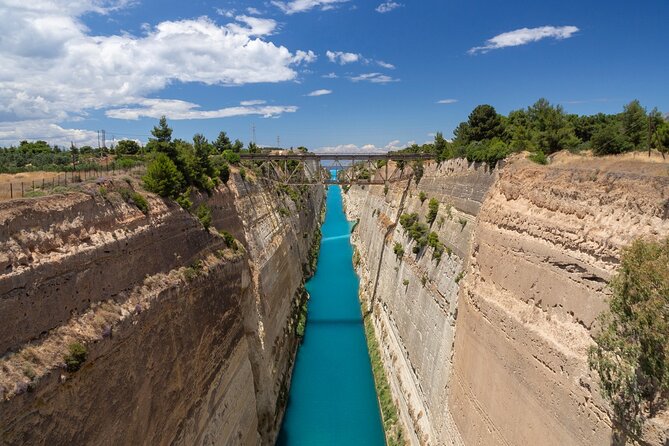
First is the Corinth Canal, an engineering marvel that cuts through the Isthmus of Corinth and connects two gulfs. It wasn’t built in biblical times, but it underlines how strategic this corridor is—even when the story timeline changes, the geography is still doing the heavy lifting.
Then comes the Ancient Port of Kenchreai (Kechrees), Corinth’s eastern port. Admission is free, and the stop is about 20 minutes. Here, the value is in layering: you’re looking at Roman-era remains and also an early Christian basilica from the 4th century A.D. Even if much of the harbor is submerged or ruined, you can still make sense of what used to be there—storerooms, breakwaters, a nymphaeum, sanctuaries, and religious structures tied to maritime traffic.
This is also the traditional arrival point for Paul in 51 A.D., when his mission in Corinth begins. That time marker helps you connect the dots between “Paul arrived here” and “Paul later taught in Corinth,” rather than treating the cities as disconnected names.
One drawback to be aware of:
Because these are quick stops, you won’t have the luxury of deep archaeological study. They work best when you see them as story geography—places that help you frame what comes next in Ancient Corinth.
- All Day Cruise -3 Islands to Agistri,Moni, Aegina with lunch and drinks included
★ 5.0 · 4,958 reviews



Ancient Corinth: the Bema, the Agora, and the Temple of Apollo
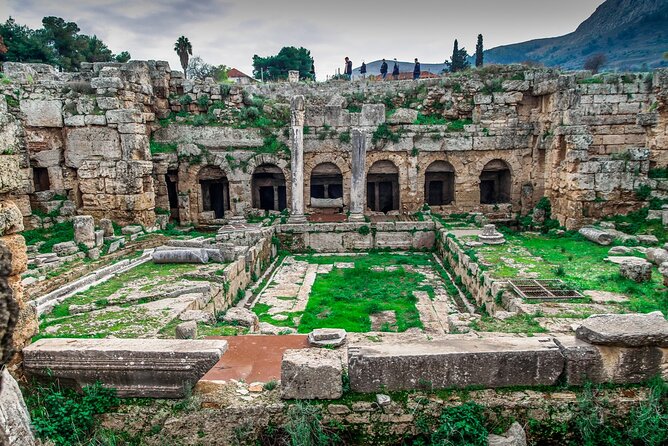
The main event starts at Ancient Corinth (Archaia Korinthos). You’ll spend about 1 hour here, and admission tickets are not included.
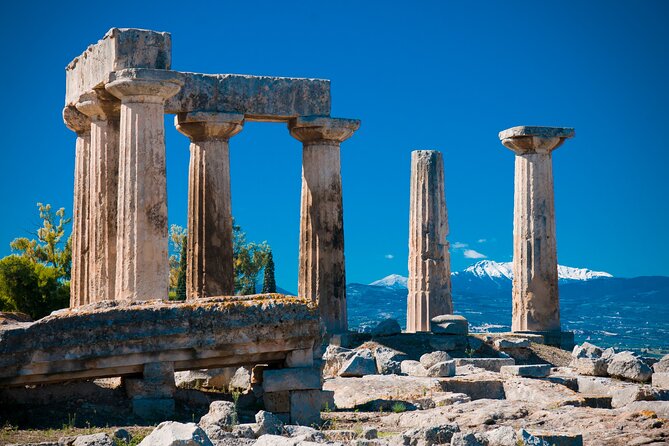
This stop is where Paul’s story gets tied to the urban daily life of the Corinthians. There’s a reason this site feels like the heart of the day: the ruins aren’t just “ancient rocks.” They show the parts of city life where public decisions happen—marketplaces, civic spaces, and major religious sites.
The key places to watch for:
- At the Bema, a raised platform in the city, Paul is believed to have addressed the community and faced trial before the Roman proconsul. Even if you don’t know every archaeological detail, the setting helps you picture public speech and public judgment.
- The nearby Agora gives you that marketplace feel, where everyday life unfolds. It’s easier to read Paul’s letters as practical advice when you’re standing where people bought, sold, argued, and lived.
- The Temple of Apollo nearby reminds you that religious identity in the region wasn’t one-note. You’re seeing a place where different belief systems existed over time.
What can slow you down:
This is a ruin site, which means uneven ground. Wear shoes with real grip. If you’re someone who struggles with steps or long walks, you’ll still get value, but your comfort level will depend on how your body handles rough surfaces.
Corinth Museum plus Acrocorinth views: putting the day into context
After walking through the city ruins, the tour adds the Archaeological Museum of Corinth. It’s about 45 minutes and has free admission.
What makes the museum helpful is that it turns vague impressions into something you can hold onto. The museum (established in 1932) preserves artifacts from the area and includes prehistoric treasures and finds from the Sanctuary of Asklepios. The exhibits are arranged to help you connect daily life, religious practices, and artistic achievements to what you just saw outside.
This is the part of the day I’d call “learning insurance.” You don’t have to be an expert to benefit. The museum helps you interpret the site without needing a separate specialist.
Then you finish at Acrocorinth, Corinth’s imposing hilltop acropolis. This is about 30 minutes and free admission. From here, the region’s story becomes visible in a single glance: a fortified stronghold through centuries, and also a religious center linked with the Temple of Aphrodite (traditionally said to have housed up to 1,000 priestesses).
Even if you skip the more dramatic story angles, the views alone make the last stop worth it. You can see why this place mattered for control and communication, not just worship.
Heat reality check:
Greece can run hot and sunny. The tour provides bottled water, but you still need your own protection—hat and sunscreen are strongly advised.
How the best guides keep Paul from becoming text on a page
A big reason this tour earns such high marks is the way the driver frames each stop. A history talk from a bus speaker is one thing. A driver who adjusts explanations as you ask questions is another.
In reviews tied to real guide names—Ruslan, Yannis, Kostas, Giannis, Katerina, George, Karas, and Fortis—the praise is consistent: clear English, practical context, and patience. One strong pattern is how the driver helps you know where to look and what to notice, so you don’t wander around feeling lost.
You’ll also benefit from safety and comfort attention. Private means less rushing, and it often means the driver can help with small details like pacing on rough ground. People also described an extra helpful attitude—like steering the group toward souvenir stops or suggesting places to eat.
One thing to keep expectations realistic: the tour driver is your history guide, but the tour data says a licensed guide for archaeological sites is not included. So if you’re someone who wants a formal, inside-the-venue expert at every single stop, you might need to plan for additional services or read more on your own.
Still, the best version of this tour is exactly what people hope for: walking where Paul walked and leaving with a clearer picture of why those locations mattered.
Walking time, uneven ground, and what to pack for the full day
This is an 8–9 hour day, and most of the “work” comes from walking around ancient sites and moving between them. The tour data is very clear about the footwear: wear comfortable shoes. Reviews also echo that the pavement can be uneven.
Here’s how I’d prepare so the day stays enjoyable:
- Shoes: solid grip, not fashion sneakers.
- Sun protection: hat and sunscreen, especially in warmer months.
- Pacing: plan to slow down a little at each stop so you can actually take in what you’re seeing.
- Weather: the experience requires good weather. If weather is poor, you’ll be offered a different date or a full refund.
Good news: bottled water is included, and Wi‑Fi on board helps you stay connected for quick maps, notes, or messaging.
If you’re traveling with kids, a child seat is available on request. And if you have mobility limits, it’s worth thinking twice because of uneven surfaces—your comfort will depend on what “uneven” means for you personally.
Should you book this Apostle Paul tour from Athens and Corinth?
I’d book it if you want a single-day route that makes Paul’s Athens and Corinth feel grounded in place—not just in a story you read. The door-to-door pickup, private pacing, and English communication make it a strong fit for couples and small groups who like asking questions and learning without scrambling.
You should also consider booking if you:
- like biblical sites but also want the classical background around them
- prefer a private vehicle over buses and crowded schedules
- want help with where to go next and how to interpret what you’re looking at
I’d think twice if you:
- hate uneven walking on ruin terrain
- want a licensed site guide inside every archaeological area
- are traveling with very tight time buffers (this is a full day)
If your goal is to feel the geography of Paul’s mission—Athens to Corinth, debate to preaching, port to city center—this is one of the more practical ways to do it.
FAQ
How long is the tour?
It runs about 8 to 9 hours.
What’s included in the price?
You get air-conditioned vehicle transport, Wi‑Fi on board, bottled water, and hotel/port pickup and drop-off. The driver is English-speaking and provides history context.
Are entrance fees included?
No. Entrance fees for archaeological sites and museums are not included. Some stops are free, but key archaeological areas require tickets.
Is this a private tour?
Yes. It’s private, meaning only your group participates. For groups of 1–4 people, a sedan vehicle is used.
Do you offer hotel or port pickup?
Yes. You can be picked up from Athens hotels or the port. The driver waits outside for hotel/apartment pickup, or at the port arrival area holding a sign with your name.
Do I need to speak another language?
No. The tour is offered in English.
What should I bring or wear?
Wear comfortable shoes, and bring a hat and sunscreen since Greece can be hot and sunny. Bottled water is provided.
Can I cancel for a full refund?
Yes, free cancellation is available up to 24 hours in advance for a full refund.
What if the weather is bad?
The experience requires good weather. If it’s canceled due to poor weather, you’ll be offered a different date or a full refund.


More Tour Reviews in Athens
- All Day Cruise -3 Islands to Agistri,Moni, Aegina with lunch and drinks included
★ 5.0 · 4,958 reviews