REVIEW · ATHENS
Steps to tradition: Greek Traditional Dances in Athens
Book on Viator →Operated by Hidden Greece · Bookable on Viator
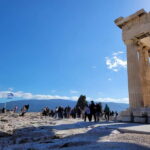
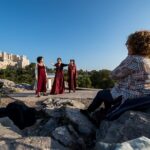
Greek dancing under the Acropolis is a rare morning treat. This 2.5-hour class takes you to Philopappou Hill (near ancient ruins) where you learn traditional circular dances step by step, hand in hand, to real Greek music. You’ll also get a short walk with big sight lines before you start moving.
I like two things most: the instruction feels personal in a group capped at 12 people, and Tania’s teaching comes with context—what the steps mean and how the dances evolved over centuries. The choreography is beginner-friendly, but it still turns into a real group rhythm quickly.
One consideration: it depends on good weather, and you’ll be outdoors on a hillside early in the morning. Wear shoes you trust, and don’t plan on skipping hydration.
In This Review
- Key things to know
- Circular Greek Dancing on Philopappou Hill: Why This One Feels Different
- 6:00am Meeting Point and the 10-Minute Walk With Acropolis Views
- What You’ll Learn in the 2.5 Hours: Steps, Handholds, and Rhythm
- Who Teaches You: Tania’s Lead Role With Kostas, Alexandra, and Konstantinos
- The Setting Inside Philopappou: Quiet Park Vibes and Ancient Views
- Learning to Move Like You Belong: Using These Steps in Real Life
- Price and Value at $41.52: Small Group Teaching for a Serious Culture Hit
- Weather, Footing, and Other Real-World Considerations
- Should You Book Steps to Tradition Greek Traditional Dances in Athens?
- FAQ
- Where does the tour start?
- What time does it start and how long does it last?
- How big is the group?
- What should I expect during the experience?
- Is the class outdoors?
- What is the cancellation policy?
Key things to know
- Start time at 6:00am: cooler air, fewer crowds, and a calmer start near the Acropolis.
- Philopappou Hill setting: dancing beside nature and ancient landmarks with Acropolis views.
- Circular dances, ancient roots: the class connects today’s hand-held loops to traditions reaching back thousands of years.
- Small group energy: max 12 people, with room for questions and corrections.
- A teaching team: Tania leads, with support from Kostas and other instructors such as Alexandra and Konstantinos.
- End-of-class keepsakes: you get water and a participation certificate with QR codes to a Greek traditional playlist.
Circular Greek Dancing on Philopappou Hill: Why This One Feels Different
Greek traditional dance is easy to watch and harder to forget once you’re in it. This experience leans hard into the circular, hand-to-hand format—dances that are meant to pull people together into one shared tempo. And because the setting is Philopappou Hill, the whole thing has an extra layer of meaning: you’re moving through a living connection between past and present right next to Athens’ ancient world.
The cultural framing matters here. You’re not just copying steps. The class explains how cyclical dances have been kept alive and reshaped across eras—passing through families, villages, and regions like a living tradition rather than something locked in a museum. That helps the dancing click fast, especially if you’re the type who likes to understand what your body is doing before it becomes automatic.
You can also read our reviews of more tours and experiences in Athens.


6:00am Meeting Point and the 10-Minute Walk With Acropolis Views
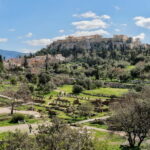
You’ll meet at Dionysiou Areopagitou & Apostolou Pavlou (Athina 117 41). The start time is 6:00am, and you’ll do a short group gathering before moving out. Expect a 10-minute walking route with views toward the Acropolis, then you’ll continue to your main dancing spot.
This little pre-dance walk is more than warm-up. You get a chance to get your bearings fast so you’re not mentally scrambling once the music starts. One participant noted information during the walk about noteworthy nearby things, including Socrates’ Prison, plus the idea of traditional dance festivals in Greece—so you’re building context while you’re still stretching your legs.
Practical note: since this is an early start outdoors, think “comfortable layers” rather than “sun hat and flip-flops.” Even if the day warms up fast, you’ll be standing and walking before the main rhythm section begins.
What You’ll Learn in the 2.5 Hours: Steps, Handholds, and Rhythm
The class runs about 2 hours 30 minutes. During that time, Tania teaches you to dance multiple traditional dances from different parts of Greece. People who took the class reported learning roughly 5 to 7 dances, so you’re not stuck repeating one routine for the whole session.
Here’s what makes the teaching feel doable: it’s step by step. You’ll practice the basics of the movements, then the group builds into the full circular pattern—hands linked, bodies turning together, everyone matching the music’s pulse. Reviews repeatedly mention that instruction is clear and that the teachers are patient, with coaching that helps you feel successful even if you’ve never danced like this before.
Also, the class isn’t only about the physical steps. You’ll be told the background and the character of the music. That’s why people describe the session as more than a workout—it becomes a quick cultural crash course delivered through movement and sound.
Who Teaches You: Tania’s Lead Role With Kostas, Alexandra, and Konstantinos
Tania is the named lead instructor, and she’s front and center in how the class flows. But the experience feels like a small team effort, not a one-person show. Reviews mention Tania with Kostas during some sessions, and in other cases an expanded teaching group including Alexandra and Konstantinos.
That matters for two reasons. First, the group size stays small, so you get real guidance rather than watching from the edge. Second, having multiple instructors helps when you’re trying to remember new patterns—one person can demonstrate, another can help correct what’s happening in your hands, feet, or timing.
If you ask questions, you’re likely to get a real answer. Participants highlighted that the instructors kept things encouraging and motivational, not stiff. In a dance class, that tone is half the success.
The Setting Inside Philopappou: Quiet Park Vibes and Ancient Views
Once you reach the dance spot, it’s not a crowded plaza. Reviews describe it as a more peaceful area—church-and-park type surroundings inside the hill’s natural environment—where you can hear the music and move without feeling boxed in by traffic or tour groups.
Most importantly, Athens’ icons show up as your backdrop. People mention seeing the Acropolis clearly from where they danced. On the way back, participants also described stunning views that include the Acropolis and even the Pantheon.
This is a big part of why the class is memorable. You’re not just learning to dance. You’re learning to dance while Athens is visually talking to you—stone monuments, morning light, and that sense of being close to something old.
- All Day Cruise -3 Islands to Agistri,Moni, Aegina with lunch and drinks included
★ 5.0 · 4,958 reviews




Learning to Move Like You Belong: Using These Steps in Real Life
One of the nicest surprises is what happens after the class. A couple of people specifically said the skills helped them join in later—like dancing in a tavern setting after the lesson. Even if you’re not planning to “dance out” every night, the change is real: once you understand the basic circular pattern and rhythm, you stop feeling like Greek music is for other people.
Here’s the practical takeaway. Traditional Greek dancing is social by design. If you know the logic of handholds and turning timing, you can participate with confidence when the music starts later. You don’t need to memorize everything—just enough structure to follow the group.
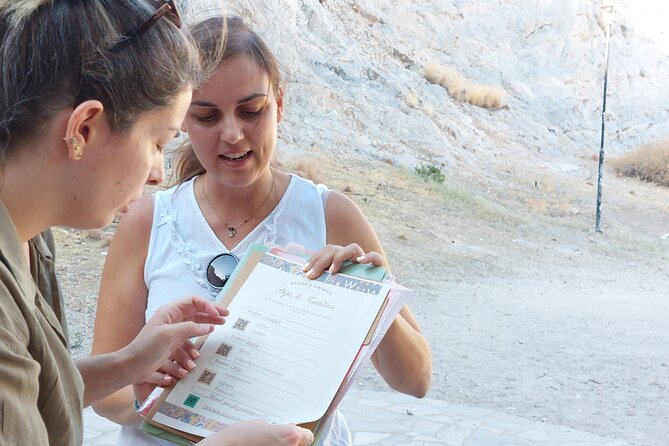
The class also adds a follow-along layer. One report mentioned a participation certificate with QR codes pointing to a Greek traditional playlist, plus an overview of the dances learned. That’s useful if you want to replay the music at home and remember which step goes with which rhythm.
Price and Value at $41.52: Small Group Teaching for a Serious Culture Hit
At $41.52 per person, this isn’t an all-day museum ticket. It’s closer to paying for expert instruction in a rare setting—across 2.5 hours—with a small cap of 12 people.
Value comes from three places:
- Expert-led instruction from Tania and a teaching team (not a generic dance demo).
- A high-signal location near the Acropolis on Philopappou Hill, where the setting supports the cultural theme of cyclical tradition.
- A real output: you learn multiple dances rather than one simple move repeated until your time is up.
The early start might cost you a bit of sleep, but it’s also part of the value equation. You get the hill experience in a calmer window, and the views feel extra clean in the morning light.
For many people, this class lands as a highlight because it combines doing, not just seeing—and it trains your body to understand the culture.
Weather, Footing, and Other Real-World Considerations
This activity requires good weather. If it’s canceled for poor weather, you’ll be offered a different date or a full refund. Since it’s outdoors and on a hill, be ready for uneven ground and outdoor conditions. Choose footwear that grips well and clothing that won’t fight with morning wind.
There’s also a minimum number of travelers requirement. If the minimum isn’t met, you’ll get a different date/experience or a full refund. That’s the kind of rule that keeps the class quality intact, but it’s worth knowing if you’re planning a tight schedule.
On the plus side, the experience notes that most people can participate, and service animals are allowed. You’re also close to public transportation, which makes it easier to pair this with a bigger Athens day plan.
Should You Book Steps to Tradition Greek Traditional Dances in Athens?
Book it if you want a hands-on Athens highlight that’s more than a photo stop. You’ll get real instruction, a small-group feel, and a cultural story tied to the dance form—circular traditions with deep roots. And if you like the idea of leaving with memories you can replay (music via QR code, plus a participation certificate), this class delivers that.
Skip it only if your schedule can’t handle an early 6:00am start or if you’re dealing with weather risk and don’t have flexibility. Because it’s outdoors, a rainy morning can change plans quickly.
My take: for the price, in this location, with teachers like Tania (and support from Kostas and others), it’s an easy yes for anyone who wants to participate in Greek culture instead of just observing it.
FAQ
Where does the tour start?
It starts at Dionysiou Areopagitou & Apostolou Pavlou, Athina 117 41, Greece.
What time does it start and how long does it last?
It starts at 6:00am and lasts about 2 hours 30 minutes.
How big is the group?
The group size is capped at a maximum of 12 travelers.
What should I expect during the experience?
You meet Tania at the main entrance of Philopappou Hill, take a short 10-minute walking route with views of the Acropolis, then learn real traditional Greek circular dances step by step hand in hand with music.
Is the class outdoors?
Yes. The experience requires good weather, and if it’s canceled due to poor weather you’ll be offered a different date or a full refund.
What is the cancellation policy?
You can cancel for a full refund up to 24 hours before the experience starts. If you cancel less than 24 hours in advance, the amount you paid is not refunded.


More Tour Reviews in Athens
- All Day Cruise -3 Islands to Agistri,Moni, Aegina with lunch and drinks included
★ 5.0 · 4,958 reviews