REVIEW · ATHENS
Biblical Tour Letters to The Corinthians – St Paul’s Footsteps
Book on Viator →Operated by Athens Taxi Travel · Bookable on Viator
Paul’s message sounds different in the actual places.
This private St. Paul-themed route links Athens and the Corinth region in a single day, with stops tied to the sermon on Mars Hill, Paul’s time around Corinth, and the Corinthians letters. I especially like the private format (you can adjust the day), and I like that you’re not stuck with a bus crowd—your driver handles transport smoothly while giving you the historical and Bible background you actually want. One thing to consider: if you prefer to linger slowly, the pace can feel a bit tight partway through the day.
Key takeaways
- Private up-to-4 control: you can customize within the day’s route and focus.
- Comfort on the road: air-conditioned vehicle, bottled water, and onboard WiFi.
- Paul-connected stops: Mars Hill, Gallio’s Bema, Kechreae/Cenchreae, and Akrokorinthos.
- Unexpected engineering sights: Corinth Canal and the Diolkos (ship transport across the isthmus).
- Isthmia’s full setting: Poseidon sanctuary, athletic grounds, theater, and the ancient world Paul stepped into.
- Licensed guide is optional: you’ll usually travel with a driver guide; a licensed guide may be available by request.
In This Review
- Why Paul’s footsteps travel better than a standard “Corinth only” day
- Private Athens-to-Corinth logistics that actually matter
- Areopagus Hill (Mars Hill): the Unknown God moment in context
- Corinth Canal and the Diolkos: engineering that shaped travel and trade
- Isthmia: Poseidon games, Paul’s tentmaking setting, and pagan vs. Christian worlds
- The theater stop: entertainment as a spiritual backdrop
- A note on Paul’s athletics imagery
- Ancient Corinth (Archaia Korinthos): Gallio’s Bema and the Temple of Apollo view
- Kechreae (Cenchreae) and Apostolou Pavlou: the port where faith keeps moving
- Akrokorinthos: the fortress view that makes the whole city make sense
- Lunch break and how to spend your time well in a long day
- Price and value: what $386 per group buys you
- Who should book this Paul-and-Corinth footsteps tour
- Should you book Biblical Tour Letters to The Corinthians – St Paul’s Footsteps?
- FAQ
- How long is the St Paul’s footsteps tour?
- How many people can be in the group?
- Is pickup included?
- What language is the tour in?
- Are admission tickets included?
- Who provides the historical commentary?
- Is lunch included?
- Is a licensed tour guide included?
- Do I need a paper ticket?
- What is the cancellation policy?
Why Paul’s footsteps travel better than a standard “Corinth only” day
A lot of Corinth day trips feel like a checklist: arrive, see ruins, leave. This one connects the dots. You start in Athens at Areopagus Hill (Mars Hill)—the place tied to the sermon about the “Unknown God”—and then you move down to the Corinth region where Paul lived, worked, argued, and wrote.
What makes it click is the mix of theology and setting. You’re not only looking at stones; you’re seeing how geography shaped the conversations. From the isthmus crossings to the ports and stadium culture, the day gives you a sense of what Paul was walking into—intellectual debate in Athens, civic religion and big public events near Corinth, and the daily grind of tentmaking and travel.
And yes, it’s a specifically Christian history route. If that’s your lane, you’ll feel like you’re driving through Paul’s world instead of just visiting locations.
Private Athens-to-Corinth logistics that actually matter
This tour is designed for groups up to 4 people, and it’s private, so you don’t share the ride or the timing with strangers. Pickup happens from your place, and the vehicle is air-conditioned with bottled water and onboard WiFi—small details that make a long day much easier.
Your driver is a big part of the experience: they’re described as professional and well-versed in history (but not licensed tour guides inside each site). In plain terms, you’ll get great explanations during transit and at pull-offs, then you walk the sites yourself. If you want a licensed guide included for the walking portions, you can request it, depending on availability.
One practical tip from past experiences: pacing can swing depending on your guide and what you’ve already seen. Some people liked that their guide skipped repeats and used the time for other Corinth-area stops. If you’re coming from Athens and already visited Mars Hill or the Parthenon, tell your driver up front so the day stays focused.
You can also read our reviews of more tours and experiences in Athens.


Areopagus Hill (Mars Hill): the Unknown God moment in context
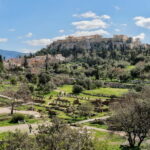
You’ll begin at Areopagus Hill, associated with the Areopagus council in ancient Athens. This stop is short—about 20 minutes—but it’s built around the emotional punch of the story: Paul speaking to the Athenians and challenging the ideas of the day, then introducing Christianity at the intellectual center of the ancient world.
Even if you know the passage well, standing in the setting helps you understand why that sermon would land so hard. The “Unknown God” theme isn’t just clever rhetoric. It’s Paul meeting the audience where they are—religiously curious, philosophical, and full of competing beliefs—and then redirecting the conversation toward the God he proclaims.
Consideration: Areopagus Hill can feel like a “position stop” more than a “wander stop.” If you love getting extra time to read plaques slowly, bring that expectation into your planning and ask for flexibility early.
Corinth Canal and the Diolkos: engineering that shaped travel and trade
Next comes a pair of stops that many Bible-history tours skip, but they’re exactly what makes this day feel real.
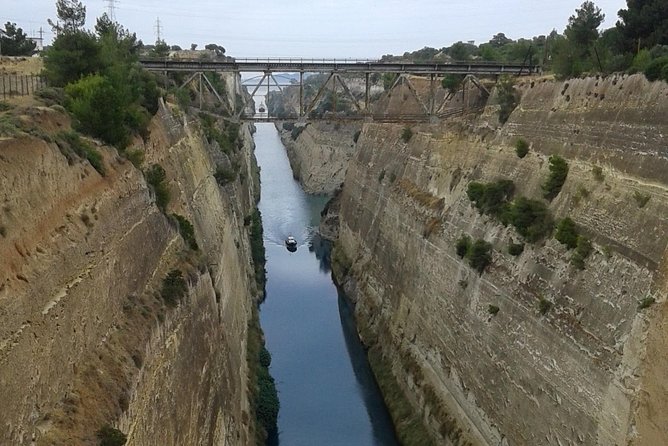
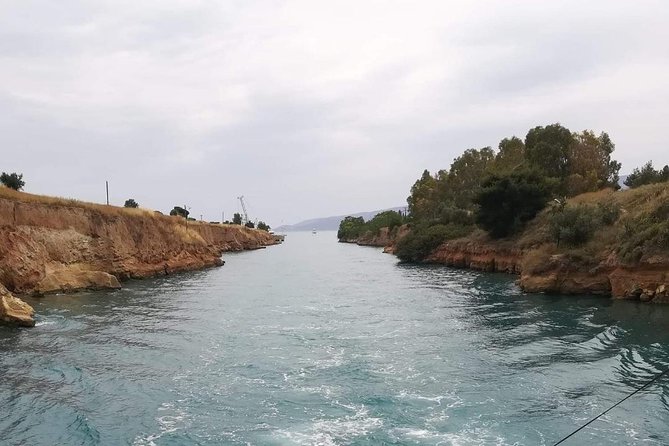
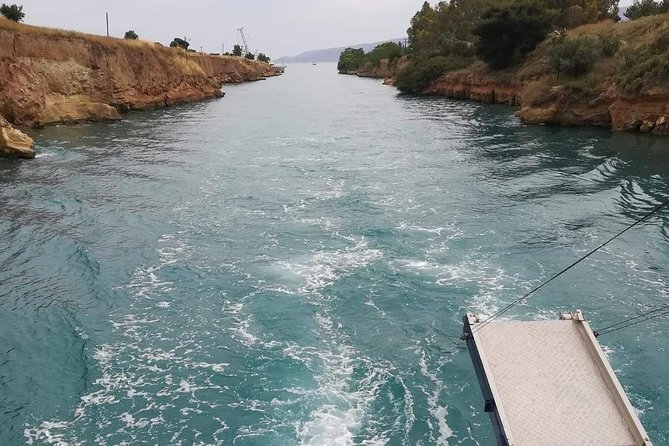
At Corinth Canal, you’ll see the narrow waterway linking the Gulf of Corinth with the Saronic Gulf. It’s modern in construction (19th century), but the idea is ancient—an old dream of cutting across instead of sailing the long way around the Peloponnese. The result is a strong reminder: whether you’re a trader, a sailor, or a traveler like Paul’s network, routes matter.
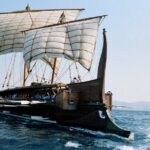
Then you’ll visit the Diolkos, an ancient system used to haul ships across the isthmus. It’s only about 20 minutes, but it helps you picture how people moved before modern roads and canals. When you imagine boats being transported over land, you start to understand why Corinth mattered so much. It wasn’t just one city. It was a node.
Why it’s valuable: Paul’s world ran on movement—people, goods, stories, ideas. These engineering stops quietly explain why Corinth could host so much debate and so many visitors.
Isthmia: Poseidon games, Paul’s tentmaking setting, and pagan vs. Christian worlds
Isthmia is where the tour really turns from “ancient geography” into “ancient life.” You’ll visit the ancient site of Isthmia and also the associated archaeological spaces.
The big theme here is the Isthmian Games, held in honor of Poseidon. These weren’t small local events. They drew athletes and spectators from across the Greek world, and that matters for Paul’s story. The Bible doesn’t turn Isthmia into a named scene the way Athens is, but it places Paul in Corinth’s region at a time when this kind of public gathering was a magnet for strangers, questions, and community-building.
The tour frames Paul as a tentmaker—a job that would place him alongside athletes, travelers, and the crowd energy of the games. If you like Bible stories that feel grounded in daily life (not just big preaching scenes), this stop is one of the strongest.
You’ll also see the archaeological museum area and artifacts connected to worship at Poseidon’s sanctuary. The museum focus matters because it shows the religious setting Paul challenged. And it’s not abstract: you get a tangible sense of how people practiced faith in that world.
The theater stop: entertainment as a spiritual backdrop
Another Isthmia highlight is the ancient theater space tied to musical events. It’s short, but it’s a powerful contrast point. Roman-era mosaics and myth imagery surround you, while you’re meant to think about crowds gathering for festivals—then Paul’s message pressing a different kingdom and way of living.
If you’re the type of person who loves the “how did people think?” angle, don’t rush this moment. Even a 20–40 minute stop can shift how you read Paul’s letters.
- All Day Cruise -3 Islands to Agistri,Moni, Aegina with lunch and drinks included
★ 5.0 · 4,958 reviews



A note on Paul’s athletics imagery
Paul’s letters often use athletic metaphors. Seeing the stadium context and the festival culture helps those words land more naturally. You’re not just translating metaphors. You’re seeing the training-world and event-world the metaphors came from.
Ancient Corinth (Archaia Korinthos): Gallio’s Bema and the Temple of Apollo view
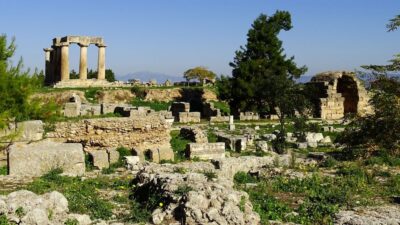
This is the heart of the day—Ancient Corinth itself. You’ll spend about an hour here, and admission is not included, so you’ll want to plan for the onsite ticket purchase.
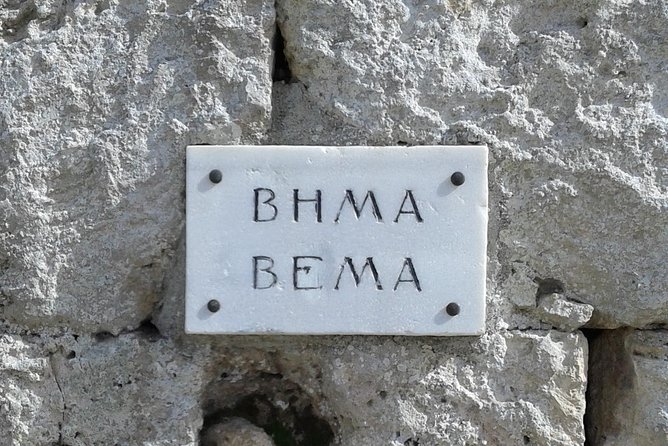
The standout is the Bema, tied to Paul being brought before Roman proconsul Gallio. Acts frames Gallio’s decision as a turning point, because it meant Paul could keep preaching in Corinth without Roman interference. Standing at the Bema helps you feel the risk and the relief at the same time. Paul’s message wasn’t only spiritual; it had political pressure in the background.
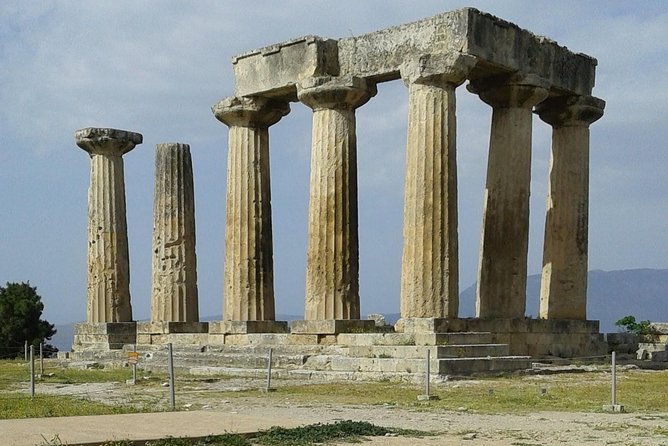
Next, the tour typically includes a view into the city’s religious power through the Temple of Apollo—built around 560 BC, with impressive Doric columns. This temple represents the old system Paul was working around. It’s not there to make you “judge” ancient people; it’s there so you can grasp the environment Paul stepped into: polytheism, civic religion, and a city where worship had deep public roots.
If you’re a photos person: Akrokorinthos and Apollo-area views are strong, so wear shoes that handle uneven ground. The day can include a few walking stretches between stops.
Kechreae (Cenchreae) and Apostolou Pavlou: the port where faith keeps moving
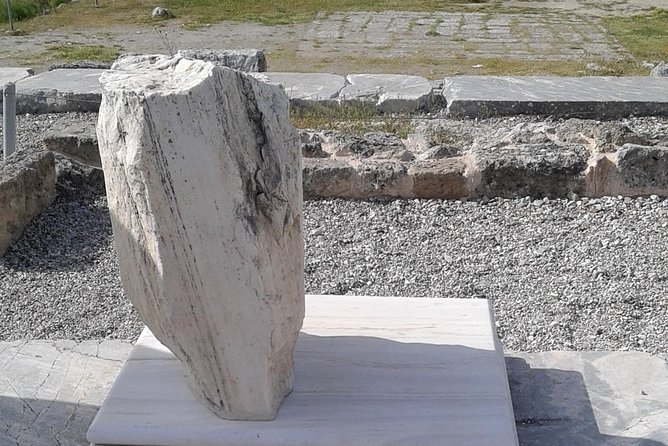
After the main inland ruins, the route turns to the coast with Kechries, tied to ancient Cenchreae, Corinth’s eastern port.
This stop connects to Paul’s second missionary journey (Acts 18:18) and a personal detail: he cut his hair to fulfill a vow as he departed for Syria with Priscilla and Aquila. It’s a quick scene in the story, but it’s meaningful because it shows faith expressed through actions, not just arguments.
Kenchreae/Cenchreae is also connected to an early Christian community—Paul commends Phoebe as a respected servant of that church (in his letter to the Romans). The quiet coastal feel of the stop makes it easier to sit with those details instead of rushing through them like trivia.
You’ll also visit Apostolou Pavlou, a church honoring Paul and his 18-month presence in Corinth. This isn’t an ancient ruin; it’s a place of reflection. That balance is nice on a long day: you get both the archaeology and the living memory.
Akrokorinthos: the fortress view that makes the whole city make sense
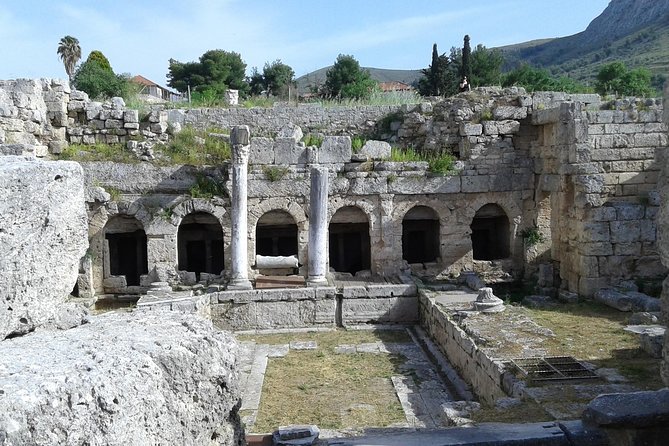
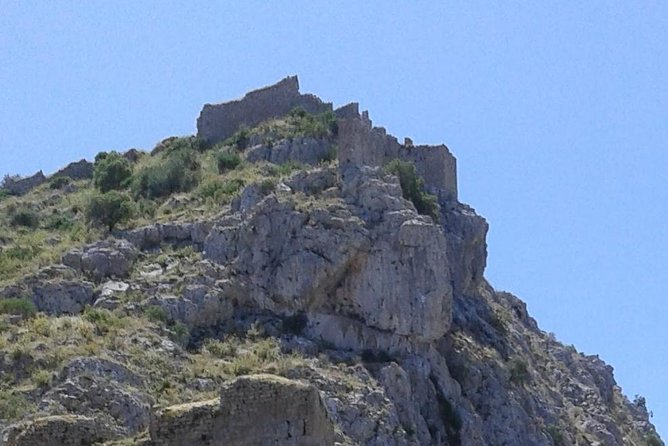
Akrokorinthos is a must if you like understanding the “why” behind ancient cities. This fortress sits above Ancient Corinth, with walls and a vantage point that explains control, defense, and how you could watch the region.
The tour includes time to walk partway along the believed path and to look over Corinth below. Even if you’re not chasing dramatic panoramas for the perfect postcard shot, the perspective helps you understand why Paul’s message spread where it did and why Corinth’s religious and civic power mattered.
This is also a good spot to slow down mentally. A walk with views can do what a paragraph can’t: it helps the story feel larger than a single sermon or argument.
Lunch break and how to spend your time well in a long day
There’s time built in for a relaxing lunch at a traditional seaside Greek taverna. Lunch is not included in the price, but the break matters. A day trip like this involves multiple sites, and you’ll enjoy the last stops more if you eat and rehydrate.
Here’s how I’d play it if you want the best day:
- Plan for shade and water breaks when you can.
- If you already saw major Athens sites, ask your driver to shift time toward Corinth stops.
- If you care deeply about the Bible background, ask your driver questions during the driving segments, where the pace is naturally easier to slow down.
Price and value: what $386 per group buys you
At $386.18 per group (up to 4) for about 8 hours, this tour is priced like a private day trip—so the value comes from what you avoid: waiting, mixing with strangers, and losing time to inefficient logistics.
You get:
- Private transportation with an air-conditioned vehicle
- Bottled water and onboard WiFi
- A driver who provides history context during the ride
- Pickup from your place
- A mobile ticket
What’s not included:
- Lunch
- A licensed tour guide inside sites (optional upon request, depending on availability)
- Admission fees for Ancient Corinth and the Archaeological Museum of Isthmia (listed as €15 per person, purchased onsite)
So the real “value math” depends on your preferences. If you want a calm day with a driver who can explain Paul’s setting as you go, this is a strong fit. If you only want the bare ruins with zero interpretation and you’d rather do it on your own, a self-guided day could cost less. But you’d give up the storytelling that ties the geography to Paul’s letters.
Who should book this Paul-and-Corinth footsteps tour
This works best if you want:
- A Christian history focus rather than a generic “see the ruins” trip
- The convenience of a private car with pickup
- A driver who can connect sites to Paul’s journeys, including the Corinth letters angle
- The chance to visit both Athens-related context (Mars Hill) and the Corinth region in one day
It may be less ideal if:
- You hate any sense of schedule and want to wander with zero time pressure
- You specifically need a licensed guide for every site (you’ll likely rely on your driver unless a licensed guide is arranged)
Should you book Biblical Tour Letters to The Corinthians – St Paul’s Footsteps?
If your goal is to understand Paul’s message in the places where it first made waves, I think this is a very good booking. You’re paying for comfort, control, and interpretation—especially the Paul-centered connections from Athens to Corinth.
If you’re the type who likes to linger for long readings and extra photos in every stop, ask for a pacing approach early (and confirm whether a licensed guide can be added if you want deeper, onsite explanations). For many people, that adjustment alone turns the day from fast into satisfying.
FAQ
How long is the St Paul’s footsteps tour?
It runs for about 8 hours (approx.).
How many people can be in the group?
The tour is priced for a group of up to 4 people, and it’s private.
Is pickup included?
Yes. Pickup is offered from your place since it’s a private tour.
What language is the tour in?
It’s offered in English.
Are admission tickets included?
Some stops are free, but entrance fee for Ancient Corinth & the Archaeological Museum of Corinth is not included and can be purchased on-site for €15 per person.
Who provides the historical commentary?
You travel with professional drivers who provide commentary in fluent English, but they are not licensed to accompany you inside sites.
Is lunch included?
No. Lunch is not included.
Is a licensed tour guide included?
Not automatically. A licensed tour guide is available upon request, depending on availability.
Do I need a paper ticket?
No. You get a mobile ticket.
What is the cancellation policy?
Cancellation is free if you cancel up to 24 hours in advance for a full refund. If you cancel less than 24 hours before the start time, the amount paid is not refunded.

More Tours in Athens

More Tour Reviews in Athens
- All Day Cruise -3 Islands to Agistri,Moni, Aegina with lunch and drinks included
★ 5.0 · 4,958 reviews