REVIEW · ATHENS
Athens Private Tour: All Major Landmarks in 2 hours
Book on Viator →Operated by Greek Heritage: Private Tours & Transfers · Bookable on Viator
Athens hits you fast. In just 2 hours, this private car tour strings together the big sights with just enough story to make them stick. You get hotel pickup, an English-speaking driver, and a plan that keeps you moving without turning the day into a sprint.
What I like most is the format: short, high-impact stops at places like the Temple of Olympian Zeus and Panathenaic Stadium, plus classic Athens scenes around Syntagma Square. I also appreciate that it’s really a private setup—only your group—so questions don’t get lost in a crowd. The one catch: this is mainly a stop-and-gaze tour, and you’re told you won’t enter the Parthenon or the Acropolis site.
In This Review
- Key Highlights at a Glance
- A 2-hour Athens Plan That Actually Gives You Context
- Pickup, Comfort, and How to Keep This Short Trip Smooth
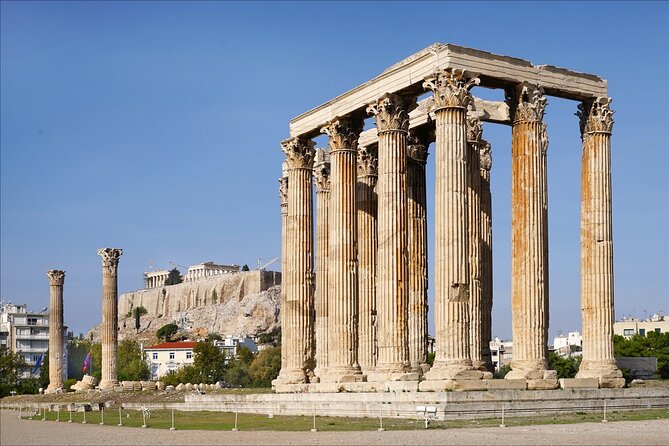
- Stop 1: Temple of Olympian Zeus—Why Those Few Columns Still Matter
- Alexander the Great: A History Stop Without the Museum Lines
- Panathenaic Stadium: The Marathon Link From Ancient Games to Modern Olympics
- Syntagma Square Essentials: Parliament and the Unknown Soldier
- The Athenian Trilogy Viewing Stops: Academy, University, National Library
- Mount Lycabettus: The Panoramic Payoff (If You Time It Right)
- Parthenon and Acropolis: Icon Views Without Long Entry Time
- Price and Value: Is $89.36 for 2 Hours Worth It?
- Who This Athens Private Tour Fits Best
- Should You Book This Athens Private Tour?
- FAQ
- Do you enter the Parthenon or the Acropolis on this tour?
- Is this tour private?
- Is pickup included, and how early does the driver arrive?
- What language is the tour guide/drivers available in?
- Are there any added costs for port pickups?
- What is the cancellation policy?
Key Highlights at a Glance

- Private ride for your group: less waiting, more control of timing
- Quick hits on the classics: Olympian Zeus, Panathenaic Stadium, Syntagma Square
- Athenian Trilogy architecture viewing: Academy of Athens, University, and National Library
- Lycabettus viewpoint time: city-and-sea panorama potential in a short window
- Parthenon and Acropolis photo stops: you see the icons without the long on-site grind
A 2-hour Athens Plan That Actually Gives You Context
This tour is built for people who have limited time but still want the story behind the skyline. Instead of hopping between far-flung points on your own, you ride in an air-conditioned vehicle with WiFi on board and bottled water, and you focus on the sights.
Here’s the smart part: each major landmark gets enough attention to register, but not so much that you burn half the day stuck in one place. It’s the best fit when you’re doing other activities later—maybe museums, food tours, or even just wandering without a checklist in your head.
If you’re the type who wants long interior visits and museum time, you’ll feel the limitation. The Parthenon and Acropolis are described as viewpoint stops with no site entry, so plan a separate block if you want to walk inside or spend real time studying the ruins up close.
You can also read our reviews of more private tours in Athens


Pickup, Comfort, and How to Keep This Short Trip Smooth
The logistics are refreshingly direct. Pickup and drop-off are included from your location, and the driver arrives about 5 minutes early. You’ll want to be ready when the car shows up—this kind of tour runs on tight windows, and the whole point is to see a lot without wasting time.
Onboard, expect an English-speaking driver, WiFi, and air-conditioned transportation. That matters more in Athens than you might think. Summer heat and sudden rain can turn a “quick walk” into an exhausting pause, and the car lets you reset fast.
Communication is set up too: the tour recommends using the WhatsApp app so you can connect easily with the driver. You get a mobile ticket, and since this is private, you’re not negotiating a meeting point with strangers at the same time.
One small note to plan around: if you’re coming from a port, pickup has an additional 40€ cost. If that’s you, account for it when budgeting, since it changes the real per-person value.
Stop 1: Temple of Olympian Zeus—Why Those Few Columns Still Matter

The tour starts with the Temple of Olympian Zeus, and it’s a good opener. Even in ruins, it feels huge—because it was built to be huge.
Construction stretched from the 6th century BCE into the 2nd century CE, so you’re looking at a project that spanned generations. The temple was dedicated to Zeus, and it once housed a colossal chryselephantine statue of the god. You won’t see the statue today, but the idea is part of the awe.
What to pay attention to: the tall Corinthian columns (listed around 17 meters) and the sheer scale. This is the kind of site where your brain needs a second to adjust. One moment you think you’re just seeing a few remnants; the next moment you realize what kind of ambition ancient Athens tried to put into stone.
The stop is also listed with free admission ticket. In practice, that means you’re not spending your short time queuing for paid entry. You’re there to take in the structure, read the story your driver shares, and move on—quick, but not careless.
Alexander the Great: A History Stop Without the Museum Lines

Next comes a stop connected to Alexander the Great. The time you spend here is brief, so you’re not expecting a deep dive or a formal exhibition experience. Instead, it’s about anchoring his story to the city’s layers.
You get the essentials: he was born in 356 BCE, took the Macedonian throne at 20, and built one of history’s largest empires through campaigns across regions that included Greece, Egypt, and Persia. The driver’s framing adds another angle that’s easy to miss when you only remember the battles—he also pushed a cultural blend that contributed to what people call Hellenistic civilization.
Even if you’re not a history buff, this is useful. Athens isn’t just temples. It’s also the later eras that inherited those classical ideas and reshaped them.
Panathenaic Stadium: The Marathon Link From Ancient Games to Modern Olympics
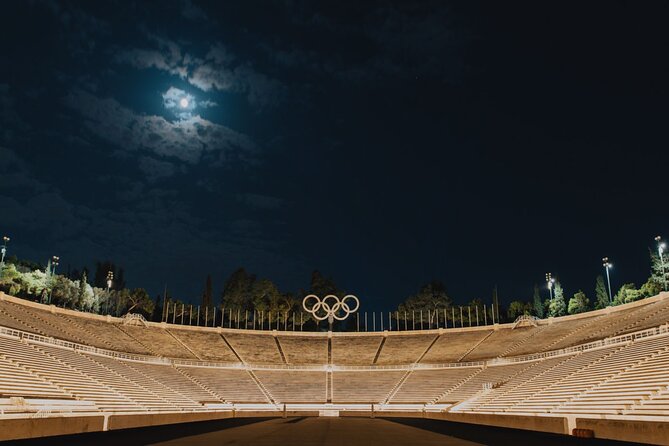
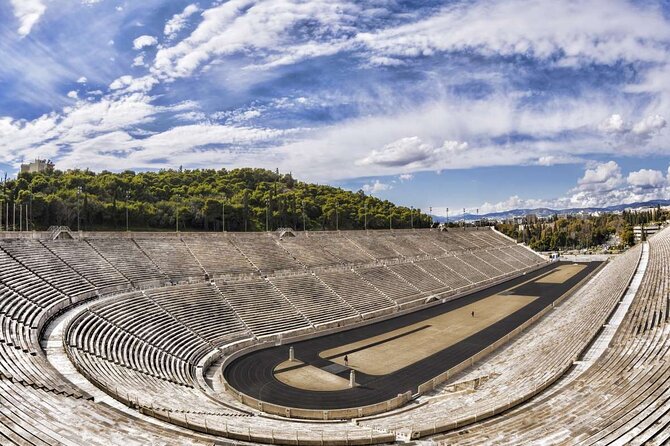
Then you’re at the Panathenaic Stadium (Kallimarmaro), a place that connects Athens to world sports in a way that feels real, not just symbolic.
This stadium was built in the 4th century BCE, then reconstructed in the 2nd century CE. The standout detail is the white marble construction and the horseshoe shape of the arena. It hosted the Panathenaic Games, and the seating capacity is listed around 50,000, which helps you grasp the scale of the ancient athletic culture.
Here’s why I think this stop earns its place in a short itinerary. It’s not only an ancient landmark—it’s also a bridge to modern history. The stadium became a venue for the revival of the modern Olympic Games in 1896.
The tour lists free admission ticket for this stop too. That’s a big deal in a tight schedule: you can spend more of your limited time actually looking and less time doing logistics.
You can also read our reviews of more tours and experiences in Athens




Syntagma Square Essentials: Parliament and the Unknown Soldier
The route moves to Syntagma Square, and this is where Athens shows its modern identity.
First is the Hellenic Parliament, a neoclassical building that began as a royal palace in 1843 and became the parliament seat in 1934. If you’re used to visiting government buildings that feel dull, this one is different because the architecture is part of the experience. Add the fact that the area includes the Tomb of the Unknown Soldier nearby, and you get a whole story told through space.
Right outside, the tour focuses on the ceremonial side as well. The Evzones are the guards in traditional attire, and they bring a sense of ceremony to what could otherwise be just a photo stop.
Then you’ll head directly to the Monument to the Unknown Soldier itself. Erected in 1932, it honors Greek soldiers who sacrificed their lives in wars, especially World War I. The tomb includes relief scenes of battle and mourning, plus an eternal flame at the center. The guard changing ceremony is described as happening regularly and drawing visitors worldwide.
The practical advantage for you: this is one of those areas where Athens gives you strong visuals and memorable details quickly. The tour lists free admission ticket for this stop, and you’re not trapped inside anything. You can watch, take in the solemn vibe, and still keep moving.
If you’re traveling with kids or people who get bored at ruins, this pair of stops is often the moment that brings energy back.
The Athenian Trilogy Viewing Stops: Academy, University, National Library
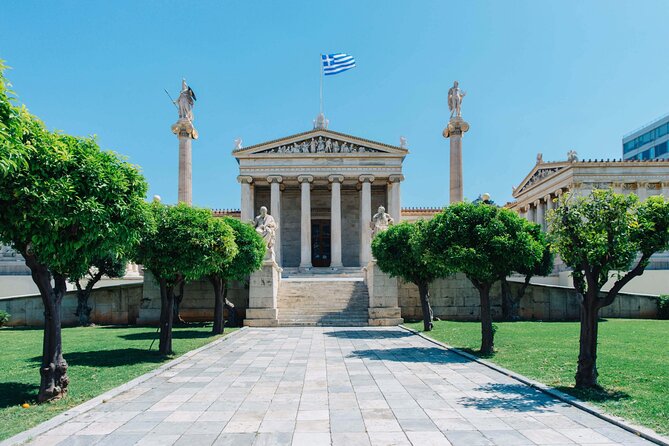
After the square, the tour shifts toward one of my favorite kinds of sightseeing: architectural “big facades” that also tell you how a city thinks about education.
You’ll make stops for the Academy of Athens (founded in 1926, inspired by Plato’s ancient academy). It’s in a neoclassical setting with notable sculptures and a grand presence. The tour highlights that it supports research across scientific areas, humanities, and fine arts, along with libraries and research centers.
Next is the National and Kapodistrian University of Athens, founded in 1837 and described as Greece’s oldest and largest university. The building is part of the famous “Athenian Trilogy,” alongside the Academy and the National Library. If you like walking past serious stone institutions and reading how they reflect national pride, you’ll enjoy this stretch.
Then comes the National Library of Greece, founded in 1832. This one is especially interesting if you care about preservation—manuscripts, rare books, and documents are mentioned as part of its role in preserving Greek cultural legacy. The tour also notes modern facilities supporting digital archives and public research.
Important reality check: with only 2 hours total, you’re not touring interiors at length. This section works best as a quick “see the outside, connect the dots” sequence. You’ll get the names, the historical framing, and enough time to notice architectural details.
Mount Lycabettus: The Panoramic Payoff (If You Time It Right)

Then you get a nature-and-view break at Mount Lycabettus, also spelled Lycabettus. It rises about 300 meters above Athens, and it’s crowned by the Chapel of St. George.
The tour describes the ascent as a winding path and highlights a local legend about Athena dropping a rock here while carrying it to the Acropolis. Whether or not you treat legends like literal history, they do one thing well: they add texture to a landscape view.
The practical reason this stop matters: when you’re doing multiple city landmarks back-to-back, your brain needs a wide-angle reset. From the summit area, you get the kind of panorama that helps you understand how everything fits together—Athens below, the Aegean Sea and mountains in the distance.
The stop is listed with free admission ticket, and again, that helps keep your time focused. For many people, the best use of the window is this: grab your photos quickly, then stand still for a minute and orient yourself. You’ll feel like you “learned” the city, even though you were only there briefly.
Parthenon and Acropolis: Icon Views Without Long Entry Time
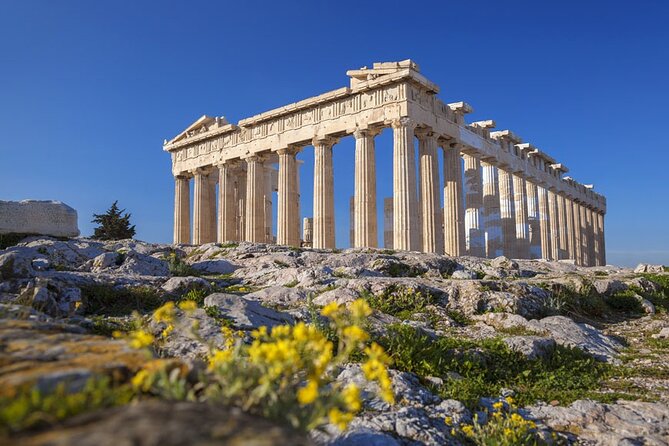
This is the big finish: Parthenon first, then Acropolis. But there’s an important detail you should know before you book: during this tour, you do not enter the Acropolis site or the Parthenon.
So think of it as viewpoint time, not a guided ruins walkthrough. You’ll stop and gaze at the Parthenon, described as a temple dedicated to Athena and built between 447–432 BCE. It’s a rectangle of classical design with 46 outer Doric columns and a frieze featuring mythological scenes. You’ll also hear about Pentelic marble and the Athena Parthenos statue that once stood there.
Then you move to the Acropolis itself, a UNESCO World Heritage site. The tour frames it as a 5th-century BCE citadel with classical Doric columns, friezes, and symmetry. You’ll also get context about centuries of war, weathering, and reconstruction—and why the elevated setting makes the site feel like it overlooks modern Athens on purpose.
If you want the “walk the steps, read every plaque, and spend hours” Acropolis experience, you’ll need extra time beyond this 2-hour tour.
The nice compromise is that the tour offers an optional drop-off spot so you can explore the landmark at your own pace after the stop. That’s ideal if you want a short guided orientation first, then decide how long you want to stay.
Price and Value: Is $89.36 for 2 Hours Worth It?
At $89.36 per person for an about 2-hour private tour, you’re paying for speed, convenience, and a driver who handles the routes. You’re not paying for long museum hours.
So the value depends on how you travel.
You’ll likely feel it’s worth it if:
- You have limited time and want the main landmarks connected by a simple plan
- You prefer a private car to dragging bags or navigating public transit between far stops
- You’d rather ask questions and get context than scan guidebooks while walking fast
You might hesitate if:
- You want to enter and spend meaningful time inside the major sites
- You’re comfortable designing your own route across central Athens and want maximum flexibility on your schedule
In plain terms: this tour is a smart way to get your bearings fast and understand what you’re looking at. If you want deep site immersion, treat this as your launch pad and plan a longer, slower day after.
Who This Athens Private Tour Fits Best
This setup suits:
- First-time visitors who want the headline sights without planning stress
- Couples (the quick pacing can feel great, especially for limited stays)
- Families who benefit from short segments and lots of visual variety
- People who hate wasting vacation time stuck in transportation or ticket lines
It’s also a solid choice if you want the Parthenon/Acropolis “wow” moment but don’t want to commit to a long on-site afternoon right away. The optional drop-off helps turn this into a flexible two-stage plan.
Should You Book This Athens Private Tour?
I’d book it if you want a high-efficiency Athens highlights circuit and you like learning just enough background to make the sights click. The private setup, pickup/drop-off, and driver-led context are exactly what makes this work in 2 hours.
Skip it or pair it with more time if you know you’ll want to enter the Acropolis and Parthenon and spend time inside. This tour is built for looking and orientation, not deep exploration.
One last practical tip: if you’re sensitive to tight schedules, go in with a flexible mindset. The windows are short on purpose. If you treat each stop like a focused snapshot, you’ll leave feeling informed instead of rushed.
FAQ
Do you enter the Parthenon or the Acropolis on this tour?
No. This experience includes stop-and-gaze viewing of the Parthenon and the Acropolis, and it states that you do not enter the site. There is an optional drop-off so you can explore at your own pace after.
Is this tour private?
Yes. It is described as a private tour/activity, so only your group participates.
Is pickup included, and how early does the driver arrive?
Hotel or apartment pickup and drop-off are included. The drivers are described as arriving at your location about 5 minutes before your set start time.
What language is the tour guide/drivers available in?
The experience is offered in English, with a fluent English-speaking driver.
Are there any added costs for port pickups?
Yes. Pickup from the port includes an additional 40€ cost.
What is the cancellation policy?
Free cancellation is offered. You can cancel up to 24 hours in advance for a full refund, and cancellations made less than 24 hours before the start time are not refunded.



More Private Tours in Athens


More Tours in Athens




More Tour Reviews in Athens
- All Day Cruise -3 Islands to Agistri,Moni, Aegina with lunch and drinks included
★ 5.0 · 4,958 reviews