REVIEW · ATHENS
Ancient Athens Corinth Biblical Tour Following Paul 51.A.D
Book on Viator →Operated by Great Greece Tours · Bookable on Viator
Paul’s Greece comes into focus fast. This private Athens-to-Corinth tour strings together key stops tied to 51 A.D. preaching, from Areopagus in Athens to the major sites in Ancient Corinth—while you stay comfy with Wi‑Fi and air-conditioning.
What makes it extra practical is the door-to-door pickup feel: you start with a real driver-guide briefing, then you roam at your own pace during each site stop.
I love the hotel/cruise pickup setup and the fact that the ride is designed for comfort (air-conditioned vehicle, Wi‑Fi on board, bottled water). I also like that the driver-guide explains the geography as you go, so the names mean something before you’re standing in front of stone and sea views.
One thing to plan for: the tour provides transportation and interpretation, but it doesn’t include a guide escort inside every archaeological stop, plus you should expect extra site entry fees (most notably Ancient Corinth).
In This Review
- Key things I’d circle before you book
- Door-to-door comfort on the Athens to Corinth route
- Price and value: what $313.01 per group really covers
- Areopagus and Mars Hill in Athens: Paul’s 51 A.D. setting
- Roman Agora and the move toward Areopagus
- Diolkos boat-rolling route and the Corinth Canal views
- Ancient Corinth, the BHMA Step of Paul, and the Apollo Temple
- Acrocorinth and Kechries Harbor: fortress views and Priscilla’s setting
- Apostolos Pavlos Church mosaic: the closing image to remember
- How the guides shape the experience (and why names come up often)
- Should you book this Paul 51 A.D. Athens and Corinth tour?
- FAQ
- How long is the Ancient Athens Corinth Biblical Tour Following Paul 51.A.D?
- Is lunch included in the price?
- Are entrance fees included for all stops?
- Does the tour include hotel or cruise pickup and drop-off?
- Is this a private tour?
- What’s included in the vehicle?
- What is the cancellation policy?
Key things I’d circle before you book
- Private pace with hotel or cruise pickup, so you aren’t wasting time figuring out meeting points.
- Comfort on the road: air-conditioning plus on-board Wi‑Fi and bottled water.
- Driver-guide context that links Athens to Corinth so Paul’s story makes spatial sense.
- Engineering stops with big visuals: the Diolkos boat-rolling route and the Corinth Canal.
- At-the-site time to breathe (about 20–30 minutes per main stop), not a rushed drive-by.
- Expect pay-as-you-go admissions at Ancient Corinth and other sites marked as not included.
Door-to-door comfort on the Athens to Corinth route
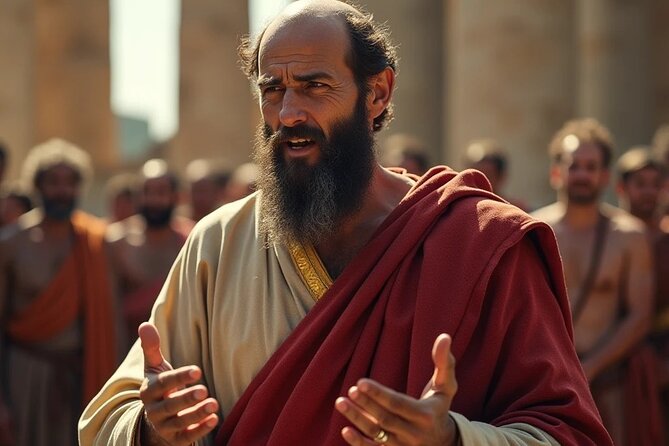
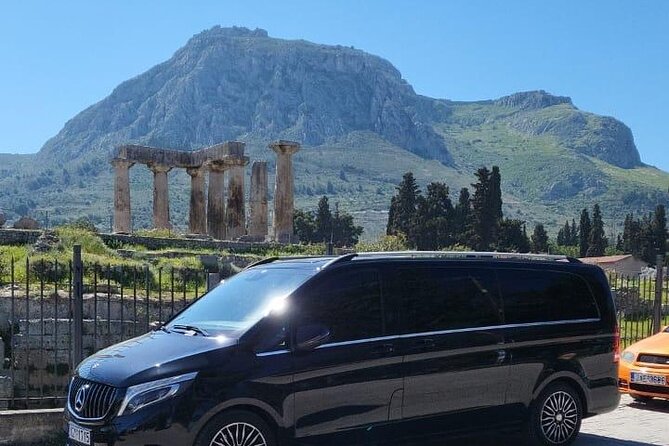
This is built as a real day trip, not a scramble. You’re picked up from your hotel or cruise, and the driver waits for you at the entrance (or holds a name sign at the port gate). That alone saves stress, especially if you’re juggling ship timetables or you don’t want to hunt for the right bus stop.
The vehicle is described as a luxury private transport with air-conditioning and Wi‑Fi on board, plus bottled water. Those details matter more than you’d think on a long Greece day: you’ll want cool-off time after walking, and Wi‑Fi helps when you’re trying to navigate maps or confirm opening hours.
And because it’s private, the tone is calmer. You’re not negotiating with a large group for where to stand for photos or when you want to pause to read a plaque.
You can also read our reviews of more tours and experiences in Athens.


Price and value: what $313.01 per group really covers
The price is $313.01 per group (up to 2) for a tour around 7–8 hours. The value angle here is simple: you’re paying for a private, fully-guided driving day with pickup/drop-off, plus an English-speaking driver-guide who provides the historical context.
If you have two people, you split the cost and effectively turn it into a “private for the price of two people” kind of deal. If you’re traveling solo, it costs more per person, so you’re really buying the transportation + guidance + time savings.
One more value note: entrances are mixed. Areopagus is listed as free, while Ancient Corinth (Archaia Korinthos) has an entrance fee of €15.00 per person that is not included. Temple of Apollo is also listed as not included, but no fee is provided for that specific stop. So budget a bit extra so the day stays smooth.
Areopagus and Mars Hill in Athens: Paul’s 51 A.D. setting
The Athens start is at Areopagus, tied in the tour narrative to Saint Denis and to Paul’s presence around 51 A.D. From here, you’re looking at the broader Mars Hill setting at the Acropolis area—one of the most famous zones in the New Testament geography.
What you’ll likely enjoy most at this stop is the framing. The driver-guide’s job is to help you understand why this spot mattered: not just the name, but the terrain and the viewpoint logic that makes the story feel grounded in place. Since you’re not staying inside a museum here, this is about getting your bearings fast and getting the story straight before the day expands.
Also, do note a practical heads-up from real-world experience: Mars Hill access can change on certain dates. One recent visit noted Mars Hill was closed for repairs, with visibility possible but no climb. If you care about going up steps, arrive with Plan B in mind: you can still see plenty from the lower areas.
Roman Agora and the move toward Areopagus

Next is the Roman Agora. This stop is described as part of the larger ancient civic space, and it’s tied to Paul’s early Corinth connections through the idea that judges invited him to move toward Areopagus for a discussion about gods.
This stop is shorter (about 30 minutes) and has an important practical factor: admission isn’t included. So even if you want to linger for reading time or photos, you’ll want to have your mindset set that this is more “look and learn” than “long museum stroll.”
If you want to squeeze extra value out of this leg, I’d suggest doing a little prep before the day: refresh the basic story of Paul at Athens and what the Areopagus discussion is associated with. Then every turn of the driver’s explanation feels less like a lecture and more like a guided walk through places you already recognize.
Diolkos boat-rolling route and the Corinth Canal views
Now you’re leaving Athens history and moving into the engineering that made Corinth a strategic connector.
The Diolkos stop is a standout because it’s time-warp specific: the tour describes it as roughly 2,700 years old and explains the boat-rolling system that dragged ships across the narrow land between the Corinthian Sea and the Aegean Sea. This is one of those “scripture-adjacent” moments where you realize how trade routes and transport shaped the real world Paul’s messages traveled through.
Then comes the Corinth Canal, another visual win. The tour’s descriptions focus on the canal’s scale and the fact that it connects the Aegean and Ionian seas. It also credits King George starting excavations in 1882, and mentions a very large workforce. Even if you don’t care about engineering, the canal is a quick hit of dramatic geography—one of those places where you automatically start thinking about what ships and people needed to do to move.
Both stops are listed as free of admission, so you’re not being squeezed by extra fees mid-route. That also means you can use the time more freely for photos and quick breaks.
- All Day Cruise -3 Islands to Agistri,Moni, Aegina with lunch and drinks included
★ 5.0 · 4,958 reviews




Ancient Corinth, the BHMA Step of Paul, and the Apollo Temple
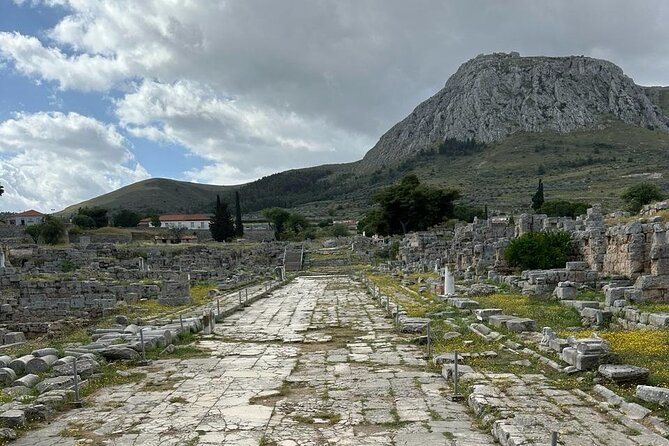
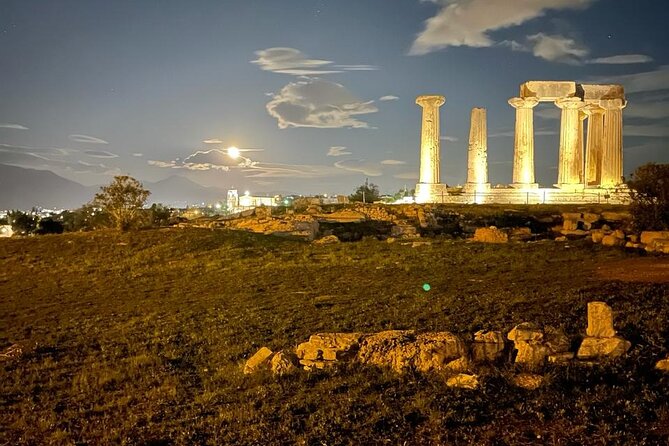
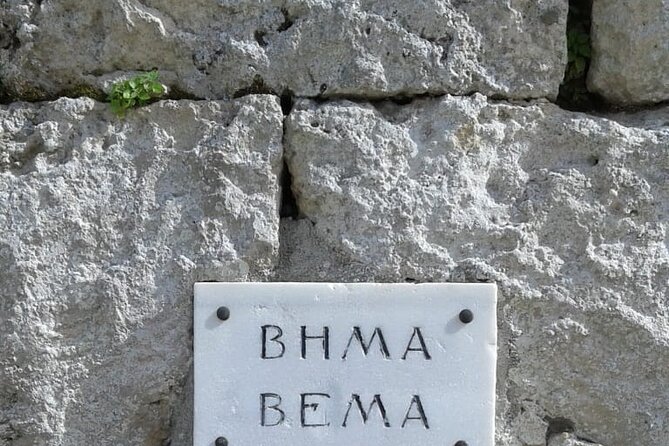
This is the heart of the day: Ancient Corinth (Archaia Korinthos). It’s labeled as the most important part of the tour, with specific attention to the BHMA and the “Step of Paul” connection in the tour narrative. Expect this stop to be the one where you feel the weight of place the most, because you’re standing inside the ancient city footprint tied to Corinth’s first-century life.
Here’s the practical catch: Ancient Corinth’s entrance fee is €15.00 per person and not included. Also, the tour does not include a guide escort inside the archaeological site. So you’ll get your historical storytelling from the driver-guide, but inside you’re mostly on your own for navigation and reading.
That doesn’t make the stop less valuable. It just means you should arrive ready to work a bit. If you’re a Christian traveler who wants scripture tied to geography, this is where it clicks. And if you’re more of a casual-history traveler, aim to use the driver-guide context to orient yourself—then walk slower and let your eyes do the connecting.
Next is the Temple of Apollo, described as an older Apollo temple in Greece and tied to Apollo as a local Corinthian god. The tour also notes a “sun hits from all sights” moment, which sounds like a specific seasonal light effect. Plan your photos and viewing angles accordingly.
The Temple of Apollo is listed as not included for admission, though no price is given. So treat this as another stop where you might need to pay entry on-site.
Acrocorinth and Kechries Harbor: fortress views and Priscilla’s setting
After the main ruin zone, the tour climbs into the wider viewpoint story.
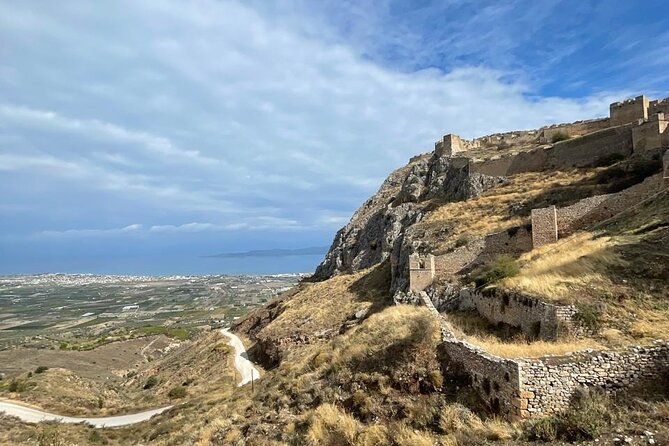
Acrocorinth is described as the winter palace of Caesar with a Temple of Aphrodite, and it’s presented as a major hilltop fortress. The tour text includes extreme height and age claims, plus a medieval palace mention. Even if you take the legends with a grain of salt, the practical value is the same: you’re on a commanding height, and the views help you understand why this location mattered.
If you like your history with scenery (and honestly, who doesn’t in Greece?), this stop can be a day-saver. It breaks up the ruin walking with wide open air and a “why here” perspective.
Then you drop toward Kechries, the ancient harbor zone. The tour connects this area to Paul meeting Priscilla and Akila, and it frames a church site as a key monument related to Paul’s teaching presence. It also notes Paul later leaving for the port to go toward Ephesus around 53 A.D.
This is the stop where the Bible narrative becomes place-based again, not just general history. Harbor areas tell you a lot about daily life: movement, trade, and people passing through. Even if you don’t know the exact route from Paul’s letters, the physical setting tends to make the timeline feel less abstract.
Apostolos Pavlos Church mosaic: the closing image to remember
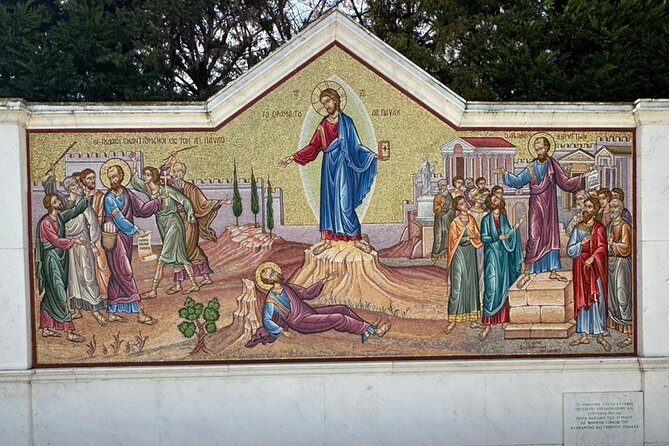
The tour ends in Apostolos Pavlos Church in Ancient Corinth. It’s listed as free and includes a notable mosaic described as The vision of Paul.
This closing stop matters because it acts like a visual period at the end of a long sentence. After ruins, canals, and cliff views, a church interior with a single strong artistic theme can bring the day full circle. If you’re the type who wants history to point somewhere meaningful, this stop is often the one you remember after the photos blur.
Time here is about 20 minutes—short enough to keep the day moving, long enough to sit for a moment and actually look.
How the guides shape the experience (and why names come up often)
The praise around this tour keeps circling back to driver-guides doing more than driving. Names mentioned in real feedback include Konstantinos, Jorge, Nick, Michael, and George. The common thread is clear: they explain the setting, communicate well, and keep the day organized without feeling rushed.
One specific benefit that shows up: because it’s a smaller, private group format, some stops feel easier than what large-bus schedules can manage. That can mean better timing for photos and more flexible pacing when you want a little extra time at a viewpoint.
One more practical point from real-world notes: since the driver-guide generally doesn’t escort you inside every archaeological site, your guide’s outside explanations become even more important. If you ask questions at the car stops—where you’re standing, what you’re likely seeing, what to look for once inside—you’ll get more out of the day.
Should you book this Paul 51 A.D. Athens and Corinth tour?
I’d book it if you want a single, organized day that ties Athens and Corinth together through Paul’s story, and you value door-to-door comfort. The strongest fit is for travelers who:
- care about Bible-era geography, not just general sightseeing
- want a private format with calm pacing (and air-conditioned transportation)
- can handle some self-guided time inside sites since entries and escorts aren’t fully included
I’d think twice if you want a fully guided inside-the-ruins experience at every stop. The tour gives historical framing, but admission inside certain sites is on your own, and entrances can add up.
If you do book, bring two things: a little scriptural context so the sites click faster, and a small budget buffer for €15 Ancient Corinth plus any other paid entries marked not included. Then you’ll walk away with that rare feeling of stepping through the same kind of streets Paul’s world depended on—minus the headache of planning every leg yourself.
FAQ
How long is the Ancient Athens Corinth Biblical Tour Following Paul 51.A.D?
It runs about 7 to 8 hours.
Is lunch included in the price?
No, lunch is not included.
Are entrance fees included for all stops?
Not fully. Ancient Corinth (Archaia Korinthos) costs €15.00 per person and is not included. Other stops are marked either free or not included, so expect some pay-as-you-go entries.
Does the tour include hotel or cruise pickup and drop-off?
Yes. Hotel/cruise pickup and drop-off are included. For port pickup, the driver waits at the gate with a sign showing your name.
Is this a private tour?
Yes. It’s private, and only your group participates.
What’s included in the vehicle?
You get air-conditioned private transportation, Wi‑Fi on board, and bottled water, plus an English-speaking tour driver-guide.
What is the cancellation policy?
You can cancel for a full refund up to 24 hours in advance of the experience start time.



More Tours in Athens

More Tour Reviews in Athens
- All Day Cruise -3 Islands to Agistri,Moni, Aegina with lunch and drinks included
★ 5.0 · 4,958 reviews