REVIEW · ATHENS
“A Day in Ancient Olympia:The Cradle of the Olympics Games”
Book on Viator →Operated by Greece Athens Taxi GAT · Bookable on Viator
Olympia in a single, well-run day. You’ll cover the Isthmus of Corinth and then dive into Olympia’s stadium and temples, plus two museums tied to the ancient Games. It’s the kind of day trip that feels efficient without feeling rushed.
What I like most is the comfortable private ride. You get a Mercedes-Benz with A/C, Wi‑Fi, water, and mobile chargers, and pickup is handled smoothly from Athens or Port Piraeus. I also really enjoy how the itinerary builds context: the archaeological site comes first, then the museum portion helps you understand what you just saw.
One consideration: tickets are not fully included. The Olympia archaeological site fee is €20 per person (not included), and museum admissions are also not included—plus the driver isn’t a licensed guide inside the sites, though a licensed guide can be requested depending on availability.
In This Review
- Key highlights worth planning for
- Isthmus of Corinth: a strategic stop before the big names
- Arriving at Olympia: getting your bearings fast
- The stadium of Olympia: where you can picture the race
- Temple of Zeus and Hera’s altar: the heart of the Games
- Temple of Zeus
- Hera’s altar and the Olympic flame moment
- Philippieion and palaestra: the “athletics building blocks”
- Philippieion
- Palaestra
- Olympia Archaeological Museum: when statues start telling the story
- Museum of the Olympic Games: the story in 45 minutes
- Private transfers from Athens or Piraeus that reduce friction
- Tickets, admissions, and the real cost of a day at Olympia
- Timing and pacing: making an 8 to 10 hour day feel manageable
- Who this day trip fits best
- Should you book this Olympia day trip?
- FAQ
- Is pickup from Athens and Port Piraeus included?
- Does the price include tickets to the archaeological site and museums?
- How long is the tour?
- Is this a private tour?
- What vehicle amenities are provided during the drive?
- Will there be a licensed tour guide at the museums and sites?
- Can I cancel and get a full refund?
Key highlights worth planning for
- Isthmus of Corinth + Hexamilion: a quick history stop tied to ancient strategy and the canal’s geography
- Olympia’s must-see set: stadium, Temple of Zeus, Hera’s altar, Philippieion, and palaestra in one visit
- Two museums that make sense of the ruins: the Olympia Archaeological Museum and the Museum of the Olympic Games
- Comfort on a long day: A/C Mercedes, Wi‑Fi, water, and chargers so you’re not surviving the transfer
- Driver support with skip-the-line tickets: you get help purchasing them, but you still cover ticket costs
Isthmus of Corinth: a strategic stop before the big names
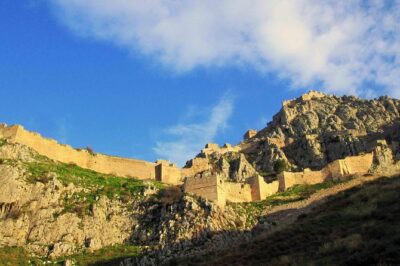
The day starts with a drive through the Peloponnese and a stop at the Isthmus of Corinth. This is that narrow strip of land linking Central Greece to the Peloponnese, where the Corinth Canal connects the Saronic Gulf with the Gulf of Corinth. It’s only about 6 kilometers long, but it matters a lot in the story of Greek travel and power.
A detail I like here is the Hexamilion wall. The area was strategic for centuries, and the wall was built in ancient times and preserved through Byzantine periods. It’s a compact stop, but it sets you up for Olympia by reminding you how geography shaped everything—routes, control, and what people could reach.
If you’re the type who likes photos with context, this stop is useful. If you’re expecting a full-on sight like a big museum complex, you’ll be fine with it being short: it’s meant to break up the drive and sharpen your focus.
You can also read our reviews of more tours and experiences in Athens.


Arriving at Olympia: getting your bearings fast
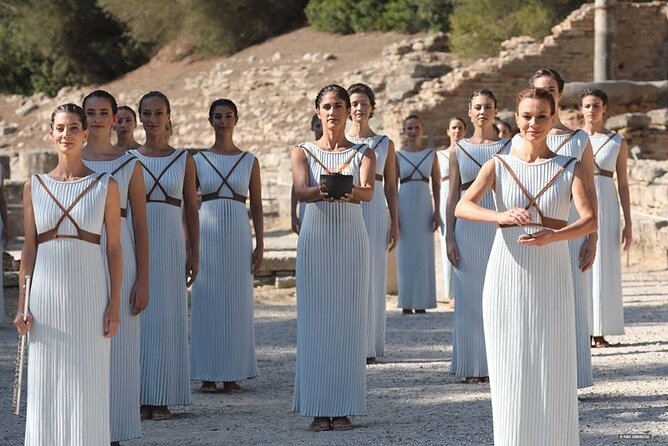
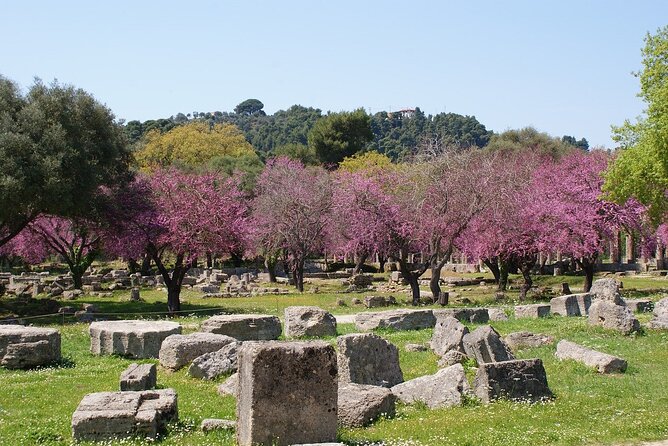
Then comes Olympia proper—a small town in Elis, but it’s famous because the ancient archaeological sanctuary of Olympia sits nearby. This was a major Panhellenic religious center, and the ancient Olympic Games were held every four years during Classical antiquity.
What makes this place special is the combination of religion and athletics. Olympia wasn’t only about competitions. It was also where people gathered in honor of Zeus, in a sanctuary setting that made the Games feel like something bigger than sports.
Your visit includes a walking tour through several key areas inside the sanctuary. You’ll spend about one hour at the archaeological site, so the trick is to focus on the big structures and learn what they were for. The stadium and main temples help you do that quickly.
Practical note: because the driver is not a licensed tour guide inside the sites, plan to rely on your own reading of signs and your driver’s general guidance before you enter. If you want richer, on-the-ground explanation, consider requesting a licensed tour guide (availability depends on the day).
The stadium of Olympia: where you can picture the race
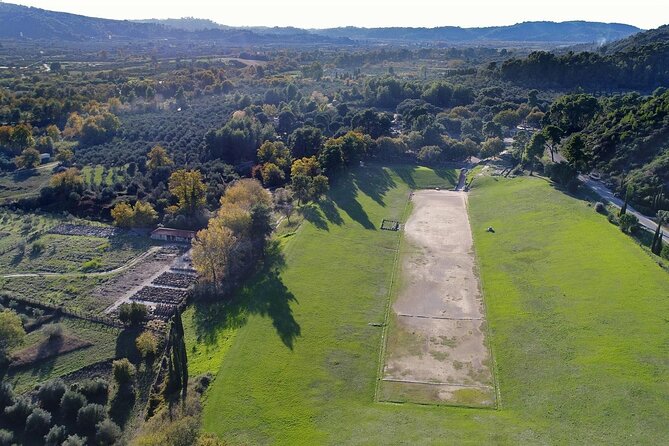
Olympia’s stadium is the anchor. This is where most ancient Olympic Games took place, and the racetrack is over 200 meters long, with a width roughly 30 to 34 meters. Standing in that space, it’s easier to imagine how athletes moved and how spectators would have watched.
Even if you’re not a sports historian, this stop helps your brain switch from looking at ruins to picturing events. The stadium size gives you a physical scale—so later, when you see temples and altars, it all feels connected rather than random stones.
Time-wise, one hour at the site means you’ll want an efficient route. Focus first on the stadium, then move to the main religious buildings. If you chase every single structure equally, you’ll spend too much time bouncing between points and miss the overall picture.
Temple of Zeus and Hera’s altar: the heart of the Games
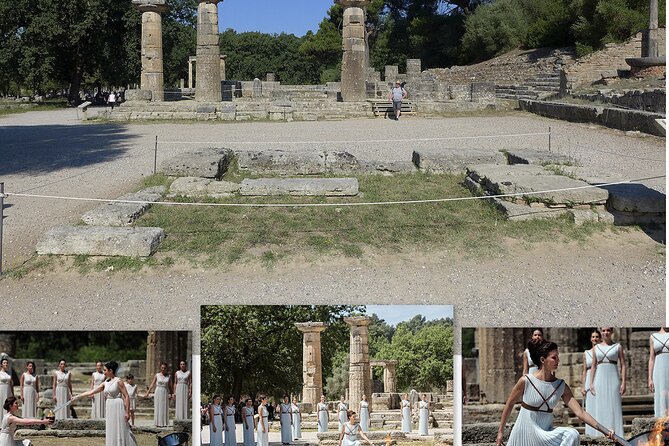
Next up are the monuments that explain why Olympia had global meaning.
Temple of Zeus
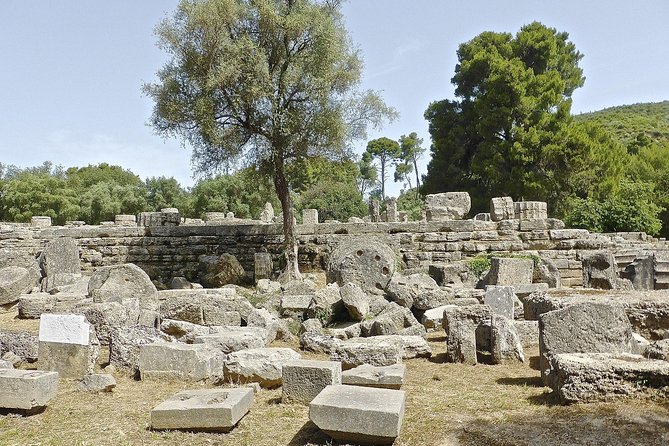
The Temple of Zeus was built in the 5th century BC by a local architect. It’s described as made of limestone and marble, and historical records say a giant golden statue of Zeus was found inside the temple. Even though the statue is not there today, the temple’s scale helps you understand how serious the sanctuary was.
If you like connecting art, power, and religion, Zeus is your big payoff. Think of this as the place where the Games weren’t just competitions—they were offerings and worship in a sacred setting.
- All Day Cruise -3 Islands to Agistri,Moni, Aegina with lunch and drinks included
★ 5.0 · 4,958 reviews



Hera’s altar and the Olympic flame moment
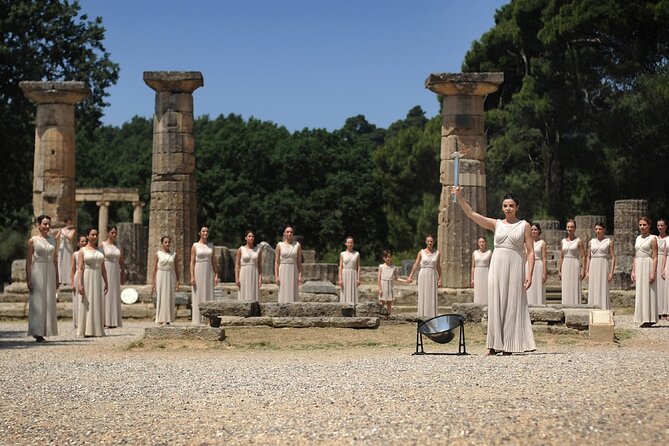
Nearby is the temple to goddess Hera, constructed in the 7th century BC in the Dorian style. Today, this is the altar where the Olympic flame is lit before the Games.
That continuity is striking. You’re walking through ancient space that still shapes modern ceremony. It’s not just a museum lesson; it’s a visual reminder that symbolism can survive for thousands of years.
Philippieion and palaestra: the “athletics building blocks”
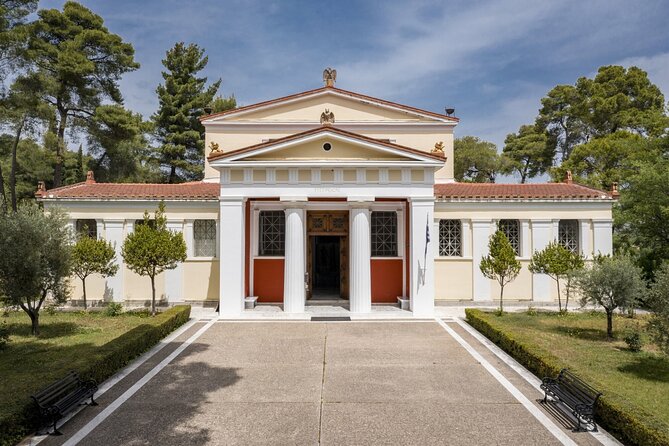
Two other spots help round out the story beyond the stadium and the main temples.
Philippieion
The Philippieion is the only circular building inside the Altis enclosure. It’s one of the finest examples of ancient Greek architecture in the sanctuary and was dedicated to Zeus by Philip II of Macedon.
For architecture lovers, this is a great contrast point. For everyone else, it’s a useful reminder that Olympia was designed for more than one kind of function. It wasn’t only a single temple-and-stadium setup.
Palaestra
The palaestra sits west of the Altis enclosure near the Kladeos river. It was built in the 3rd century BC as part of the gymnasium complex and was used for practice like boxing, wrestling, and jumping.
This is the piece that makes the athletes feel real. The stadium is where the Games happened, but the palaestra is where training and preparation fit into the daily rhythm.
Tip for your visit: take a moment at each stop and ask yourself one question—what activity does this space support? That mental label makes it stick, especially when you only have about an hour here.
Olympia Archaeological Museum: when statues start telling the story
After the outdoor site, you’ll head to the Archaeological Museum of Olympia. This museum is well regarded and runs about one hour. The key value is that it holds findings from the ancient site and other excavations in the area, with clear labeling and many rooms.
The two famous exhibits named in the description are the statues of Hermes of Praxiteles and Nike Paionios. Even if you’ve seen photos before, it hits differently to stand in a gallery after being outside among the temples and stadium stones.
I like this sequence—ruins first, museum next—because your brain starts to connect objects to the environment. Instead of leaving Olympia with only impressions of size, you leave with tangible evidence of how people lived, competed, and celebrated.
Museum of the Olympic Games: the story in 45 minutes
Then there’s the Museum of the History of the Olympic Games, described as housed in the old archaeological museum in Ancient Olympia. This stop is about 45 minutes, and it focuses specifically on findings tied to the ancient Games across the broader area.
What I find practical here is that it keeps the day from getting too general. The site shows you where it happened; this museum tries to explain the how and why. You also avoid the problem of spending extra time hunting for details at the ruins when you can get them in a more concentrated format indoors.
If you’re worried about feeling museum-fatigued, this one is short enough to stay enjoyable. If you’re a total Olympics nerd, you might wish it were longer, but the time cap makes it easy to fit into an 8–10 hour day without burning out.
Private transfers from Athens or Piraeus that reduce friction
This tour is built around a key idea: time-saving private transportation so you can cover two major areas in one day. Pickups are available from your hotel/Airbnb in Athens or from Port Piraeus, and you’ll get drop-off at the same place you start.
The vehicle is a Mercedes-Benz equipped with A/C, Wi‑Fi, bottled water, and mobile chargers. That matters more than it sounds. With a day that can run 8 to 10 hours, comfort turns your attention back to the sights instead of being stuck in fatigue math.
Also, this is private in the sense that only your group participates. That can be a big deal if you’re traveling with family, or if you want fewer compromises about pace and stops.
One important clarity: the driver is English speaking and has knowledge of the history, but they are not licensed to accompany you inside the museums or archaeological sites. That’s why you get assistance purchasing skip-the-line tickets, but not a full guided tour at each stop unless a licensed guide is arranged depending on availability.
Still, the driver’s role is useful: they can help you plan the order you tackle sights, and they can keep the schedule moving without making you feel like you’re herding cats.
Tickets, admissions, and the real cost of a day at Olympia
The price is $327.43 per person for an 8–10 hour private tour. That number covers round-trip transfers, the air-conditioned vehicle with Wi‑Fi, bottled water, and chargers, plus the driver’s English speaking history background. It also includes help with purchasing skip-the-line tickets and provides a mobile ticket.
The money you’ll likely add on top is mostly admissions:
- Archaeological Site of Olympia: €20 per person (not included)
- Olympia Archaeological Museum: admission not included
- Museum of the Olympic Games: admission not included
Lunch is also not included. So even though the headline price covers a lot, you should budget for museum entries and food on the ground.
One helpful detail: ticket prices can vary depending on season, with a winter vs summer difference mentioned. If you’re traveling in a peak season month, plan that your on-site spending could be higher.
Value-wise, this works best when you want a structured, guided day without the stress of figuring out transport on your own. If you’re the kind of traveler who enjoys DIY public buses and long waits, you may find cheaper options—but they come with more friction.
Timing and pacing: making an 8 to 10 hour day feel manageable
This day trip runs about 8 to 10 hours, so pacing matters. You’ll fit:
- a first stop at the Isthmus of Corinth (short),
- then Olympia site time (about one hour),
- then the Olympia Archaeological Museum (about one hour),
- and finally the Museum of the Olympic Games (about 45 minutes).
That adds up to a busy schedule, but the good news is the structure keeps you from drifting. You’ll always know what comes next, and you’re not stuck deciding mid-day what’s worth it.
A couple practical tips for you:
- Wear comfortable shoes. Olympia involves walking between multiple areas within the Altis sanctuary.
- Bring a light layer. Even with A/C on the drive, you’ll be outdoors at the archaeological site.
- Keep your eyes on the main priorities first: stadium, Zeus, Hera’s altar. Save extra curiosity moments for the museum stops when you can slow down indoors.
If you’d like more time on-site, there’s an option to extend for a fee. That’s handy if your group wants longer at the museum or needs a slower pace.
Who this day trip fits best
This is a strong fit if you:
- want Olympia plus museums in one outing,
- prefer private, door-to-door comfort from Athens or Piraeus,
- like your history with a practical schedule rather than open-ended touring.
It might be less ideal if you:
- want a fully licensed, stop-by-stop guided narrative inside every museum hall and archaeological structure. The driver is knowledgeable, but not licensed for site accompaniment.
- hate shopping for admissions on the spot. The site and museum entries aren’t included, so you’ll need to handle those fees directly.
One more point from the experience details: additional fees may apply if the tour ends somewhere other than the designated meeting point. So if your plans change mid-day, confirm where you’ll be dropped off.
Should you book this Olympia day trip?
I’d book this if you’re short on time and want to hit the big Olympia moments without the transport headache. The combination of easy transfers, a comfortable vehicle with Wi‑Fi and chargers, and skip-the-line ticket help makes the day feel smoother than typical DIY attempts.
I also like that the setup isn’t pretending to be a full expert guide at every doorway. You get a helpful, history-aware driver, and you can request a licensed guide depending on availability if you want extra narration.
One extra reassurance: the tour has a high rating and includes a concrete example of service recovery. In one case where the car had an electronics issue, the driver handled it well and the trip still went on schedule, and the provider’s representative, Konstadinos Tzarda, apologized and reaffirmed the experience quality. That tells me they care about fixing problems instead of shrugging them off.
If you’re thinking about it, aim to book ahead. The experience is commonly booked about 11 days in advance, which suggests it’s popular, especially in busier travel windows.
If you want a one-day ticket to the cradle of the Olympics with real comfort and a smart itinerary, this is a solid choice.
FAQ
Is pickup from Athens and Port Piraeus included?
Yes. You can be picked up from your hotel/Airbnb in Athens or directly from Port Piraeus, and you’ll also get drop-off back at the same location without extra charge.
Does the price include tickets to the archaeological site and museums?
Skip-the-line ticket assistance is included, but you pay the ticket costs. The Archaeological Site of Olympia admission is €20 per person and is not included, and museum admissions for both museums are not included.
How long is the tour?
It runs about 8 to 10 hours.
Is this a private tour?
Yes. It’s private in the sense that only your group participates.
What vehicle amenities are provided during the drive?
You’ll travel in a Mercedes-Benz with air-conditioning and Wi‑Fi. The tour also includes bottled water and mobile chargers.
Will there be a licensed tour guide at the museums and sites?
The driver is English speaking and knowledgeable, but they are not licensed to accompany you inside museums or sites. A licensed tour guide can be requested depending on availability.
Can I cancel and get a full refund?
Yes. You can cancel up to 24 hours in advance for a full refund.

More Tour Reviews in Athens
- All Day Cruise -3 Islands to Agistri,Moni, Aegina with lunch and drinks included
★ 5.0 · 4,958 reviews