REVIEW · ATHENS
Small Group Tour: 7 Balkan Countries Athens to Dubrovnik / Split
Book on Viator →Operated by Choose Balkans · Bookable on Viator
Seven countries, one well-planned route. You’ll move from Delphi’s ancient stage to Meteora’s cliff monasteries, then down through lake views, Ottoman streets, and UNESCO towns that feel worlds apart. I love the small-group size (max 10 people) and how the guide helps you connect the dots across Greece, Albania, North Macedonia, Kosovo, Montenegro, Bosnia & Herzegovina, and Croatia. The main drawback to plan for is the pace: long drives and border days mean you’ll need comfortable shoes and a flexible attitude.
I also like the people side of this trip. Guides such as Elton and Eri Veseli are described as attentive, organized, and passionate, with the kind of clear explanations that make the bus ride go faster (and yes, good music helps too). Pair that with clean 3-star hotels and you get a trip that feels run with care, not thrown together.
In This Review
- Key highlights worth your attention
- Athens pick-up and Delphi’s ruins: the perfect first mental reset
- Meteora sunset: monasteries on rock, not on a postcard
- From Ioannina to Gjirokaster: Ottoman-era street life and the Stone City effect
- Berat’s 1001 windows: why this hill town feels quietly powerful
- Ohrid and St. Naum: lake time with real monastery context
- Tirana by food and museums: the side of Albania you can feel fast
- Kruja, Prizren, Decan: fortresses, Ottoman craftsmanship, and UNESCO frescoes
- Slow food at Mrizi i Zanave and Rozafa’s hilltop drama
- Montenegro’s coast: Sveti Stefan views, Budva old town, and Kotor’s puzzle streets
- Stari Most and Blagaj: Bosnia’s bridge icons and spring water wonder
- Sarajevo: war reminders, Ottoman and Austro-Hungarian layers, and Latin Bridge
- Price and logistics: what the cost includes and what you’ll still need to handle
- Should you book this Athens to Dubrovnik/Split small-group tour?
- FAQ
- Where does the tour start and when?
- What are the countries covered on this route?
- How long is the trip?
- Are breakfasts included?
- Are entry tickets included?
- Does the tour include transport between stops?
- Is tipping expected?
Key highlights worth your attention
- Delphi + Meteora early on: you start with Greece’s big names, including Delphi’s Temple of Apollo area and a Meteora sunset built into the day.
- UNESCO towns with very different flavors: Ohrid (lake + churches), Berat (1001 windows), Kotor (old-town maze), and Stari Most (the bridge you came for).
- Food moments that feel local, not staged: Tirana byrek breakfast and lunch at Pazari i Ri, plus Albanian coffee culture stops.
- A guide who sets context: explanations that connect Illyrians, Byzantine/Ottoman layers, and more so you aren’t just taking photos.
- Clean, simple lodging: the trip uses 3-star hotels, and breakfast is included for all 14 overnights.
Athens pick-up and Delphi’s ruins: the perfect first mental reset
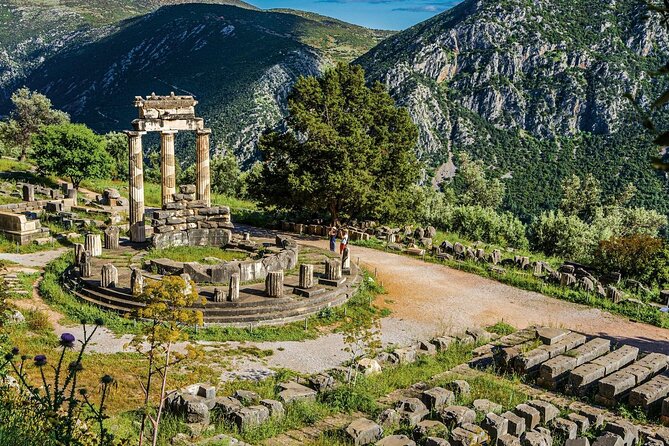
The tour starts in Athens, with a hotel pick-up (8:00 am start time). This matters because Athens can be chaotic the first day. Getting on the road early helps you avoid the common travel snag of spending your best energy on transit and figuring things out.
Then Delphi arrives fast. You’re looking at UNESCO-listed archaeological ruins with major landmarks like the Temple of Apollo area, the Castalian Fountain, and the Theatre and Stadium. What I like here is that you don’t just wander among stones—you get guided context around monuments such as the Treasury of the Athenians and the museum pieces (including the Antinoos statue and the Bronze Charioteer from 475 B.C.). Even if ancient Greece isn’t your daily obsession, Delphi has a strong emotional pull: it feels like a place where people once came to ask big questions.
Practical note: Delphi time is short (about an hour in the plan), so go in ready to move. Wear shoes you don’t mind getting dusty and keep your water handy, even when some parts of the schedule mention free admission.
You can also read our reviews of more tours and experiences in Athens.


Meteora sunset: monasteries on rock, not on a postcard
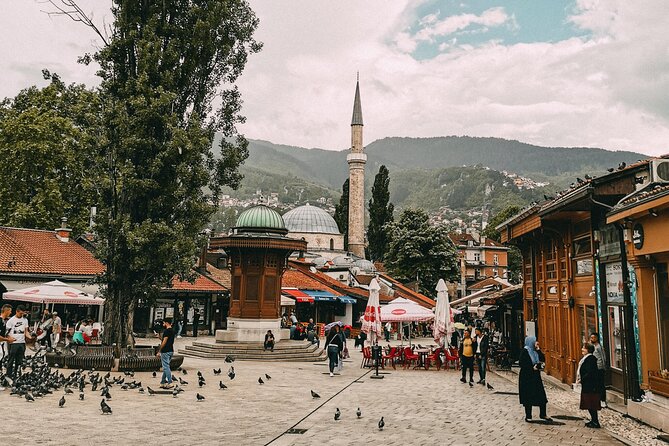
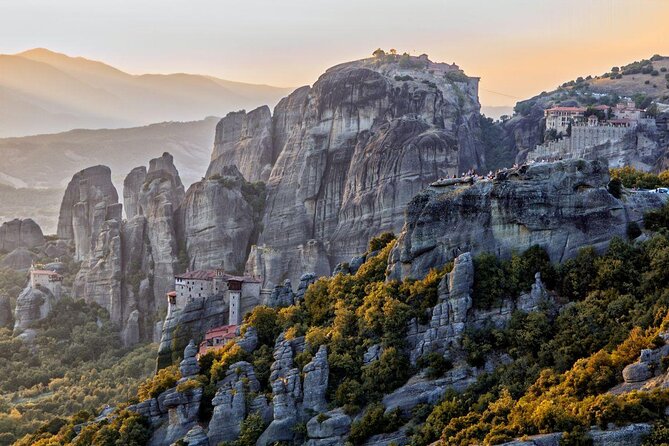
After Delphi you head to Meteora, another UNESCO site. Meteora’s monasteries sit on dramatic rock formations, and the plan focuses on the classic 14th–15th century cliff-monastery era. You’ll get about an hour here, but the way the timing is built makes the visit work.
The star moment is the sunset view. As the day turns, the sky shifts colors above the rocks, and the monasteries become silhouettes against that glow. Meteora is one of those places where your photos will look good, but your memory will stick more because it’s so physical—wind, height, and that strange feeling of being close to something cut off from everyday life.
One consideration: sunsets depend on conditions. If weather is hazy or rainy, you may not get the full show. Still, even a flat light day at Meteora feels worth it.
From Ioannina to Gjirokaster: Ottoman-era street life and the Stone City effect
Once you leave Greece, you’ll spend time in Albania. Ioannina starts the Albania stretch with cobbled old-town wandering and visible layers from Byzantine and Ottoman times—plus the Ioannina Castle. Inside the castle, the streets are maze-like, and that’s exactly the right word for how you’ll experience it: you drift, you turn corners, and suddenly you’re in a different mood than the street you just left.
Then comes Gjirokaster, often called the Stone City. This is UNESCO-listed, and the town’s feel is about fortification. Houses look like small fortresses, built on a hillside below the castle. The plan includes time for the medieval bazaar and a preserved house with original details—so you’re not just looking outward at the city’s shape, you’re seeing how people lived inside it.
If you love architecture, this is a high-payoff day. If you’re the type who gets tired from walking uphill, pace yourself in the bazaar area and save your energy for the castle views.
Berat’s 1001 windows: why this hill town feels quietly powerful
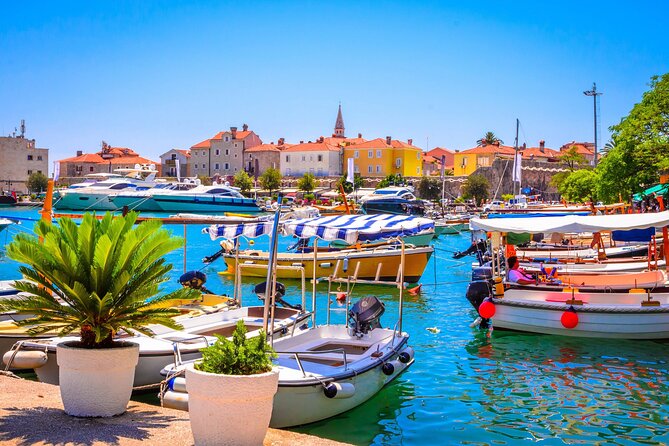
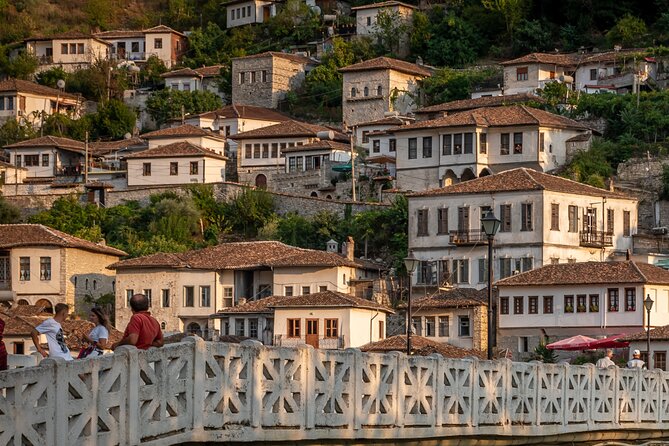
Berat is where the trip slows just enough to let you notice details. It’s UNESCO-listed and famously known as the town of 1001 windows. Walking the narrow stone streets, you get a layered view of medieval houses built so windows seem to stack and overlap across the hillside.
The included stops add structure to the wander:
- Berat Castle: more ancient-to-medieval continuity plus a view over the town.
- National Iconographic Museum Onufri: dedicated to Onufri, the painter known for a reddish church-painting tone that’s still hard to replicate.
- Gorica Bridge and the Gorica neighborhood.
What I like most is the way Berat lets you see multiple eras in the same frame—medieval walls, Ottoman-era religious buildings, and even communist-era traces mentioned as part of the broader castle-town setting. And because some of these entries are marked included, you don’t spend your day doing “ticket math” at every turn.
Ohrid and St. Naum: lake time with real monastery context
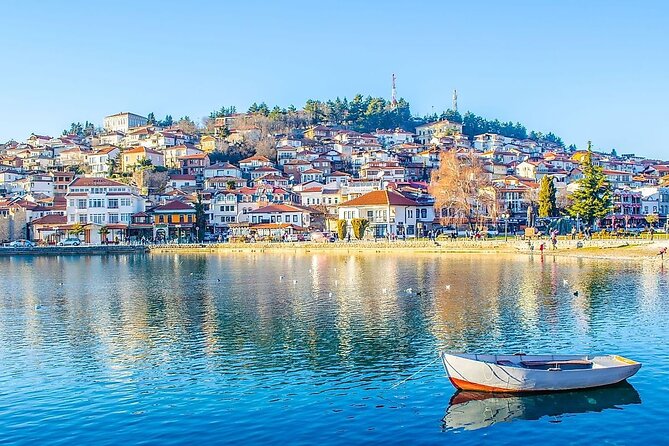
Crossing into North Macedonia, the tour highlights the region’s water and faith sites. Drilon National Park is your first stop: springs create a small lake surrounded by greenery, with weeping willows along the shoreline. This works as a mental breather before the border shift and the next UNESCO-heavy day.
St. Naum comes next. The monastery complex sits at the source of the River Crni Drim, feeding into Lake Ohrid. You’ll also be positioned within National Park Galicica’s protected area context. The setting is clean and bright in the way spring water often is—crystal-clear reflections of greenery and peaks.
Then Ohrid city and Ohrid Lake take over. Ohrid is UNESCO-listed (since 1980), and it’s tied to very old settlement in Europe. The plan includes viewpoint time at the Church of St. John, stops around the Church of St. Nicolas, and also the Halveti Hayati Tekke mosque. One detail worth holding onto as you walk is Ohrid’s reputation for 365 Orthodox churches—one for each day of the year—so you’ll start spotting church silhouettes and internal-feeling details with a different mindset.
Ohrid isn’t just a “pretty place.” It’s a living religious center with layers from Byzantine through Ottoman eras, and that gives the streets meaning beyond aesthetics.
- All Day Cruise -3 Islands to Agistri,Moni, Aegina with lunch and drinks included
★ 5.0 · 4,958 reviews
Tirana by food and museums: the side of Albania you can feel fast
Tirana is where the trip adds everyday culture instead of only monuments. You’ll start with a short city discovery with a local companion—then go straight into food and markets.
The plan includes Byrek breakfast at a small local spot (the kind of place locals know), plus time around Tregu Çam and the Çam bazaar area founded by the Çam community. Later you’ll visit Pazari i Ri, including the Bicycle bazaar and the New Bazaar for Albanian lunch: qofte (meatballs) with freshly baked bread, and for vegetarians, bread with Albanian gjize (cottage cheese). You’ll also taste Albanian raki and join locals for Albanian coffee culture.
Then there’s BUNK’ART 2. This is a museum in a former nuclear bunker associated with Enver Hoxha’s communist leadership. The key point is that the bunker was hidden from the public until 2014 and then converted into a video-museum experience about communist life and the communist army’s history. Even if politics isn’t your thing, it’s one of the more unusual “history in physical form” stops on the route.
This day can be a lot if you’re sensitive to crowded market energy. But it’s a strong break from castles and churches because it hits daily life.
Kruja, Prizren, Decan: fortresses, Ottoman craftsmanship, and UNESCO frescoes
Kruja starts your next Albania/Kosovo leg with Albanian resistance history and Ottoman-era pushback context. The plan includes time in Kruja’s Medieval Old Bazaar (one of the biggest and oldest in the Balkans) and a visit to Kruja Castle, with the guide taking you through hidden paths used during conflict.
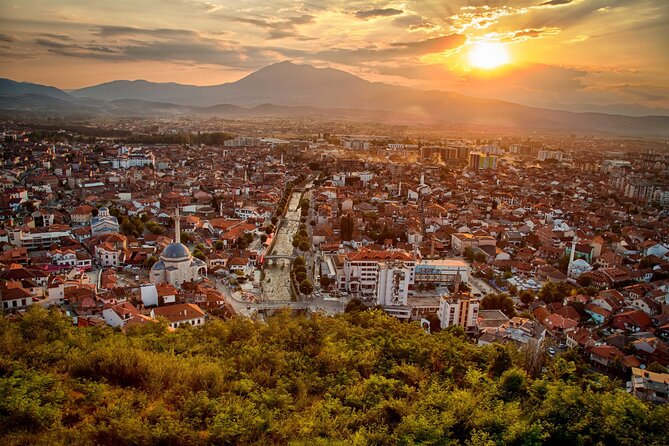
Then you cross into Kosovo for Prizren, the cultural capital on this route. Prizren’s old town includes an active river through the center and many bridges. The city’s religious tolerance shows up in how mosques and churches sit within the same street system, and the atmosphere is also shaped by craftsmanship and the bazaars.
You’ll also visit Sinan Pasha Mosque (included), then move up to Kalaja Fortress for views. There’s also free afternoon time, which I like on trips like this because it gives you room to slow down or return to a street you loved.
Next comes a UNESCO fresco visit at Decan Monastery. It’s known for its white appearance and for the fact that Orthodox monks still inhabit the monastery and make fresh organic food. The UNESCO listing is tied to frescoes and the Palaeologan renaissance style shift.
Finally there’s Rahovec in the valley area tied to viticulture, with grape cultivation dating back about 2000 years (as described in the plan). If you time your trip near September, there’s a wine festival annually—though the exact date will depend on your departure.
This stretch is a good match for travelers who want both “big UNESCO sites” and the craft-and-streets feel that makes them real.
Slow food at Mrizi i Zanave and Rozafa’s hilltop drama
One of the most human days on the route is the slow-food agro-tourism stop at Mrizi i Zanave in the Rahovec area. The plan includes a tour of the farm and the story of how it created jobs for more than 400 people in the surrounding area. You also get a feel for how the family business adapted old communist buildings for storage of bio products, plus time for a traditional lunch or buying fresh produce.
Then you move to Shkodër in Albania. It’s tied to the lake story (the biggest lake in the Balkans) and to centuries of habitation. The plan focuses on Rozafa Castle, with a viewpoint over the lake and three rivers meeting toward the Adriatic Sea.
Even the mention about Venetian influence helps you interpret what you’ll see: in a region like this, architecture often tells you which powers were in charge at different times.
Montenegro’s coast: Sveti Stefan views, Budva old town, and Kotor’s puzzle streets
Montenegro adds shoreline drama. You stop at a viewpoint near Sveti Stefan for pictures. The island itself is now an exclusive residential resort, so the experience is about seeing the famous shape from outside the current access limits.
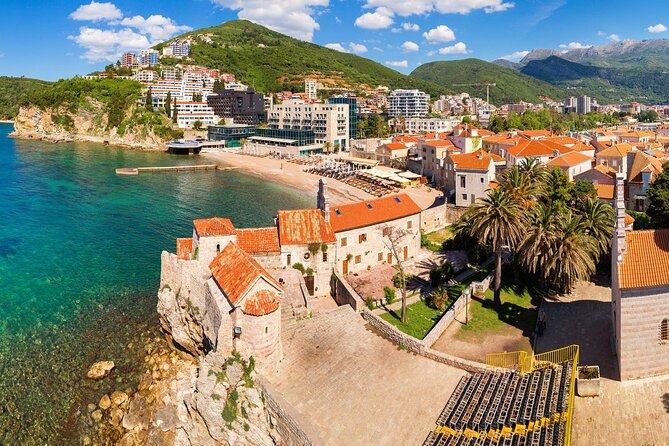
Then you head to Budva. Budva is divided between old and new areas, and the plan focuses on Old Budva, including the historical center. Expect medieval old-town streets and small churches (like St. Ivan church and the small church of St. Mary).
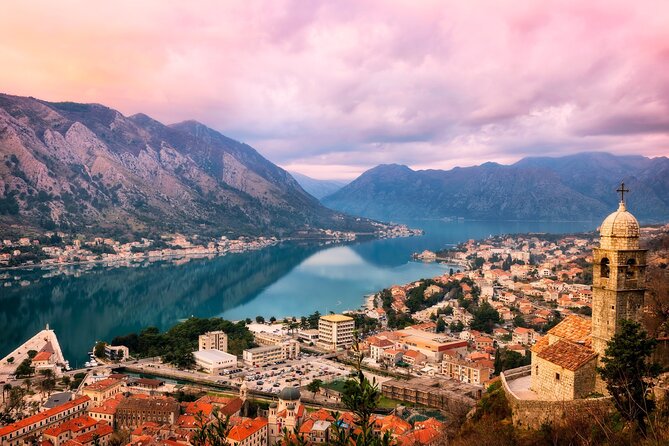
Finally comes Kotor, UNESCO-listed. Kotor feels like a maze of narrow cobblestone streets designed to confuse intruders historically—now it’s just the city’s way of rewarding you for slow walking. You’ll visit Saint Luke’s church, which matters locally as a sign of unity. Time here is about two hours, so it’s not “tour the whole city,” but it’s enough to get the feel of how the old town layers up as you climb and curve through it.
Stari Most and Blagaj: Bosnia’s bridge icons and spring water wonder
From Montenegro you cross into Bosnia & Herzegovina and arrive at Mostar. The Old Bridge, Stari Most, is UNESCO-listed and built in the 16th century in Islamic architectural style. Seeing it makes the rest of Mostar’s street plan click. It’s not just a landmark; it’s a hinge point for the city’s layout and memory.
You’ll also wander the Old Bazaar with its colorful streets and lively atmosphere. The plan mentions “Don’t Forget” stones around town commemorating history, and you’ll see Ottoman-style mosques alongside the bazaar vibe and cobbled lanes.
Then there’s Blagaj tekija, a monastery outside Mostar on the foot of a cliff with beautiful blue waters in front (river Buna springs are the key feature described). It’s a one-hour visit, including time to take in the spring setting.
This pairing works because Mostar is about urban layers and bridges, while Blagaj is about water and spiritual geography.
Sarajevo: war reminders, Ottoman and Austro-Hungarian layers, and Latin Bridge
The last major stop is Sarajevo, Bosnia & Herzegovina’s capital. The plan includes walking on uneven terrain and references visible reminders of the Yugoslav War such as bullet holes and cannon marks. You’ll cover the Ottoman and Austria-Hungarian parts of the city, including markets, bazaars, mosques, churches, and synagogues, with the idea of Sarajevo as a multi-faith crossroads.
Then you visit Latin Bridge, tied to the story of how WWI was triggered in this area. It’s named for connecting the Catholic quarter to the right bank of the Miljacka, with the Ottoman-era term Latinluk used for that area.
You also get free time in the old town for traditional dishes. Sarajevo is a food city here—meat dishes and desserts are specifically called out.
This is also where you should go in with the right expectations: the city is beautiful, but it’s also heavy. If you prefer your history lighter, you’ll still see a lot of beauty, but you can’t avoid the modern history reminders.
Price and logistics: what the cost includes and what you’ll still need to handle
At $5,116.01 per person for roughly 14 days, this isn’t a cheap weekend. The value comes from what’s built in:
- Private transportation across multiple countries, plus an included Athens hotel pick-up and end-of-tour hotel drop-off in Dubrovnik or Split.
- A professional tour leader.
- Breakfast each of the 14 overnights.
- Tourist taxes, international car insurance, road taxes, and petrol.
- Entry tickets for the sites that are listed for visits in the plan.
What’s not included is equally important: lunches, dinners, drinks, and snacks, plus souvenirs and personal spending. So you’ll want to budget meals separately. Also, the pace is real. Some days include several stops, and the schedule includes border crossings and changes of country.
Room note: the price is calculated based on double/twin/triple/quad occupancy in 3-star hotels. If you prefer a single room or want more comfort upgrades, your final cost could vary, since those details aren’t spelled out here.
One more practical detail: tipping isn’t a must in Albania or the Balkans, but it’s recommended as an international practice for good service. If your guide’s keeping everything on track—on time and with clear explanations—this is the kind of trip where a tip feels fair.
Should you book this Athens to Dubrovnik/Split small-group tour?
Book it if you want a fast, guided circuit through the Balkans that hits major UNESCO sites without you doing the planning math. The small-group limit (max 10) and the presence of professional guidance make the difference between seeing places and understanding them.
Skip it (or rethink) if you hate long travel days. This route is full of short stops wrapped around bigger experiences—Delphi, Meteora sunset, lake monasteries, bazaar days, and end-of-trip Sarajevo history. You’ll be moving enough that comfort and flexibility matter more than packing light.
If you’re aiming for one trip that strings together Greece, Albania, North Macedonia, Kosovo, Montenegro, Bosnia & Herzegovina, and Croatia into one coherent story, this is a strong way to do it.
FAQ
Where does the tour start and when?
It starts in Athens, Greece, with a hotel pick-up and an 8:00 am start time.
What are the countries covered on this route?
You’ll visit seven countries: Greece, Albania, North Macedonia, Kosovo, Montenegro, Bosnia & Herzegovina, and Croatia.
How long is the trip?
The duration is about 14 days.
Are breakfasts included?
Yes. Breakfast is included for all 14 overnights (BB).
Are entry tickets included?
Entry tickets for the sites that are visited are included, and tourist taxes are also included. Some stops are marked free, and some include paid admission.
Does the tour include transport between stops?
Yes. You get private transportation throughout the trip, plus international car insurance, road taxes, and petrol are included.
Is tipping expected?
Tipping is not a must in Albania or the Balkans, but tipping the tour leader/driver is recommended as an international practice for good service.


More Tours in Athens

More Tour Reviews in Athens
- All Day Cruise -3 Islands to Agistri,Moni, Aegina with lunch and drinks included
★ 5.0 · 4,958 reviews