REVIEW · ATHENS
Percy & Medusa: Family Mythology Treasure Hunt & Tour
Book on Viator →Operated by Narratologies · Bookable on Viator
Athens turns into a mythology scavenger hunt. This family-focused tour mixes story-based riddles with real landmarks, guided by the Narratologies app and a facilitator. I especially like the hands-on feel, and I also like that Lukumades and water are part of the experience, not an afterthought.
The route is built in short, puzzle-sized stops, so you’ll move at a game pace. If your group likes to linger in one place, the timing might feel a bit tight.
You’ll finish in Plaka, right by the Acropolis Metro area, after a clear mission with a coronation-style ending.
In This Review
- Key points before you go
- A Mythology Treasure Hunt That Actually Gets Kids Up and Walking
- Narratologies App, Magic Code, and a 15-Person Group Pace
- A small timing reality check
- The Route: Temple of Olympian Zeus Through the Tower of the Winds
- Stop 1: Temple of Olympian Zeus
- Stop 2: Acropolis Museum
- Stop 3: Dionysiou Areopagitou (the pedestrian street)
- Stop 4: Lukumades (the food stop)
- Stop 5: Theatre of Dionysus
- Stop 6: Herod Atticus Odeon
- Stop 7: Areopago (Areopagus)
- Stop 8: Ancient Agora of Athens
- Stop 9: Plaka (oldest district)
- Stop 10: Tower of the Winds
- Stop 11: Choragic Monument of Lysicrates (final coronation)
- Lukumades Break: The Food Stop That Keeps the Energy Up
- Price, Tickets, and Gift-Shop Vouchers: Where Your Money Goes
- Who Should Book Percy & Medusa
- Should You Book This Treasure Hunt?
- FAQ
- How long is the Percy & Medusa treasure hunt tour?
- Where does the tour start and end?
- What language is the tour offered in?
- Is the tour suitable for families and kids?
- What’s included in the price?
- Are admission tickets included for the stops?
- Do I need to download the app before the tour?
- Is anything besides water included to drink?
- What’s the cancellation policy for a full refund?
Key points before you go
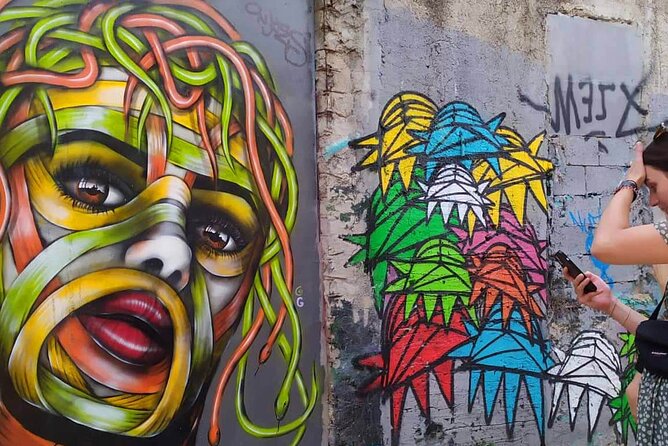
- App-guided gameplay: Narratologies provides location-based stories, navigation, riddles, and collection of gems
- Small group feel: maximum of 15 travelers keeps it manageable for families
- A landmark “best of” route: Temple of Olympian Zeus, Acropolis Museum, Ancient Agora, Plaka, and more
- Food included, not just sightseeing: Lukumades with honey and cinnamon plus water
- Short stops, clear mission: you solve, move, and arrive ready for the next clue
- Strong mythology tie-in: guides can connect Greek gods to modern pop culture, including Percy Jackson
A Mythology Treasure Hunt That Actually Gets Kids Up and Walking
Most Athens tours are a talk-and-walk. This one is a game-and-walk. You’re not just hearing about gods and monuments—you’re chasing clues across the city, guided by story prompts and riddle challenges tied to each stop.
That structure matters. With families, attention spans move fast. Here, the tour breaks Athens into bite-sized moments where you answer something, look closely, then head to the next landmark. Even adults usually end up participating because it’s hard to resist a mystery when the answer is right in front of you.
I also like the way the tour is “family designed” without being childish. The mythology is framed in a way that’s easy to follow, and the route still hits major sites you’d want to see anyway. In two hours, you get a sense of how Athens pieces together—from big temple scale to neighborhood streets to viewpoints over the Parthenon.
One nice bonus from the reviews: guides such as Maria and Konstas are great at flipping between kids’ questions and bigger-history talk. Konstas, in particular, is praised for connecting Greek mythology to Percy Jackson, which helps if your group came to Greece already loving the stories.
You can also read our reviews of more tours and experiences in Athens.


Narratologies App, Magic Code, and a 15-Person Group Pace

The tour uses the Narratologies app as your digital guide. You’ll get an email with a meeting-point info and a link to download the app after booking. The host also provides a mobile ticket. The key game piece is that the facilitator has the magic code that starts the game for your group.
Here’s what this means for you in practice:
- You’re not wandering alone. The facilitator is there, and the app supports navigation and storytelling.
- You’ll spend less time asking where to go next, since the app supports the route and directions when the facilitator steps aside.
- You get to participate even if your brain is tired from travel. Tap, read, follow the clue, solve the riddle, and move on.
Group size is capped at 15, which is a big deal in central Athens. It stays friendly and easier for families to manage than a large bus crowd. It also means the facilitator can handle questions without the tour turning into a race.
Logistically, the tour starts at the Arch of Hadrian (Leof. Vasilisis Amalias 50) and ends at the Choragic Monument of Lysicrates in Plaka (Epimenidou 3), near Acropolis Metro Station. That end point is handy if you plan to keep exploring on your own afterward.
A small timing reality check
The stops are intentionally short—often 5 to 15 minutes. That’s great for families and good for first-time visitors. Just know it’s not built for slow, long museum-style roaming. You’ll see highlights and finish with momentum.
The Route: Temple of Olympian Zeus Through the Tower of the Winds
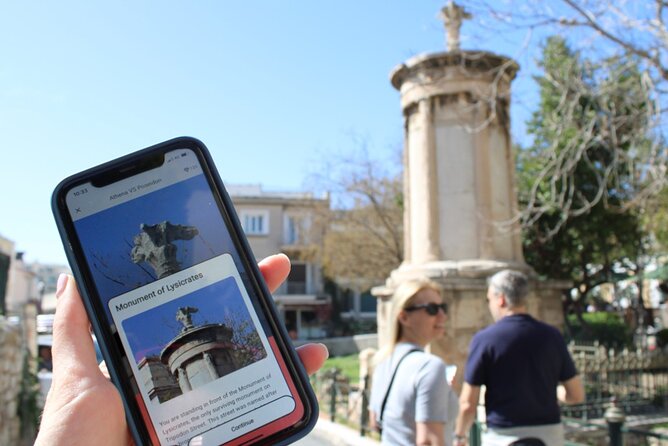
This tour is essentially a guided story walk across Athens landmarks—each stop adds a clue, a riddle, and a next direction. Some stops are “look and listen” moments with a quick puzzle. Others are “find the scene” moments where the setting does some of the teaching.
Stop 1: Temple of Olympian Zeus
You start at the place described as where the gods are having a meeting. The game begins by asking for divine assistance and tying you into the monument through a story in the Narratologies app. Then you solve a riddle and get your next location.
Why this first stop works: it sets the myth tone early. You’re not learning “Athens rules.” You’re learning the game’s logic. Also, the tour lists an admission ticket as free for this stop, so you can focus on the experience without worrying about entry costs.
Potential drawback: because it’s an early start, you may want everyone to be ready with the app and phones charged so you don’t lose minutes while you get set up.
- All Day Cruise -3 Islands to Agistri,Moni, Aegina with lunch and drinks included
★ 5.0 · 4,958 reviews




Stop 2: Acropolis Museum
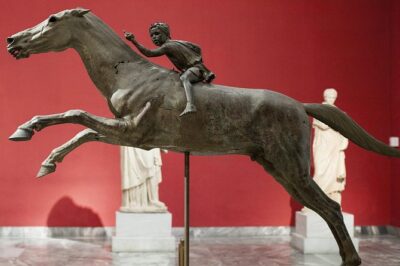
Next is the Acropolis Museum for a quick look with story support. The format here is similar: you learn key points about the museum and its collection, then solve a riddle to guide your way forward.
Even in just a few minutes, this stop helps you understand context. Athens isn’t just stones outside. A museum visit ties objects back to what the city once meant.
Potential drawback: five minutes is short. If your group wants a longer museum experience, you’ll likely want to plan an extra museum visit on another day.
Stop 3: Dionysiou Areopagitou (the pedestrian street)
This is where Athens feels close and human. You read stories about ancient monuments and designed houses along the pedestrian street, then solve challenging riddles. The tour also nudges you to watch for Olympian gods who might be looking for you—pure fun, but it also makes you look up and around instead of staring only at your feet.
Why this stop is valuable: it’s a change of pace from big monuments. You experience Athens as a lived-in city with history woven into the streets.
Stop 4: Lukumades (the food stop)
Yes, you get hungry. And yes, this tour plans for it.
You stop for Lukumades—Greek donuts—with honey and cinnamon. Water is included. This is one of those “smart tour design” moments: families often do better when the energy drop is handled halfway through.
The best part is that the food stop is directly tied into the mission flow. You’re not breaking away from the tour to find a snack. The tour just gives you one.
Stop 5: Theatre of Dionysus
Back into the mission with the Theatre of Dionysus, described as a surviving ancient theater at the feet of Acropolis hill. You get story context and a task tied to fulfilling a mission.
Why it’s special: Greek theatre is one of the most influential cultural exports of the ancient world. Even if you don’t go deep into play history, the location alone makes the concept feel real.
Timing note: it’s a short stop, so don’t expect a full lecture. Expect a highlight plus a quick riddle.
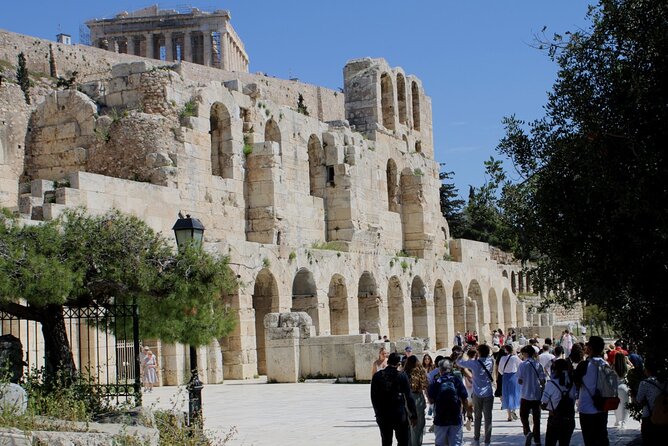
Stop 6: Herod Atticus Odeon
This is the Roman odeon of great importance. The format repeats: story, riddle, then you’re sent on with a reminder to be prepared for visiting the cradle of civilization and the Acropolis hill.
Again, even brief stops can help connect the dots. You’re seeing a progression from myth to culture to performance to power centers.
Potential drawback: if your group is very photo-heavy, you’ll still get a chance to look, but you may want to keep shots efficient so the riddle time doesn’t shrink.
Stop 7: Areopago (Areopagus)
Now you hit a viewpoint moment. Areopago is described as a small hill with fantastic views to both Athens and the Parthenon. You get clues and a warning to beware of Areopagus.
This is the kind of stop that makes the city click. If you’ve stared at the Parthenon from a distance all trip, this is where the scale and placement can finally feel understandable.
Stop 8: Ancient Agora of Athens
Next is the Ancient Agora—learn more about the vibrant center of ancient Athens from above. You read a story, solve a riddle, and continue your journey.
Why “from above” matters: it encourages you to read the space. You’re not just looking at ruins; you’re learning how the layout helped the city function.
Stop 9: Plaka (oldest district)
You reach Plaka, described as the oldest district of Athens. Here you read multiple stories and solve many riddles, each one bringing you closer to completing your mission.
This stop is where the fun can become a bit more “choose-your-own-adventure” since Plaka is full of lanes and details. The benefit of using riddles here is that it helps you move through the neighborhood with purpose instead of wandering aimlessly.
Stop 10: Tower of the Winds
The Tower of the Winds is treated as a highlight for curiosity. It’s presented as the first recorded weather station of humankind, and you’re challenged to crack the riddle about it.
Even if you only spend five minutes, this is one of those stops that can make you appreciate ancient problem-solving. A weather station sounds technical. But the app-style riddle keeps it playful.
Stop 11: Choragic Monument of Lysicrates (final coronation)
You end at the Choragic Monument of Lysicrates. The tour asks if you fulfilled your mission, then tells you to meet the facilitator for a coronation ceremony.
Finishing with a ceremony is a strong move for families. It gives closure. It also makes the whole hunt feel like it had a beginning, middle, and end—not just a collection of stops.
Lukumades Break: The Food Stop That Keeps the Energy Up
The included food is simple and satisfying: Lukumades with honey and cinnamon, plus water.
This is a smart inclusion for two reasons. First, it prevents the common mid-trip food scramble that can derail a family day. Second, it turns the tour into an Athens experience, not just a history route.
One note: drinks besides water are not included. If you know your group drinks a lot of water (or needs something more than water for heat or energy), you’ll want a plan for extra refreshments outside the tour.
Price, Tickets, and Gift-Shop Vouchers: Where Your Money Goes
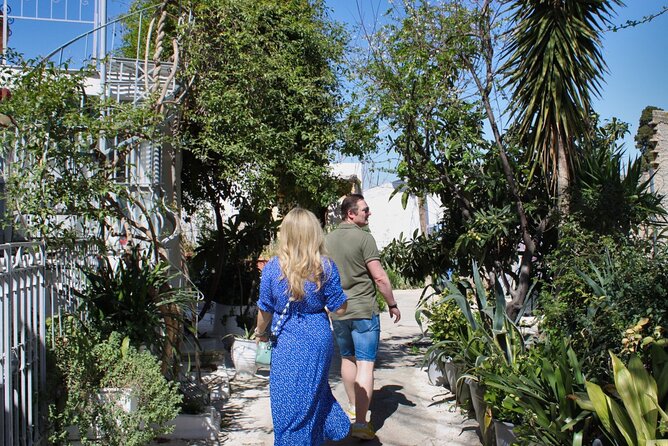
At $75.06 per person for about 2 hours, you’re paying for more than a walking guide. You’re paying for a structured game, a facilitator, a branded app (Narratologies), and an included food stop.
Here’s how the value shows up:
- App + riddle system: This is the core product. It changes what you do at each site.
- Family-friendly pacing: The stops are short and mission-based, which keeps the experience moving.
- Included snack: Lukumades with honey and cinnamon plus water is a real add-on, especially if you were going to grab something anyway.
- Free admission tickets listed at stops: The itinerary notes admission ticket free at each stop, meaning you can focus on experience rather than site-by-site fees.
- Discount vouchers: You also receive vouchers from local souvenir shops and museum giftshops, which can soften the cost of postcards, small gifts, or last-minute buys.
If you’re visiting Athens for a short time, or you want your first day to feel organized, this kind of priced “guided mission” is often worth it. The group cap at 15 also helps keep the value practical.
Who Should Book Percy & Medusa
This is best for:
- Families with kids who like puzzles and stories, not just lectures
- Adults who want a guided route but still like a bit of play
- First-time Athens visitors who want a highlights network across multiple areas (temples, museum, streets, Plaka, viewpoints)
- Anyone whose kids already enjoy Percy Jackson themes and wants the mythology connection handled in a friendly, understandable way
The experience also fits people who don’t want to plan a route from scratch. The narration app helps you avoid decision fatigue, and the facilitator keeps the game moving.
You’ll want moderate physical fitness, since the tour is walking through central sights with multiple short stops. If your group needs slow, long stays at each site, plan for an alternate day with longer museum time.
Should You Book This Treasure Hunt?
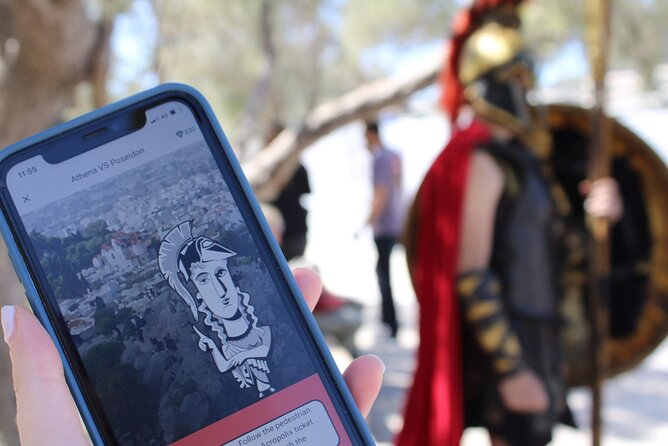
I’d book it if you want Athens to feel like an interactive story, not a checklist. The strongest part is the combination: major sites plus a mission that makes you look closer. The included Lukumades stop is the kind of detail that quietly improves the whole day.
I might skip it (or book a different style tour) if you strongly prefer deep, unhurried museum time or you hate timed “move to the next clue” formats. This tour is designed to keep going, not to linger.
If you do book, do one prep step that matters: download the Narratologies app ahead of time so you don’t waste the first minutes. After that, go in with the mindset of a family quest. Athens is more fun when you’re solving it like a mystery.
FAQ
How long is the Percy & Medusa treasure hunt tour?
It lasts about 2 hours.
Where does the tour start and end?
It starts at the Arch of Hadrian, Leof. Vasilisis Amalias 50, Athina. It ends at the Choragic Monument of Lysicrates, Epimenidou 3, in Plaka near Acropolis Metro Station.
What language is the tour offered in?
The tour is offered in English.
Is the tour suitable for families and kids?
Yes. It’s designed as an interactive mythology treasure hunt for families, and it includes riddle-solving and story prompts aimed at keeping kids engaged.
What’s included in the price?
A Narratologies app for navigation, location-based stories, riddles, and a collection of gems; 1 facilitator; a food stop with Lukumades (honey and cinnamon) plus water; and discount vouchers from local souvenir shops and museum giftshops.
Are admission tickets included for the stops?
The itinerary notes admission ticket free for the stops listed.
Do I need to download the app before the tour?
You should. The tour advises downloading Narratologies in advance, and you’ll get an email with a link and meeting-point information after booking.
Is anything besides water included to drink?
No. Drinks besides water are not included.
What’s the cancellation policy for a full refund?
You can cancel up to 24 hours in advance for a full refund. If you cancel less than 24 hours before the start time, the amount paid is not refunded.

More Tours in Athens


More Tour Reviews in Athens
- All Day Cruise -3 Islands to Agistri,Moni, Aegina with lunch and drinks included
★ 5.0 · 4,958 reviews