REVIEW · ATHENS
Meteora Monasteries: Full Day Tour from Athens
Book on GetYourGuide →Operated by GREECE ATHENS TRANSFERS & TOURS · Bookable on GetYourGuide
Clifftop monasteries steal the show in Meteora. I love the UNESCO-listed monasteries perched high on sandstone cliffs, and you’ll also get time in Kalambaka to wander and grab lunch on your own. It’s a day that mixes big views with slow, thoughtful walking.
Do note the main downside: this tour is a long day with lots of drive time, and the monastery rules are strict enough that you’ll want to plan your outfit and cash in advance. You’ll be handed practical details like the 3 euro entrance fees and a modest dress code before you start climbing.
In This Review
- Key highlights worth marking on your mental map
- Clifftop Monasteries: Why Meteora Is a Serious Day Trip
- From Athens pickup to Kastraki: Where the day starts
- Kastraki stop: what to expect and what to skip in your head
- Meteora arrival and the first walk: Getting your bearings
- Monastery of St. Stephen: A focused start on the cliffs
- Monastery of Varlaam: Another perspective on the same story
- Great Meteor Monastery: Your main wow hour
- Photo stops at Holy Trinity, Rousanou, and St. Nicholas Anapavsa
- Kalambaka time: Eating and decompressing on your own
- Hidden hermit caves and what they mean for your understanding
- Price and value: Is $282 a fair deal?
- Logistics that save your day: cash, dress code, and timing
- Who this tour suits best
- Should you book the Meteora Monasteries full day from Athens?
- FAQ
- How long is the Meteora tour from Athens?
- What areas in Athens are pickup locations?
- How many monasteries will I visit?
- Are entrance fees included in the price?
- Do I need cash for Meteora?
- What is included in the tour besides transport?
- Is lunch included?
- What is the dress code for monastery visits?
- Is WiFi available during the trip?
- Is the tour suitable for everyone?
Key highlights worth marking on your mental map
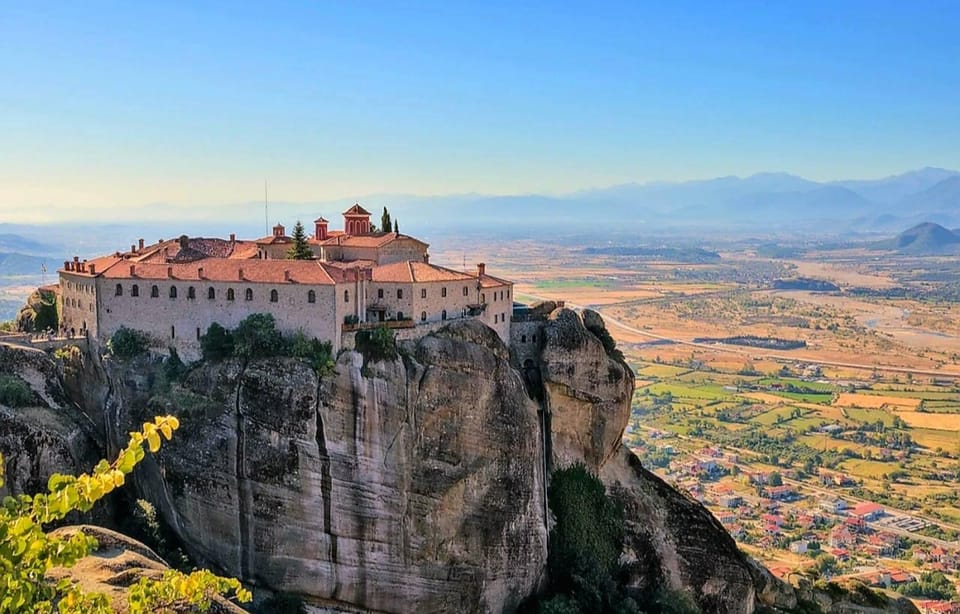
- Three real monastery visits plus hermit cave stops near the clifftop complex
- A full day from Athens with pickup across multiple neighborhoods
- Kastraki break for a short walk and a quick food tasting moment
- Great Meteor Monastery gets the longest visit window for unhurried photos
- Multiple additional monasteries are photo stops, not full visits
- Cash planning matters since there’s no ATM in the area
Clifftop Monasteries: Why Meteora Is a Serious Day Trip
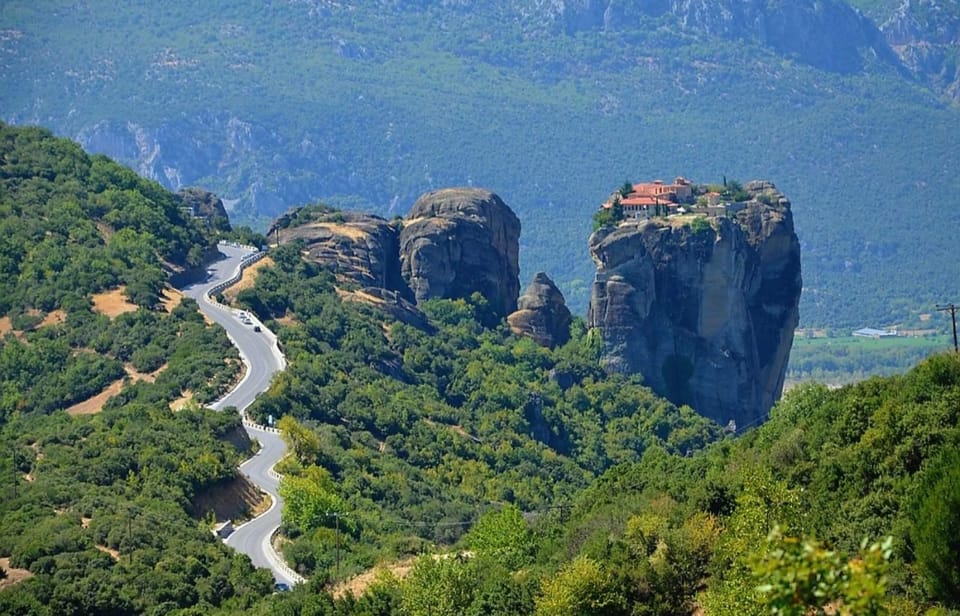
Meteora is famous for a reason. The monasteries sit on top of tall, rough sandstone pillars, like somebody built stone retreats in the middle of the sky. Even if you know the story, seeing it in person hits differently.
This tour is built around that moment. You’ll spend your day at the clifftop sites in a way that feels structured, but not rushed. Instead of trying to cram in every stop under the sun, you focus on the monasteries that people most want to see, plus a few extra photo moments when the views are best.
I also like that the day isn’t only about walking stairs. You get a short break in Kastraki, then time in Kalambaka to eat and reset. That balance makes Meteora feel like a real experience instead of a nonstop sightseeing sprint.
You can also read our reviews of more tours and experiences in Athens
- All Day Cruise -3 Islands to Agistri,Moni, Aegina with lunch and drinks included
★ 5.0 · 4,958 reviews

From Athens pickup to Kastraki: Where the day starts
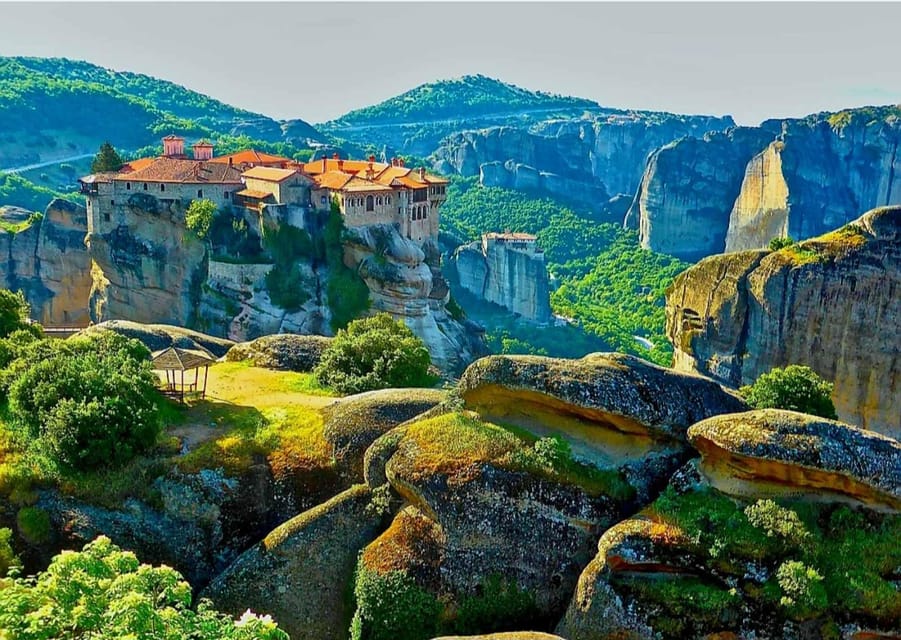
The tour begins with pickup from eight options around Athens and the nearby port area, including spots like Moschato, Pireas, Glyfada, and Kallithea. That matters because Meteora tours often start with an awkward scramble. Here, you’re met by your driver with a signboard showing the tour name.
Once you’re rolling, you’ll pass through Athens sights briefly before heading toward the Meteora area. The ride is long enough that you’ll want to arrive with a plan: water, a hat if it’s sunny, and something to occupy yourself during traffic. The driver typically brings the energy for that stretch with stories and local context. One driver I learned about, Yiannis, is especially good at keeping things entertaining during slow highway moments, even singing along the way. Another driver, Nicolas, comes across as friendly and helpful with good practical guidance.
After the drive, you reach Kastraki for a short stop. You’ll get a bit of free time to walk around and you’ll even have a brief food tasting moment. It’s not a long break, but it’s enough to stretch your legs and get your first taste of the Meteora atmosphere.
Kastraki stop: what to expect and what to skip in your head
This is a small window, so treat it like a launchpad, not a full town exploration. If you’re the kind of person who needs every restaurant recommendation before you leave, use this time to grab something quick and keep your pace steady for the clifftop walking later.
Meteora arrival and the first walk: Getting your bearings
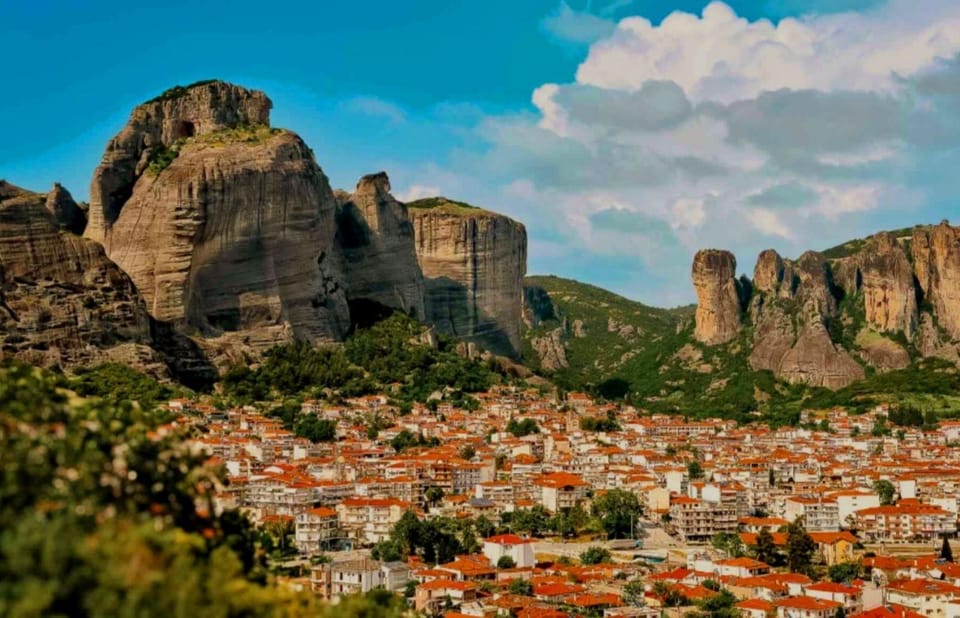
When you arrive at Meteora, you’ll start with sightseeing and walking. This is your moment to understand the layout: the monasteries sit on different platforms and the views open in angles depending on where you stand. Getting those first landmarks early makes later stops easier.
You’ll also be in the area where hermit-cave spaces connect to the monastic history. You won’t be in a museum room; you’ll be among the rock and the structures that shaped monastic life here. It’s one of those details you can feel, not just read.
This portion is brief—about 25 minutes—so you’ll want comfortable shoes and an eye out for photo angles. If you wait until the later monasteries to start your photo planning, you may miss the lighting that works best for some of the cliff views.
Monastery of St. Stephen: A focused start on the cliffs
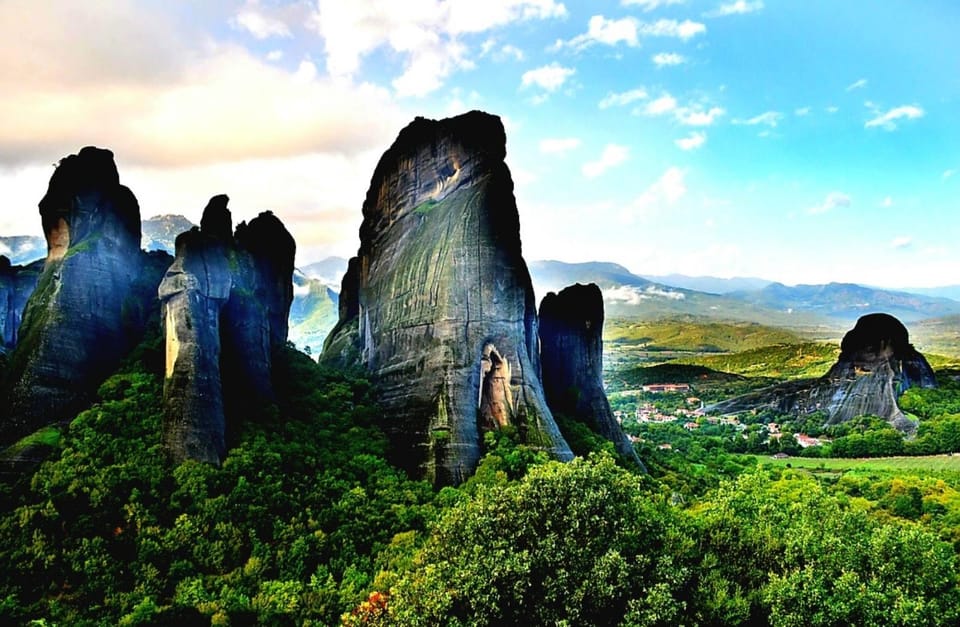
Your first full monastery stop is the Monastery of St. Stephen. You’ll have about 25 minutes here for visiting and sightseeing.
What I like about starting with St. Stephen is the pacing. It’s a manageable first stop where you can take in the setting, understand the scale, and then build from there. You’re not hit with every big viewpoint at once. Instead, you’re given a first taste of the monasteries’ layout and atmosphere.
One thing to remember: the monasteries enforce a modest dress code. For women, skirts that fall below the knee or longer are required. Pants, shorts, or sleeveless shirts won’t work. For men, sleeveless clothing and shorts above the knee are also prohibited. If you forget this, you may end up spending time solving an outfit issue instead of sightseeing.
- All Day Cruise -3 Islands to Agistri,Moni, Aegina with lunch and drinks included
★ 5.0 · 4,958 reviews

Monastery of Varlaam: Another perspective on the same story
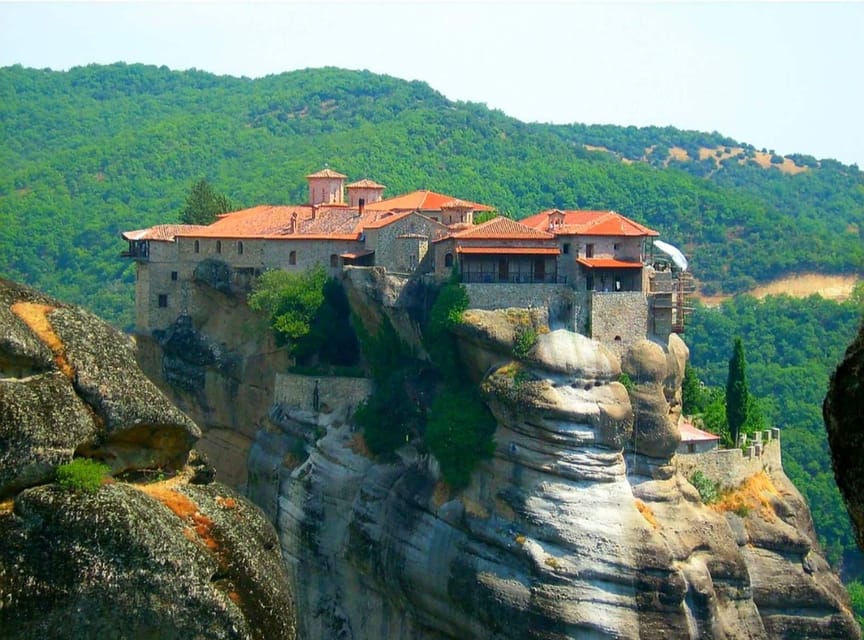
Next is the Monastery of Varlaam, with a longer visit window of about 35 minutes.
Varlaam gives you another look at how these communities built their spiritual and practical lives into the landscape. Even when you already understand the basic idea of monastic refuge, each monastery has its own feel: different angles, different stonework, and different ways the buildings sit against the cliff.
This is also a good stop for photos, but treat it like a visit first. The best shots usually come after you’ve spent a minute or two simply looking—at how the path, the structures, and the rock all line up.
Great Meteor Monastery: Your main wow hour
The day’s biggest time block is at Great Meteor Monastery, where you’ll have about an hour for visiting and sightseeing.
This is where you slow down. An hour sounds long until you’re standing in the right place with the right view and you realize you want more time to take it in. Great Meteor is often the stop that people remember most because it feels like the core statement of Meteora’s cliffside monastic life.
If you only care about the highlights, don’t cut this stop short. If you care about details, it’s even better—this is the time to look closely at how the monastery occupies the rock and how the walkways guide your movement.
Practical note: plan for the fact that monastery routes can include uneven surfaces and steps. There’s walking throughout the day, and the tour data flags that you should avoid it if you have heart problems or serious medical conditions.
Photo stops at Holy Trinity, Rousanou, and St. Nicholas Anapavsa
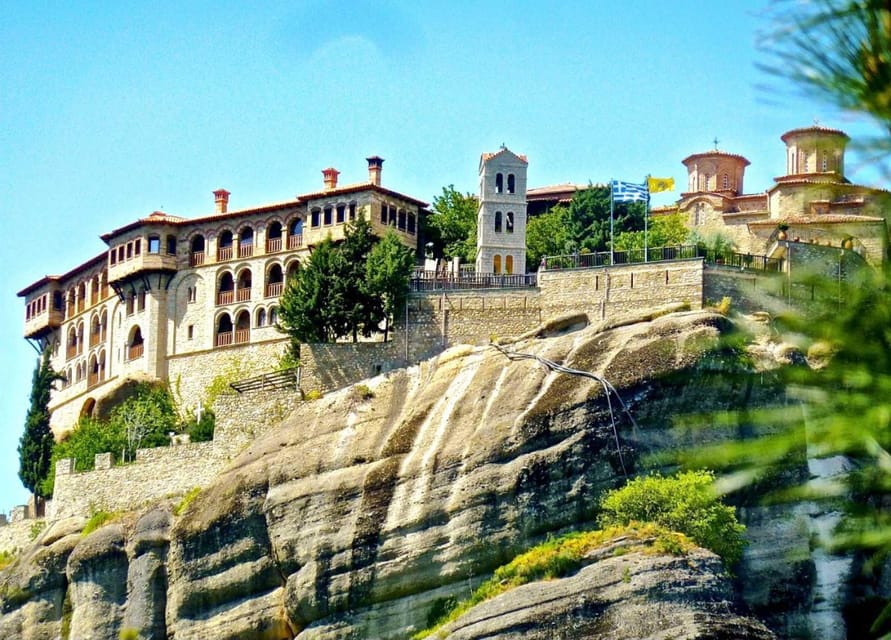
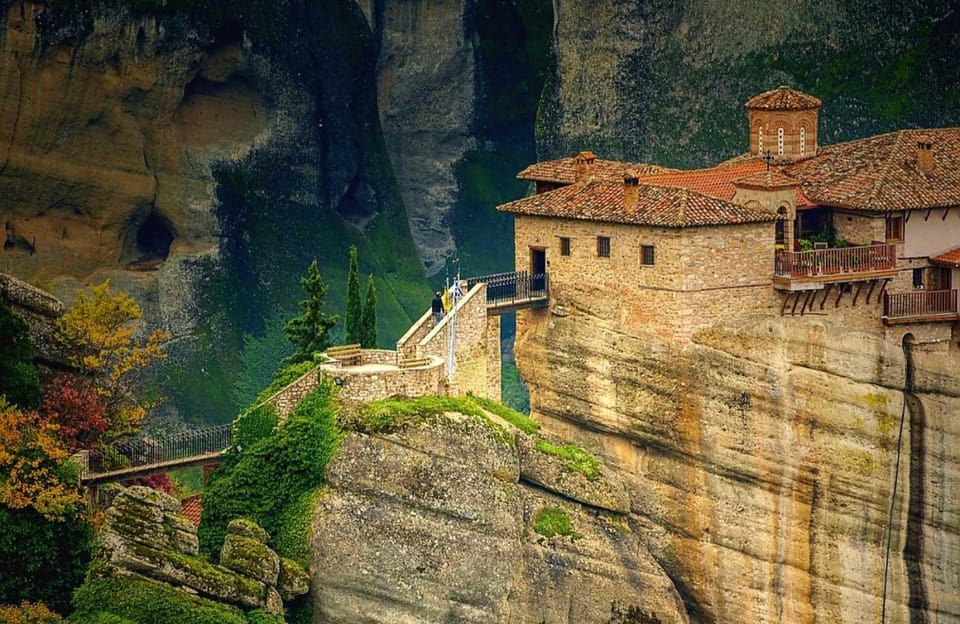
After the hour at Great Meteor, the tour shifts into quicker moments with photo stops at several smaller monasteries: Holy Trinity Monastery, Monastery of Rousanou, and Monastery of St. Nicholas Anapavsa.
Each of these stops is short—around 10 minutes each. That’s the tradeoff. You may not have time to go deep inside, but you will get key visual access: cliffside angles that make Meteora feel like a whole system of stone retreats rather than just one famous complex.
Use these stops for what they’re best at:
- quick photos from the best viewpoint
- short looks to connect what you saw earlier with what’s ahead
- filling any gaps you missed during the main monastery visits
If you want only full, inside-the-church time, you might feel the photo-stop format is less satisfying. But if you love viewpoints, this portion helps you understand the wider Meteora area.
Kalambaka time: Eating and decompressing on your own
You’ll also get free time in Kalambaka for sightseeing and time to explore. The tour is designed so you can dine and move at your own pace here, instead of relying on one fixed lunch option.
This matters because Meteora can be emotionally and physically tiring. After you’ve spent time on cliff paths and inside religious spaces, a normal town meal feels like a reset button. You can choose what you actually want, whether that’s a longer lunch or a quick snack before heading back.
Your lunch itself is not included—this tour includes bottled water and a snack, and then lunch is on your own at local restaurants. That’s not a bad thing. It gives you flexibility, and Kalambaka tends to have enough options that you’re not stuck with one formula.
Hidden hermit caves and what they mean for your understanding
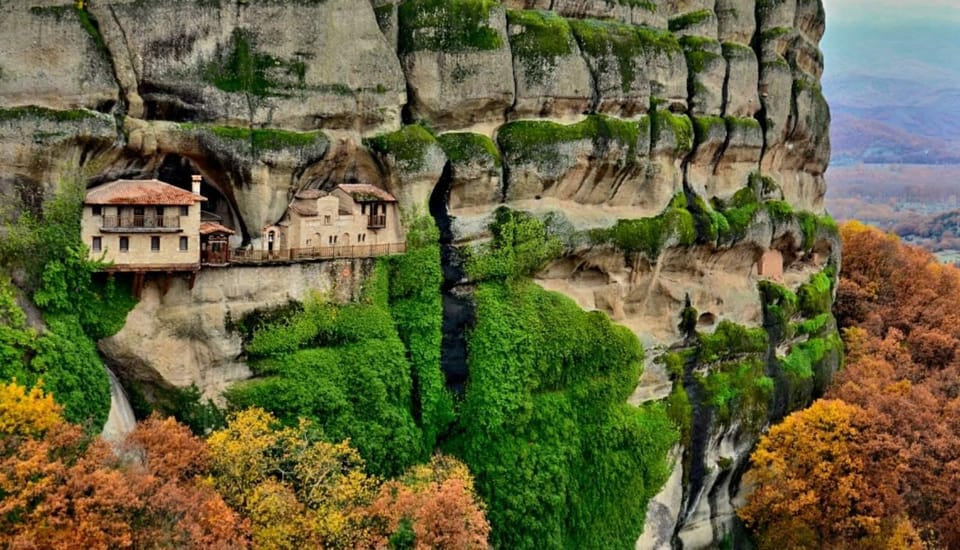
The tour includes stops related to the hidden hermit caves. Even if you don’t know the details before you arrive, the caves connect the monasteries to a more private form of devotion—one person or small groups living and praying in isolation, connected to the cliff refuge.
Why this is valuable: it keeps Meteora from becoming only a postcard. It’s not just tall rocks and white stone. It’s a place where people used the environment—its height, its difficulty, its seclusion—to shape a way of life.
Price and value: Is $282 a fair deal?
At $282 per person for a 12-hour private-group day trip, this isn’t a budget outing. But you’re paying for several things that add real value:
- door-to-door pickup and drop-off across multiple Athens/port areas
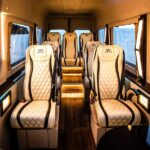
- air-conditioned transport for a long ride
- a driver with real context and personality during travel time
- the structured plan that includes three monastery visits plus cave and photo moments
- bottled water, WiFi on board, and a snack that keeps the day from feeling purely survival-mode
Also, the tour asks you to bring cash for entrance fees (3 euros per person at each monastery). That’s a small extra cost, but it’s easy to handle if you plan early. What I like is that the baseline experience is clear: you’ll know how many monasteries you’ll actually visit.
Where the price can feel high is if you’re the type who would rather DIY every stop with no guide at all. In that case, you might compare costs of renting or booking transport separately. But if you want one set plan, less stress, and a driver handling the logistics, this price usually starts to feel more reasonable.
Logistics that save your day: cash, dress code, and timing
A few practical items make a big difference at Meteora.
First, plan for cash. The tour notes there’s no ATM in the area, so bring enough for 3 euro entrance fees per monastery. If you’re short, you’ll slow down your day.
Second, respect the dress code. Monastery staff don’t negotiate much on basic rules. If you show up in summer shorts or a sleeveless top, you’ll likely need to wait or adjust.
Third, recognize the walking. The tour includes walking at multiple points and a climb-and-path day overall. It’s flagged as not suitable for those with heart problems or serious medical conditions.
Finally, if you’re prone to getting bored in traffic, bring something to occupy yourself. One driver, Yiannis, is known for handling long return traffic with stories of Greek gods and legends and even singing. Not every day will include that level of performance, but a good driver helps you tolerate the road time.
Who this tour suits best
This is a great fit if you:
- want a single-day plan that covers the main Meteora monasteries
- love photography and want cliff viewpoints without trying to schedule them yourself
- care about history and spirituality, but also like breaks for food and decompression
- prefer a private-group format with pickup convenience
It can be less ideal if you:
- want maximum time inside every monastery (the schedule includes photo stops)
- are not ready for a long drive and multiple walking stretches in one day
- don’t want to follow dress-code rules
Should you book the Meteora Monasteries full day from Athens?
If you’re deciding whether Meteora is worth the long day, my answer is yes—especially if you want both the major clifftop monasteries and a bit of time in local towns like Kastraki and Kalambaka. The value comes from the structure: three monasteries you can actually visit, plus supporting cave and photo moments, all handled by transport that starts and ends with door-to-door pickup.
I’d book it if Meteora is high on your list and you don’t want to coordinate multiple legs of travel. I’d think twice if you’re sensitive to long drives, strict dress rules, or you need lots of time inside every stop.
FAQ
How long is the Meteora tour from Athens?
It runs for about 12 hours.
What areas in Athens are pickup locations?
Pickup is available from eight options: Moschato, Athens, Pireas, Zografou, Kallithea, Nea Smyrni, Alimos, and Glyfada. Drop-off is also offered at eight locations, including those same areas.
How many monasteries will I visit?
You will visit three monasteries, plus you’ll have photo stops at several additional monastery points. The main monastery visit stops include St. Stephen, Varlaam, and Great Meteor.
Are entrance fees included in the price?
No. Entrance fees are not included and are listed as 3 euros per person at each monastery.
Do I need cash for Meteora?
Yes. The tour specifically notes that you should bring cash for monastery entrances because there is no ATM in the area.
What is included in the tour besides transport?
Included items are bottled water, a snack, WiFi on board, and an air-conditioned vehicle. You’ll also have a professional English-speaking driver with deep knowledge (the driver is not licensed to accompany you inside the sites).
Is lunch included?
Lunch in a local restaurant is not included. You can handle lunch using your own expenses during the free time.
What is the dress code for monastery visits?
You’ll need modest clothing: for women, skirts below the knee or longer are required, and pants, shorts, or sleeveless shirts are not allowed. For men, sleeveless clothing and shorts above the knee are not allowed.
Is WiFi available during the trip?
Yes, WiFi is included on board.
Is the tour suitable for everyone?
The tour notes it is not recommended for people with heart problems or other serious medical conditions, and it does include walking. Service animals are allowed, and infant seats are available.

More Full-Day in Athens
- All Day Cruise -3 Islands to Agistri,Moni, Aegina with lunch and drinks included
★ 5.0 · 4,958 reviews
More Tours in Athens

More Tour Reviews in Athens
- All Day Cruise -3 Islands to Agistri,Moni, Aegina with lunch and drinks included
★ 5.0 · 4,958 reviews