REVIEW · ATHENS
Ancient Corinth Half Day Tour from Athens
Book on Viator →Operated by Let's Book Travel · Bookable on Viator
Corinth in half a day is a smart move. You get a break from Athens with a guided run through the Corinth Canal and the ruins of Ancient Corinth (Archaia Korinthos)—a place most people skip because it takes planning. I especially liked how guides (for example Sophia and Georgina) connect the sites to the stories you’ve heard since school, and how the hotel pickup/drop-off makes the trip feel low-stress. The one possible catch is the schedule: the canal stop is short, and on Fridays the Daphni monastery stop may or may not happen depending on timing.
This tour is built for people who want the highlights without turning it into an all-day hike. You’ll see Paul’s Corinth area with enough context to understand what you’re standing on (Agora, Apollo’s Temple, and the Fountain of Peirene), and you should come away with a clearer picture of why Corinth mattered. The main drawback to watch for is that the walking and site time are limited, so if you want to linger over every corner, you’ll need a different style of trip.
Key points I’d use to decide fast
- Short, efficient half-day so you can still aim for lunch back in Athens
- Corinth Canal + photos with a quick stretch of time
- Ancient Corinth includes Agora and key monuments tied to Paul’s life there
- English-speaking guides with strong on-the-ground interpretation (I’ve seen Sophia, Georgina, Dora, Katia, and George praised)
- Hotel pickup/drop-off reduces logistics friction
- Group size up to 50, so it’s not a tiny private ride but it’s manageable
In This Review
- Why Ancient Corinth Beats Another Athens Box-Check
- The 8:30am Route: Sacred Way, Corinth Canal, and Daphni (If It’s on Your Day)
- Arriving at Ancient Corinth: Paul’s City, Not Just Ruins
- The Agora, Shops, and the Fountain of Peirene: What You’ll Actually Stand On
- Guide Energy Makes the Difference: Sophia, Georgina, Dora, Katia, George
- Time, Walking Pace, and Who This Half Day Suits Best
- Price and Value: Is $107.23 Worth It?
- Logistics That Can Surprise You: Pickup Changes and Day-Of Adjustments
- Tips to Get More Out of Your Ancient Corinth Day
- Should You Book the Ancient Corinth Half Day Tour from Athens?
- FAQ
- What time does the Ancient Corinth half-day tour start?
- How long is the tour from Athens?
- Is hotel pickup and drop-off included?
- What’s included in the price?
- What do I visit at Ancient Corinth?
- Is the Monastery of Daphni stop included?
Why Ancient Corinth Beats Another Athens Box-Check
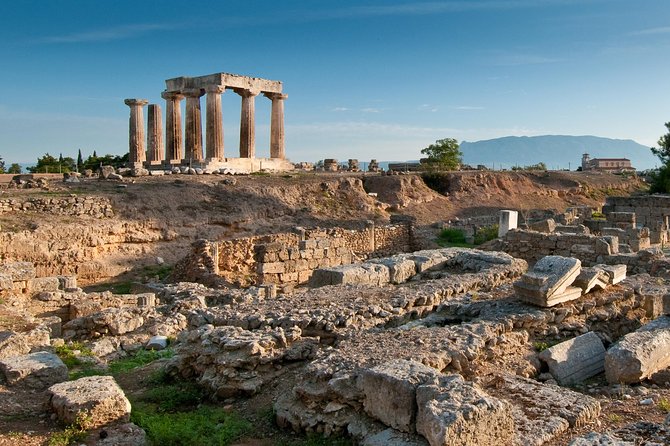
If you only stick to Athens, you’ll miss how the ancient Greek world connected. Corinth sits on a major crossroads of sea and land, and it shows—especially in the layout of the ruins and the religious/merchant life around the Agora. A half-day trip is a good way to trade some city traffic for real site value without sacrificing your afternoon.
I like that this tour targets what many casual itineraries skip. Instead of just waving at ruins from far away, you’re guided through the main areas of Archaia Korinthos, including the market spaces and the monumental temple zone. And because the guide’s commentary is part of the package, the archaeology doesn’t feel like a pile of stones with guesswork.
One more thing I appreciate: the tone tends to be practical. You’re not asked to “be an expert.” You’re guided to understand what matters—then you get the time to look, walk, and ask questions.
The 8:30am Route: Sacred Way, Corinth Canal, and Daphni (If It’s on Your Day)
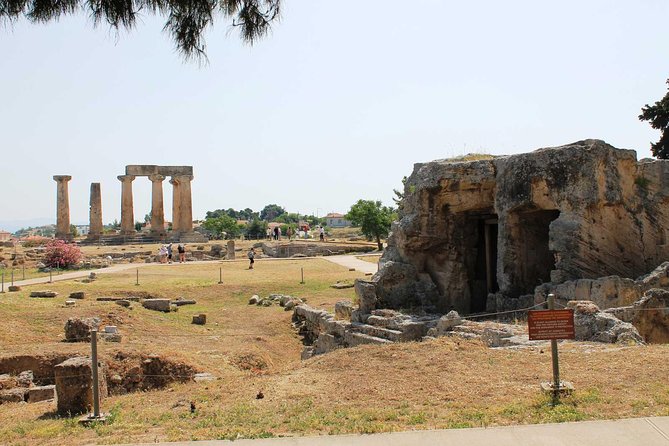
You start at 8:30am with pickup from your hotel or the closest available apartment area. Then you head south-west toward Corinth, passing through countryside that helps you shake the Athens feeling. Along the drive, your guide points out the route that was once called the Sacred Way, tied to the Eleusinian Mysteries—initiations held annually for Demeter and Persephone.
The first main stop is the Corinth Canal. Expect a short pause for restroom and coffee, plus some time to step out and see the canal up close for photos. Even though it’s brief, it’s useful: the canal is a modern reminder of how seriously this region manages movement between seas, and it sets context for why Corinth was so important.
On Fridays, the plan may include a stop at the Monastery of Daphni. This is an 11th-century Byzantine monastery known for mosaics inside the church. It’s also recognized as a World Heritage site along with other monasteries. If your day includes it, you’ll get around 30 minutes, and the commentary usually helps you notice the mosaic storytelling rather than treating it like a quick photo stop.
Important reality check: schedules can shift in the real world. On a Friday, don’t treat Daphni as guaranteed. Think of it as a bonus if timing works out, while Corinth itself is the core of the experience.
You can also read our reviews of more tours and experiences in Athens.


Arriving at Ancient Corinth: Paul’s City, Not Just Ruins
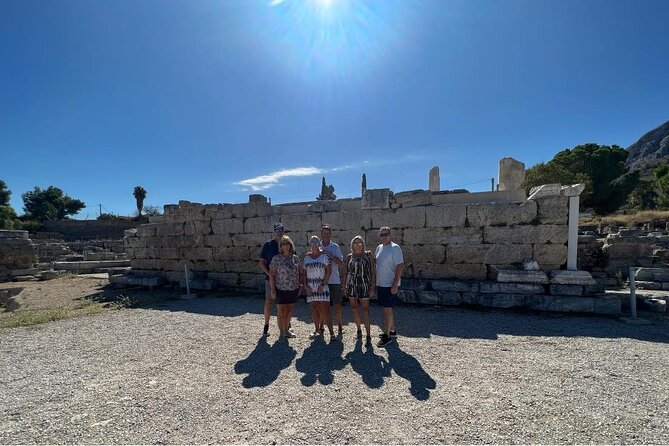
Once you reach Corinth, you’re in Archaia Korinthos, the archaeological zone that brings the ancient city into view. This is where St. Paul lived and preached for about two years (Acts 18:1–18). Standing at the right points is the trick here, and a good guide helps you connect the ground to the stories.
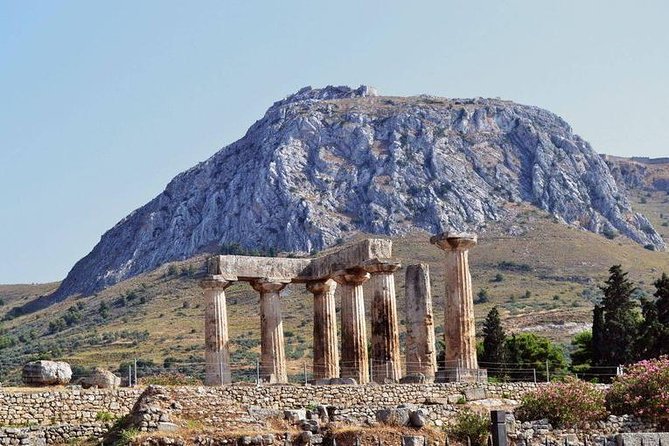
The city remains you’ll focus on include the Agora (marketplace area) and Apollo’s Temple (dated to the 6th century B.C.). You also get a sense of the pre-Roman scale of the city through major monuments in the area. On top of that, your guide typically weaves in details like Paul working with Aquila and Priscilla, as well as the political/legal backdrop of Paul’s time connected with Gallio’s judgment in the Agora.
A lot of tours treat Corinth as a side stop. This one treats it as the point. You’re there long enough for the site to start making sense—where commerce happened, where crowds gathered, and why the religious monuments mattered in everyday life.
The Agora, Shops, and the Fountain of Peirene: What You’ll Actually Stand On
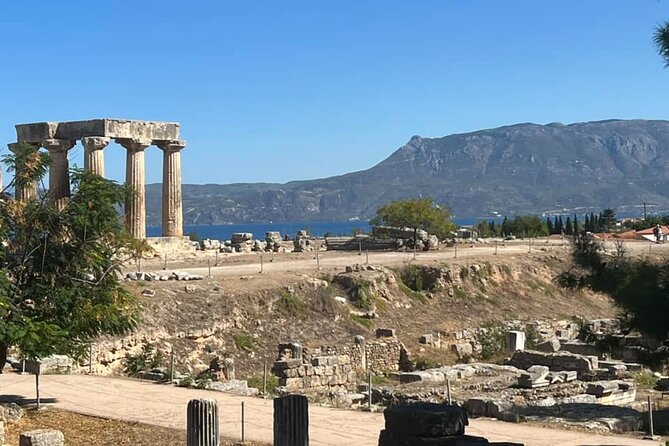
The most valuable part for first-timers is the way the walk gets organized. You’re not just touring random ruins; you’re moving through the main “city functions” that shaped life.
Here’s what you should expect to see and what it means:
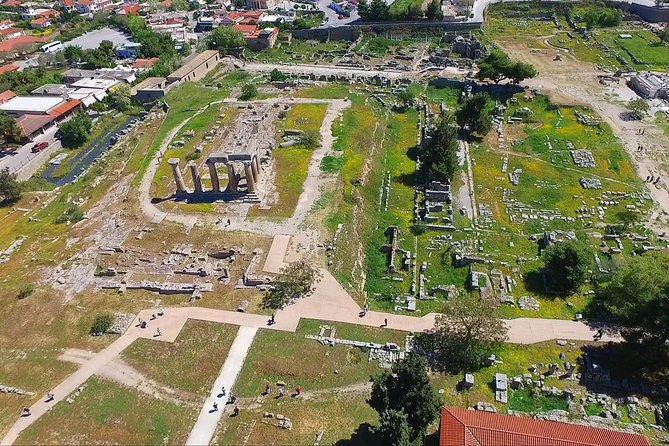
The Agora and city activity. The Agora is the market/meeting space where civic life and public events played out. In Paul’s story, it’s tied to the public nature of what happened there, including references connected to his trial before Gallio. Even without memorizing every name, you’ll get a clearer picture of why public squares mattered in ancient Rome-and-Greece style governance.
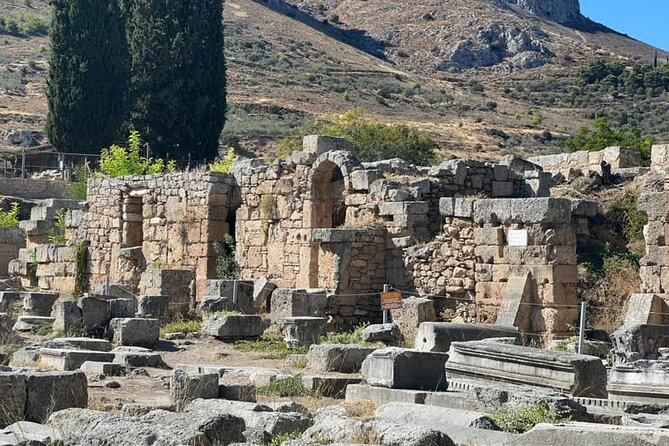
First-century shop remains. Corinth was a working city, not a museum. Seeing the remains connected with shops helps you understand the economy behind the famous names. This makes Paul feel less like a biography and more like someone doing real-life work in a real marketplace.
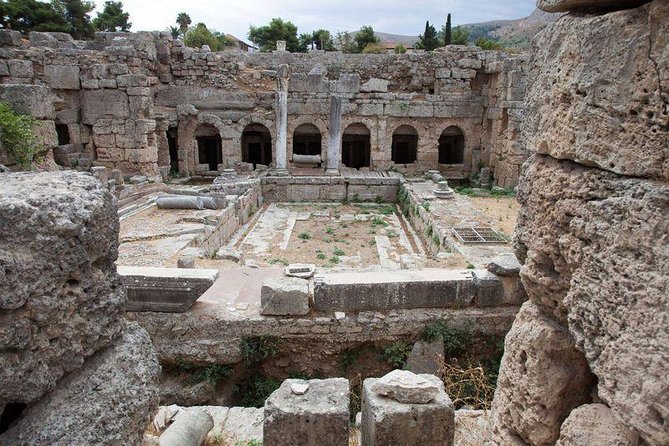
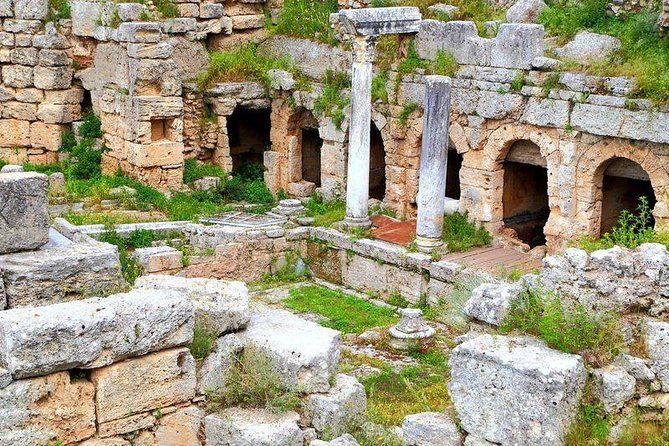
The Fountain of Peirene. Water mattered for everything—people, commerce, and daily routines. The Fountain of Peirene is one of the standout references tied to Corinth’s urban life, and it’s a point where your guide can connect practical details to the larger story.
Apollo’s Temple. Apollo’s Temple anchors the religious monument side of the city. It’s one of the major pre-Roman monuments in the area, and it gives you that “scale shock” moment: Corinth wasn’t small-town Greece. This was a major city with serious architectural ambition.
If you’re traveling with a history brain, you’ll enjoy how the route can turn into a map of meaning. If you’re not, it still works because the commentary tends to keep you oriented: where you are, what it used to be, and why you should care.
Guide Energy Makes the Difference: Sophia, Georgina, Dora, Katia, George
This is the kind of tour where the guide quality can make or break the experience. The good news: the people leading these trips get praised for being clear, friendly, and genuinely prepared.
In particular, I’ve seen Sophia described as fun, informative, and extremely knowledgeable, with a guide who takes care of you from start to finish. Georgina gets high marks for connecting the drive to context—pointing out historic sites as you travel—and for leading a strong presentation once you reach Corinth.
Dora is noted as an amazing guide who teaches you a lot. Katia’s style includes personal, faith-linked touches—for example, bringing in the text of 1 Corinthians 13, which can make the message behind Corinth feel more human and less academic.
George also gets positive notes for friendliness and for explaining where you’re standing so the ruins stop being confusing. Even when the time feels short, these guides tend to make it feel structured rather than rushed.
Practical takeaway for you: if you have questions, ask early. Guides like this often have ways of answering that connect your question to multiple parts of the site, not just one spot.
Time, Walking Pace, and Who This Half Day Suits Best
The tour runs about 5 to 6 hours, starting at 8:30am and returning to Athens in time for lunch. That time window is exactly why this works for many people. You don’t lose a whole day to transportation, and you still get enough hours on the ground to feel like you visited something important.
At the sites, the experience is essentially walking. You’ll want comfortable shoes, and you’ll likely spend time moving between points in the archaeological area rather than sitting in the bus with perfect views. If you want lots of lingering, you might feel the boundaries. One review-style theme is that the time can be just enough for a satisfying overview, but you’ll crave more if you get deeply hooked.
This half-day format is best for:
- First-timers in Greece who want a major site with real context
- Bible/history lovers who want the connection between Paul’s letters and the geography
- People staying in Athens who don’t want a full-day logistics puzzle
It’s less ideal if you want a slow, photography-only day with no time pressure.
- All Day Cruise -3 Islands to Agistri,Moni, Aegina with lunch and drinks included
★ 5.0 · 4,958 reviews




Price and Value: Is $107.23 Worth It?
At $107.23 per person, this tour isn’t a throwaway add-on. The real value comes from what’s included: a professional guide, entrance tickets, and transfers from/to your hotel or closest apartment pickup point.
That matters more than it sounds. Transportation and entrance fees are usually the hidden price multipliers on day trips. Here, you’re paying for the structure: someone organizes the timing, the guide does the interpretation, and you don’t have to puzzle out how to get to the canal and archaeological zone efficiently.
Also consider what you’re buying: understanding. Corinth can be overwhelming if you arrive with no help. When the guide connects the Agora, Paul’s setting, and major monuments into a coherent route, your “wow” factor usually goes up—even if the time on site is limited.
If you’re trying to build a compact Athens itinerary, this is a cost that can prevent you from wasting time elsewhere.
Logistics That Can Surprise You: Pickup Changes and Day-Of Adjustments
This tour offers hotel pickup, and you’ll receive mobile ticket info. Those are big comforts.
Still, one practical caution: sometimes the bus-world behind the scenes isn’t as clean as you’d expect. In one case, a transfer between vehicles happened after pickup with a different bus company, then the group met their assigned tour group. The good part is that service still delivered what was paid for, and the day moved on.
So, don’t panic if you’re asked to step between vehicles. Just keep your ticket handy and follow staff directions. And build in some flexibility with your morning mindset.
Weather also matters. This experience requires good weather, and if it’s canceled due to poor weather, you should be offered a different date or a full refund.
Tips to Get More Out of Your Ancient Corinth Day
You’ll enjoy this tour more if you prepare like it’s a real walk, not a drive-by.
- Bring water and sun protection. The time outdoors is real, and the half-day format doesn’t include long breaks.
- Plan for a quick photo moment at the Corinth Canal. If you care about photos, be ready when the stop opens.
- Wear comfortable shoes with decent grip. Archaeological zones are uneven.
- If you’re interested in the Paul connection, ask your guide to point out the specific site-area ties in plain language. That’s where a great guide really shines.
- If you’re visiting on a Friday and Daphni matters to you, treat it like a bonus stop rather than a guarantee. Corinth is the fixed prize.
Should You Book the Ancient Corinth Half Day Tour from Athens?
I think you should book this tour if you want a high-impact ancient site day without giving up your afternoon. It’s a smart way to see Corinth Canal, understand why Ancient Corinth mattered, and connect the geography to Paul’s story through a guide’s commentary.
Skip it (or look for a longer format) if you hate walking, want maximum time at each monument, or you’re the type who needs zero schedule constraints. The half-day structure is efficient, but it doesn’t cater to slow wandering.
If your travel style is “see the key places, learn what they mean, then get on with my day,” this one fits.
FAQ
What time does the Ancient Corinth half-day tour start?
The tour starts at 8:30am.
How long is the tour from Athens?
It lasts about 5 to 6 hours.
Is hotel pickup and drop-off included?
Yes. Transfers from and to your hotel or closest available apartment are included.
What’s included in the price?
The price includes a professional tour guide, entrance tickets, and all fees and taxes.
What do I visit at Ancient Corinth?
You’ll visit the archaeological site area of Archaia Korinthos, including the Agora, Apollo’s Temple, and references such as the Fountain of Peirene. The guide provides context tied to Paul’s time there.
Is the Monastery of Daphni stop included?
The itinerary states that on Fridays the tour stops at the Monastery of Daphni for about 30 minutes. If timing changes on your specific day, you may still focus on Corinth itself.

More Tours in Athens

More Tour Reviews in Athens
- All Day Cruise -3 Islands to Agistri,Moni, Aegina with lunch and drinks included
★ 5.0 · 4,958 reviews